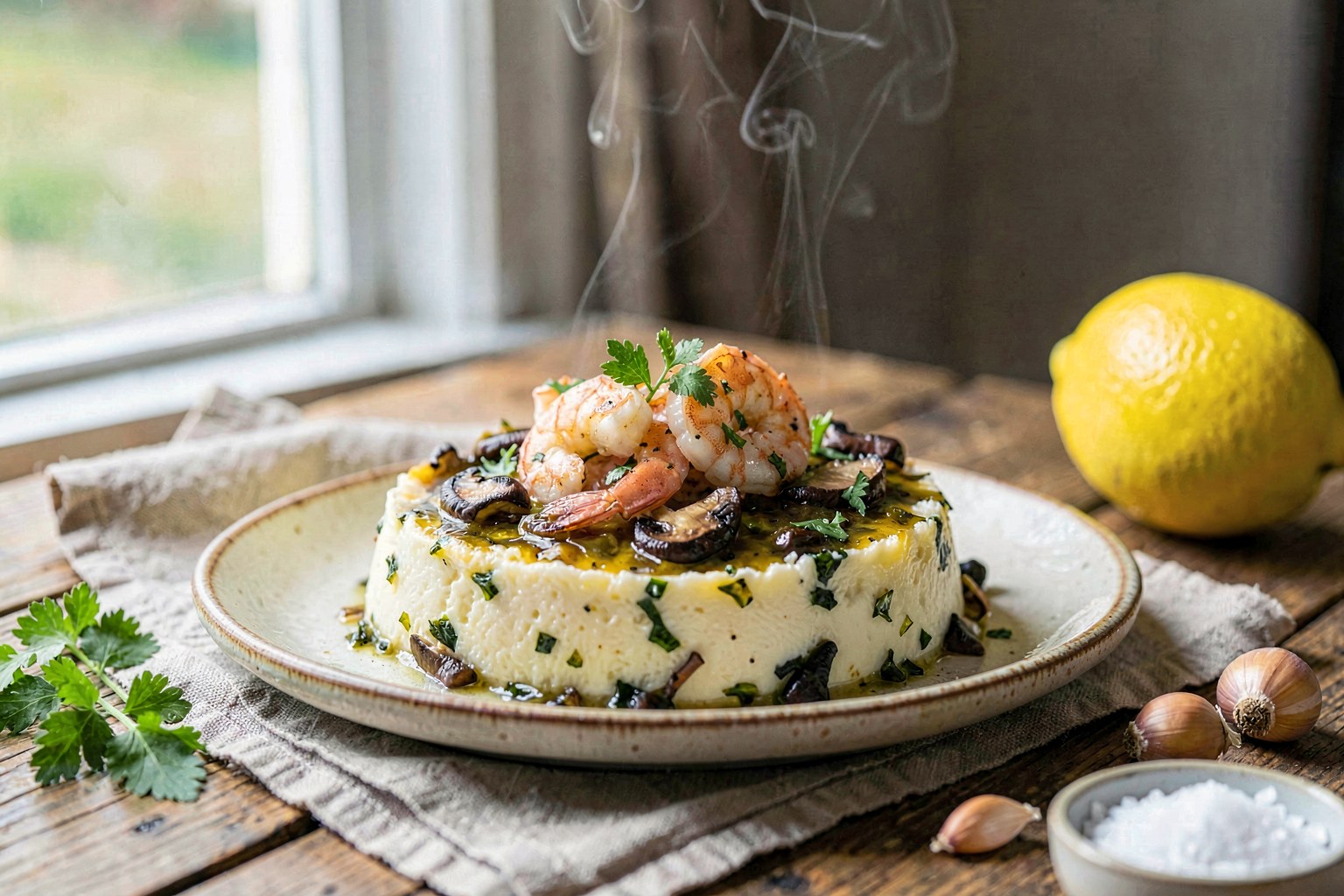
Fermented Teff Injera with Spiced Grass-Fed Ghee
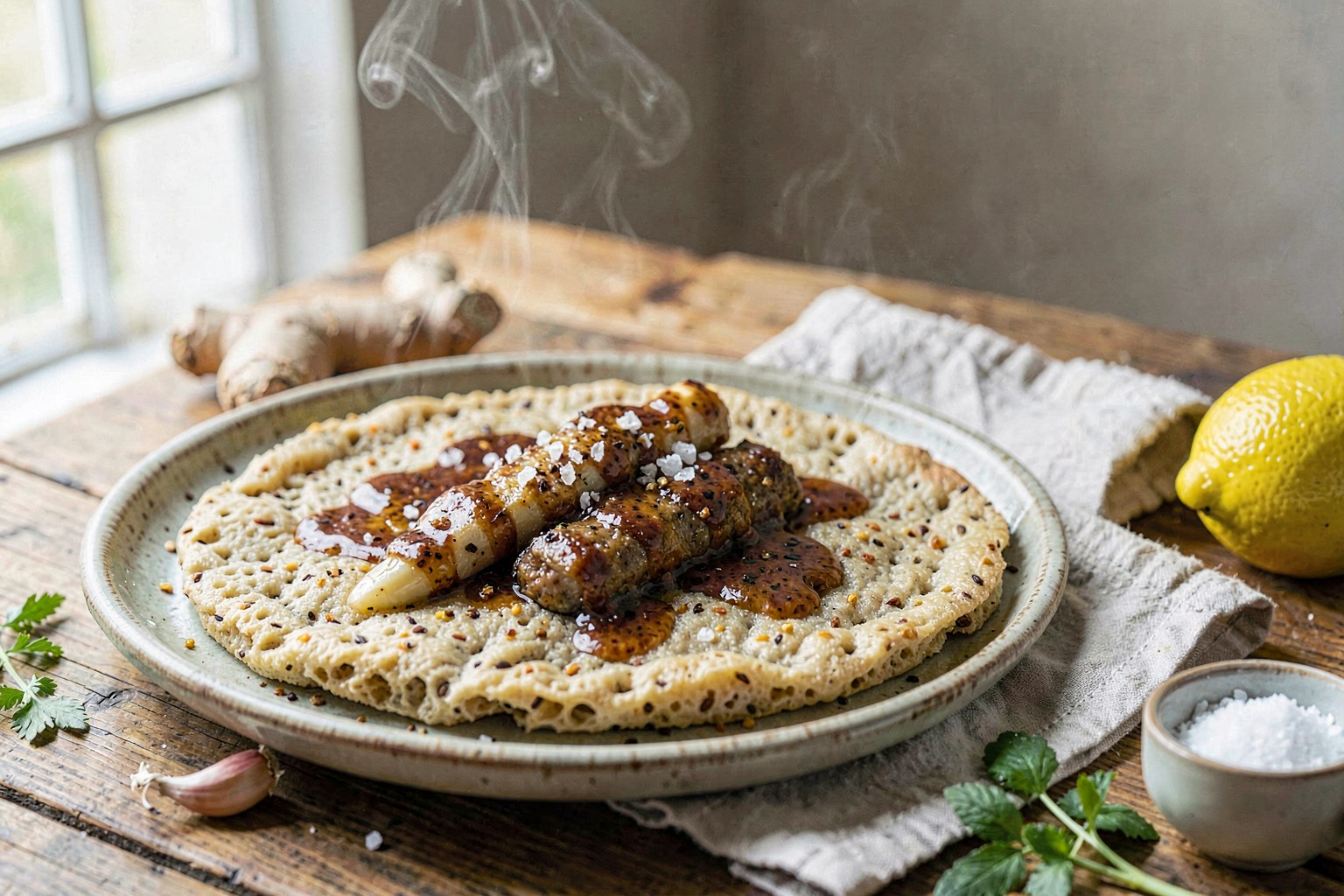
Spongy, sourdough-like flatbread made from ancient teff grain, naturally fermented for 3 days to unlock nutrients and probiotics. Served warm with a drizzle of homemade spiced grass-fed ghee (niter kibbeh) for richness and anti-inflammatory support without seed oils.
A little context
Injera is the staple of Ethiopian cuisine, traditionally fermented for days to create a sour, spongy base for stews. We honor this tradition by using organic teff and wild fermentation, swapping traditional seed oils or commercial shortcuts for nutrient-dense grass-fed ghee and whole spices to align with longevity principles.
The longevity story
Teff is a polyphenol-dense ancient grain rich in iron, calcium, and resistant starch which feeds beneficial gut bacteria. The 3-day fermentation process breaks down phytates, improving mineral bioavailability and reducing anti-nutrients. Spiced grass-fed ghee provides butyrate and fat-soluble vitamins (A, D, K2) while turmeric and ginger add curcumin and gingerol for systemic inflammation reduction.
Method
- 01
Mix the batter
In a large glass bowl, whisk together 300 g organic teff flour, 750 ml filtered water, and 5 g sea salt until smooth and free of lumps. The consistency should resemble thin pancake batter.
- 02
Ferment the dough
Cover the bowl loosely with a lid or cloth. Let it sit at room temperature (20°C / 68°F) for 48 to 72 hours. The batter will bubble, rise, and develop a sour aroma similar to sourdough starter. Stir once daily.
- 03
- 04
Adjust batter consistency
After fermentation, stir the batter again. If it is too thick, add a splash of water. If it is too thin, add a tablespoon of teff flour. It should pour easily but not be watery.
- 05
Heat the skillet
Place your non-stick skillet or injera pan over medium heat. It should be hot enough that a drop of water sizzles and evaporates immediately. Do not add oil to the pan.
- 06
Cook the Injera
Pour a ladle of batter into the center of the pan. Quickly swirl the pan in a circular motion to spread the batter thinly and evenly. Cover with a lid immediately to steam the top. Cook for 3-4 minutes until the top looks dry and bubbles have formed. Do not flip.
- 07
Serve with Niter Kibbeh
Remove the injera from the pan. While still warm, brush lightly with the warm spiced grass-fed ghee. Stack with a clean cloth to keep soft. Serve immediately as a breakfast wrap with fresh fruit or avocado.
Nutrition facts
Per serving · 1 of 4- — Saturated
- 9 g
- — Polyunsaturated
- 1 g
- Carbohydrates
- 16 g
- — Fiber
- 3 g
- — Sugars
- 0 g
- Cholesterol
- 45 mg
- Sodium
- 492 mg
- Potassium
- 102 mg
Estimated from USDA FoodData Central for matched ingredients (67% ingredient coverage). Values vary with brand, preparation, and exact measurements.
Pro tips
- ✦Sourcing teff: Look for 'organic' and 'fair trade' labels to ensure soil quality and ethical farming practices.
- ✦Fermentation check: The batter is ready when it smells tangy and has doubled in volume with visible bubbles.
- ✦Pan temperature: If the injera sticks, your pan is not hot enough. If it browns too fast, lower the heat.
- ✦Ghee infusion: Do not burn the garlic or ginger in the ghee; low and slow preserves the polyphenols.
Shop this recipe
As an Amazon Associate we earn from qualifying purchases.
Substitutions
- grass-fed ghee → coconut oil or olive oil (for a strictly dairy-free version, though ghee provides better butyrate for gut health)
- teff flour → buckwheat flour blend (will alter the texture and sourness, not traditional but gluten-free)
Storage
Store cooked injera in an airtight glass container in the fridge for up to 5 days. Reheat in a dry skillet. The spiced ghee keeps in a sealed jar in the fridge for 2 weeks.
What to serve with it
- Fresh seasonal berries for antioxidants
- Avocado slices for healthy fats
- Green tea or turmeric golden milk
- Sparkling water with lemon
FAQ
Can I skip the fermentation?+
You can cook it immediately, but you will lose the gut-health benefits, phytate reduction, and the signature sour flavor that makes injera unique.
Is this recipe vegan?+
The batter itself is vegan, but this recipe includes grass-fed ghee. For a vegan version, substitute with coconut oil or avocado oil.
Why does my injera not have holes?+
This usually means the batter was too thick or the pan was not hot enough to create steam bubbles. Ensure proper fermentation and pan temperature.
Share this recipe
Notes from the community
Sign in to leave a note.
No notes yet — be the first.
You might also like