Steamed Methi Paratha: Ayurvedic Modern Tradition
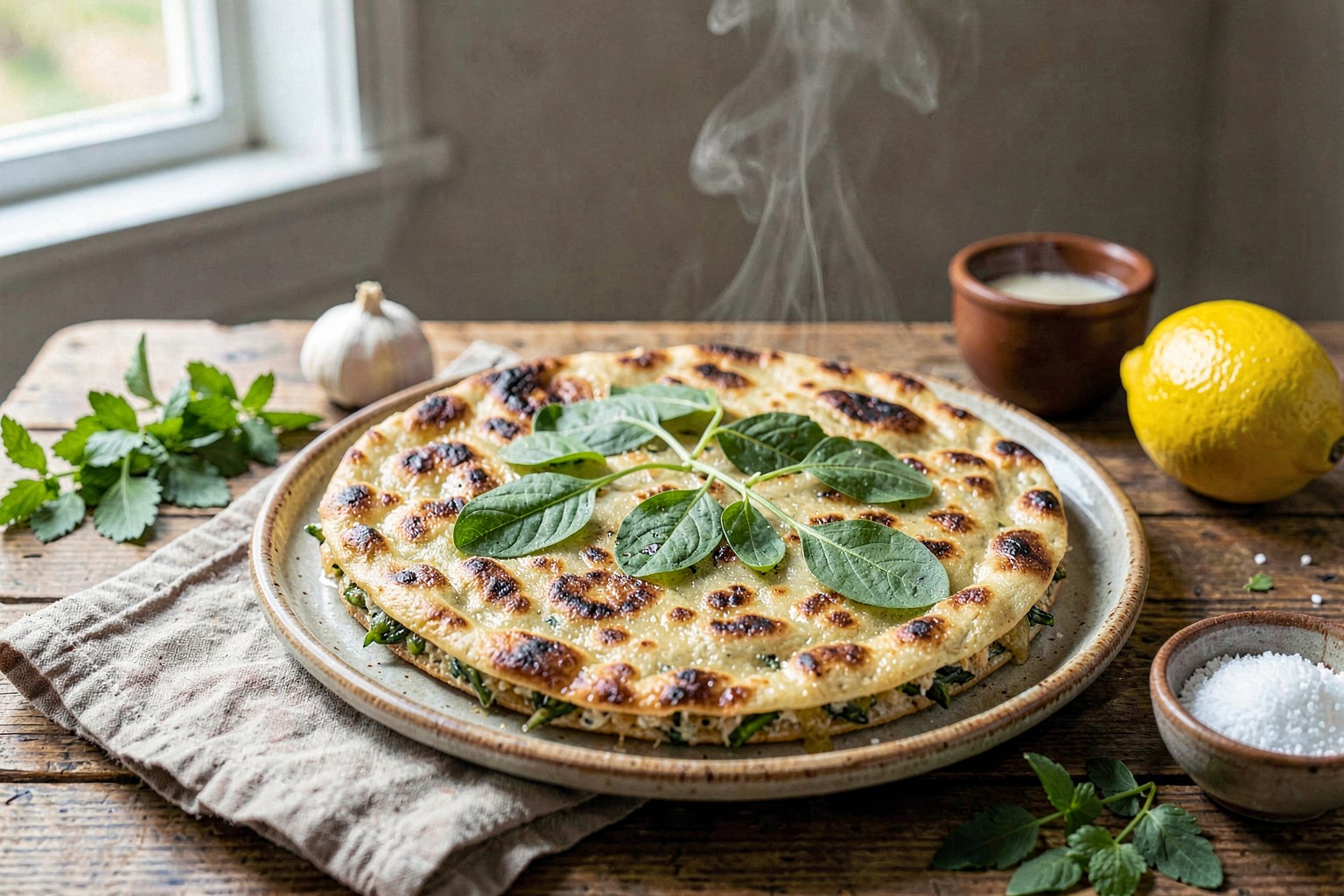
These tender, herb-packed flatbreads are steamed to lock in moisture before being seared in grass-fed ghee for a crisp, golden exterior. The filling features fresh fenugreek leaves (methi) and aromatic cumin, offering a bitter-savory depth that balances well with the rich, nutty fat of the ghee. A perfect farm-to-table dinner that honors ancient grain traditions while adhering to strict whole-food principles.
A little context
Methi Paratha is a staple in North Indian agrarian cuisine, traditionally cooked on a clay tawa with minimal oil. We honor this by using a cast-iron skillet and steaming the dough first to ensure it remains soft and digestible, a technique that reduces the need for heavy frying. We have strictly eliminated the refined sugar often dusted on the dough for quick browning, relying instead on the natural caramelization of the wheat and the Maillard reaction from the ghee. Seed oils are replaced entirely with grass-fed ghee, respecting the Ayurvedic preference for ghee as a medium for delivering herbs deep into the tissues.
The longevity story
Fenugreek leaves are a powerhouse of soluble fiber and saponins, known to support healthy blood sugar regulation and digestion. The recipe relies on grass-fed ghee, which provides butyrate—a short-chain fatty acid that nourishes the gut lining and reduces systemic inflammation. By using whole sprouted wheat flour, we retain the germ and bran, delivering a complete amino acid profile and polyphenols that are often stripped from refined white flour. The absence of seed oils ensures the fat source remains stable and anti-inflammatory, aligning with longevity protocols.
Method
- 01
Activate the dough
In a large bowl, combine the sprouted whole wheat flour and sea salt. Add the warm water and melted ghee. Knead vigorously for 5–7 minutes until the dough is smooth, elastic, and slightly tacky but not sticky. Cover with a damp cloth and rest for 30 minutes at room temperature.
- 02
Prepare the methi filling
While the dough rests, finely chop the fenugreek leaves, cilantro, and grated ginger. In a dry bowl, mix the chopped greens with the crushed cumin seeds, asafoetida, and a pinch of sea salt. Do not add water; the moisture from the greens is sufficient. Let the mixture sit for 10 minutes to allow the flavors to meld.
- 03
Form the stuffed balls
Divide the dough into 8 equal portions (approx. 50 g each). Divide the filling into 8 equal portions (approx. 30 g each). Take a dough ball, flatten it into a small disc in your palm, place a filling ball in the center, and carefully pleat the dough edges up to enclose it completely. Roll it gently into a smooth ball, ensuring no filling leaks out.
- 04
Roll the parathas
Dust your work surface lightly with extra sprouted flour. Take a stuffed ball and gently roll it out into a circle about 15 cm (6 inches) in diameter. Apply light pressure to avoid tearing the dough; if a small tear occurs, patch it with a bit of extra flour. The dough should be thin but not translucent.
- 05
Steam the parathas
Bring a pot of water to a gentle boil. Place the rolled paratha directly onto a greased steamer tray or a heat-proof plate inside a steamer basket. Cover and steam for 3–4 minutes until the surface looks cooked and opaque but is not yet browned. This step ensures the interior is fully cooked and soft.
- 06
Sear in ghee
Heat the cast-iron skillet over medium-high heat. Once hot, add a generous teaspoon of ghee. Place the steamed paratha in the skillet. Cook for 1–2 minutes until golden brown spots appear on the bottom. Flip, add another teaspoon of ghee to the top surface, and cook for another 1–2 minutes until crisp and fully browned on both sides.
- 07
Serve immediately
Remove from the skillet and brush with a final thin layer of warm ghee if desired. Serve hot, ideally within 5 minutes of cooking, to maintain the contrast between the crisp exterior and the soft, steamed interior.
Nutrition facts
Per serving · 1 of 4- — Saturated
- 9 g
- — Polyunsaturated
- 1 g
- Carbohydrates
- 35 g
- — Fiber
- 3 g
- — Sugars
- 0 g
- Cholesterol
- 45 mg
- Sodium
- 520 mg
- Potassium
- 412 mg
Estimated from USDA FoodData Central for matched ingredients (80% ingredient coverage). Values vary with brand, preparation, and exact measurements.
Pro tips
- ✦When selecting fenugreek, look for small, tender leaves; large, dark leaves can be overly bitter and fibrous.
- ✦If the dough feels too stiff after resting, knead in a teaspoon of warm water; if too sticky, add a dusting of flour.
- ✦The steaming step is non-negotiable for the 'steamed' method; it prevents the need for deep frying and keeps the bread pliable.
- ✦Store unused dough balls covered in the fridge for up to 24 hours; bring to room temperature before rolling.
- ✦Toast your cumin seeds in a dry pan until fragrant before crushing to unlock their essential oils.
Shop this recipe
As an Amazon Associate we earn from qualifying purchases.
Substitutions
- sprouted whole wheat flour → organic whole grain spelt flour (spelt is more digestible for some but has similar fiber content; adjust water by 10% if needed)
- fresh fenugreek leaves → frozen chopped methi (thawed and squeezed dry) (ensure no added salt or preservatives; texture will be slightly softer)
- grass-fed ghee → pastured butter (if not strictly dairy-free) (butter contains milk solids which may burn faster; lower heat slightly)
Storage
Cool completely and store in an airtight glass container in the fridge for up to 3 days. Reheat in a dry skillet or steamer. Freezing is possible: wrap individual parathas in parchment paper, place in a freezer bag, and freeze for up to 2 months. Reheat directly from frozen in a skillet.
What to serve with it
- Warm green tea with a slice of fresh ginger
- Homemade plain yogurt with a drizzle of raw honey and flax seeds
- A small bowl of lentil dal (made with turmeric and cumin)
- Sparkling water with lemon and a pinch of rock salt
FAQ
Why steam the paratha instead of just frying it?+
Steaming cooks the dense filling and the inner dough layer thoroughly without requiring excessive oil. It results in a softer, more digestible texture that aligns with the 'steamed' tradition, while the final sear provides the necessary crispiness.
Can I make this gluten-free?+
Yes, substitute the wheat flour with a 1:1 gluten-free all-purpose blend that includes xanthan gum, or use a mix of chickpea flour and almond flour. Note that the texture will be more crumbly and requires careful handling.
Is fenugreek safe for everyone?+
Fenugreek is generally safe and beneficial, but it can lower blood sugar. If you are on medication for diabetes, monitor your levels or consult your practitioner, as the fiber and compounds in the leaves are potent.
Share this recipe
Notes from the community
Sign in to leave a note.
No notes yet — be the first.
You might also like