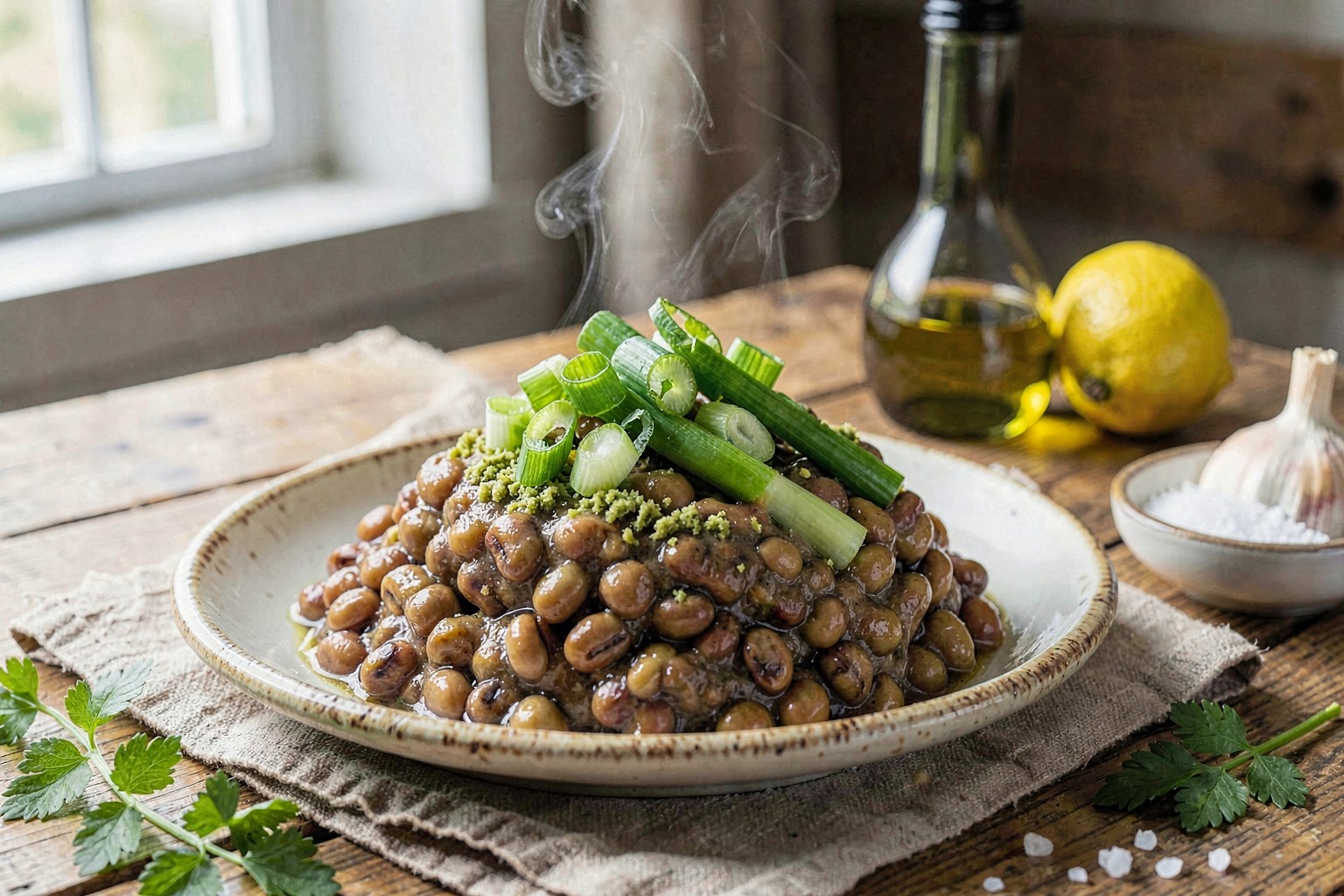
Traditional Natto with Wild-Caught Soybeans, Green Onions, and Mustard
This dish features organic, non-GMO soybeans fermented with Bacillus subtilis to create a probiotic-rich, sticky texture topped with fresh wasabi, chopped green onions, and a drizzle of extra-virgin olive oil. It delivers a savory, umami depth with a hint of heat, serving as a powerhouse dinner that supports gut health without any refined sugars or processed additives.
A little context
Rooted in the Japanese Washoku tradition, natto has been a staple breakfast and dinner item for centuries, valued for its preservation and nutritional density. In this Blueprint-aligned version, we honor the tradition by using only organic, non-GMO soybeans and traditional fermentation methods, strictly omitting the small amount of refined sugar or mirin often added to commercial packets. We replace the typical sesame oil or seed oil drizzles with high-polyphenol extra-virgin olive oil, ensuring the dish remains anti-inflammatory while respecting its authentic flavor profile.
The longevity story
Natto is a unique source of Vitamin K2 (menaquinone-7), essential for bone density and cardiovascular health, produced during the fermentation of soybeans. The fermentation process also breaks down anti-nutrients, making the plant protein and fiber more bioavailable while introducing beneficial enzymes like nattokinase, which supports healthy blood flow. Unlike many fermented foods, natto is naturally free of added sugars, relying on the bean's natural compounds for flavor, while the addition of fresh wasabi and green onions provides additional polyphenols and anti-inflammatory compounds.
Method
- 01
Soak the Soybeans
Rinse 250 g organic soybeans thoroughly. Place in a large bowl and cover with 3x their volume of filtered water. Soak for 12 to 24 hours at room temperature until the beans have doubled in size and are soft enough to crush between your fingers.
- 02
Steam the Beans
Drain and rinse the soaked beans. Steam them in a steamer basket over boiling water for 45 minutes, or pressure cook in an Instant Pot for 30 minutes on high pressure. The beans must be extremely soft and mushy; if they are firm, they will not ferment properly.
- 03
Cool and Inoculate
Allow the cooked beans to cool to approximately 40°C (104°F). They should be warm to the touch but not hot. In a small bowl, dissolve the natto starter packet in 1 tsp of filtered water. Pour this mixture over the warm beans and toss gently but thoroughly to ensure every bean is coated.
- 04
Ferment
Place the beans in sterilized glass jars, filling them no more than 2/3 full. Cover with breathable cloth or loose lids to allow gas exchange. Place in your incubation device (rice cooker with 'keep warm' setting, yogurt maker, or cooler with warm water bottles) maintaining a steady 40°C (104°F) for 24 hours. Do not disturb during this time.
- 05
Aerate and Age
After 24 hours, the beans should be covered in white spores and sticky threads. Remove from the incubator, uncover, and let them sit at room temperature for another 12-24 hours to develop flavor and reduce ammonia scent. Then, refrigerate for at least 24 hours to age; this improves the texture and flavor significantly.
- 06
Prepare the Toppings
When ready to serve, portion the natto into bowls. In a small bowl, mix the minced green onions, fresh wasabi, and coconut aminos. Drizzle generously with cold-pressed extra-virgin olive oil.
- 07
Mix and Serve
Stir the natto vigorously with chopsticks for 30-60 seconds until it becomes frothy and the sticky threads (neba-neba) are fully developed. Top with the wasabi/onion mixture and serve immediately over a bed of warm brown rice or quinoa, or eat as is for a protein-rich dinner.
Nutrition facts
Per serving · 1 of 4- — Saturated
- 6 g
- — Polyunsaturated
- 5 g
- Carbohydrates
- 5 g
- — Fiber
- 4 g
- — Sugars
- 2 g
- Cholesterol
- 0 mg
- Sodium
- 136 mg
- Potassium
- 307 mg
Estimated from USDA FoodData Central for matched ingredients (83% ingredient coverage). Values vary with brand, preparation, and exact measurements.
Pro tips
- ✦Sourcing is critical: Only use organic, non-GMO soybeans; conventional soy often carries glyphosate residues that can inhibit fermentation and harm gut health.
- ✦Temperature control is the make-or-break factor; if the incubation temperature drops below 38°C (100°F), the bacteria will not activate, and if it exceeds 42°C (108°F), the culture will die.
- ✦The 'sticky' texture is a sign of success; if the beans remain dry, the fermentation failed, and you should discard and try again with a fresh starter.
- ✦For the best flavor, let the fermented natto age in the fridge for 2-3 days before eating; this mellows the ammonia scent and deepens the umami profile.
- ✦When selecting green onions, choose bunches with firm, crisp white bulbs and vibrant green tops; avoid any with slimy spots or yellowing.
Shop this recipe
As an Amazon Associate we earn from qualifying purchases.
Substitutions
- coconut aminos → tamari (gluten-free soy sauce) (Use a low-sodium variety if available; ensure no sugar is added to the label.)
- fresh wasabi → high-quality horseradish paste (check label for no sugar/seed oils) (Real wasabi is expensive; high-grade horseradish is a good functional alternative for the heat.)
Storage
Refrigerate in airtight glass containers for up to 7 days. The flavor continues to develop and the texture becomes stickier over time. Do not freeze, as this destroys the live probiotic cultures and alters the texture significantly.
What to serve with it
- Matcha green tea (rich in EGCG polyphenols)
- Warm brown rice or quinoa
- Simple miso soup (made from scratch with organic miso and dashi)
- Fresh cucumber slices with a drizzle of EVOO
- Sparkling water with a wedge of lemon
FAQ
Why does natto smell like ammonia?+
A slight ammonia scent is normal for fresh natto and dissipates after refrigeration. If the smell is overpowering or sour, the fermentation may have been contaminated, and it should be discarded.
Can I make this without a specialized incubator?+
Yes, you can use a rice cooker with a 'keep warm' function (test the temperature first to ensure it stays near 40°C), or wrap the jars in thick towels inside a cooler with warm water bottles, checking the temperature every few hours.
Is natto safe for people on blood thinners?+
Natto is extremely high in Vitamin K2, which aids blood clotting. Individuals on warfarin or similar blood thinners should consult their doctor before consuming natto regularly.
Share this recipe
Notes from the community
Sign in to leave a note.
No notes yet — be the first.
You might also like