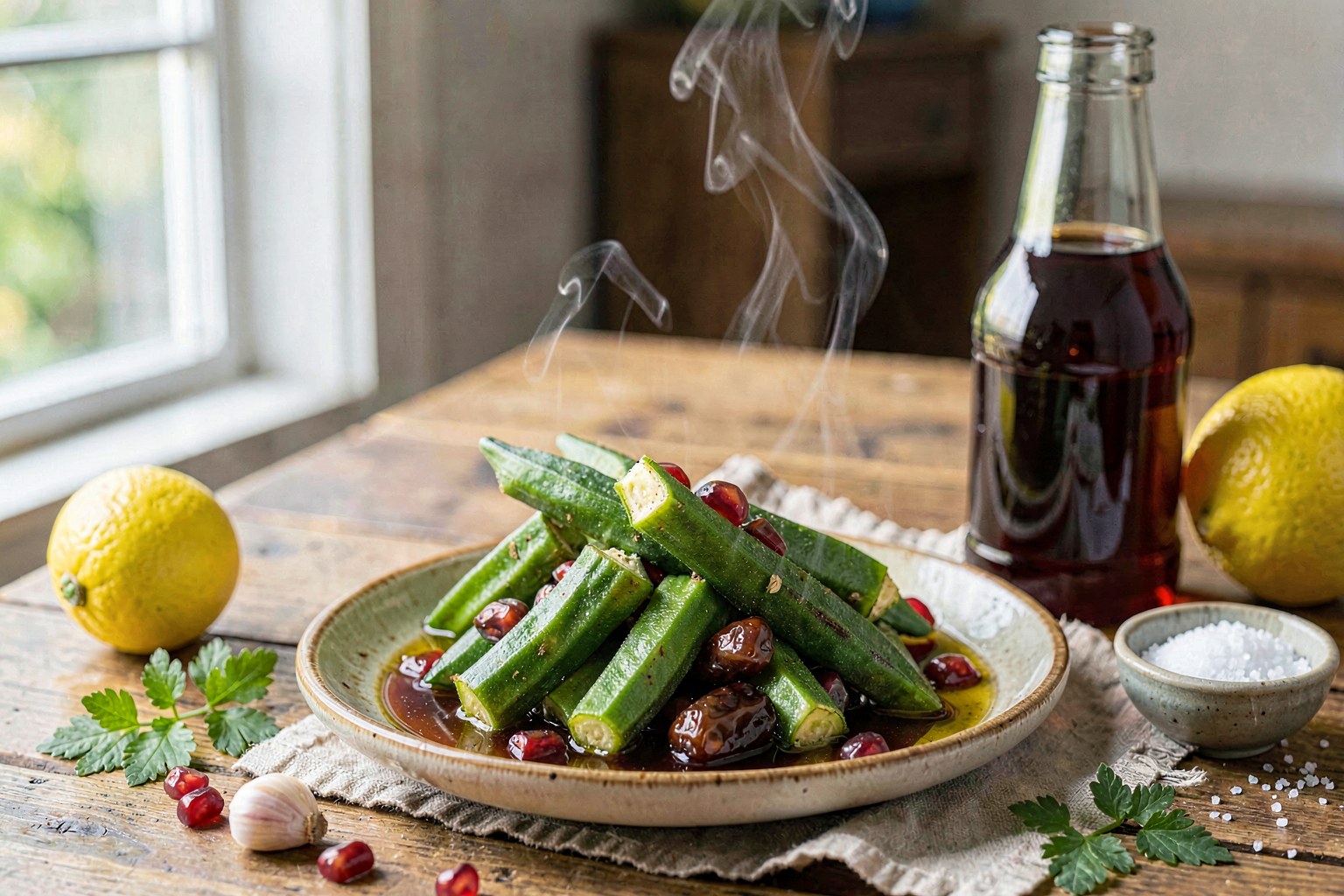
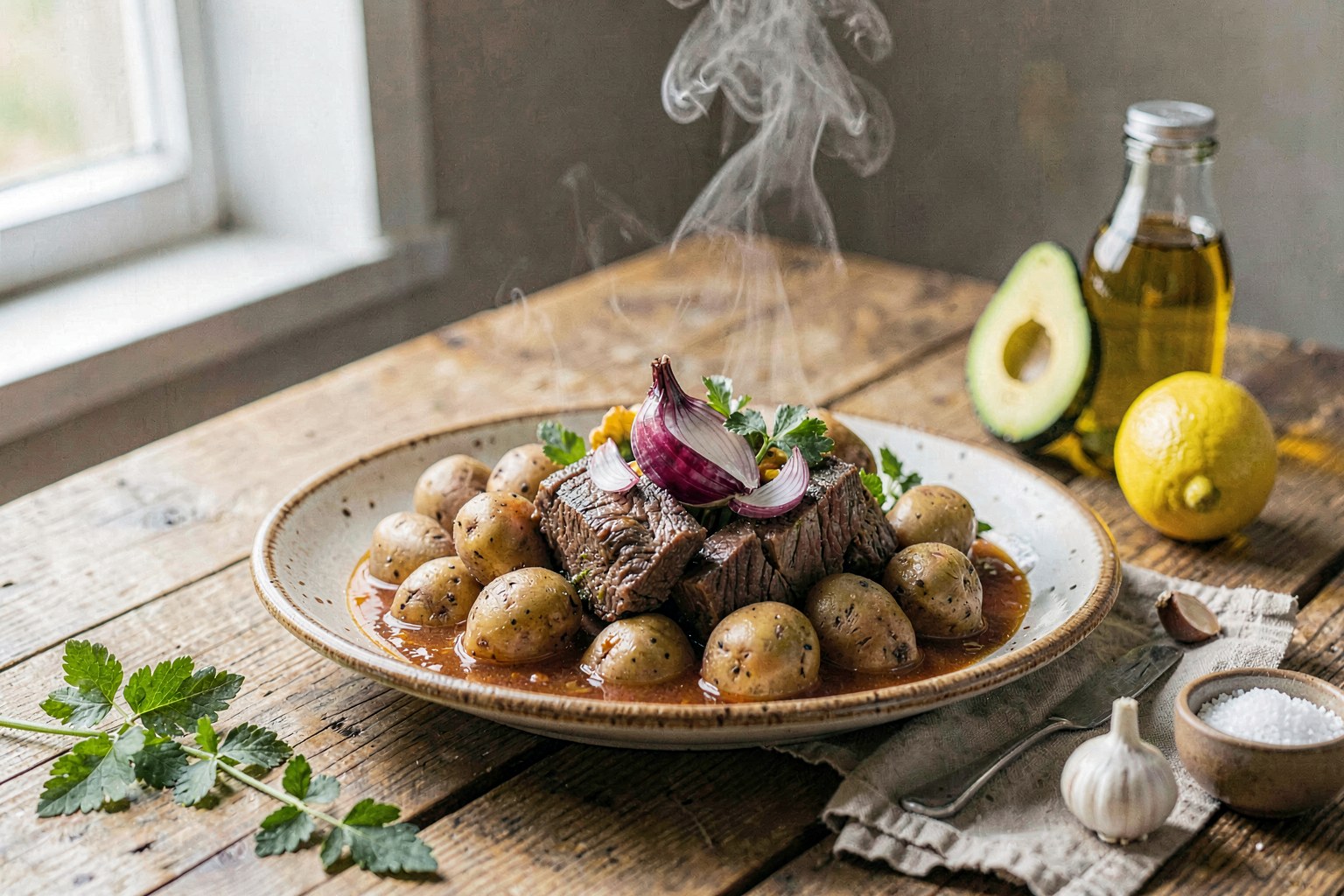
Olluquito con Charque (Andean Stew)
A hearty Peruvian stew featuring earthy Andean tubers and salt-cured grass-fed beef. Savory, aromatic, and deeply comforting without refined sugar or seed oils, relying on the natural sweetness of caramelized onions and the complexity of aji panca.
A little context
Rooted in the high Andes where preservation was key, charque (dried meat) and tubers like olluco formed the backbone of survival diets. We honor this by using authentic aji panca and grass-fed charque, swapping traditional seed oils for avocado oil and omitting added sugar often found in modern adaptations to balance acidity.
The longevity story
This dish leverages the high fiber content of Olluco tubers for stable blood sugar, paired with grass-fed beef for conjugated linoleic acid (CLA) and iron. The aji panca provides capsaicinoids that support metabolism, while garlic and onion contribute allicin and quercetin for immune support. Using avocado oil preserves heat-stable fats that avoid the inflammatory oxidation common in seed oils.
Method
- 01
Rehydrate the Charque
Place the dried beef cubes in a bowl, cover with cold water, and soak for at least 8 hours or overnight. Change the water once halfway through to reduce excess sodium. Drain and rinse thoroughly before cooking.
- 02
Prep the Tubers
Peel the Olluco (or substitute) and dice into uniform 1 cm cubes. Keep them submerged in water with a squeeze of lemon juice to prevent oxidation until ready to cook.
- 03
Sauté Aromatics
Heat 15 ml (1 tbsp) avocado oil in the Dutch oven over medium heat. Add the diced red onion and cook until translucent and soft, about 5 minutes. Add minced garlic and cook for 1 minute until fragrant.
- 04
Toast the Spices
Stir in the aji panca paste and ground cumin. Cook for 2 minutes, stirring constantly, to release the oils in the spices and deepen the flavor profile.
- 05
Simmer the Beef
Add the rehydrated charque and the remaining 15 ml (1 tbsp) avocado oil. Pour in the beef bone broth. Bring to a boil, then reduce heat to low, cover, and simmer for 20 minutes to tenderize the meat.
- 06
Add the Tubers
Drain the Olluco and add to the pot. Simmer uncovered for another 20-25 minutes until the tubers are tender but not falling apart. The sauce should thicken slightly.
- 07
Adjust and Serve
Taste and adjust salt only if necessary (charque is salty). Stir in half the cilantro. Serve hot with lemon wedges on the side to brighten the rich stew.
Nutrition facts
Per serving · 1 of 4- — Saturated
- 1 g
- — Polyunsaturated
- 1 g
- Carbohydrates
- 10 g
- — Fiber
- 1 g
- — Sugars
- 7 g
- Cholesterol
- 99 mg
- Sodium
- 3491 mg
- Potassium
- 367 mg
Estimated from USDA FoodData Central for matched ingredients (40% ingredient coverage). Values vary with brand, preparation, and exact measurements.
Pro tips
- ✦Source Olluco at Latin American markets or online; yellow potatoes are the closest common substitute for texture.
- ✦Check the aji panca label carefully; many commercial brands add sugar or sunflower oil.
- ✦If charque is too salty after soaking, boil it in fresh water for 10 minutes before adding to the stew.
- ✦Toast whole cumin seeds in a dry pan before grinding for a brighter, less dusty spice flavor.
- ✦Leftovers taste better the next day as the flavors meld; reheat gently to preserve the tuber texture.
Shop this recipe
As an Amazon Associate we earn from qualifying purchases.
Substitutions
- grass-fed dried beef (charque) → grass-fed beef stew meat (fresh) (increase simmer time to 1 hour for tenderness)
- fresh Olluco tubers → Yukon Gold potatoes or taro (Yukon Gold hold shape well; taro is starchier)
- avocado oil → ghee (adds a buttery richness if dairy is tolerated)
Storage
Store in a glass container in the fridge for up to 4 days. Freezes well for up to 3 months; thaw overnight in the fridge before reheating.
What to serve with it
- steamed quinoa or white rice
- green tea or herbal yerba mate
- sparkling water with fresh lime
FAQ
What if I can't find Olluco?+
Use Yukon Gold potatoes. They have a similar waxy texture that holds up well in stews without turning to mush.
Is charque too salty?+
It is very salty by design for preservation. The overnight soak and boiling step are crucial to make it palatable without added salt.
Can I make this in a slow cooker?+
Yes, sauté the aromatics first, then cook on low for 6 hours. Add the Olluco in the last hour so they do not disintegrate.
Share this recipe
Notes from the community
Sign in to leave a note.
No notes yet — be the first.
You might also like