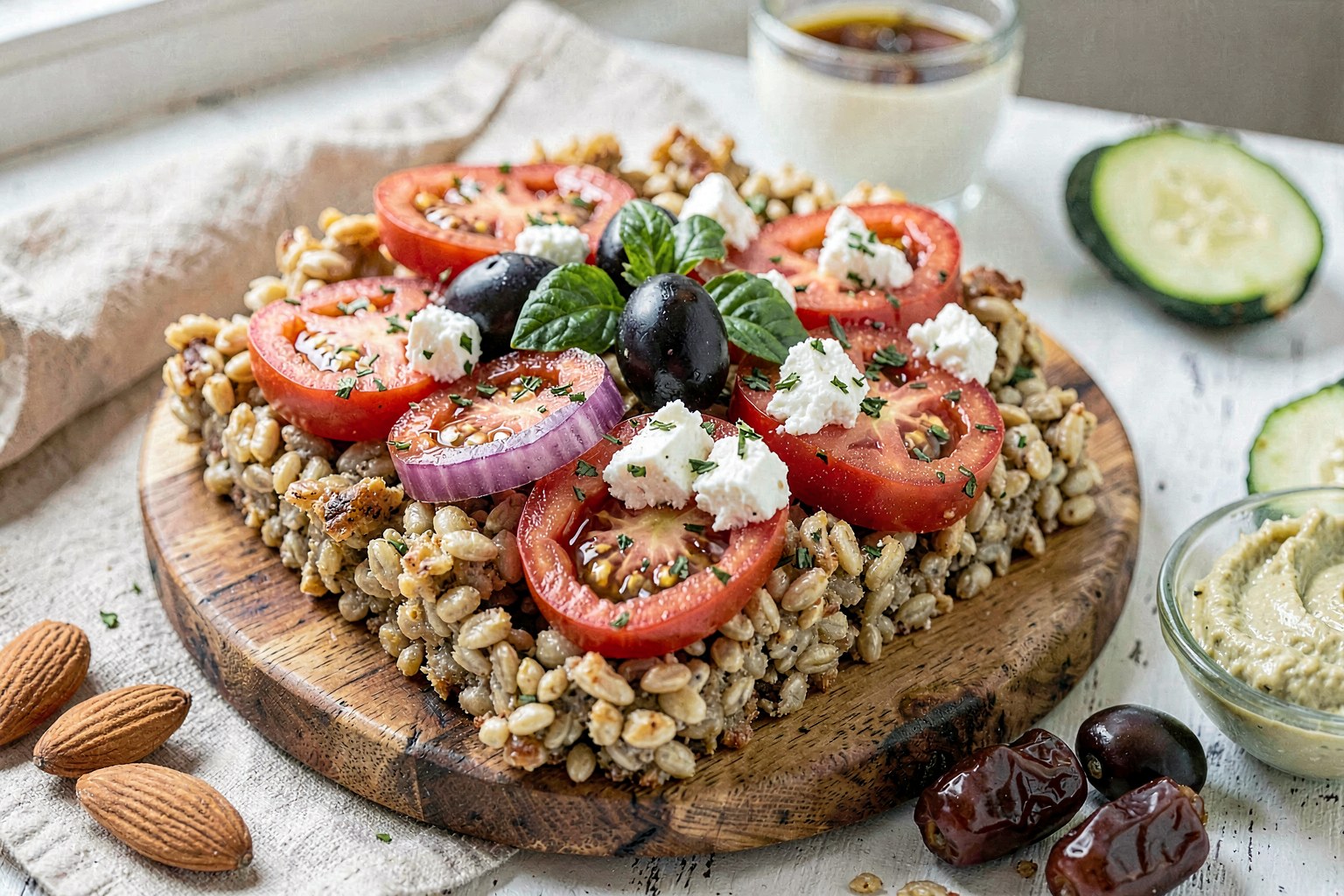
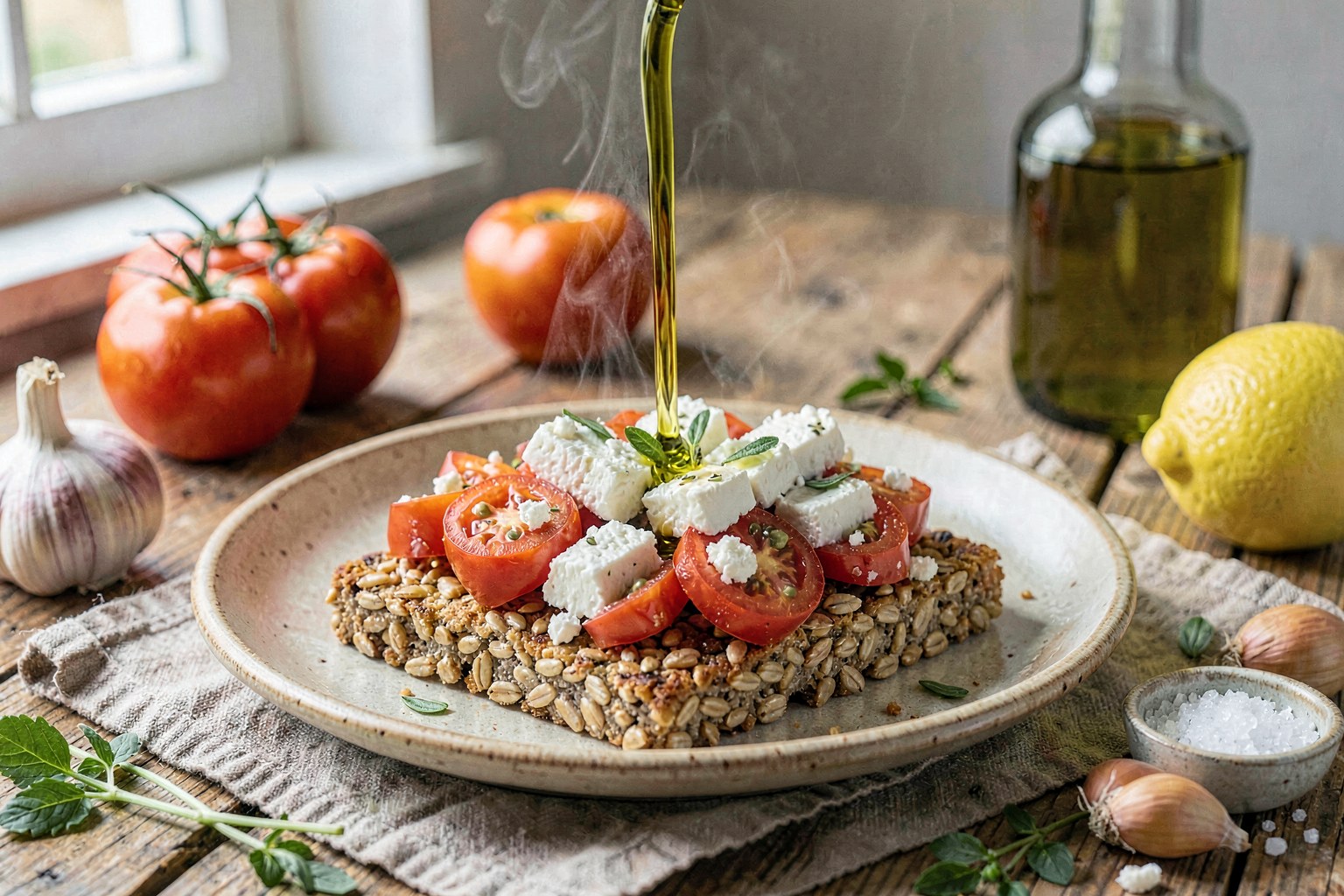
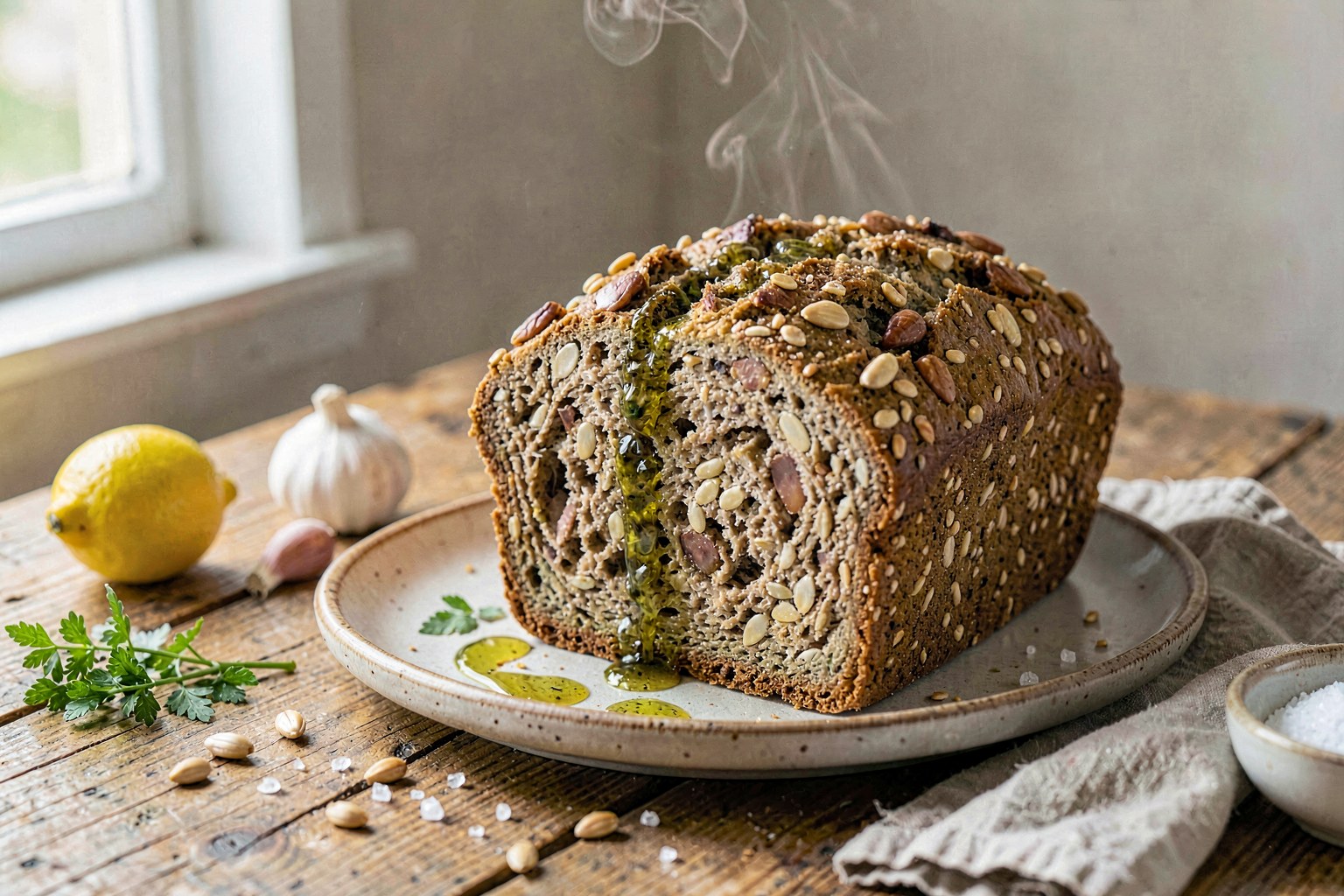
Pane Sardo: Ancient Sardinian Whole-Grain Olive Oil Loaf
A dense, rustic loaf from the Sardinian Blue Zone, made with sprouted whole-grain flour and generously kneaded with polyphenol-rich extra virgin olive oil. This bread offers a nutty, earthy flavor profile with a tender, moist crumb, serving as a perfect, unrefined vehicle for farm-fresh vegetables and pastured cheeses.
A little context
Originating from the Barbagia region of Sardinia, traditional Pane Sardo was historically a survival food made from locally grown durum or whole wheat, kneaded with olive oil to extend shelf life and add caloric density without spoilage. We honor this tradition by strictly adhering to the original ingredient list: only flour, water, salt, yeast, and EVOO. We have removed any modern shortcuts like sugar added to feed the yeast or seed oils used for greasing, ensuring the loaf remains a pure, nutrient-dense staple.
The longevity story
This recipe leverages the polyphenol power of high-quality extra virgin olive oil (EVOO), which contains oleocanthal and oleuropein, compounds linked to reduced inflammation and cardiovascular protection. By using sprouted whole-grain flour, we increase the bioavailability of minerals like zinc and magnesium while lowering the glycemic impact compared to refined flours. The absence of seed oils and refined sugars ensures the meal remains anti-inflammatory, supporting the longevity protocols seen in Sardinia's centenarian populations.
Method
- 01
Activate the yeast
In a small bowl, combine the warm water (35°C/95°F) and yeast. Let sit for 5-10 minutes until foamy. If using fresh yeast, crumble it in. No sugar is added to feed the yeast; the natural enzymes in the sprouted flour will suffice.
- 02
Mix the dough
In a large mixing bowl, whisk together the sprouted flour and sea salt. Pour in the activated yeast mixture and the 80 ml (⅓ cup) of extra virgin olive oil. Begin mixing with a wooden spoon or your hands until a shaggy dough forms.
- 03
Knead for structure
Turn the dough onto a lightly floured surface (using a bit of the sprouted flour). Knead vigorously for 8-10 minutes. The dough will be slightly tacky but should pull away from the sides of the bowl. The gluten needs to develop to trap the gas, but the high oil content will make it feel rich and supple.
- 04
First rise (bulk fermentation)
Place the dough in a lightly oiled bowl, cover with a damp linen cloth, and let rise in a warm spot for 60-90 minutes. The dough should double in size. Because this is a dense whole-grain loaf, do not rush this step; the sprouted flour needs time to ferment and develop flavor.
- 05
Shape the loaf
Gently deflate the dough and shape it into a round boule or an oval batard. Place it seam-side up into a floured banneton or a bowl lined with a floured cloth. Cover and let proof for another 30-45 minutes until puffy.
- 06
Preheat the oven
Place your Dutch oven (with lid) into the oven and preheat to 230°C (450°F) for at least 30 minutes. The thermal mass of the cast iron is crucial for the oven spring of this dense bread.
- 07
Bake with steam
Carefully remove the hot Dutch oven. Invert the dough into the pot (seam-side down). Cover with the lid and bake for 25 minutes. This trapped steam mimics a professional bakery environment, allowing the crust to set without burning.
- 08
Finish the crust
Remove the lid and bake for an additional 15-20 minutes until the crust is deep golden brown and the internal temperature reaches 93°C (200°F). The bread should sound hollow when tapped on the bottom.
- 09
Cool and glaze
Transfer the loaf to a wire rack. Immediately brush the top with the remaining 2 tbsp of extra virgin olive oil. Let cool completely before slicing to allow the crumb to set. Slicing while hot will cause the interior to become gummy.
Nutrition facts
Per serving · 1 of 4- — Saturated
- 4 g
- — Polyunsaturated
- 2 g
- Carbohydrates
- 111 g
- — Fiber
- 5 g
- — Sugars
- 0 g
- Cholesterol
- 0 mg
- Sodium
- 974 mg
- Potassium
- 31 mg
Estimated from USDA FoodData Central for matched ingredients (83% ingredient coverage). Values vary with brand, preparation, and exact measurements.
Pro tips
- ✦Sourcing is key: Look for EVOO labeled 'cold-pressed' with a harvest date within the last 12 months to ensure maximum polyphenol content and antioxidant power.
- ✦Do not substitute the sprouted flour with all-purpose white flour; the lack of bran and germ will alter the texture and remove the nutritional benefits essential to the Blue Zone diet.
- ✦If the dough feels too sticky during kneading, resist adding more flour immediately; let it rest for 5 minutes to allow the gluten to relax and absorb the moisture.
- ✦For a deeper flavor, you can add a teaspoon of dried rosemary or fennel seeds to the flour mixture, common in Sardinian traditions.
Shop this recipe
As an Amazon Associate we earn from qualifying purchases.
Substitutions
- sprouted whole-wheat flour → sprouted spelt or sprouted einkorn flour (Einkorn is an ancient grain with a different protein structure that is often easier to digest for those sensitive to modern wheat.)
- active dry yeast → 100% active sourdough starter (For a fermented version, increase bulk fermentation to 12-16 hours (overnight) in the refrigerator to develop lactic acid bacteria and further lower the glycemic index.)
Storage
Store in a breathable linen bag or paper bag at room temperature for up to 3 days. For longer storage, slice and freeze in airtight containers for up to 2 months. Reheat slices in a toaster or oven to restore the crisp crust.
What to serve with it
- Served warm with a drizzle of raw honey (sparingly) and fresh ricotta or pecorino.
- Accompanied by a side of roasted seasonal vegetables (zucchini, eggplant, tomatoes) dressed with EVOO.
- Pair with a glass of Cannonau wine (Sardinian Grenache) or unsweetened green tea.
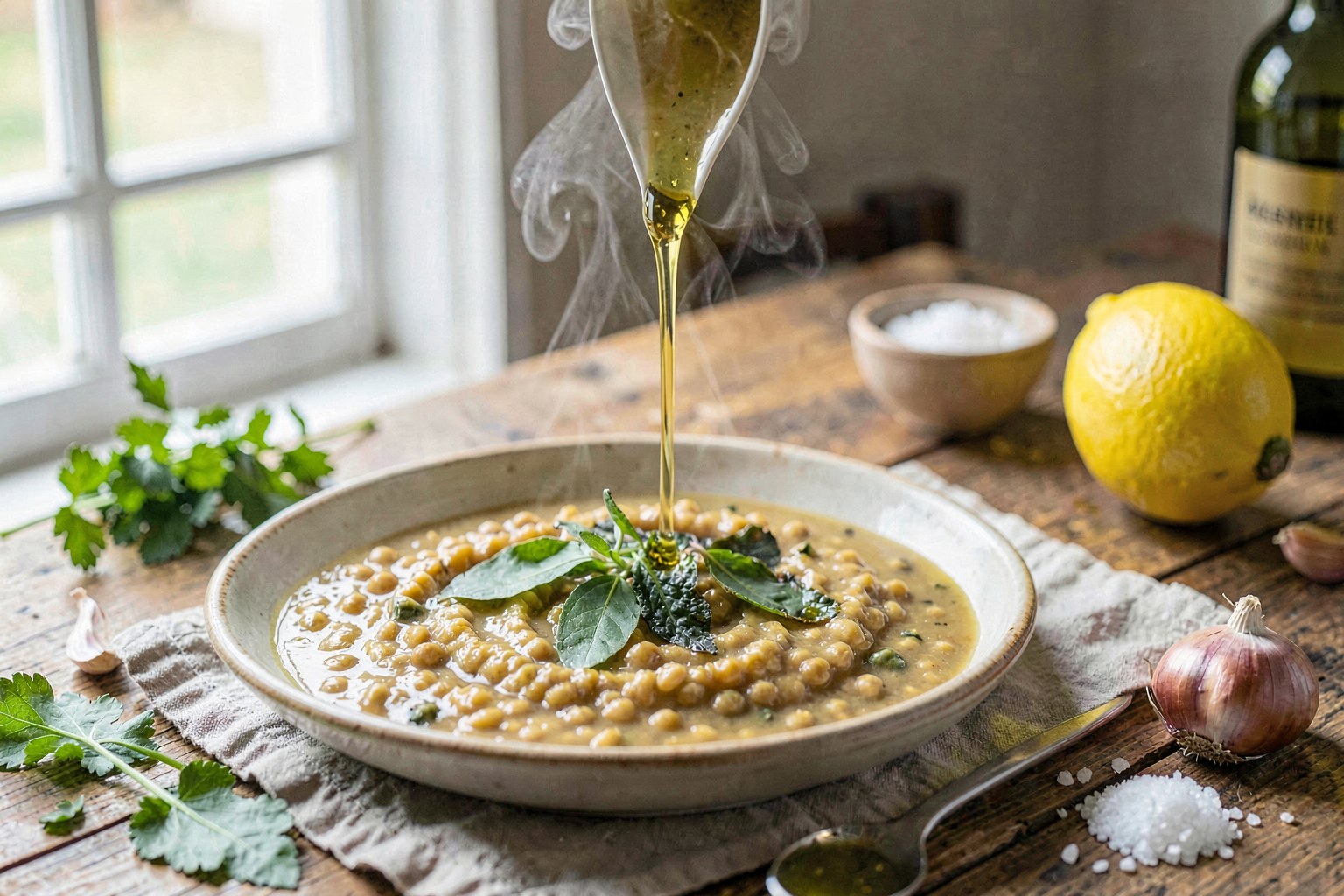
- Perfect for dipping in a bowl of white bean stew (fave e cicoria).
FAQ
Why is my bread so dense?+
Whole-grain and sprouted flours naturally produce a denser crumb than refined white flour. Ensure your yeast is fresh and that you did not skip the bulk fermentation time, as the gluten needs to fully develop to trap gas.
Can I use regular flour instead of sprouted?+
You can, but you lose the enzymatic breakdown of phytates which improves mineral absorption. If using regular flour, ensure it is organic and stone-ground for the best nutrient retention.
Is this bread gluten-free?+
No, traditional Pane Sardo contains gluten. However, the sprouting process makes the gluten more digestible for some, but it is not safe for those with Celiac disease.
Share this recipe
Notes from the community
Sign in to leave a note.
No notes yet — be the first.
You might also like