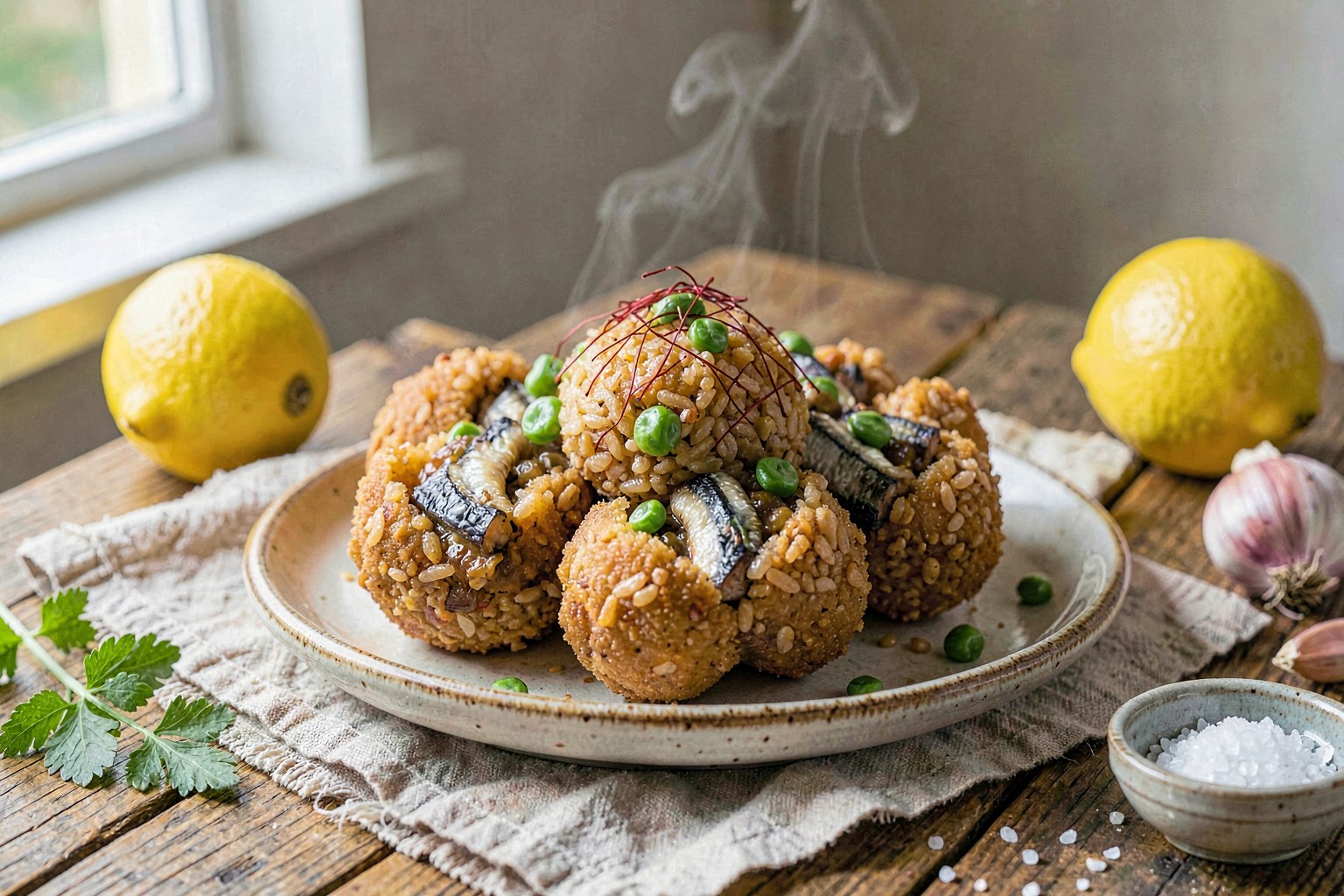
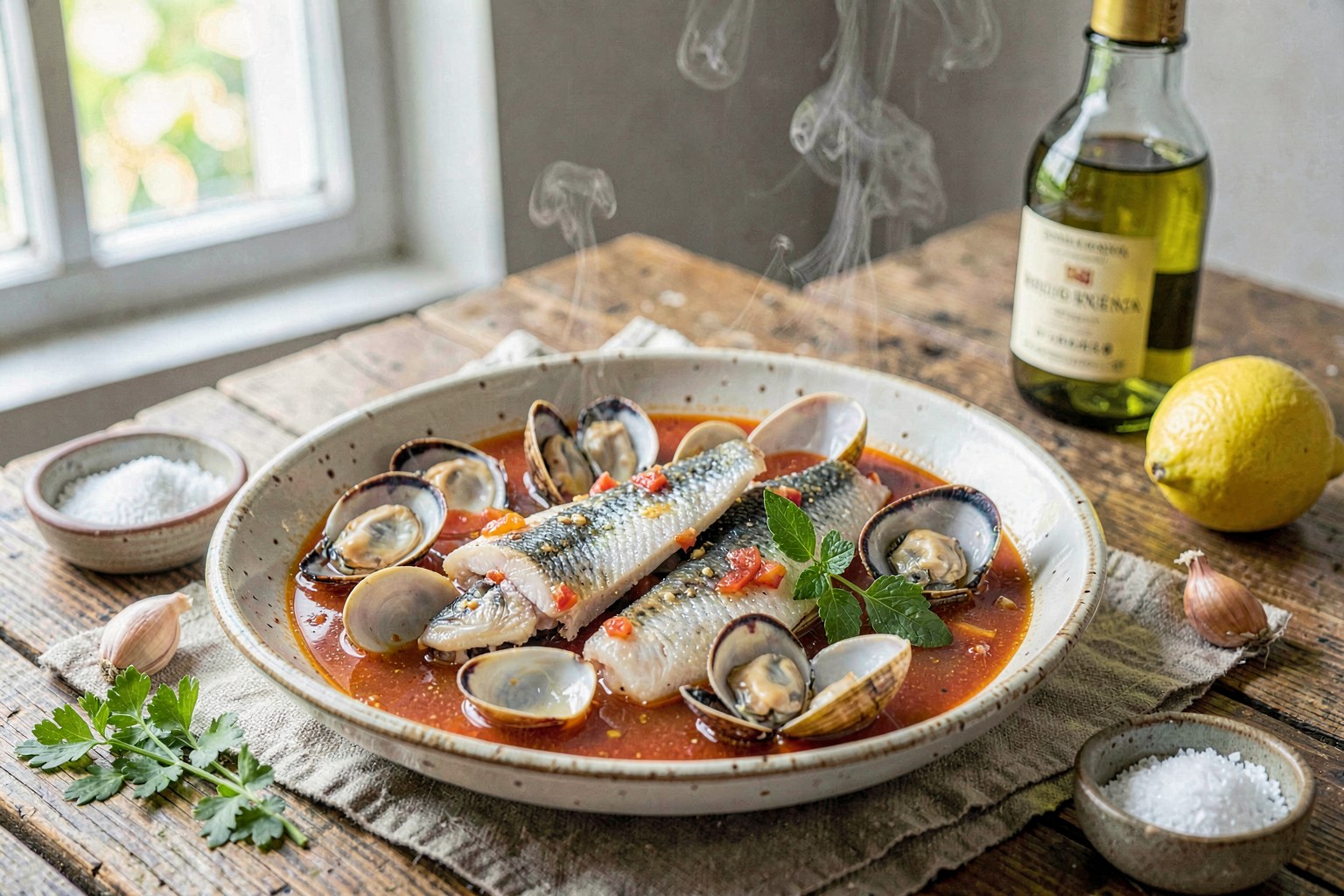
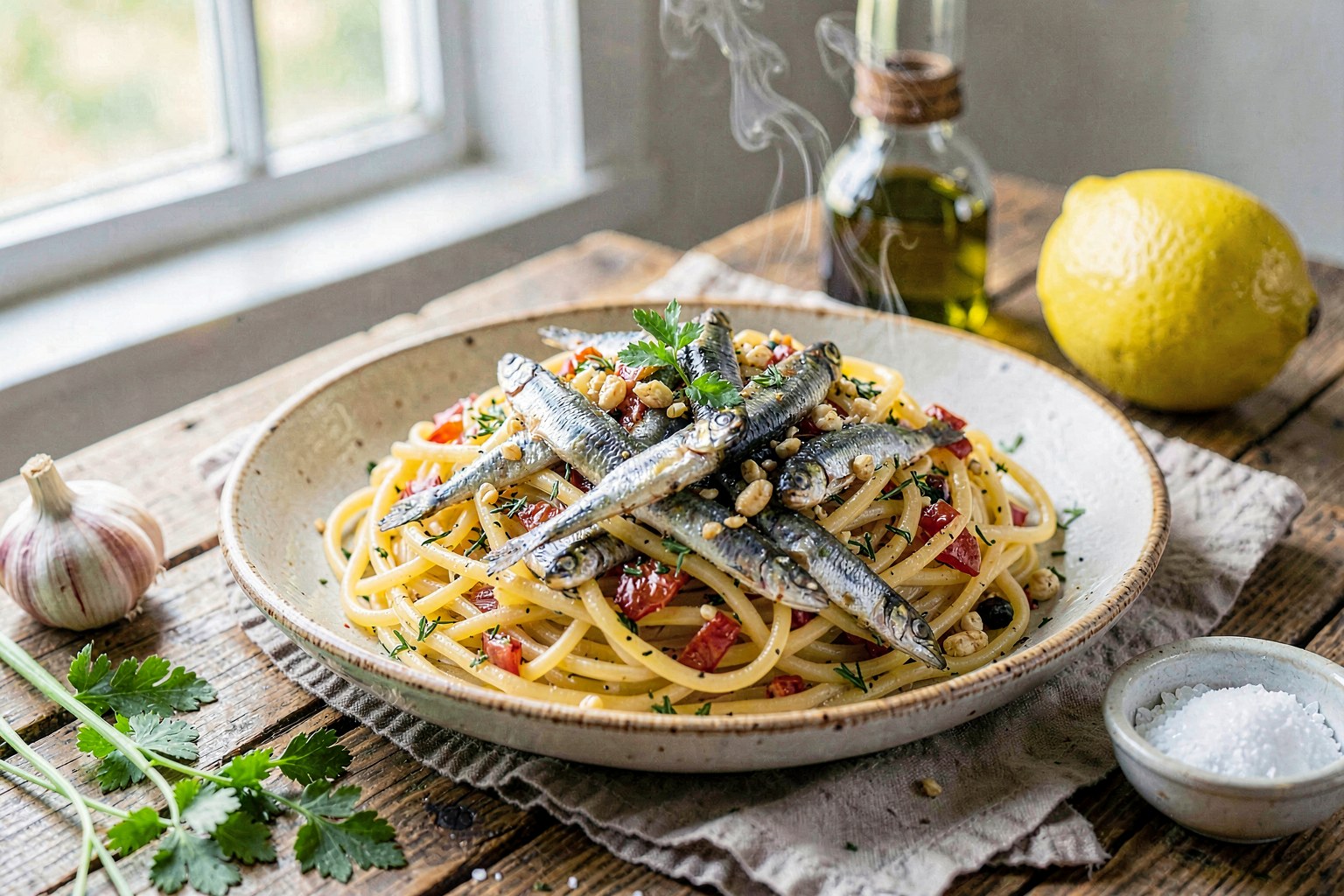
Ligurian Spaghetti alla Pescatora with Wild-Caught Small Fish
A vibrant, oil-based pasta dish rooted in Ligurian tradition, featuring wild-caught small fish like sardines and anchovies sautéed with garlic, chili, and fresh herbs. This version strips away refined grains and seed oils, relying on the natural richness of the fish and the antioxidant power of high-quality extra virgin olive oil to create a deeply savory, nutrient-dense meal.
A little context
Originating from the coastal villages of Liguria, this dish traditionally celebrates the abundance of the sea with simple, unadorned ingredients. We honor this tradition by strictly avoiding the modern shortcuts of refined white flour and industrial seed oils, opting instead for sprouted spelt pasta and cold-pressed EVOO. No sugar or processed tomato paste is used; the dish relies entirely on the savory depth of the fish and the acidity of fresh lemon.
The longevity story
This dish is a powerhouse of marine omega-3 fatty acids (EPA and DHA) from the wild-caught sardines and anchovies, which support cardiovascular health and reduce systemic inflammation. The generous use of high-polyphenol extra virgin olive oil and fresh garlic provides potent antioxidant protection, while the fiber from the sprouted whole-grain pasta supports gut microbiome diversity. The inclusion of capers and parsley adds further micronutrients and polyphenols without adding inflammatory load.
Method
- 01
Prep the fish
Rinse the sardine and anchovy fillets under cold water and pat them completely dry with paper towels. If the sardines are large, cut them into 2-3 bite-sized pieces. Season lightly with sea salt.
- 02
Cook the pasta
Bring a large pot of well-salted water to a rolling boil. Add the sprouted spelt spaghetti and cook until 2 minutes shy of al dente. Reserve 200 ml (3/4 cup) of the starchy cooking water before draining.
- 03
Infuse the oil
While pasta cooks, heat the extra virgin olive oil in your wide pan over medium-low heat. Add the sliced garlic and red pepper flakes. Sauté gently for 2-3 minutes until the garlic is fragrant and just starting to turn golden, but not browned.
- 04
Build the sauce base
Increase heat to medium. Add the anchovies to the pan and stir constantly with a wooden spoon until they dissolve into the oil (about 1 minute). This creates a savory umami base. Add the chopped capers and half of the parsley stems.
- 05
Sear the fish
Add the sardine pieces to the pan, skin-side down if applicable. Cook undisturbed for 2 minutes to get a slight sear, then gently flip and cook for another 1-2 minutes until opaque but still moist. Avoid breaking the fish apart too much.
- 06
Deglaze and emulsify
Pour in the white wine (if using) and scrape the bottom of the pan to release any fond. Let it bubble for 1 minute to evaporate the alcohol. Add the lemon zest and half the lemon juice. Lower heat to a simmer.
- 07
Combine and finish
Transfer the drained pasta directly into the pan with the fish. Add 100 ml (1/2 cup) of the reserved pasta water. Toss vigorously with tongs for 1-2 minutes, adding more pasta water as needed until the sauce coats the noodles in a glossy emulsion.
- 08
Season and serve
Remove from heat. Stir in the remaining fresh parsley leaves and the rest of the lemon juice. Taste and adjust salt only if necessary (the anchovies and capers are very salty). Serve immediately in warm bowls.
Nutrition facts
Per serving · 1 of 4- — Saturated
- 4 g
- — Polyunsaturated
- 8 g
- Carbohydrates
- 30 g
- — Fiber
- 5 g
- — Sugars
- 1 g
- Cholesterol
- 178 mg
- Sodium
- 1831 mg
- Potassium
- 793 mg
Estimated from USDA FoodData Central for matched ingredients (90% ingredient coverage). Values vary with brand, preparation, and exact measurements.
Pro tips
- ✦Source your sardines and anchovies from a trusted fishmonger; they should smell like the ocean, not ammonia. If you can't find fresh, use high-quality canned anchovies in olive oil (drained) and fresh sardines.
- ✦Do not overcook the garlic; if it burns, the oil becomes bitter and loses its polyphenol benefits. Keep the heat moderate.
- ✦The 'mantecatura' (emulsification) step is crucial: tossing the pasta with the starchy water and oil over heat creates a creamy texture without any dairy or cream.
- ✦For the best polyphenol profile, use an EVOO harvested within the last 12 months and stored in a dark bottle.
Shop this recipe
As an Amazon Associate we earn from qualifying purchases.
Substitutions
- sprouted spelt spaghetti → brown rice pasta or chickpea pasta (Maintains the gluten-free requirement while keeping the high-protein profile if using legume pasta.)
- fresh sardines → wild-caught mackerel or herring (These fatty fish offer a similar omega-3 profile and texture when cooked.)
- white wine → low-sodium vegetable broth with a splash of lemon juice (Creates a non-alcoholic version that still deglazes the pan effectively.)
Storage
Store leftovers in an airtight glass container in the refrigerator for up to 2 days. Note: Fish texture softens upon reheating. Reheat gently in a pan with a splash of water or broth; do not microwave. Not recommended for freezing due to texture degradation.
What to serve with it
- A glass of crisp, organic Vermentino or Pinot Grigio
- Sparkling water with fresh lemon and a slice of cucumber
- Green tea served warm to aid digestion
FAQ
Can I use canned sardines instead of fresh?+
Yes, but choose those packed in extra virgin olive oil (not soybean or sunflower oil) and drain them well. Fresh fish offers superior texture and a more complex flavor profile.
Is this recipe gluten-free?+
Not with spelt pasta. However, by swapping the spelt for certified gluten-free brown rice or buckwheat pasta, you can easily make it gluten-free while maintaining the dish's integrity.
Why no tomatoes in this version?+
Traditional Ligurian 'alla pescatora' often omits tomatoes to highlight the delicate flavor of the small fish. We honor this by focusing on the olive oil and lemon emulsion, avoiding the acidity and sugar content of canned tomato products.
Share this recipe
Notes from the community
Sign in to leave a note.
No notes yet — be the first.
You might also like