Rågkryddig Gröt (Nordic Cold Grain Bowl)
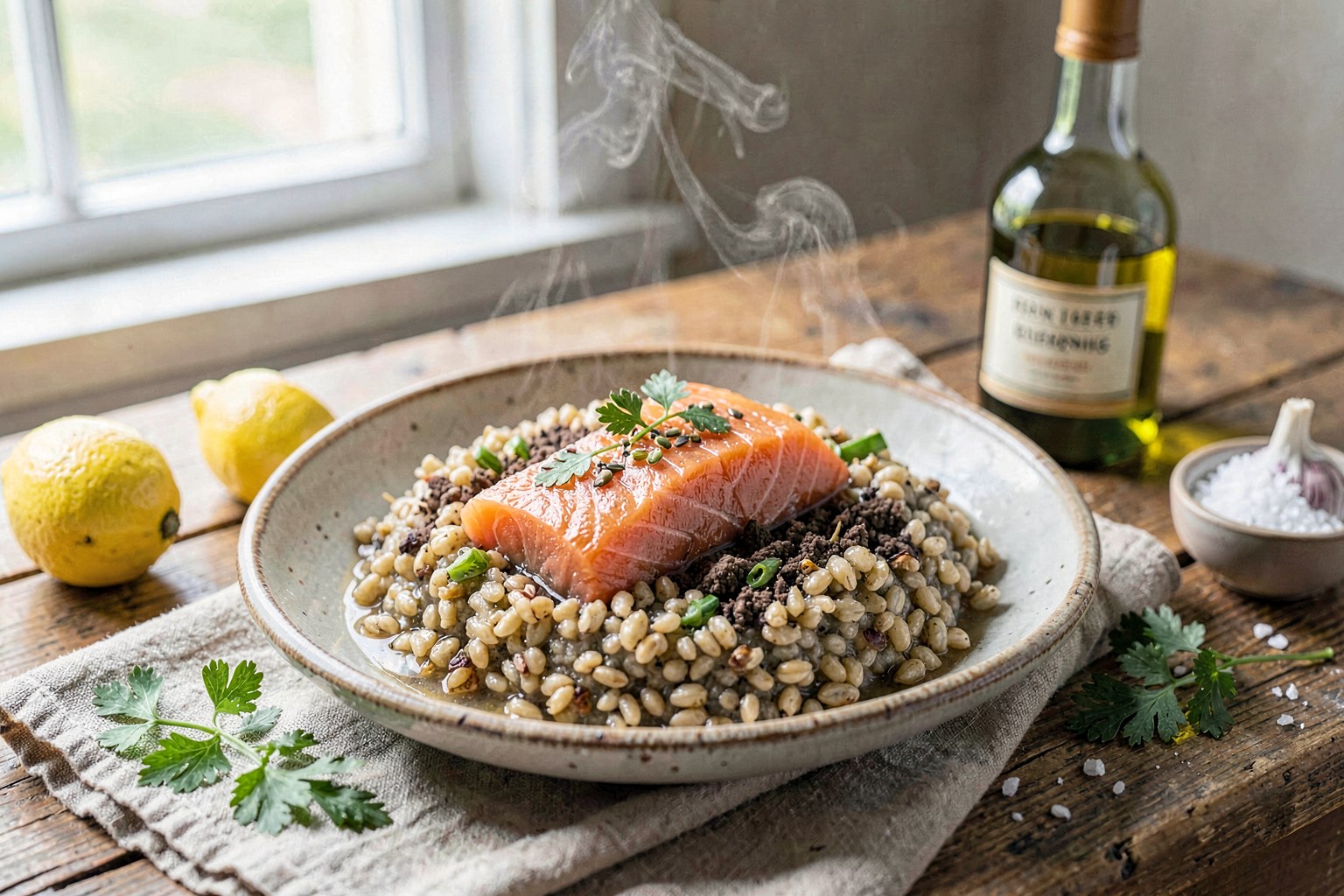
A savory adaptation of the classic Nordic porridge, this dish combines hulled barley and whole rye flour for a fiber-rich base, served cold with wild-caught salmon, grass-fed sour cream, and pickled red onions. It offers a comforting, nutrient-dense dinner that stabilizes blood sugar while delivering healthy fats and probiotics.
A little context
Traditional Scandinavian gröt often appears as a sweet breakfast or a savory stew, but this cold version honors the agrarian need for make-ahead meals without the historical reliance on refined sugar or seed oils. We have preserved the earthy, nutty flavor profile of the grains while ensuring every fat source is clean and every protein is sustainably sourced.
The longevity story
Hulled barley and dark rye are rich in beta-glucans, soluble fibers shown to support healthy cholesterol levels and slow glucose absorption. Wild-caught salmon provides EPA and DHA omega-3 fatty acids, critical for reducing systemic inflammation and supporting brain health. The grass-fed sour cream and pickled onions introduce lactic acid bacteria and polyphenols from the alliums, aiding digestion and gut microbiome diversity.
Method
- 01
Prep the onions
Thinly slice the red onion and place in a jar. Cover with apple cider vinegar and a pinch of sea salt. Let sit for at least 20 minutes while you cook the grains.
- 02
Cook the barley
Drain the soaked barley. In a heavy saucepan, combine barley and vegetable broth. Bring to a boil, then reduce heat to low. Cover and simmer for 40 minutes until tender but chewy. Add 50 ml water if it dries out.
- 03
Thicken with rye
Whisk the dark rye flour into a small amount of cold water to make a slurry. Stir this into the hot barley. Simmer for 5 more minutes, stirring constantly, until the mixture thickens into a porridge consistency. Remove from heat and let cool completely.
- 04
Sear the salmon
Pat the salmon fillets dry. Season with sea salt and crushed caraway seeds. Heat a cast-iron skillet over medium-high heat. Add 15 ml olive oil. Place salmon skin-side down. Press down gently for 30 seconds to prevent curling.
- 05
Finish the fish
Cook skin-side down for 4-5 minutes until crispy. Flip and cook for 2 minutes. Add grass-fed butter to the pan in the last minute, basting the flesh. Remove and let rest.
- 06
Assemble the bowls
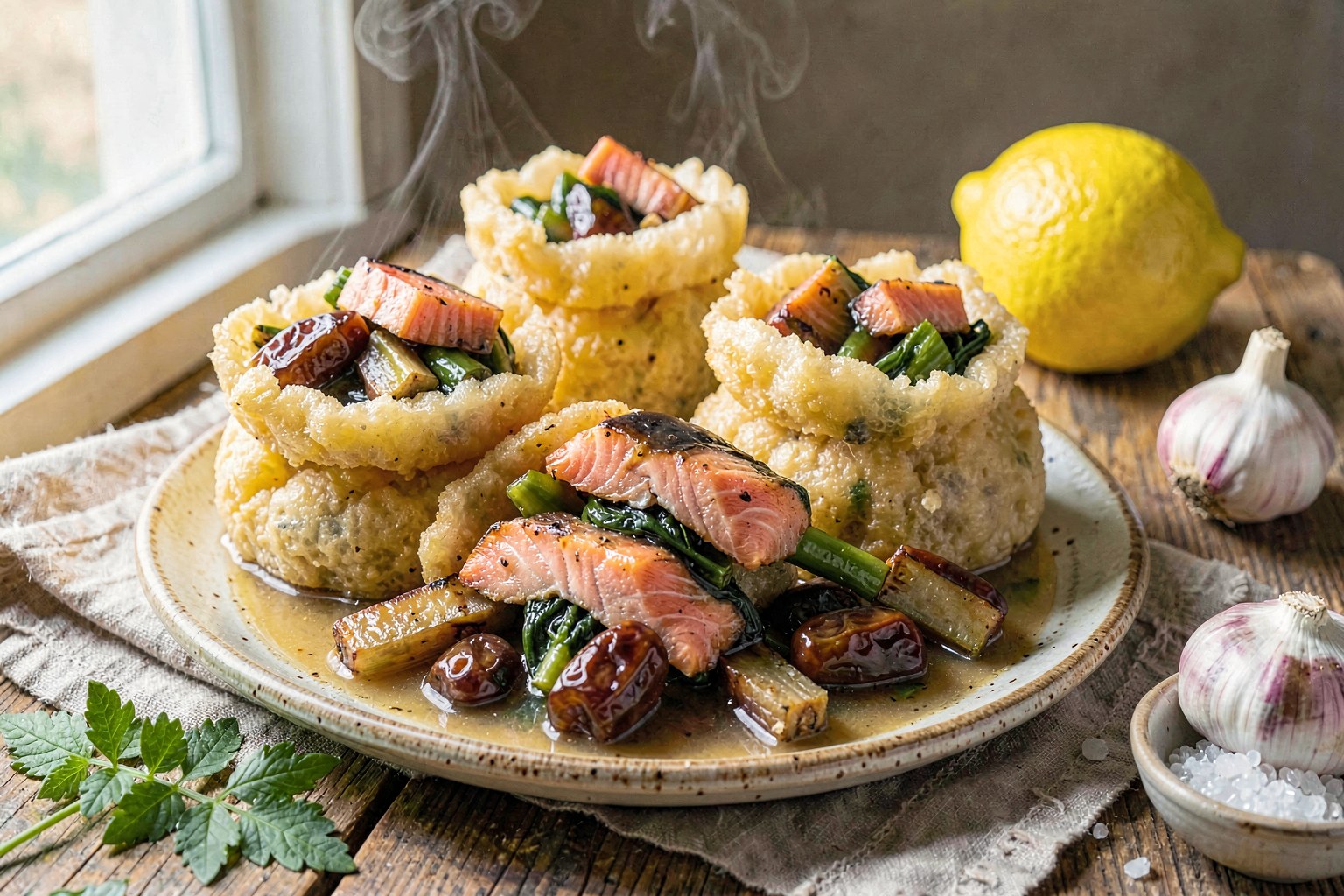
Divide the cooled barley-rye porridge among four bowls. Top with a portion of salmon, a generous dollop of sour cream, and the pickled onions. Garnish with fresh dill and a drizzle of raw extra-virgin olive oil.
Nutrition facts
Per serving · 1 of 4- — Saturated
- 5 g
- — Polyunsaturated
- 3 g
- Carbohydrates
- 59 g
- — Fiber
- 13 g
- — Sugars
- 3 g
- Cholesterol
- 78 mg
- Sodium
- 660 mg
- Potassium
- 986 mg
Estimated from USDA FoodData Central for matched ingredients (100% ingredient coverage). Values vary with brand, preparation, and exact measurements.
Pro tips
- ✦Soaking the barley overnight reduces phytic acid and shortens cooking time significantly.
- ✦When selecting sour cream, read the label to ensure it contains only cream and cultures—avoid added starches or gums.
- ✦For the best sear, ensure the salmon skin is bone-dry before it touches the hot pan.
- ✦If you prefer a tangier profile, use lacto-fermented onions instead of quick-pickled vinegar onions for extra probiotics.
Substitutions
- wild-caught sockeye salmon → wild Arctic char or rainbow trout (similar fat profile and texture, sear for same duration)
- hulled barley → millet or quinoa (gluten-free alternative, but texture will differ; cook until fluffy)
- full-fat sour cream → full-fat Greek yogurt or skyr (thicker texture, slightly more tang, similar protein content)
Storage
Store the grain base and salmon separately in glass containers. Keeps in fridge for 3 days. Reheat grain base gently with a splash of water; keep salmon cold or sear fresh for best texture.
What to serve with it
- Hot green tea with lemon
- Sparkling water with fresh cucumber slices
- Dry Riesling or light Pinot Noir
- Fermented beet kvass
FAQ
Can I make this gluten-free?+
Barley and rye contain gluten. Substitute with certified gluten-free oats or quinoa, but note the traditional Nordic flavor profile will change.
Why serve it cold?+
Cooling cooked grains increases resistant starch, which acts as a prebiotic for your gut bacteria and lowers the glycemic impact.
Share this recipe
Notes from the community
Sign in to leave a note.
No notes yet — be the first.
You might also like