Rågur: Nordic Clean Rye Bread
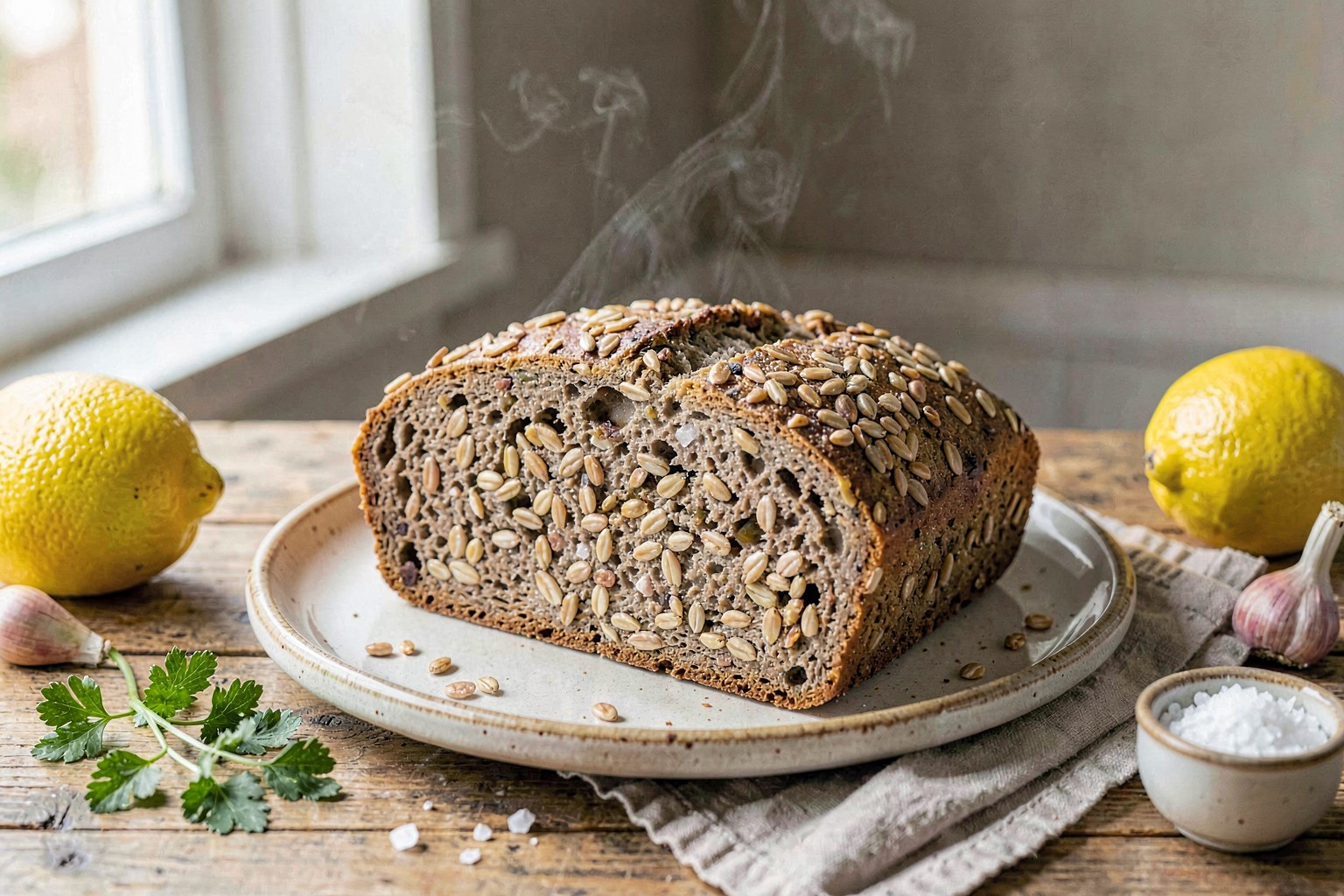
This traditional Norwegian rye bread is a dense, deeply sour, and nutrient-dense staple made from just three ingredients: sprouted whole-grain rye, water, and salt. With a texture similar to a moist cake, it is naturally sweetened by the fermentation process rather than refined sugar, offering a robust, earthy flavor that pairs perfectly with pastured butter or wild-caught fish.
A little context
Rågur is a centuries-old Scandinavian tradition born from the need for bread that could survive harsh winters without spoiling, relying on sourdough fermentation as a natural preservative. We honor this heritage by strictly adhering to the original three-ingredient formula, eliminating the modern addition of refined sugar or honey often found in contemporary recipes. By using only sprouted rye and wild fermentation, we preserve the authentic, complex sour profile while ensuring the bread remains free of ultra-processed additives and seed oils.
The longevity story
The long, slow fermentation of the rye flour significantly reduces phytic acid, unlocking bioavailable minerals like magnesium and zinc while lowering the glycemic impact of the grain. This process also promotes the growth of beneficial lactic acid bacteria, supporting gut health and aiding digestion. The high fiber content from the whole rye grain acts as a prebiotic, feeding the microbiome, while the polyphenols in the rye bran provide potent antioxidant protection against oxidative stress.
Method
- 01
Activate the Starter
Ensure your rye sourdough starter is at its peak activity, having been fed 4 to 8 hours ago. It should be bubbly, aromatic, and have doubled in volume. If it has collapsed, feed it again and wait for the peak.
- 02
Mix the Dough
In a large bowl, combine the sprouted rye flour, active starter, water, and sea salt. Mix vigorously with a sturdy wooden spoon or your hands until a sticky, cohesive dough forms. Unlike wheat dough, rye does not develop gluten strands; the texture should remain sticky and dense.
- 03
Bulk Fermentation
Cover the bowl with a damp linen cloth or beeswax wrap. Let the dough rest at room temperature (20-22°C / 68-72°F) for 2 to 3 hours. The dough will not rise significantly but will develop a tangy, complex aroma as the enzymes and bacteria work.
- 04
Shape the Loaf
Grease the loaf pan lightly with pastured butter or extra-virgin olive oil. Scrape the sticky dough into the pan. Wet your hands with water and press the dough down firmly to eliminate large air pockets and create a smooth, even top surface. Rye needs to be compact to bake properly.
- 05
Final Proof
Cover the pan loosely and let it rest for another 45 to 60 minutes. The loaf will expand slightly, but do not expect a dramatic rise. The goal is to relax the dough and allow the flavor to deepen.
- 06
Preheat and Steam
Preheat your oven to 190°C (375°F). Place a cast-iron Dutch oven (or a heavy baking stone) inside to heat up. Once hot, carefully place the loaf pan inside the Dutch oven and cover with the lid. This traps steam, essential for the dense rye crumb.
- 07
Bake
Bake covered for 45 minutes. Remove the lid and continue baking for another 10-15 minutes to allow the crust to firm up and darken. The internal temperature should reach at least 96°C (205°F) for a fully set crumb.
- 08
Cool Completely
Remove the bread from the oven and let it cool in the pan for 10 minutes, then transfer to a wire rack. Crucial: Do not slice until the bread is completely cool (at least 4 hours). Slicing hot rye causes the crumb to become gummy and collapse.
Nutrition facts
Per serving · 1 of 4- — Saturated
- 1 g
- — Polyunsaturated
- 1 g
- Carbohydrates
- 72 g
- — Fiber
- 9 g
- — Sugars
- 6 g
- Cholesterol
- 0 mg
- Sodium
- 1875 mg
- Potassium
- 249 mg
Estimated from USDA FoodData Central for matched ingredients (75% ingredient coverage). Values vary with brand, preparation, and exact measurements.
Pro tips
- ✦Sourcing matters: Look for 'sprouted' rye flour specifically, as the sprouting process pre-digests the grain, reducing anti-nutrients and making minerals more bioavailable.
- ✦Rye dough is sticky by nature; do not add extra flour to fix the texture, as this will alter the hydration and result in a dry loaf.
- ✦Patience is the secret ingredient: Rye bread tastes significantly better on day two or three as the flavors mellow and the texture stabilizes.
- ✦Store in a linen bag or airtight container at room temperature; it keeps well for 5-7 days due to the natural acidity from fermentation.
Shop this recipe
As an Amazon Associate we earn from qualifying purchases.
Substitutions
- sprouted whole-grain rye flour → organic whole-grain rye flour (If sprouted flour is unavailable, use high-quality organic rye flour, but expect slightly less digestibility and a tangier, sharper sour taste.)
- rye sourdough starter → wheat sourdough starter (Can be used in a pinch, but rye starter is preferred for the specific enzymatic profile required for rye flour. The rise may be slightly lower.)
Storage
Store in a linen bag or airtight glass container at room temperature for up to 5 days. The bread freezes exceptionally well; slice before freezing and toast directly from frozen. Do not refrigerate, as cold temperatures accelerate staling in rye.
What to serve with it
- Thinly sliced wild-caught salmon with dill and lemon
- Pasture-raised butter and house-made sauerkraut
- Hard-boiled eggs with sea salt and chives
- Warm cup of loose-leaf green tea or rooibos
- Dry red wine such as a Pinot Noir
FAQ
Why is my bread so dense?+
Rye bread is naturally dense due to the lack of gluten. This is a feature, not a bug. Ensure your starter is active and you have followed the cooling instructions strictly; slicing too early makes it gummy.
Can I add seeds or nuts?+
Traditional Rågur is pure, but you can add 50g of toasted pumpkin seeds or sunflower seeds during the mixing stage for added texture and healthy fats, provided they are raw and unsalted.
Share this recipe
Notes from the community
Sign in to leave a note.
No notes yet — be the first.
You might also like