Råost: Nordic Clean Curd & Wild Salmon Plate
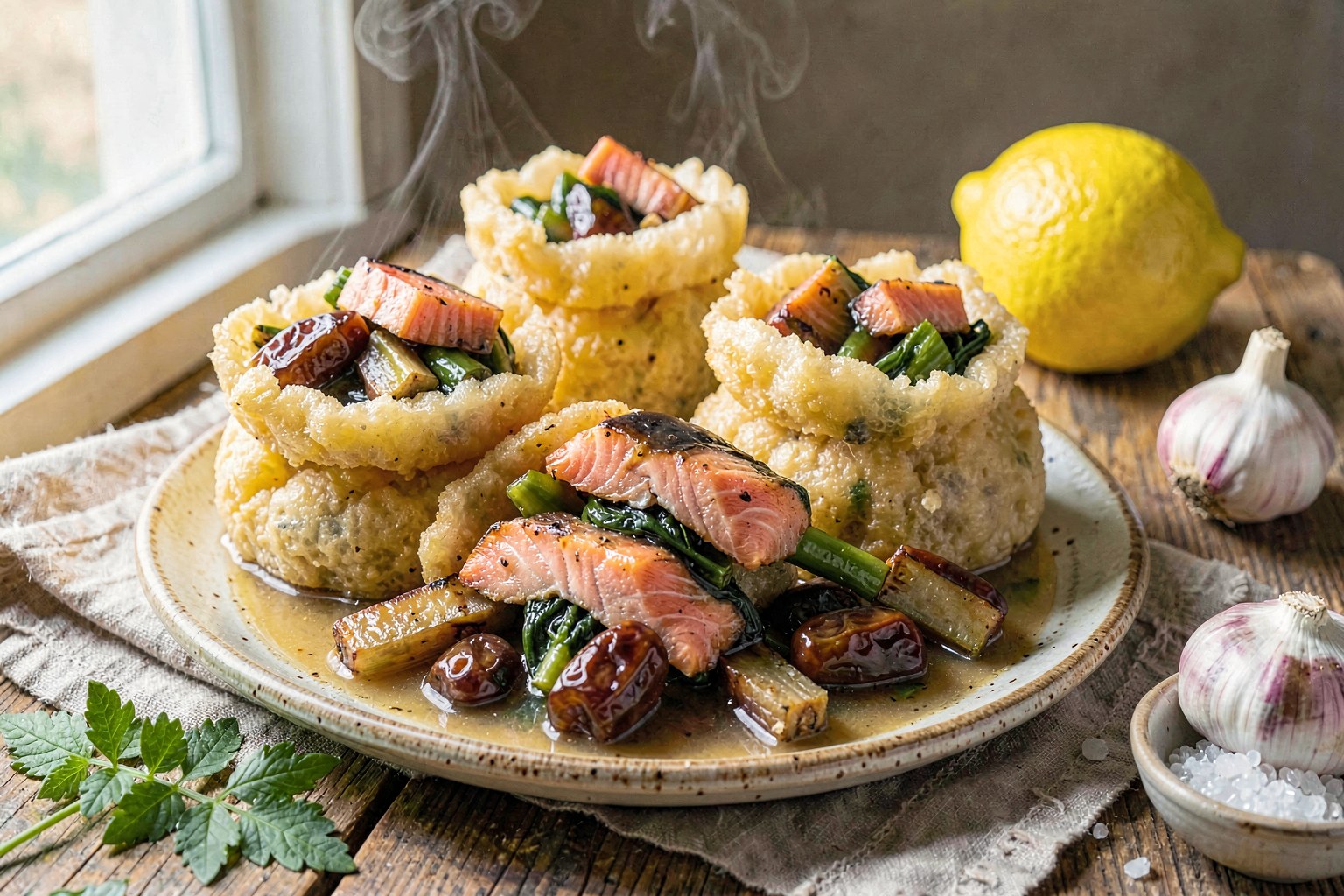
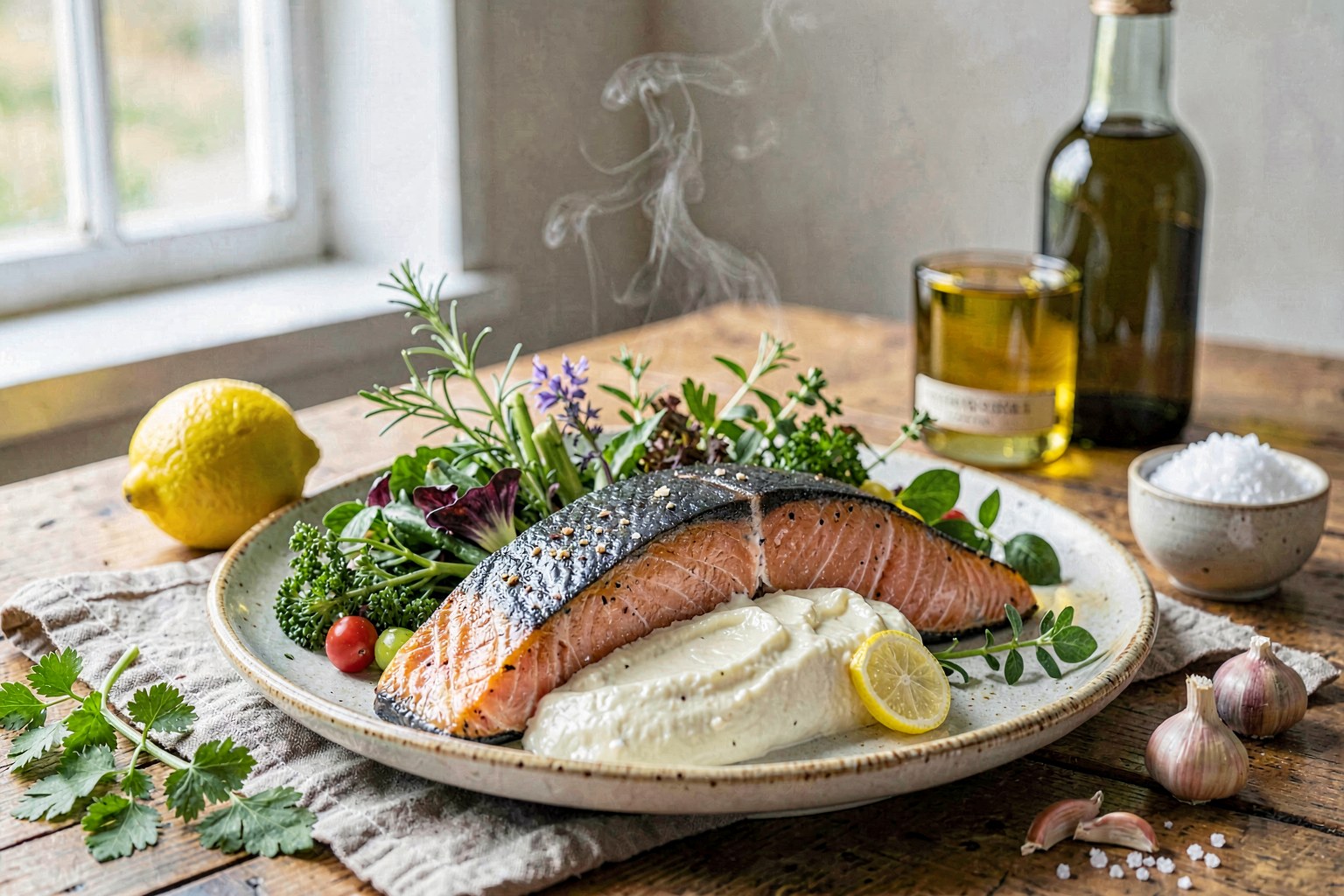
A modern Nordic dinner pairing creamy, house-made Icelandic curd cheese with pan-seared wild sockeye salmon and a vibrant herb garden. This dish strips away the refined sugars and seed oils often found in commercial dairy spreads, replacing them with the natural richness of grass-fed culture and the deep, polyphenol-rich flavor of extra-virgin olive oil.
A little context
Råost is a traditional Nordic concept of serving fresh, uncooked curd cheese with simple, high-quality toppings, often enjoyed as a light supper. We honor this tradition by making the curd from grass-fed milk and avoiding the common modern shortcut of adding sugar or vegetable oils to stabilize the texture. Instead, we rely on the natural creaminess of the cheese and the flavor intensity of fresh herbs and cold-pressed olive oil to create a satisfying, farm-fresh experience.
The longevity story
The fermentation process in the curd cheese introduces beneficial probiotics that support gut barrier integrity and digestion, while the wild-caught salmon provides a robust profile of long-chain omega-3 fatty acids (EPA/DHA) essential for reducing systemic inflammation. The generous drizzle of high-phenolic extra-virgin olive oil adds oleocanthal, a natural anti-inflammatory compound, while fresh dill and chives contribute antioxidants that protect cellular health. This combination creates a nutrient-dense meal that stabilizes blood sugar without the need for added sweeteners or processed thickeners.
Method
- 01
Create the Curds
In a medium heavy-bottomed pot, heat the 500 g of organic whole milk over medium heat until it reaches 82°C (180°F), just before a simmer. Do not boil. Remove from heat immediately.
- 02
Acidify and Separate
Stir in the 60 ml of fresh lemon juice and 1 tsp of sea salt. Gently stir for 30 seconds, then let the pot sit undisturbed for 15 minutes. You will see the milk separate into solid white curds and clear yellow whey.
- 03
Strain the Cheese
Line a fine-mesh sieve with cheesecloth or a clean linen towel and place it over a bowl to catch the whey. Pour the curd mixture into the sieve. Let it drain at room temperature for 30 minutes for a softer, spreadable texture, or up to 2 hours in the refrigerator for a firmer, cream cheese consistency.
- 04
Prepare the Salmon
While the curds drain, pat the wild-caught sockeye salmon fillets completely dry with paper towels. Season both sides generously with sea salt. Let them rest at room temperature for 15 minutes to take the chill off; this ensures even cooking.
- 05
Sear the Fish
Heat a heavy skillet over medium-high heat. Add the 30 ml of extra-virgin olive oil. Once the oil shimmers, place the salmon skin-side down. Press gently with a spatula for 10 seconds to prevent curling. Cook undisturbed for 4-5 minutes until the skin is crisp and golden.
- 06
Baste and Finish
Flip the salmon carefully. Add the 10 g of pastured butter to the pan. Reduce heat to medium. Tilt the pan and spoon the foaming butter over the salmon for 2-3 minutes until the internal temperature reaches 52°C (125°F) for medium-rare or 57°C (135°F) for medium. Remove from heat.
- 07
Assemble the Curd
Transfer the drained curds to a serving bowl. Stir in half of the chopped dill, chives, and parsley. Drizzle with the 15 ml of finishing extra-virgin olive oil and season with a pinch of sea salt flakes. The texture should be creamy but distinct.
- 08
Plate and Serve
Divide the curd cheese among four shallow bowls. Place a hot salmon fillet alongside or atop the cheese. Garnish with the remaining fresh herbs and a final drizzle of olive oil. Serve immediately while the salmon is warm and the curd is cool.
Nutrition facts
Per serving · 1 of 4- — Saturated
- 6 g
- — Polyunsaturated
- 3 g
- Carbohydrates
- 9 g
- — Fiber
- 1 g
- — Sugars
- 7 g
- Cholesterol
- 84 mg
- Sodium
- 582 mg
- Potassium
- 764 mg
Estimated from USDA FoodData Central for matched ingredients (100% ingredient coverage). Values vary with brand, preparation, and exact measurements.
Pro tips
- ✦Sourcing is critical: Look for 'wild-caught' specifically on the salmon label; farmed salmon often has a different fatty acid profile and can contain contaminants from feed.
- ✦For the curd, never use ultra-pasteurized (UHT) milk; the high heat denatures the proteins so they won't curdle. Look for 'pasteurized' or 'raw' (if you know how to handle it) on the carton.
- ✦When selecting fresh dill, avoid bunches with yellowing leaves or slimy stems; the stems should be firm and vibrant green.
- ✦If you prefer a thicker curd, strain it longer in the fridge; if you prefer it looser, drain for only 20 minutes.
- ✦Do not overcook the salmon; it continues to cook slightly as it rests. Pull it off the heat just before it looks fully done in the center.
Shop this recipe
As an Amazon Associate we earn from qualifying purchases.
Substitutions
- wild-caught sockeye salmon → wild-caught Arctic char or rainbow trout (Both have similar fat profiles and cook in the same timeframe; char is slightly milder.)
- whole milk → full-fat organic yogurt (unsweetened) (Can be used as a base for a quicker version, though the texture will be tangier and less curd-like.)
- pastured butter → grass-fed ghee (Ghee has a higher smoke point and is lactose-free, making it a great alternative for searing.)
Storage
Store the curd cheese in an airtight glass container in the refrigerator for up to 3 days. Cooked salmon is best eaten immediately but can be stored separately for up to 2 days; reheat gently or eat cold. Do not refreeze cooked salmon.
What to serve with it
- Hot green tea (sencha or gyokuro) to complement the polyphenols
- Sparkling water with a twist of lemon and fresh mint
- A glass of dry, cold-climate Pinot Noir
- Side of lightly steamed asparagus or roasted root vegetables
FAQ
Can I use farmed salmon?+
You can, but the nutritional profile changes significantly. Farmed salmon often has lower omega-3s and higher omega-6s due to corn/soy feed, and may contain more environmental contaminants. Wild-caught is the Blueprint choice.
Is this dish dairy-free?+
No, the curd cheese is made from whole milk. However, it uses only minimal processing and no additives. If you need a dairy-free version, substitute the curd with a high-quality almond or cashew cheese made without seed oils.
Why use olive oil for searing?+
High-quality, fresh extra-virgin olive oil is stable at moderate searing temperatures and provides a superior flavor profile and antioxidant content compared to seed oils. Just ensure your oil is fresh and not rancid.
Share this recipe
Notes from the community
Sign in to leave a note.
No notes yet — be the first.
You might also like