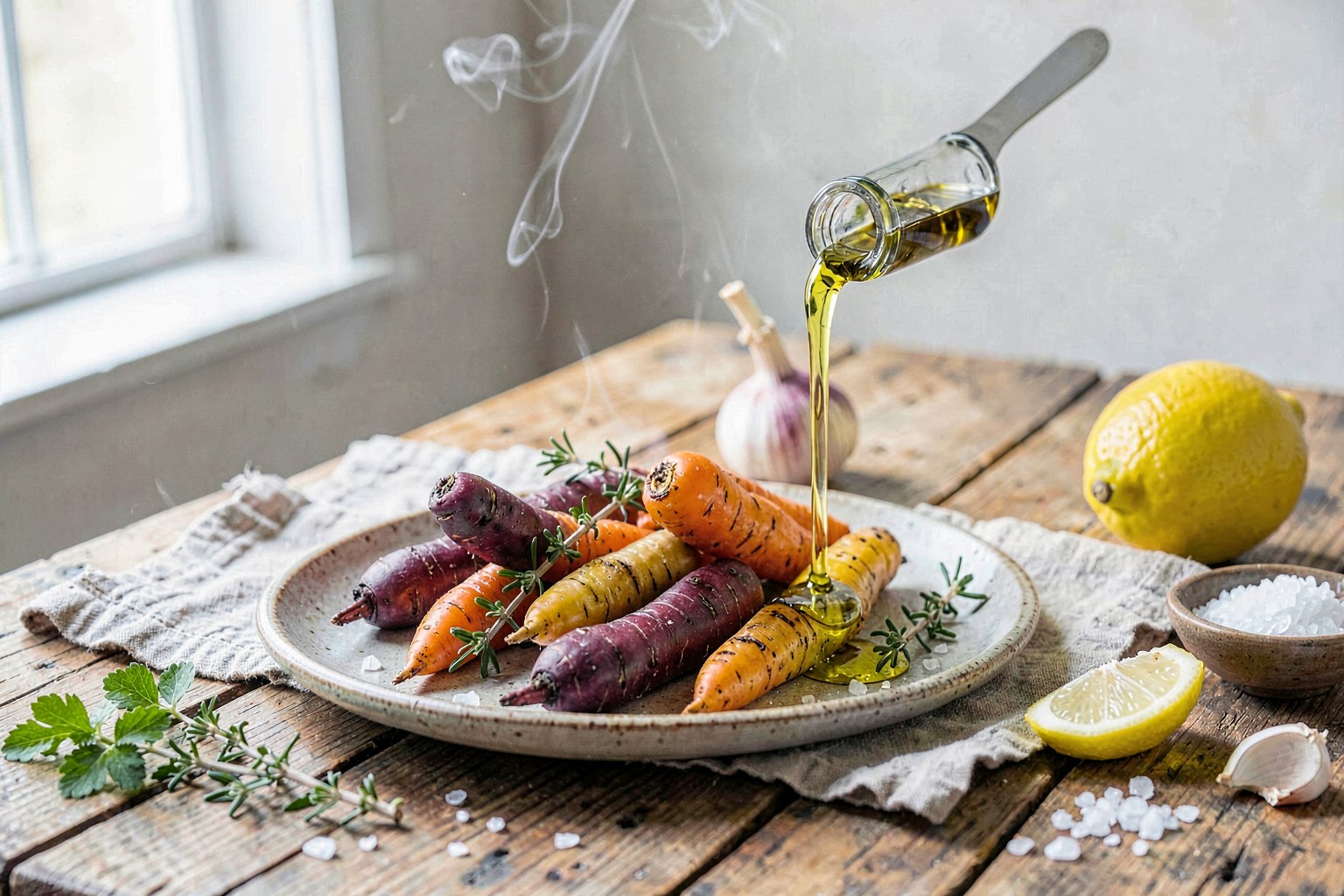
Roasted Heirloom Carrots with Lemon & Olive Oil
Tender, multi-colored heirloom carrots are slow-roasted until their natural sugars caramelize without added sweeteners, then finished with a generous pour of polyphenol-rich extra virgin olive oil and bright local lemon. This dish captures the essence of California's Central Valley harvest, delivering a savory-sweet balance that honors the vegetable's integrity while adhering to strict longevity protocols.
A little context
Rooted in the California farm tradition of celebrating produce at its peak, this recipe strips away the historical reliance on seed oils and refined sugars often found in roasted vegetable sides. By using only cold-pressed EVOO and the natural sweetness of the carrots themselves, we honor the agricultural heritage while eliminating the pro-inflammatory agents common in modern American cooking. The technique mimics traditional Mediterranean roasting, adapted for the specific terroir of California's heirloom varieties.
The longevity story
Heirloom carrots provide a diverse spectrum of carotenoids (alpha-carotene, beta-carotene, lutein) that act as potent antioxidants, supporting cellular health and visual acuity. The specific variety of extra virgin olive oil (EVOO) used here delivers oleocanthal and oleuropein, powerful polyphenols with proven anti-inflammatory and neuroprotective properties. Roasting at controlled temperatures preserves fiber integrity, which supports gut motility and feeds beneficial microbiota, while the absence of seed oils prevents the oxidation of fats during the cooking process.
Method
- 01
Preheat and Prep
Preheat your oven to 200°C (400°F). Line a heavy rimmed baking sheet with parchment paper. Ensure the carrots are clean and dry; moisture is the enemy of caramelization.
- 02
Season the Roots
Place the carrots in a large bowl. Drizzle with 40 ml (3 tbsp) of the extra virgin olive oil. Sprinkle with 3 g (2/3 tsp) of the sea salt and the cracked black pepper. Toss thoroughly by hand to ensure every surface is coated.
- 03
Arrange for Roasting
Spread the carrots on the baking sheet in a single layer. Do not overcrowd; if they touch, they will steam instead of roast. Tuck the reserved thyme stems among the carrots to release their oils slowly.
- 04
First Roast
Roast for 25 minutes. The carrots should begin to soften and show light browning at the edges.
- 05
Flip and Continue
Remove the tray and carefully flip the carrots. If using large carrots, check for tenderness with a fork. Return to the oven for another 15–20 minutes until the carrots are tender throughout and deeply caramelized in spots.
- 06
Finish with Acid and Fat
Transfer the hot carrots to a serving platter. Immediately drizzle with the remaining 20 ml (1 tbsp) of cold extra virgin olive oil and the fresh lemon juice. This preserves the delicate polyphenols in the oil and the volatile compounds in the lemon.
- 07
Garnish and Serve
Scatter the fresh thyme leaves over the top and finish with the remaining 2 g (1/3 tsp) of flaky sea salt. Serve immediately while warm.
Nutrition facts
Per serving · 1 of 4- — Saturated
- 3 g
- — Polyunsaturated
- 2 g
- Carbohydrates
- 26 g
- — Fiber
- 8 g
- — Sugars
- 12 g
- Cholesterol
- 0 mg
- Sodium
- 184 mg
- Potassium
- 835 mg
Estimated from USDA FoodData Central for matched ingredients (100% ingredient coverage). Values vary with brand, preparation, and exact measurements.
Pro tips
- ✦When selecting heirloom carrots, look for vibrant, unblemished skin and firm roots; avoid any with soft spots or wilting greens, as this indicates age and nutrient loss.
- ✦Do not wash the carrots until right before prepping; excess moisture on the skin can lead to steaming rather than the desired roasting caramelization.
- ✦Use a high-quality, high-polyphenol EVOO (look for harvest dates within the last 12 months) for the finishing drizzle, as heat can degrade some of the beneficial compounds.
- ✦If the carrots are very large, cut them lengthwise to ensure even cooking; smaller varieties can be left whole.
- ✦Taste the carrots before adding the final salt; the natural sugars released during roasting may reduce the need for heavy salting.
Substitutions
- heirloom carrots → parsnips or golden beets (adjust roasting time slightly; beets may bleed color, so roast separately if serving alongside carrots.)
- fresh thyme → fresh rosemary or oregano (woody herbs work well but remove woody stems before serving.)
Storage
Store in a glass container in the refrigerator for up to 3 days. Reheat gently in a skillet with a splash of water or in the oven; avoid microwaving to preserve texture and prevent nutrient degradation.
What to serve with it
- Grass-fed beef tenderloin or wild-caught salmon
- Quinoa or sprouted grain pilaf
- Green tea or sparkling water with a slice of lemon
- Dry Pinot Noir (low sulfite)
FAQ
Why not add maple syrup or honey?+
Carrots are naturally high in sugars that caramelize beautifully at 200°C (400°F). Adding refined sweeteners or even large amounts of fruit sugars can spike blood glucose unnecessarily, violating Blueprint-aligned principles. The natural sweetness is sufficient.
Can I use vegetable oil?+
No. Vegetable oils (canola, soybean, corn) are high in unstable omega-6 fatty acids that oxidize during heating, creating inflammatory compounds. We strictly use cold-pressed extra virgin olive oil or avocado oil for stability and health benefits.
Share this recipe
Notes from the community
Sign in to leave a note.
No notes yet — be the first.
You might also like