Nordic Clean Fermented Rye Loaf
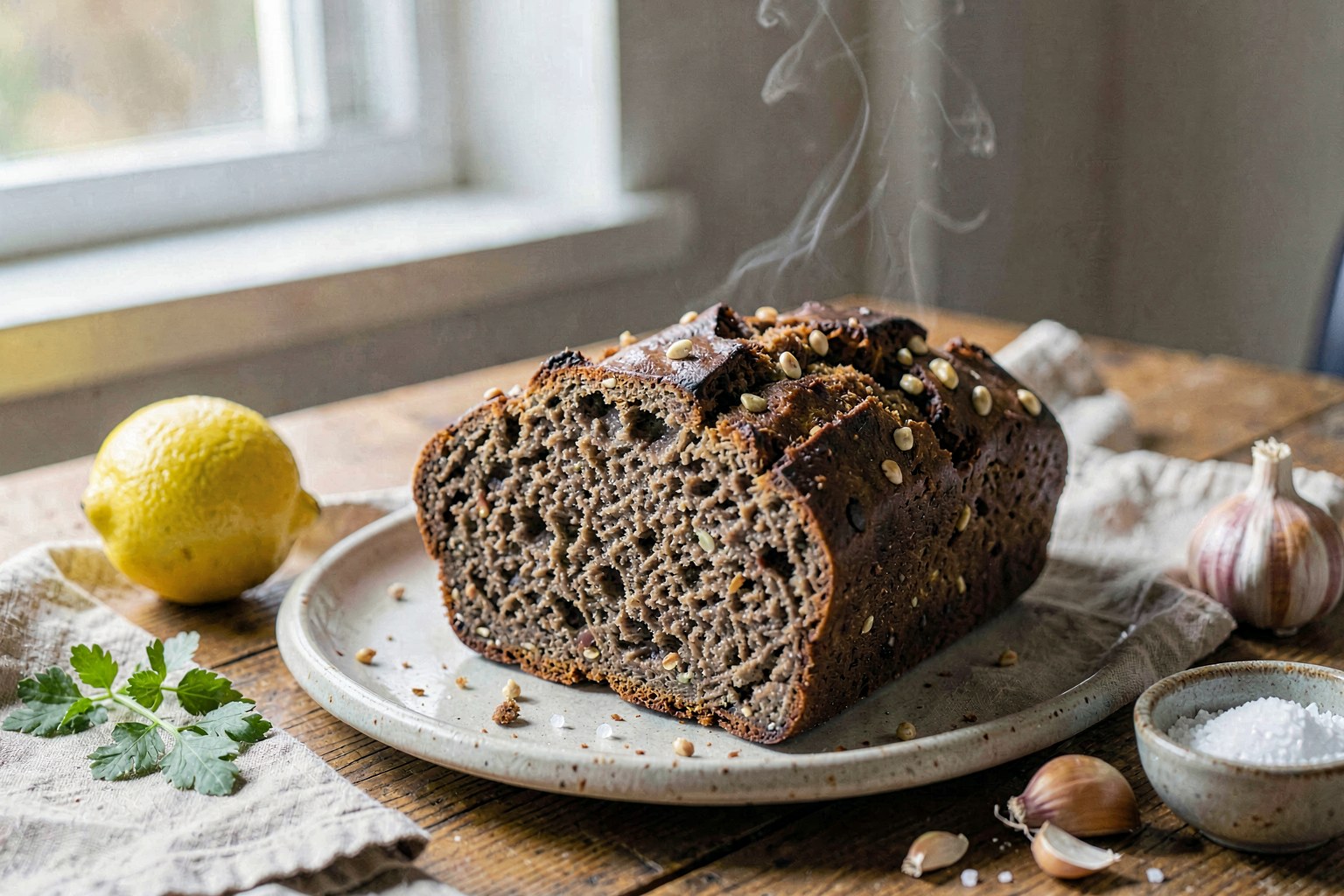
A dense, dark, and deeply tangy artisanal loaf rooted in the Nordic tradition of sourdough fermentation. This version strips away refined sweeteners and industrial seed oils, relying on the natural sweetness of rye berries and the complex, gut-friendly acidity of a 48-hour wild yeast starter. The result is a nutrient-dense, slow-digesting bread with a crisp, polyphenol-rich crust and a moist, earthy crumb perfect for serving with grass-fed butter or cold-smoked salmon.
A little context
Traditional Scandinavian 'rugbrød' is a staple of longevity diets, historically leavened with sourdough and sweetened slightly with molasses or honey. We honor this heritage by maintaining the long, slow fermentation essential for digestibility while eliminating refined sugar and substituting industrial vegetable oils with cold-pressed extra-virgin olive oil. The recipe strictly adheres to whole-food principles, ensuring the loaf is as close to the raw grain as possible while remaining palatable and deeply satisfying.
The longevity story
This loaf leverages the biochemistry of long fermentation to break down phytic acid, significantly increasing the bioavailability of magnesium, zinc, and iron found in the rye. The extended souring process generates organic acids that support gut microbiome diversity and lower the glycemic response compared to standard breads. We prioritize rye flour for its high lignan content, a potent phytoestrogen linked to reduced inflammation, and use only extra-virgin olive oil to add heart-healthy monounsaturated fats and polyphenols without the oxidative stress of seed oils.
Method
- 01
Activate the starter
Ensure your rye sourdough starter is active, bubbly, and has peaked 4-8 hours after its last feeding. It should float in water or show significant volume increase. If it has collapsed, feed it again and wait.
- 02
Mix the wet ingredients
In a large bowl, whisk together the lukewarm filtered water, date paste, and extra-virgin olive oil until the dates are fully emulsified. Stir in the active rye starter until the mixture looks like a thin, brownish batter.
- 03
Combine dry ingredients
Add the whole-grain rye flour, spelt/einkorn flour, sea salt, and the soaked rye berries to the wet mixture. Mix with a sturdy spoon or dough hook on low speed until a very sticky, cohesive dough forms. Do not over-knead; rye relies on pentosans, not gluten, for structure.
- 04
Bulk fermentation
Cover the bowl with a damp cloth or beeswax wrap. Let the dough rest at room temperature (20-22°C / 68-72°F) for 4 to 6 hours. The dough will not double in size like wheat bread but will become slightly puffier and smell distinctly sour and tangy.
- 05
Shape the loaf
Generously dust a piece of parchment paper with rye flour. Scrape the sticky dough onto the paper. Wet your hands with water to prevent sticking, and gently shape the dough into a tight oval or round loaf. Do not punch it down; handle gently to preserve gas pockets.
- 06
Final proof
Place the loaf (on the parchment) into a proofing basket or a bowl lined with a floured cloth. Cover and let proof for 45-60 minutes, or until the loaf feels slightly lighter when lifted. Preheat your oven to 230°C (450°F) with the Dutch oven inside.
- 07
Score and bake
Carefully remove the hot Dutch oven. Invert the loaf onto the parchment, then slide it (parchment and all) into the pot. Score the top deeply with a lame in a cross or diagonal pattern to allow expansion. Cover with the lid and bake for 35 minutes.
- 08
Finish the crust
Remove the lid and bake for an additional 10-15 minutes until the crust is deep mahogany and sounds hollow when tapped. The internal temperature should reach 96°C (205°F). Cool completely on a wire rack for at least 2 hours before slicing to set the crumb.
Nutrition facts
Per serving · 1 of 4- — Saturated
- 2 g
- — Polyunsaturated
- 2 g
- Carbohydrates
- 103 g
- — Fiber
- 18 g
- — Sugars
- 9 g
- Cholesterol
- 0 mg
- Sodium
- 1700 mg
- Potassium
- 636 mg
Estimated from USDA FoodData Central for matched ingredients (88% ingredient coverage). Values vary with brand, preparation, and exact measurements.
Pro tips
- ✦Sourcing matters: Look for organic, stone-ground rye flour; industrial roller-milled rye often loses the germ and has a bleached, pale color that indicates lower nutrient density.
- ✦Rye is sticky: Unlike wheat, rye dough should never be kneaded until elastic. It should remain a sticky mass that holds its shape through fermentation, not gluten development.
- ✦The cool down is critical: Slicing hot rye bread causes the starches to gum up, resulting in a gummy texture. Patience ensures a clean, distinct slice.
- ✦Storage: This bread keeps well for 3-4 days at room temperature wrapped in linen, or in the fridge for up to a week. It freezes beautifully sliced for toast later.
- ✦Date substitution: If you prefer less sweetness, reduce the dates to 20g or use 1 tsp of pure maple syrup, though the dates provide better moisture retention in this dense loaf.
Shop this recipe
As an Amazon Associate we earn from qualifying purchases.
Substitutions
- spelt/einkorn flour → 100% whole-grain rye flour (creates a denser, more traditional 'rugbrød' texture; may require slightly more water)
- extra-virgin olive oil → grass-fed ghee or pastured butter (melted) (for a non-vegan version; adds a creamy richness and buttery flavor profile)
- soaked rye berries → toasted sunflower seeds or pumpkin seeds (adds crunch and healthy fats; add 10g more water if using dry seeds)
Storage
Wrap cooled loaf in linen or beeswax wrap; store at room temperature for up to 4 days. For longer storage, slice and freeze in a glass container or parchment-lined bag for up to 3 months. Do not refrigerate unless necessary, as cold accelerates staling.
What to serve with it
- Thinly sliced cold-smoked wild-caught salmon with dill and lemon
- Grass-fed butter and ripe avocado slices
- Fermented pickles (cucumbers or beets) for a probiotic boost
- Hot green tea or a cup of bone broth to accompany the meal
- A glass of dry red wine or sparkling water with fresh lemon and mint
FAQ
Why does this bread not rise as much as my regular bread?+
Rye contains very little gluten and relies on pentosans for structure. It is naturally dense. The goal of fermentation here is flavor development and digestibility, not airy volume.
Can I use instant yeast instead of sourdough starter?+
You can, but you will lose the gut-health benefits of long fermentation and the complex tang. If you must, use 1 tsp of organic instant yeast and reduce the rise time to 1 hour, but the 'clean' biochemistry is superior with sourdough.
Is this bread gluten-free?+
No, rye and spelt/einkorn contain gluten. For a gluten-free version, use a dedicated gluten-free rye alternative or a blend of teff and sorghum, though the texture will differ significantly.
Share this recipe
Notes from the community
Sign in to leave a note.
No notes yet — be the first.
You might also like