Salada Tazina (Moroccan Souq Tradition)
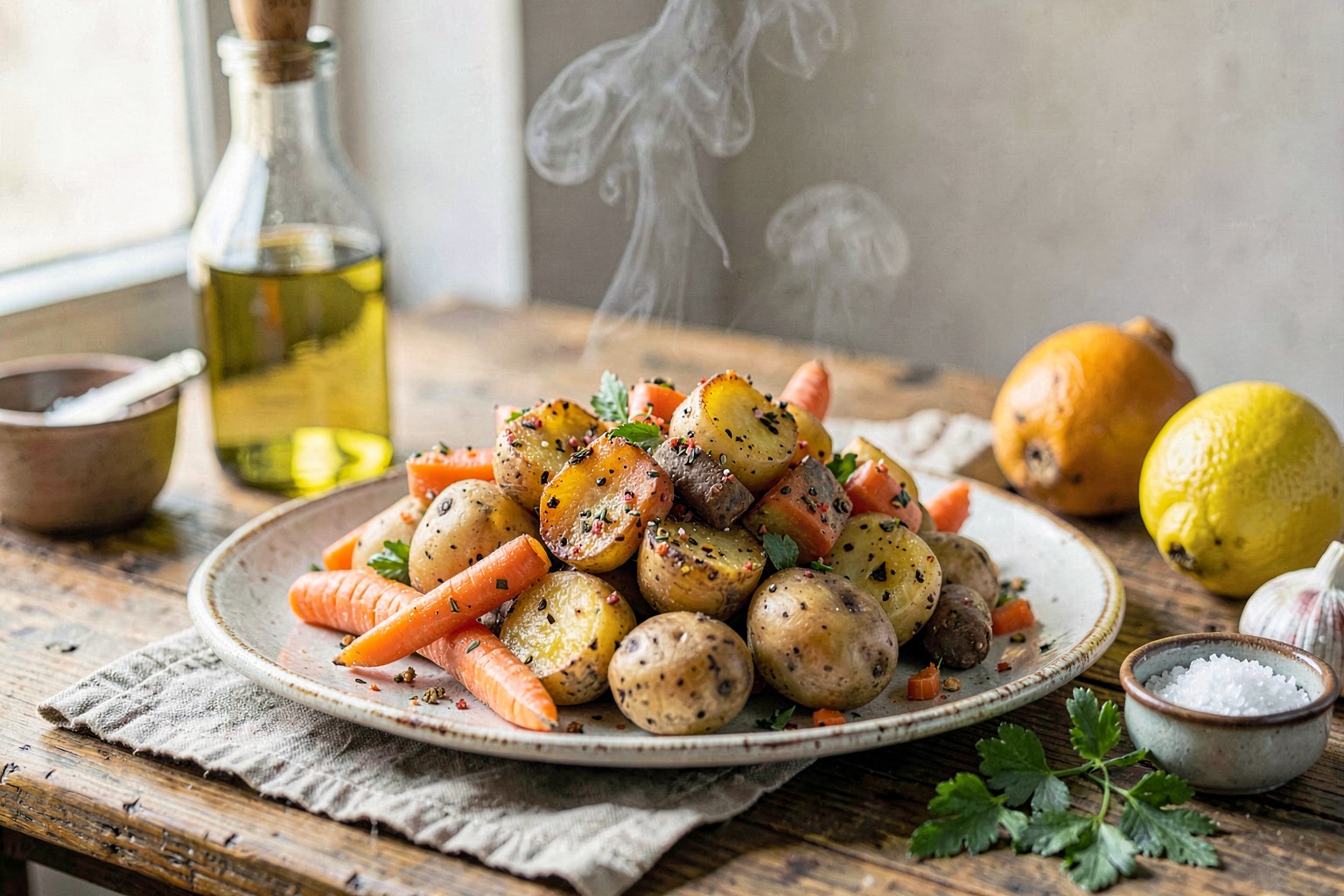
A vibrant, rustic Moroccan side dish featuring golden-fried potatoes, sweet carrots, and earthy turnips, all tossed in a fragrant blend of cumin and paprika. This farm-fresh version swaps traditional seed oils for extra-virgin olive oil, preserving the dish's soulful, savory depth while eliminating inflammatory fats. It offers a comforting, polyphenol-rich vegetable medley that honors the street-food tradition of the souk without the refined sugar or processed shortcuts.
A little context
Salada Tazina is a beloved street-food staple in Moroccan souqs, traditionally deep-fried in neutral oils and sometimes dusted with a hint of sugar to balance the earthiness. We honor this tradition by using generous amounts of high-quality extra-virgin olive oil, the historic fat of the region, and relying on the natural sweetness of slow-cooked carrots and a touch of date syrup if needed for balance. This approach strips away the inflammatory seed oils and refined sugars common in modern adaptations, returning the dish to its nutrient-dense, whole-food roots while maintaining the authentic spice profile.
The longevity story
This dish leverages the synergy of extra-virgin olive oil (EVOO) and root vegetables to deliver a high load of polyphenols, specifically oleocanthal and hydroxytyrosol, which support cardiovascular health and reduce systemic inflammation. The carrots provide beta-carotene, a potent antioxidant that converts to vitamin A, while the turnips offer fiber and glucosinolates that support liver detoxification pathways. By avoiding seed oils and refined sugars, we prevent the glycemic spike often associated with fried root vegetables, allowing the natural fiber to modulate glucose absorption. The spices, cumin and paprika, add luteolin and capsanthin, further boosting the dish's anti-inflammatory profile.
Method
- 01
Prep the vegetables
Wash, peel, and cut the potatoes, carrots, and turnips into uniform 2 cm (3/4 inch) cubes. Uniformity is critical for even cooking; if pieces vary in size, smaller ones will burn before larger ones are tender.
- 02
Heat the oil
Place your heavy skillet over medium-high heat and add the extra-virgin olive oil. Heat until shimmering but not smoking (approx. 175°C / 350°F). You can test by dropping a small potato cube in; it should sizzle immediately and bubble gently.
- 03
Fry the potatoes
Carefully add the potato cubes in a single layer (work in batches if necessary to avoid crowding). Fry for 8–10 minutes, turning occasionally, until they are golden brown and fork-tender. Remove with a slotted spoon and place on paper towels to drain.
- 04
Fry the carrots and turnips
In the same oil, add the carrots and turnips. These take slightly less time than potatoes. Fry for 6–8 minutes until the carrots are bright orange and tender-crisp, and the turnips are golden. Remove and drain on fresh paper towels.
- 05
Toast the spices
Reduce heat to low. If the pan is dry, add a tiny splash more oil. Add the cumin, paprika, black pepper, and sea salt. Stir constantly for 30–45 seconds until the spices are fragrant. Be careful not to burn them, as burnt spices turn bitter.
- 06
Combine and toss
Return all the fried vegetables to the skillet. Toss gently but thoroughly to coat every piece in the spiced oil. Cook for 1–2 minutes more to let the flavors meld and the spices adhere to the hot vegetables.
- 07
Finish and serve
Transfer to a serving dish. Sprinkle generously with fresh chopped parsley. Serve warm as a side dish. The residual heat will wilt the parsley slightly, releasing its aromatic oils.
Nutrition facts
Per serving · 1 of 4- — Saturated
- 4 g
- — Polyunsaturated
- 4 g
- Carbohydrates
- 28 g
- — Fiber
- 6 g
- — Sugars
- 5 g
- Cholesterol
- 0 mg
- Sodium
- 807 mg
- Potassium
- 848 mg
Estimated from USDA FoodData Central for matched ingredients (78% ingredient coverage). Values vary with brand, preparation, and exact measurements.
Pro tips
- ✦Sourcing tip: Look for 'high polyphenol' or 'early harvest' extra-virgin olive oil; these have a peppery finish and significantly higher antioxidant content than standard EVOO.
- ✦Do not overcrowd the pan. Adding too many vegetables at once drops the oil temperature, causing the vegetables to soak up oil rather than fry, resulting in a greasy texture.
- ✦If you prefer a softer texture, cover the pan with a lid for the last 2 minutes of frying the turnips to steam them slightly before uncovering to crisp up.
- ✦Freshly ground cumin makes a massive difference in flavor compared to pre-ground; toast whole cumin seeds in a dry pan for 1 minute and grind them just before use.
- ✦For a sugar-free sweetness boost, you can add 1 tablespoon of finely chopped Medjool dates in the last minute of tossing, allowing them to melt slightly into the oil.
Shop this recipe
As an Amazon Associate we earn from qualifying purchases.
Substitutions
- turnips → parsnips or rutabaga (parsnips add more sweetness; rutabaga adds a denser, earthier texture. Adjust cooking time slightly as rutabaga takes longer.)
- extra-virgin olive oil → avocado oil (acceptable if you prefer a higher smoke point, though you will lose some of the distinct polyphenol profile and peppery flavor of EVOO.)
Storage
Store in an airtight glass container in the refrigerator for up to 3 days. Reheat in a skillet with a splash of oil to restore crispness; avoid microwaving if possible to maintain texture. Does not freeze well as the texture of the root vegetables will become mushy upon thawing.
What to serve with it
- Serve alongside a grilled grass-fed lamb chop or wild-caught mackerel for a complete Blueprint-aligned meal.
- Pair with a glass of cold-brew green tea or sparkling water with a wedge of lemon to aid digestion.
- Accompany with a simple salad of arugula and shaved fennel dressed with lemon and EVOO.
FAQ
Can I bake these instead of frying to make them healthier?+
Yes, you can roast them at 200°C (400°F) on a parchment-lined sheet. Toss with oil and spices before roasting. While roasting uses less oil, the traditional 'Salada Tazina' texture relies on the rapid frying to seal in moisture and create a specific crisp-tender contrast.
Why are there no tomatoes or onions in this version?+
Classic Salada Tazina is specifically the fried root vegetable medley. Tomatoes and onions are typically served as a separate salad (Salada Mkaouara or a simple onion salad) on the same plate in the souk tradition. We keep them separate here to maintain the distinct texture of the fried roots.
Share this recipe
Notes from the community
Sign in to leave a note.
No notes yet — be the first.
You might also like