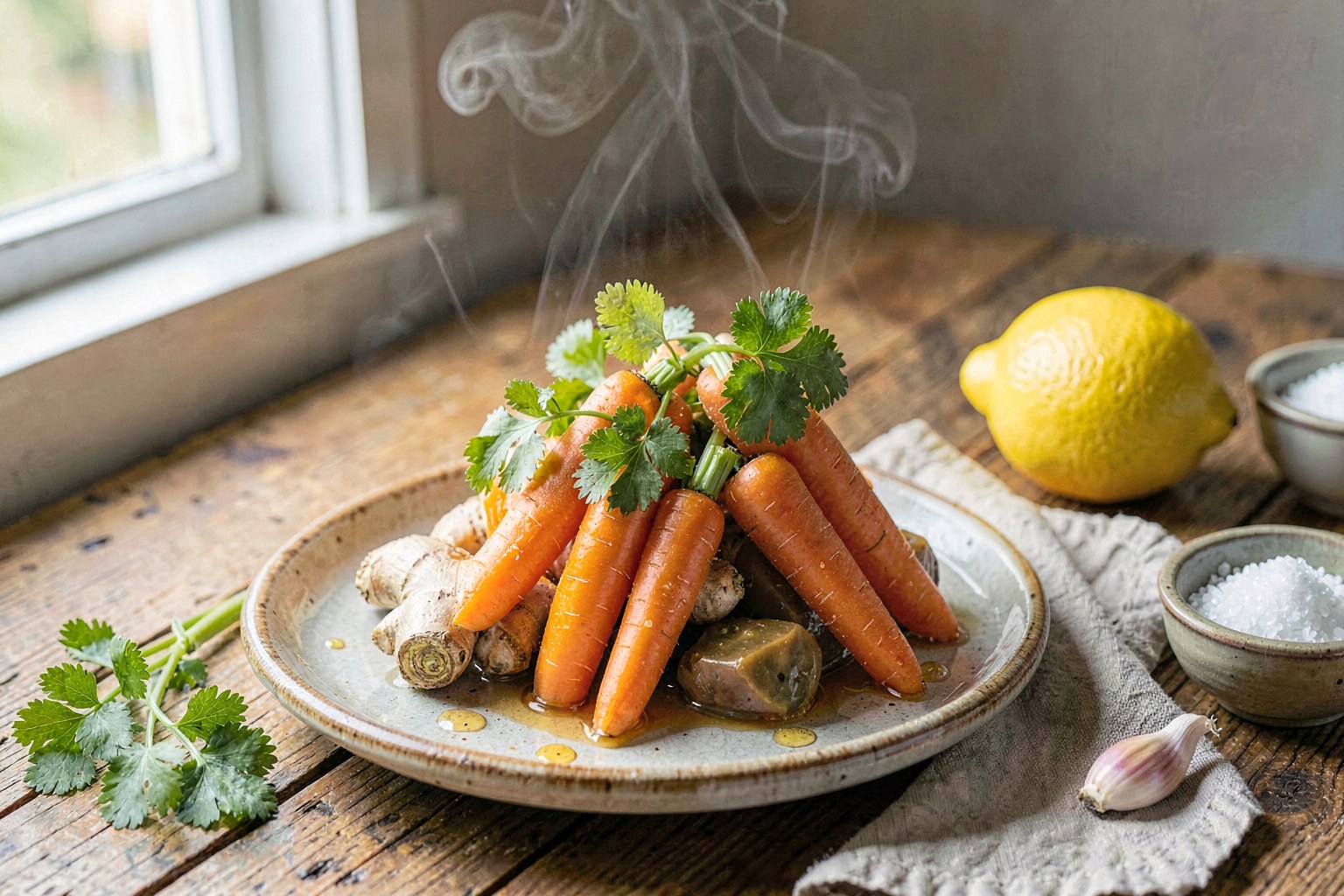
San Francisco Fermented Carrot & Ginger Pickles (California Farm Tradition)
Crisp, organically grown carrots and zesty ginger undergo a 48-hour lactic acid fermentation in a brine sweetened solely by local raw honey. This dish delivers a bright, tangy crunch that cuts through rich mains while flooding your gut with beneficial probiotics and polyphenol-rich bioactives.
A little context
Rooted in the vibrant farm-to-table ethos of California's coastal agriculture, this recipe honors the traditional San Francisco practice of quick-pickling but elevates it through true lacto-fermentation rather than vinegar-only preservation. We have stripped away the refined white sugar and preservatives often found in commercial versions, replacing them with local, raw honey to support the microbiome and respect the seasonal harvest. This approach ensures the final product is a living food that aligns with longevity protocols while celebrating the native terroir of the West Coast.
The longevity story
This recipe leverages the power of lactic acid fermentation to convert carbohydrates into beneficial lactic acid, a potent probiotic that supports gut barrier integrity and immune modulation. The carrots provide beta-carotene and fiber, while fresh ginger delivers gingerol, a compound with proven anti-inflammatory and antioxidant properties. Local raw honey introduces trace enzymes and prebiotics that feed the fermentation process without spiking blood glucose like refined sugar would, and the inclusion of high-polyphenol sea salt enhances mineral bioavailability.
Method
- 01
Prepare the vegetables
Wash and scrub the carrots thoroughly. Cut them into uniform 5 cm (2 inch) matchsticks to ensure even fermentation. Peel and julienne the fresh ginger into similar thin strips. Pack the carrots, ginger, garlic, peppercorns, and cilantro tightly into the clean glass jar, leaving about 2.5 cm (1 inch) of headspace at the top.
- 02
Create the brine
In a separate bowl, whisk together the filtered water, raw honey, sea salt, and rice vinegar until the honey and salt are completely dissolved. The brine should taste distinctly salty and slightly sweet, reminiscent of the ocean with a hint of floral notes.
- 03
Pour and submerge
Pour the brine over the packed vegetables, ensuring they are completely covered by at least 2.5 cm (1 inch) of liquid. If any carrots float above the surface, use the ceramic weight to push them down. Exposure to air is the enemy of successful fermentation.
- 04
Seal and ferment
Attach the airlock lid or cover the jar mouth with a clean cloth secured by a rubber band. Place the jar in a dark corner of your kitchen at room temperature (18–22°C / 65–72°F). Allow the mixture to ferment for 48 to 72 hours. Taste a carrot stick after 48 hours; it should be tangy and slightly crunchy.
- 05
Stop the fermentation
Once the desired tartness and crunch are achieved, seal the jar with a tight lid and transfer it immediately to the refrigerator. The cold temperature will drastically slow the fermentation process, preserving the texture and flavor profile.
- 06
Serve
Allow the pickles to chill for at least 4 hours before serving to let the flavors meld. Serve as a palate-cleansing side dish alongside grilled wild-caught salmon, roasted root vegetables, or a grain bowl. The brine can also be sipped as a probiotic tonic.
Nutrition facts
Per serving · 1 of 4- — Saturated
- 0 g
- — Polyunsaturated
- 0 g
- Carbohydrates
- 45 g
- — Fiber
- 5 g
- — Sugars
- 37 g
- Cholesterol
- 0 mg
- Sodium
- 2041 mg
- Potassium
- 581 mg
Estimated from USDA FoodData Central for matched ingredients (56% ingredient coverage). Values vary with brand, preparation, and exact measurements.
Pro tips
- ✦Sourcing matters: Look for 'hard' carrots that snap when bent; soft carrots indicate age and will result in mushy pickles.
- ✦Always use non-iodized sea salt; table salt often contains anti-caking agents that can cloud the brine and inhibit beneficial bacteria.
- ✦Keep an eye on the brine level; if vegetables are exposed to air, they may develop kahm yeast (a white film) which is harmless but should be skimmed off immediately.
- ✦For a deeper flavor, add a strip of organic orange zest to the jar during fermentation to complement the ginger.
- ✦If you do not have an airlock, simply burp the jar (open the lid) once a day to release built-up CO2 gas.
Substitutions
- carrots → daikon radish or fennel bulb (Daikon offers a milder, slightly peppery crunch; fennel adds an anise note that pairs beautifully with ginger.)
- raw honey → pure maple syrup (Use sparingly; maple syrup has a stronger flavor profile that may alter the final taste slightly.)
- rice vinegar → apple cider vinegar (raw, unfiltered) (Adds a different acidity profile and more polyphenols from the apples.)
Storage
Keeps in the refrigerator for up to 4 weeks in the brine. The texture will soften slightly over time, but the probiotic benefits remain active.
What to serve with it
- Grilled wild-caught sockeye salmon with a side of wilted kale
- Roasted sweet potatoes with grass-fed ghee
- Matcha green tea or unsweetened kombucha
- Dry Riesling or a crisp, un-oaked Sauvignon Blanc
FAQ
Is it safe if I see bubbles?+
Yes, bubbles are a sign of active fermentation and carbon dioxide production, which is exactly what we want. It indicates the lactic acid bacteria are working.
Can I use regular table salt?+
No. Table salt often contains iodine and anti-caking agents like sodium aluminosilicate, which can inhibit the growth of beneficial bacteria and cause a cloudy brine. Always use sea salt or pickling salt.
My pickles are too sour. What did I do wrong?+
Fermentation is temperature-dependent. If your kitchen is warm, they may ferment faster. Next time, check them at the 24-hour mark or move them to a cooler spot. You can also shorten the fermentation time.
Share this recipe
Notes from the community
Sign in to leave a note.
No notes yet — be the first.
You might also like