Sarde in Saor: Blue Zone Sweet & Sour Sardines
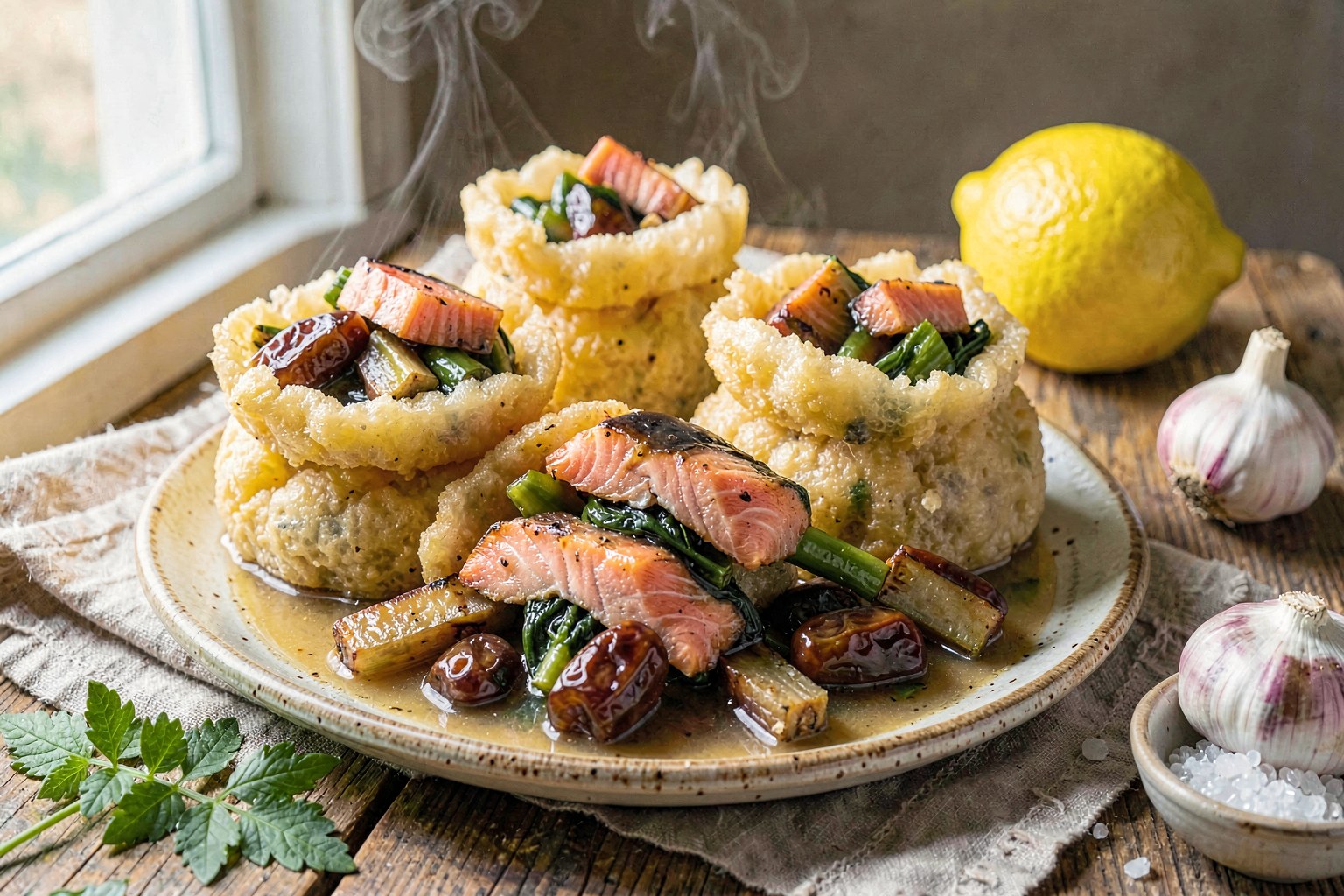
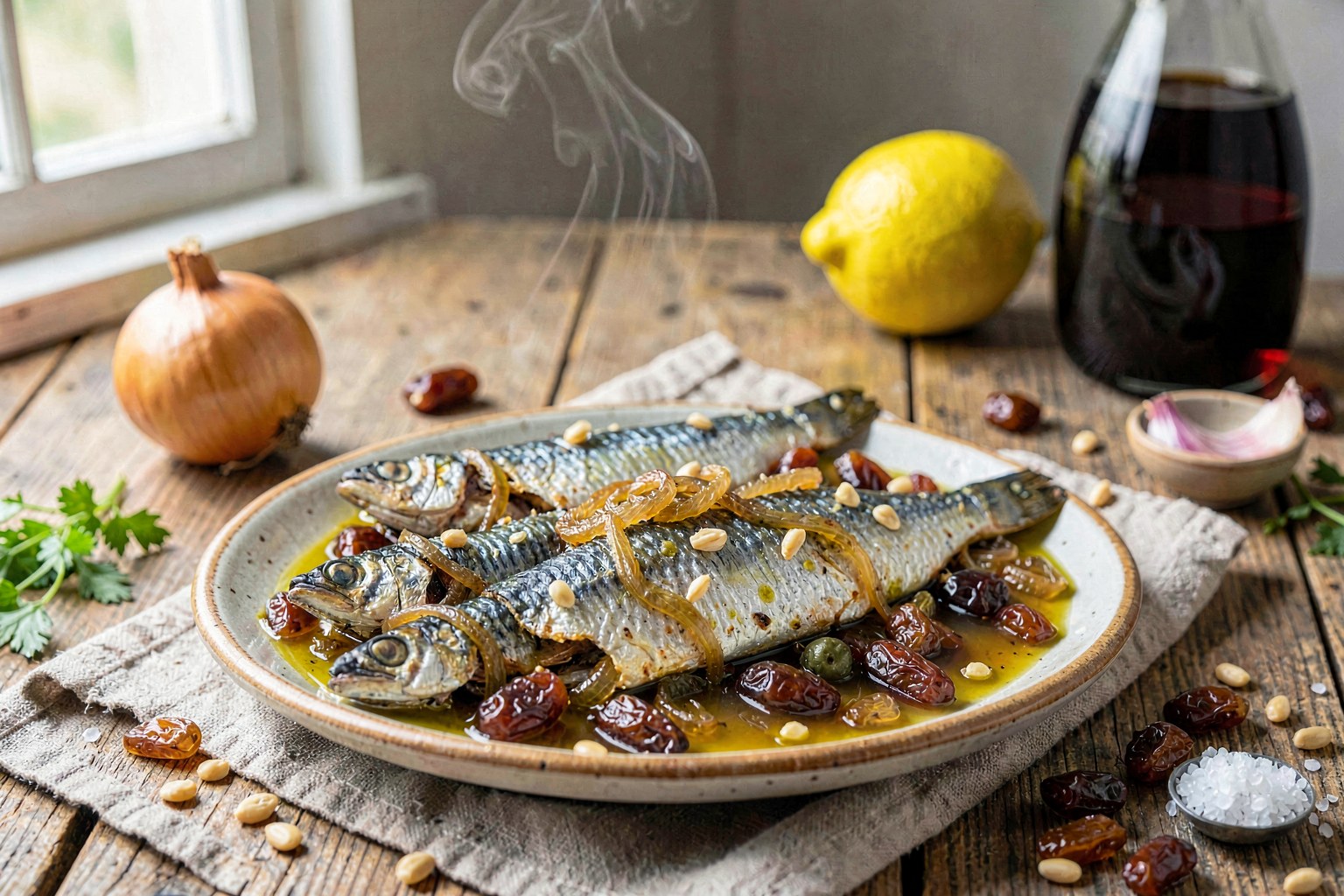
This Venetian classic features wild-caught sardines gently fried in extra-virgin olive oil and marinated in a bright, sweet-and-sour brine of caramelized onions, pine nuts, capers, and raisins. The dish balances savory umami with the natural sweetness of whole dates and the acidity of wine vinegar, creating a polyphenol-rich meal that honors the longevity traditions of the Mediterranean Blue Zones.
A little context
Sarde in Saor originated as a practical method for Venetian sailors to preserve fish on long voyages using vinegar and onions, a technique that evolved into a beloved antipasto of the Venetian Republic. We honor this tradition by strictly excluding the refined sugar often added in modern adaptations, replacing it with the gentle sweetness of whole Medjool dates, and swapping industrial seed oils for cold-pressed, polyphenol-rich extra-virgin olive oil. This approach preserves the dish's historical integrity while aligning it with modern longevity science.
The longevity story
Sardines are a powerhouse of long-chain omega-3 fatty acids (EPA and DHA) essential for reducing systemic inflammation and supporting brain health, while their small size ensures low mercury accumulation. The recipe is dense in polyphenols from the extra-virgin olive oil, capers, and dark raisins, which act as potent antioxidants to protect cellular integrity. The slow-caramelization of onions releases quercetin, a flavonoid that supports vascular health, while the vinegar marinade aids in the bioavailability of minerals like calcium from the fish bones when eaten whole.
Method
- 01
Prepare the sardines
Pat the wild-caught sardine fillets completely dry with clean kitchen towels. Season both sides lightly with 1 tsp of the sea salt. Let them rest at room temperature for 15 minutes to bring the fish to an even temperature before cooking.
- 02
Caramelize the onions
In a large skillet over medium-low heat, add 2 tbsp of the extra-virgin olive oil. Add the sliced onions and a pinch of salt. Cook slowly, stirring occasionally, for 20-25 minutes until the onions are deeply golden and soft but not browned. This slow breakdown is crucial for releasing quercetin.
- 03
Build the sweet-sour base
Stir in the chopped dates, raisins, capers, and pine nuts. Cook for another 3-4 minutes until the dates soften and the raisins plump. Pour in the red wine vinegar and 60 ml (1/4 cup) of the remaining olive oil. Simmer gently for 2 minutes to meld the flavors, then remove from heat and set aside.
- 04
Pan-fry the sardines
Wipe the skillet clean or use a second pan. Heat the remaining 60 ml (1/4 cup) of extra-virgin olive oil over medium-high heat until it shimmers but does not smoke. Carefully place the sardine fillets in the pan, skin-side down if skin is on. Cook for 2-3 minutes per side until the flesh is opaque and lightly golden. Do not overcrowd; work in batches if necessary.
- 05
Layer and marinate
In your glass container, create a layer of the onion-date mixture. Place half the fried sardines on top, then cover with the remaining onion mixture. Repeat with the remaining sardines and finish with the remaining onion mixture. Ensure the fish is fully submerged in the oil and vinegar juices.
- 06
The wait
Cover the container and refrigerate for at least 24 hours, ideally 48 hours. The acid in the vinegar will gently 'cook' the fish further, softening any remaining bones and allowing the flavors to penetrate deeply. Serve chilled or at room temperature.
Nutrition facts
Per serving · 1 of 4- — Saturated
- 8 g
- — Polyunsaturated
- 16 g
- Carbohydrates
- 34 g
- — Fiber
- 3 g
- — Sugars
- 28 g
- Cholesterol
- 284 mg
- Sodium
- 1679 mg
- Potassium
- 1168 mg
Estimated from USDA FoodData Central for matched ingredients (90% ingredient coverage). Values vary with brand, preparation, and exact measurements.
Pro tips
- ✦Sourcing is critical: Look for sardines that are bright-eyed, firm to the touch, and have a clean ocean scent; avoid any with a strong ammonia smell.
- ✦Do not rush the onion caramelization; adding heat too fast will burn the sugars and create bitterness rather than the deep, sweet umami base required for this dish.
- ✦The dish tastes significantly better after 48 hours in the fridge as the sardines fully absorb the marinade and the bones soften completely.
- ✦If using salt-cured capers, rinse them thoroughly under cold water to remove excess sodium before adding to the sweet-sour mix.
- ✦Serve with a side of bitter greens like arugula or radicchio dressed with a splash of the marinade oil to cut through the richness.
Substitutions
- wild-caught sardines → wild-caught mackerel or anchovies (Mackerel has a similar high-fat profile; anchovies will be saltier, so reduce added salt in the marinade.)
- pine nuts → walnuts or almonds (Walnuts offer a different omega-3 profile; toast them lightly before adding for extra depth.)
- Medjool dates → pure maple syrup (sparingly) (Use 2 tbsp maple syrup added at the end of cooking if you cannot find dates, though whole dates provide better fiber.)
Storage
Store in an airtight glass container in the refrigerator for up to 5 days. The flavors continue to develop over time. Do not freeze, as the texture of the fish will degrade upon thawing.
What to serve with it
- A glass of dry, low-sulfite natural red wine (e.g., Nebbiolo or Sangiovese)
- Sparkling water with a slice of blood orange and fresh rosemary
- Steamed broccolini with a drizzle of the leftover marinade oil
- Unsweetened green tea to complement the polyphenols without adding sugar
FAQ
Why do I have to wait 24 hours to eat this?+
Sarde in Saor is a marinated dish, not a hot meal. The vinegar and oil need time to penetrate the fish, soften the tiny calcium-rich bones, and allow the sweet and sour flavors to harmonize. Eating it fresh results in a disjointed flavor profile.
Can I use canned sardines to save time?+
No. Canned sardines are often packed in seed oils or have added salt and preservatives that ruin the delicate balance of this dish. Fresh wild-caught fillets are essential for the texture and health profile.
Is this dish safe for those watching sodium?+
While capers and salted fish can be high in sodium, using rinsed capers and controlling the added salt allows for a moderate sodium load. The high potassium content from the onions and sardines helps balance this.
Share this recipe
Notes from the community
Sign in to leave a note.
No notes yet — be the first.
You might also like