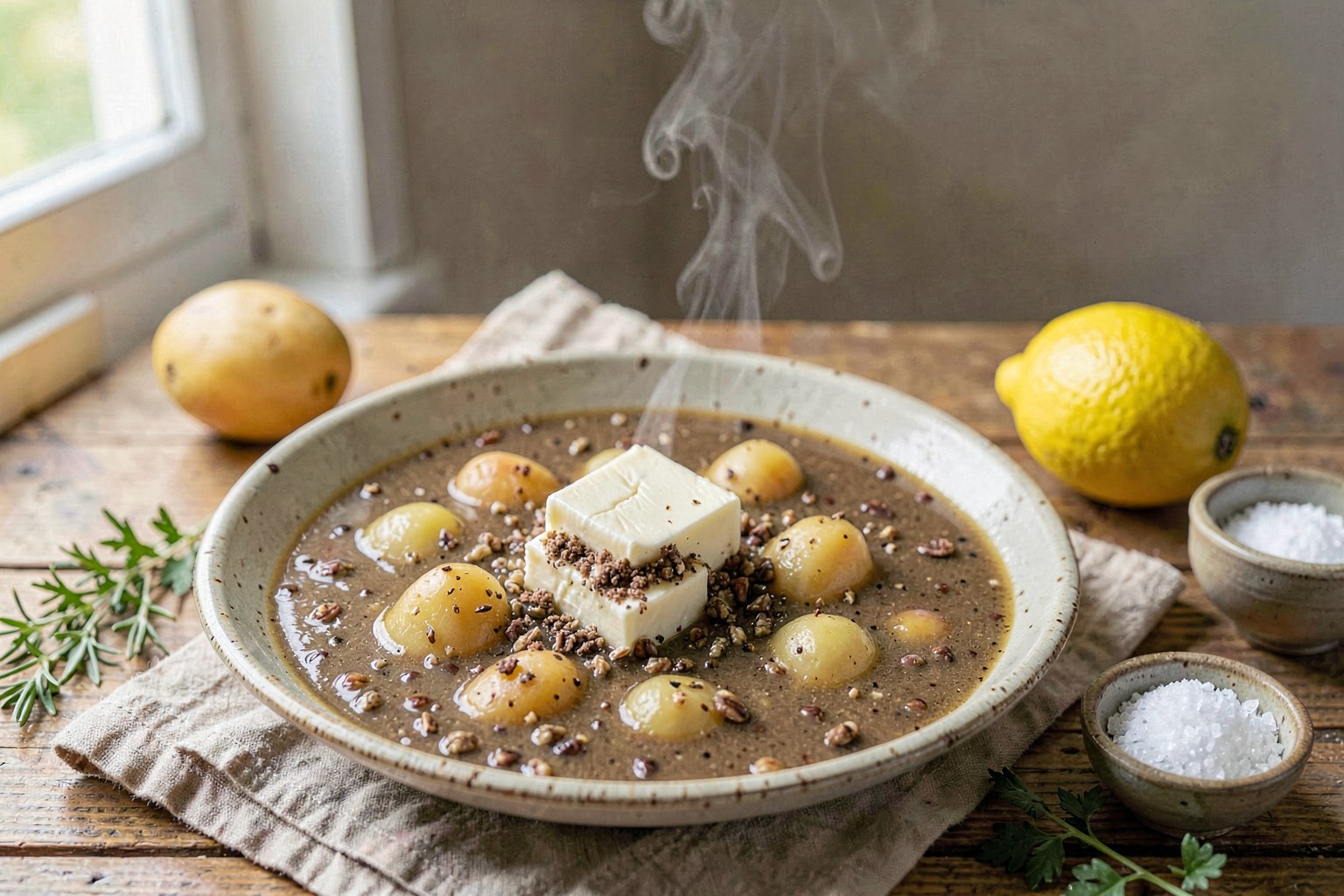
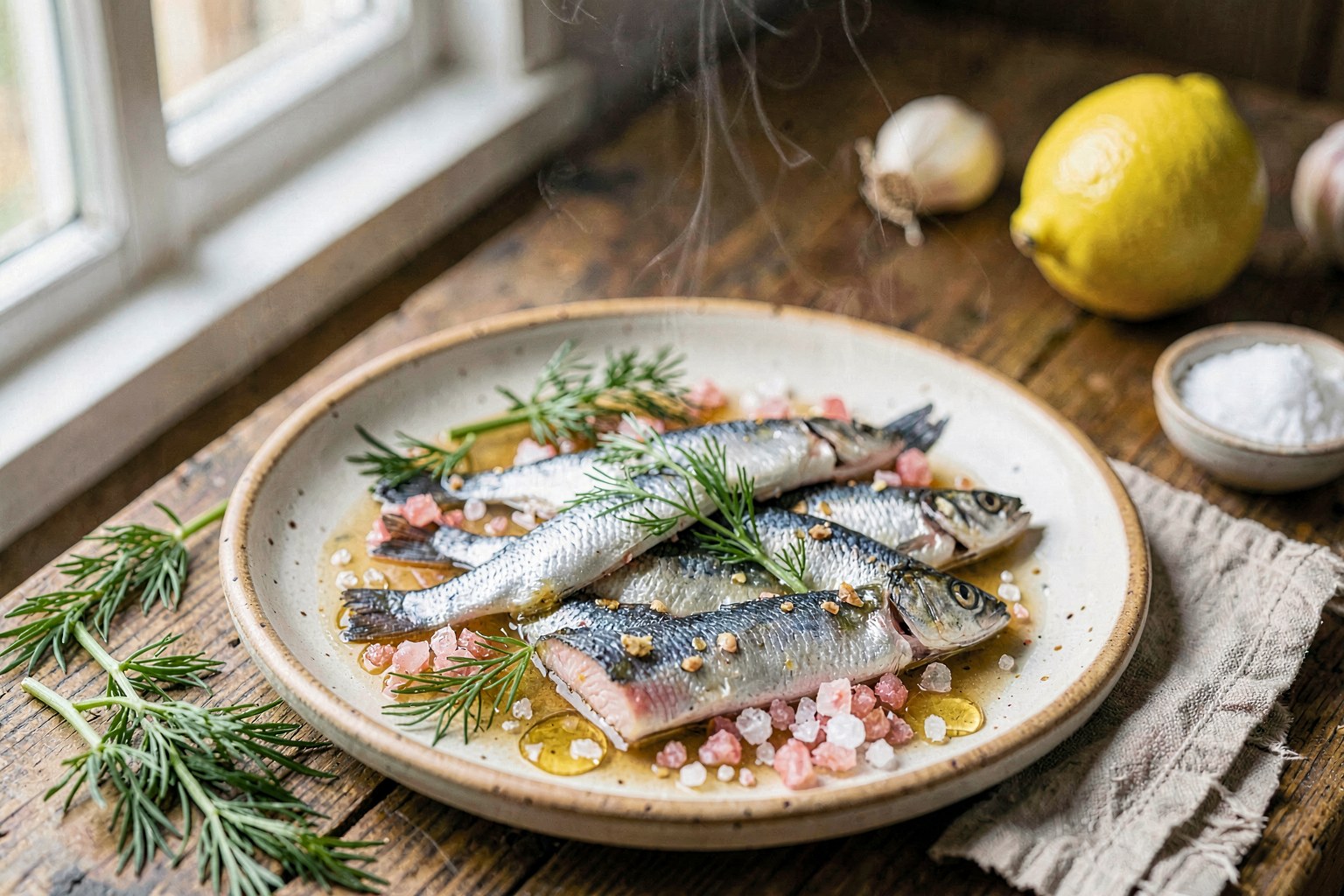
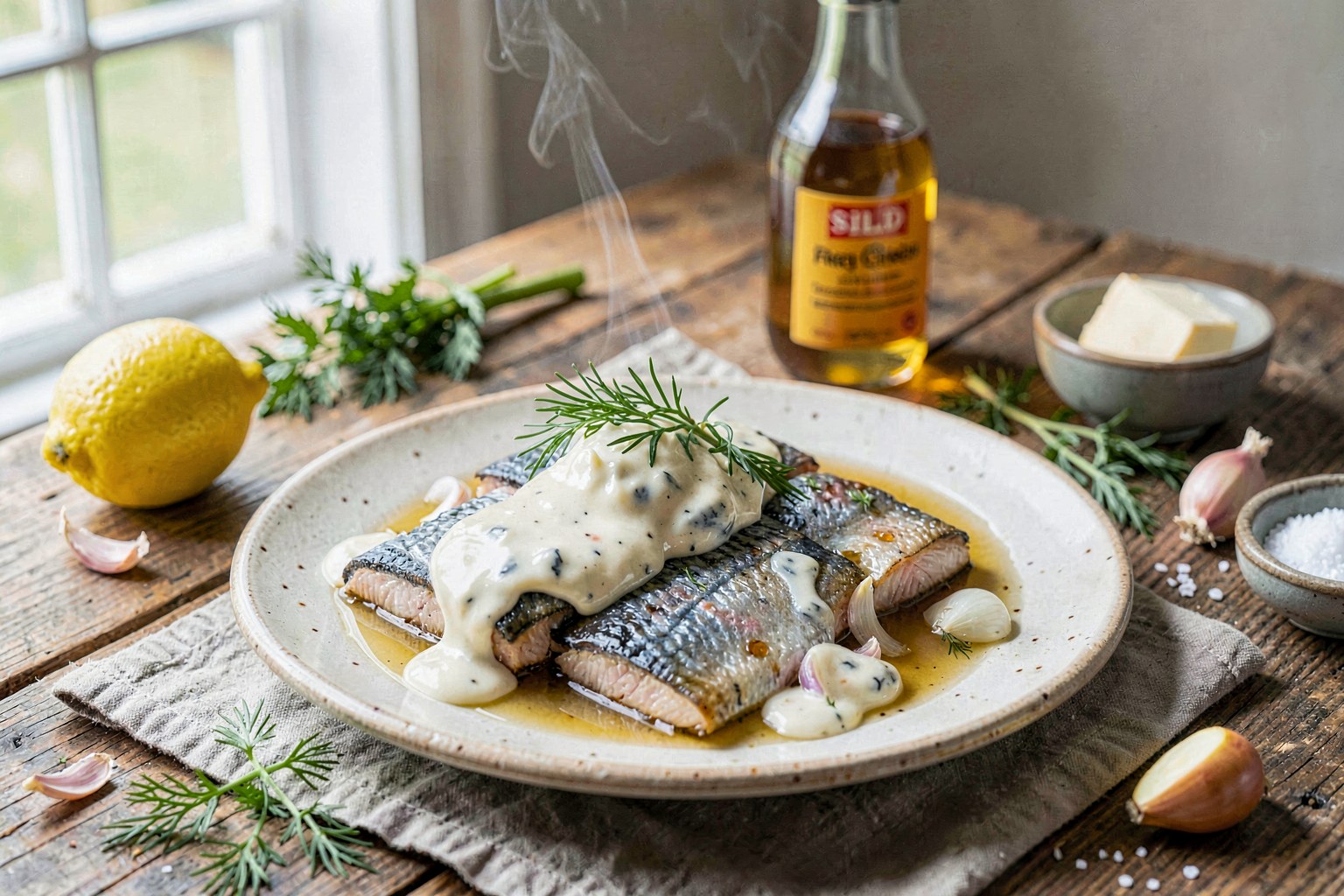
Sild med Gräddsås (Nordic Clean Tradition)
Wild-caught herring fillets cured in a light vinegar brine, served with a rich, creamy sauce of pasture-raised cream, shallots, and fresh dill. Accompanied by boiled organic new potatoes with skins on for maximum mineral retention. A nutrient-dense Nordic classic reimagined without refined sugar or seed oils.
A little context
Traditional Swedish Sild often relies on refined sugar in the pickling brine and seed oils in the sauce. We honor the tradition by using a date syrup reduction for natural sweetness that mimics the depth of sugar without spiking insulin. Seed oils are swapped for grass-fed butter and cold-pressed olive oil to preserve the integrity of the fats, ensuring the dish remains anti-inflammatory and nutrient-dense.
The longevity story
This dish is anchored by wild-caught herring, one of the richest sources of EPA and DHA omega-3 fatty acids, which support cardiovascular health and reduce systemic inflammation. The sauce utilizes extra-virgin olive oil and capers, both dense in polyphenols that protect cellular integrity. Fermented capers and the natural probiotics in the vinegar brine support gut microbiome diversity, while the potato skins provide resistant starch and fiber, keeping the glycemic load moderate.
Method
- 01
Cure the herring
If using fresh fillets, place in a glass bowl. Whisk apple cider vinegar, date syrup, and a pinch of sea salt. Pour over fish, cover, and refrigerate for 30 minutes to 1 hour. If using pre-cured herring, rinse gently under cold water to remove excess salt and pat dry.
- 02
Boil the potatoes
Place scrubbed potatoes in a saucepan with cold water, bay leaf, and 1 tsp sea salt. Bring to a boil, reduce heat, and simmer for 20-25 minutes until fork-tender but not falling apart. Drain and keep warm.
- 03
Sauté shallots
While potatoes cook, heat olive oil and butter in a small skillet over medium-low heat. Add minced shallots and cook gently for 5 minutes until translucent but not browned. Do not let them burn.
- 04
Make the cream sauce
Remove skillet from heat. Stir in sour cream, capers, and chopped dill leaves (reserve some for garnish). Warm gently over lowest heat for 2 minutes to meld flavors. Do not boil the sauce or it may curdle.
- 05
Assemble and serve
Drain herring brine. Arrange herring fillets on plates alongside warm potatoes. Spoon the cream sauce generously over the fish and potatoes. Garnish with remaining fresh dill and a crack of black pepper.
Nutrition facts
Per serving · 1 of 4- — Saturated
- 5 g
- — Polyunsaturated
- 1 g
- Carbohydrates
- 15 g
- — Fiber
- 2 g
- — Sugars
- 3 g
- Cholesterol
- 21 mg
- Sodium
- 453 mg
- Potassium
- 302 mg
Estimated from USDA FoodData Central for matched ingredients (64% ingredient coverage). Values vary with brand, preparation, and exact measurements.
Pro tips
- ✦Source wild-caught herring from reputable fisheries; avoid farmed herring which may have higher contaminant loads and inferior fatty acid profiles.
- ✦When buying dill, look for bright green, perky stems; limp herbs indicate age and lower polyphenol content.
- ✦Do not overcook the potatoes; they should hold their shape to maintain a lower glycemic impact.
- ✦If the sauce thickens too much, thin it with a splash of the potato cooking water or warm water instead of milk.
Substitutions
- wild-caught Atlantic herring → wild-caught mackerel or sardines (similar omega-3 profile, adjust curing time to 15 minutes)
- full-fat organic sour cream → coconut cream (full-fat) (makes the dish dairy-free; add a squeeze of lemon to mimic tang)
Storage
Store herring and sauce separately in airtight glass containers. Refrigerate for up to 3 days. Reheat sauce gently; do not microwave. Potatoes are best fresh but can be reheated in a skillet with butter.
What to serve with it
- Sparkling water with a wedge of lemon
- Dry Riesling or Pinot Gris
- Green tea (unsweetened)
- Pickled beets for additional gut-friendly nitrates
FAQ
Can I use canned herring?+
Yes, but check the label carefully. Many canned varieties include soybean oil or sugar. Look for herring packed in vinegar or water only.
Why date syrup instead of sugar?+
Date syrup provides minerals and fiber alongside sweetness, preventing the rapid blood glucose spike associated with refined white sugar.
Share this recipe
Notes from the community
Sign in to leave a note.
No notes yet — be the first.
You might also like