Sill med Matar: Nordic Clean Herring with New Potatoes
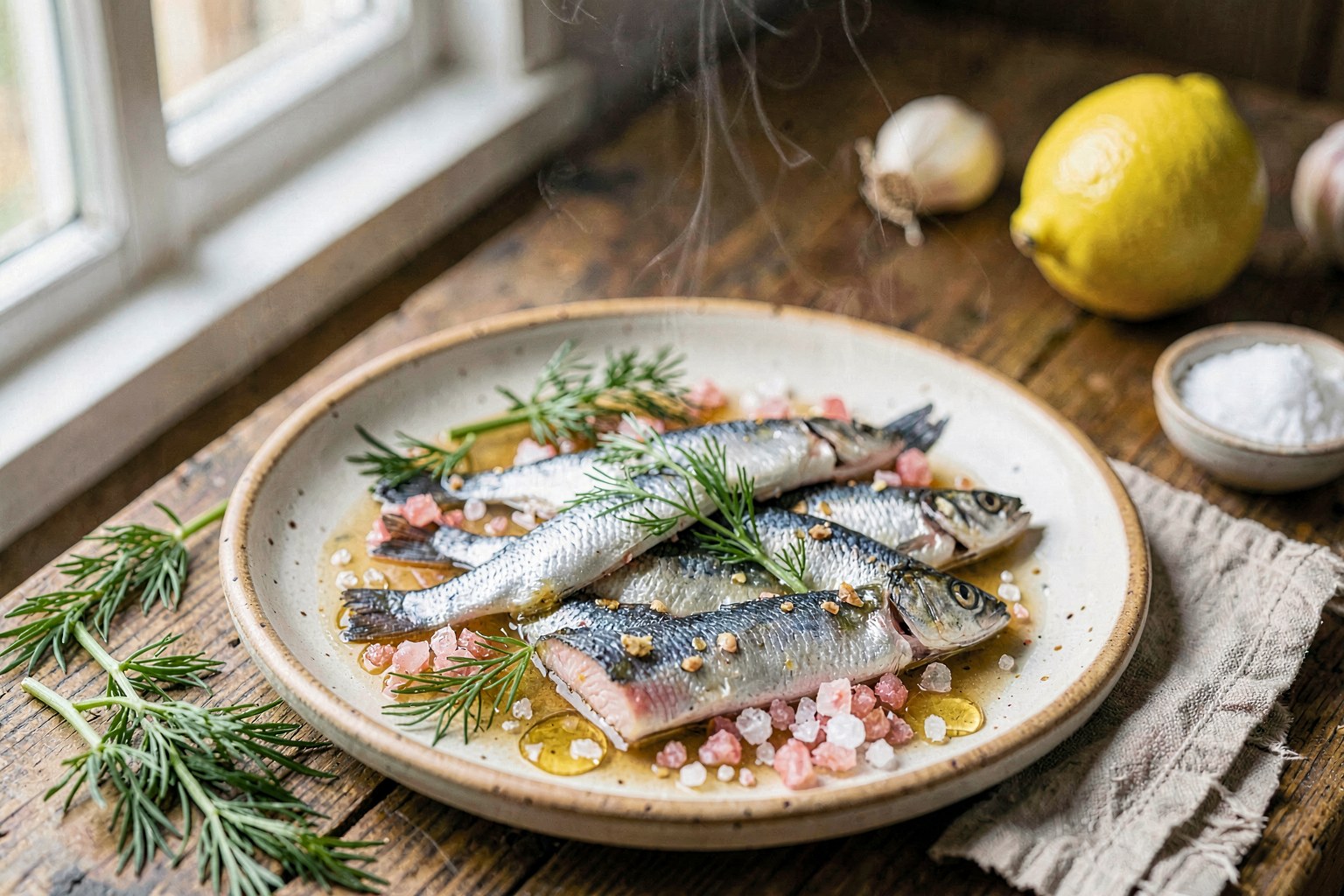
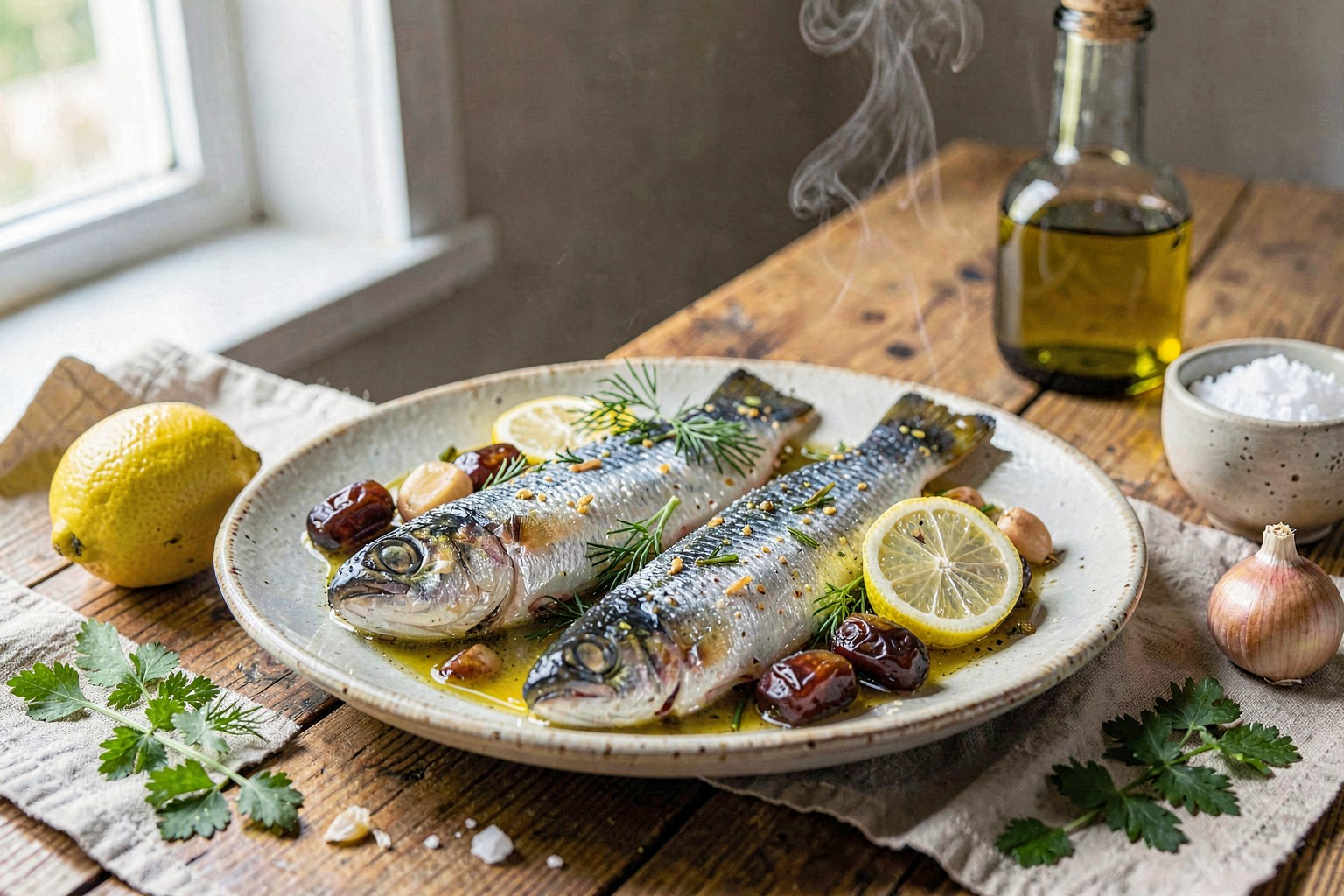
A modern, clean take on the Swedish classic sill med matar, featuring wild-caught Atlantic herring cured in a vibrant brine of lemon, dill, and shallots. Served alongside tender, skin-on new potatoes boiled in seawater, this dish delivers a salty, bright, and umami-rich profile without a single gram of refined sugar or processed oil.
A little context
Originating from the Swedish tradition of preserving fish for winter, this recipe honors the ancestral practice of fermentation and curing while stripping away the modern industrial shortcuts of white sugar and seed oils. Traditional recipes often call for a significant amount of sugar to balance the acidity; here, we use whole Medjool dates to provide a slow-release sweetness that respects the fish's natural flavor. We also swap industrial canola oil for cold-pressed extra-virgin olive oil, ensuring the fat source supports heart health rather than hindering it.
The longevity story
This dish is a powerhouse of long-chain omega-3 fatty acids (EPA and DHA) from the wild-caught herring, essential for reducing systemic inflammation and supporting cognitive longevity. The curing process utilizes the polyphenols found in fresh dill, lemon zest, and extra-virgin olive oil, which act as potent antioxidants. By replacing traditional sugar with the natural sweetness of whole dates, we maintain the flavor balance while avoiding the blood sugar spikes associated with refined sucrose, keeping the meal low-glycemic and gut-friendly.
Method
- 01
Prepare the Date-Lemon Brine
In a glass bowl, combine the chopped Medjool dates, lemon juice, extra-virgin olive oil, diced shallot, chopped dill, sea salt, and cracked peppercorns. Whisk vigorously until the dates begin to break down and the mixture emulsifies slightly. The acidity will soften the dates over time, creating a sweet-savory marinade.
- 02
Cure the Herring
Pat the wild-caught herring fillets completely dry with paper towels. Place them in the bowl with the brine, ensuring every surface is coated. Cover tightly with plastic wrap or a lid and refrigerate for 2 to 4 hours. Do not exceed 4 hours, as the acid will begin to 'cook' the fish too aggressively, altering the texture.
- 03
Boil the Potatoes
While the fish cures, fill a large pot with cold water and add the sea salt. Bring to a rolling boil, then add the new potatoes. Reduce heat to a simmer and cook for 15–20 minutes until a knife slides easily into the center. The potatoes should be tender but not falling apart.
- 04
Drain and Dress Potatoes
Drain the potatoes immediately in a colander. Return them to the warm pot (off the heat) and toss gently with a splash of extra-virgin olive oil and a pinch of fresh dill. Keep them warm; they are best served hot alongside the cool, cured fish.
- 05
Plate and Serve
Remove the herring from the brine, letting excess liquid drip off. Arrange the fillets on a serving platter or individual plates. Spoon a generous amount of the date-shallot brine over the fish. Serve immediately with the warm, dressed new potatoes on the side.
Nutrition facts
Per serving · 1 of 4- — Saturated
- 2 g
- — Polyunsaturated
- 1 g
- Carbohydrates
- 25 g
- — Fiber
- 4 g
- — Sugars
- 18 g
- Cholesterol
- 0 mg
- Sodium
- 2138 mg
- Potassium
- 435 mg
Estimated from USDA FoodData Central for matched ingredients (80% ingredient coverage). Values vary with brand, preparation, and exact measurements.
Pro tips
- ✦Sourcing is critical: Look for 'wild-caught Atlantic herring' from MSC-certified fisheries; avoid farmed herring which often has a higher contaminant load and inferior omega-3 profile.
- ✦Select firm, bright-eyed fish if buying whole, or translucent, firm fillets with no fishy odor if buying pre-cut.
- ✦Do not skip the date step: Whole dates provide a complex sweetness that mimics the traditional sugar cure without spiking blood glucose.
- ✦If you cannot find new potatoes, small Yukon Golds with the skin on are an excellent substitute for the creamy texture.
- ✦Serve with a glass of dry sparkling water with a lemon twist or a small glass of dry Swedish aquavit (if alcohol is part of your protocol) to enhance the digestive experience.
Substitutions
- wild-caught Atlantic herring → wild-caught sardines or mackerel fillets (these fatty fish have a similar oil content and benefit equally from the acid cure; adjust curing time to 1 hour for sardines.)
- Medjool dates → 2 tbsp pure maple syrup (use sparingly if you prefer a liquid sweetener, though whole dates offer better texture and fiber.)
Storage
Store the cured fish and vegetables separately in airtight glass containers in the refrigerator for up to 3 days. The fish will continue to cure and become more tender over time, but the texture may soften significantly after 48 hours. Do not freeze once cured, as the texture will become mushy upon thawing.
What to serve with it
- Green tea (sencha or gyokuro) to complement the polyphenol content
- Sparkling water with fresh lemon and mint
- Dry, mineral-forward white wine like a Swedish Pitepölle or a crisp Sancerre
FAQ
Can I use canned herring instead of fresh?+
Canned herring is often packed in sunflower or soybean oil, which violates the seed-oil rule. If you must use canned, look for herring packed in water or extra-virgin olive oil, drain it thoroughly, and then apply the fresh date-lemon brine.
Why is there no sugar in the recipe?+
Traditional sill recipes rely heavily on white sugar. We replaced it with Medjool dates to maintain the sweet-sour balance while adding fiber and avoiding the insulin spike associated with refined sucrose, keeping the meal Blueprint-aligned.
Share this recipe
Notes from the community
Sign in to leave a note.
No notes yet — be the first.
You might also like