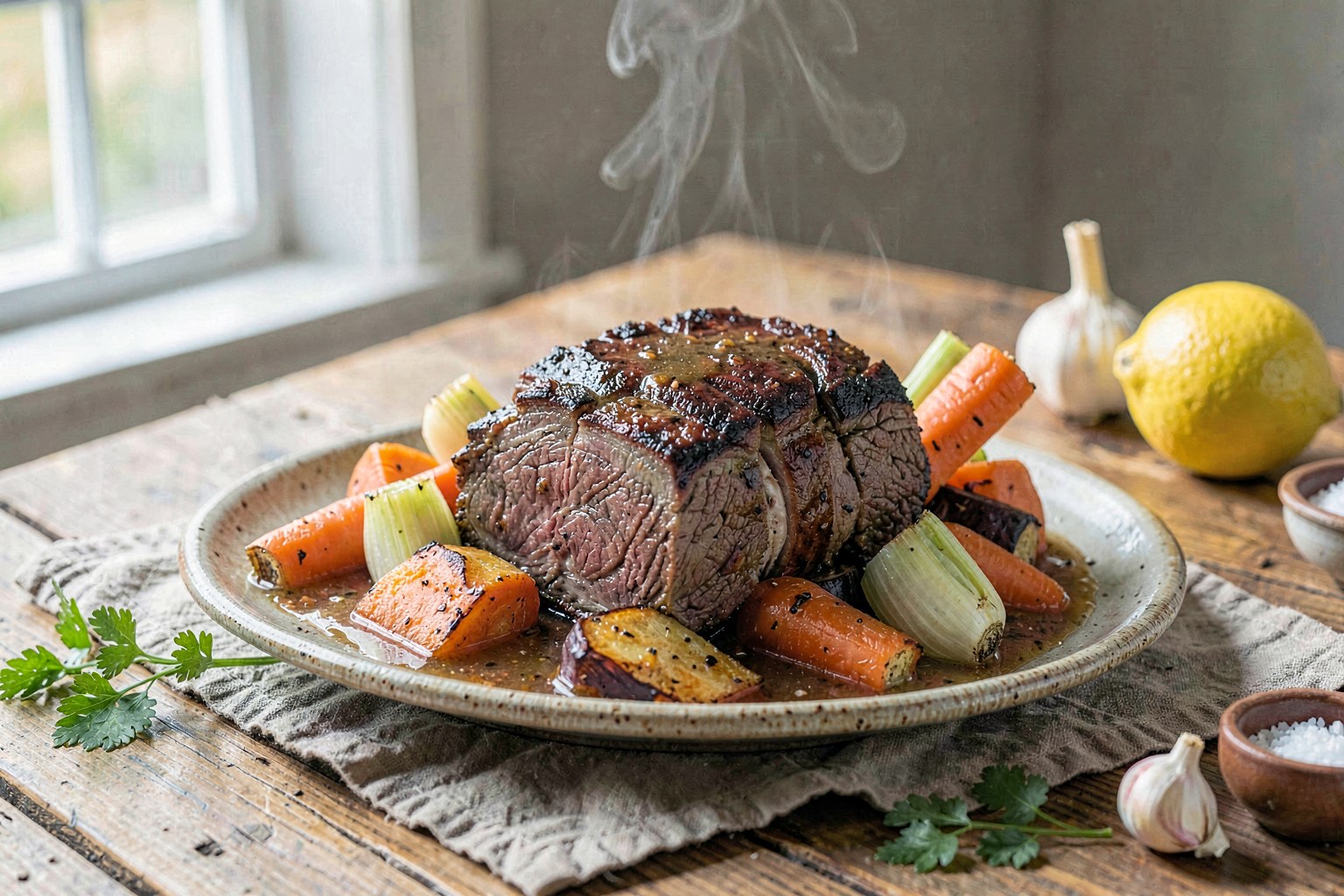
Slow-Roasted Grass-Fed Short Rib with Roasted Root Vegetables
This dish features collagen-rich, grass-fed short ribs braised slowly until they fall apart, surrounded by caramelized carrots, parsnips, and fennel. The rich, savory sauce is built entirely on bone broth, red wine, and aromatic herbs, delivering deep umami without a single gram of refined sugar or seed oil.
A little context
Rooted in the California farm tradition of utilizing seasonal winter harvests, this recipe honors the French braise technique but strips away the heavy butter finishes and sugar-laden glazes often found in commercial versions. Instead of using store-bought bouillon or seed oils, we build flavor through a custom bone broth reduction and the natural sweetness of roasted parsnips and carrots, respecting the ingredient's integrity while adhering to longevity standards.
The longevity story
The grass-fed beef provides a superior omega-3 to omega-6 ratio and high levels of conjugated linoleic acid (CLA) compared to grain-fed counterparts, supporting metabolic health. The slow-braising process extracts collagen and gelatin from the connective tissue, which supports gut lining integrity and joint function. We utilize extra-virgin olive oil and red wine to introduce resveratrol and hydroxytyrosol, potent polyphenols that combat oxidative stress, while the root vegetables offer fiber and beta-carotene for sustained energy release.
Method
- 01
Preheat and Prep
Preheat your oven to 150°C (300°F). Pat the grass-fed short ribs completely dry with paper towels. Season generously on all sides with sea salt and freshly cracked black pepper. Let them sit at room temperature for 20 minutes to take the chill off, ensuring an even sear.
- 02
Sear the Meat
Heat 30 ml (2 tbsp) of extra-virgin olive oil in your Dutch oven over medium-high heat until it shimmers. Sear the short ribs in batches, ensuring not to overcrowd the pot. Cook for 4-5 minutes per side until a deep, dark brown crust forms. This Maillard reaction is crucial for flavor. Remove meat and set aside on a plate.
- 03
Sauté Aromatics
Reduce heat to medium. Add the remaining 30 ml (2 tbsp) olive oil to the pot. Add the onions, carrots, parsnips, fennel, and mushrooms. Sauté for 8-10 minutes, stirring occasionally, until the vegetables begin to soften and brown. Add the tomato paste and cook for 2 minutes, stirring constantly, to caramelize the sugars naturally.
- 04
Deglaze
Pour in the red wine, scraping the bottom of the pot vigorously with a wooden spoon to release the fond (the browned bits). This is where the deep flavor lives. Simmer for 5 minutes to burn off the raw alcohol, leaving the concentrated fruit and tannin notes.
- 05
Build the Braise
Return the seared short ribs to the pot, nestling them into the vegetables. Pour in the beef bone broth until the meat is almost submerged but the tops are still visible. Stir in the fresh thyme leaves and tie the rosemary sprigs with twine, then submerge them in the liquid.
- 06
Slow Roast
Bring the liquid to a gentle simmer on the stovetop, then cover the pot tightly with the lid. Transfer to the preheated oven. Roast for 3.5 to 4 hours. The meat is done when it pulls apart effortlessly with a fork and the connective tissue has fully gelatinized.
- 07
Rest and Serve
Remove the pot from the oven. Carefully lift out the rosemary bundle. Let the dish rest for 15 minutes before serving; this allows the juices to redistribute. If the sauce is too thin, remove the meat and vegetables, then simmer the liquid on the stovetop for 10 minutes to reduce and thicken naturally.
Nutrition facts
Per serving · 1 of 4- — Saturated
- 36 g
- — Polyunsaturated
- 6 g
- Carbohydrates
- 51 g
- — Fiber
- 13 g
- — Sugars
- 17 g
- Cholesterol
- 296 mg
- Sodium
- 2016 mg
- Potassium
- 2501 mg
Estimated from USDA FoodData Central for matched ingredients (73% ingredient coverage). Values vary with brand, preparation, and exact measurements.
Pro tips
- ✦Sourcing is key: Look for short ribs with a thick layer of white fat cap; yellow fat often indicates grain-fed cattle. Ask your butcher for 'bone-in' as the bone marrow adds richness to the sauce.
- ✦Do not skip the searing step. The caramelization of the meat surface creates complex flavor compounds that boiling alone cannot achieve.
- ✦If the sauce tastes too acidic from the wine, stir in a teaspoon of pastured butter at the very end to round out the flavors naturally, or use a pinch of monk fruit if absolutely necessary (though the carrots usually provide enough sweetness).
- ✦This dish tastes better the next day. Reheat gently in a covered dish with a splash of broth to prevent drying out.
Shop this recipe
As an Amazon Associate we earn from qualifying purchases.
Substitutions
- grass-fed short ribs → grass-fed beef chuck roast or oxtail (Chuck requires slightly less time (2.5-3 hours); oxtail requires more time (4.5+ hours) but offers higher gelatin content.)
- red wine → non-alcoholic grape juice (unsweetened) or extra bone broth (If omitting alcohol, use 250ml of strong brewed coffee mixed with broth to mimic the depth of tannins.)
- cremini mushrooms → shiitake or portobello mushrooms (Shiitakes offer a stronger umami kick; portobellos hold their shape well during long braising.)
Storage
Store in an airtight glass container in the refrigerator for up to 4 days. The fat will solidify on top, which you can skim off or leave for moisture. Freeze portions in glass jars (leaving headspace) for up to 3 months.
What to serve with it
- Serve over a bed of steamed organic kale or spinach to absorb the nutrient-dense sauce.
- Pair with a glass of dry, organic Pinot Noir or a cup of high-quality green tea to aid digestion.
- A side of fermented sauerkraut or kimchi on the side adds probiotics to complement the gut-supportive gelatin in the meat.
FAQ
Can I cook this on the stovetop instead of the oven?+
Yes. Once you bring the liquid to a simmer, cover the pot and reduce the heat to the lowest setting. Simmer gently for 3.5 to 4 hours, checking occasionally to ensure it doesn't burn. The oven provides more consistent, gentle heat.
Why not use butter for searing?+
While pastured butter is healthy, it burns at the high temperatures required for a good sear. We use extra-virgin olive oil or avocado oil for the initial sear due to their higher smoke points, then finish with butter if desired for flavor.
Is this low-carb?+
Yes, this dish is naturally low-carb and keto-friendly. The carbohydrates come solely from the fiber-rich root vegetables and wine, with no added sugars or starches.
Share this recipe
Notes from the community
Sign in to leave a note.
No notes yet — be the first.
You might also like