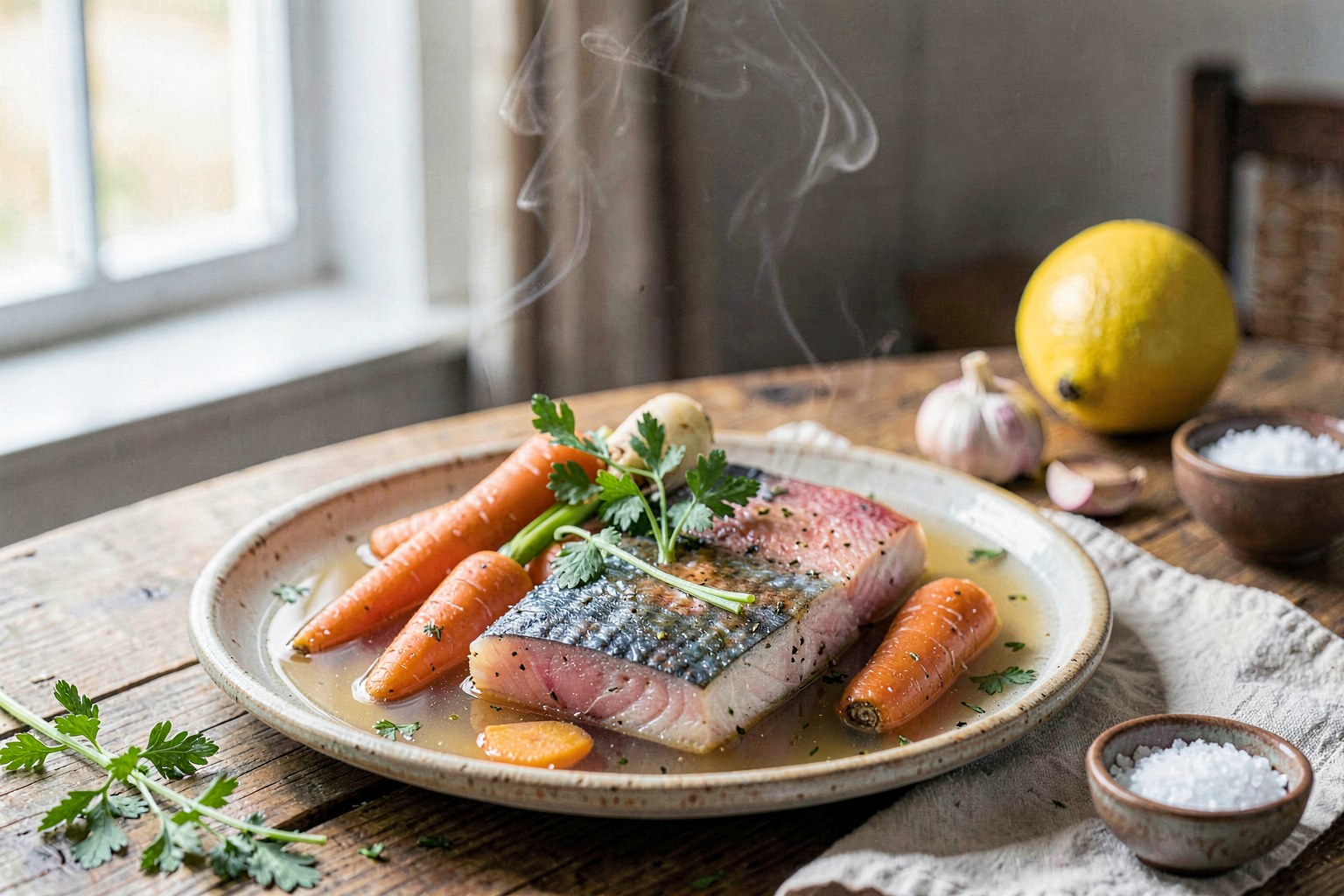
Nordic Clean Soppa: Wild Cod, Root Vegetables, and Fresh Herb Broth
A luminous, clear broth honoring the Nordic tradition of 'soppa' but stripped of dairy and refined sugars, focusing on the delicate sweetness of root vegetables and the clean protein of wild cod. Finished with a vibrant burst of fresh mint and dill, this dish offers a light yet deeply nourishing dinner that feels restorative and bright.
A little context
Rooted in the Scandinavian tradition of simple, seasonal soups often made with cream or butter, this version honors the spirit of the dish by highlighting the natural sweetness of carrots and parsnips rather than adding refined sugar or heavy dairy. We replace the traditional seed-oil sauté or heavy cream finish with a cold-pressed extra-virgin olive oil swirl and fresh herbs, adhering to a clean, anti-inflammatory framework. The result is a soup that respects the Nordic palate's love for earthy roots and fresh herbs while aligning with modern longevity standards.
The longevity story
This bowl leverages the high-quality, low-mercury protein of wild-caught cod, rich in B12 and selenium, while the root vegetables provide soluble fiber for gut motility. The broth is polyphenol-dense thanks to the fresh dill and mint, which contain rosmarinic acid and flavonoids that support anti-inflammatory pathways. Unlike traditional cream-based versions, this clear broth minimizes saturated fat load while maximizing hydration and electrolyte balance from the mineral-rich stock.
Method
- 01
Prepare the root base
In your large stockpot, combine the homemade broth, carrots, parsnips, and turnips. Bring to a gentle simmer over medium heat. Do not boil vigorously, as this will cloud the broth and toughen the vegetables.
- 02
Simmer the vegetables
Reduce heat to low, cover partially, and simmer for 25–30 minutes until the root vegetables are tender but still hold their shape. They should offer slight resistance when pierced with a knife.
- 03
Strain for clarity
Using a fine-mesh sieve, carefully strain the broth to remove the vegetable solids. Return the clear, golden broth to the clean pot. Reserve the cooked vegetables if you wish to stir them back in for texture, or discard them to keep the soup strictly 'clear' as per the Nordic clean tradition.
- 04
Season the broth
Bring the clear broth back to a bare simmer (approx. 85°C / 185°F). Season with sea salt and freshly cracked white peppercorns. The broth should taste bright and savory but not overly salty, as the fish will release its own juices.
- 05
Poach the cod
Gently lower the wild-caught cod chunks into the simmering broth. Cook for 4–6 minutes, gently swirling the pot occasionally. The fish is done when it reaches an internal temperature of 54°C (129°F) and flakes easily with a fork. Do not overcook.
- 06
Finish with herbs and oil
Remove the pot from the heat immediately. Stir in half of the fresh dill and mint. Ladle the soup into warm bowls, ensuring each serving gets a generous chunk of fish and some of the reserved vegetables (if kept).
- 07
Serve with a polyphenol boost
Top each bowl with the remaining fresh dill, mint, and a generous drizzle (1/2 tbsp) of high-quality extra-virgin olive oil. The oil should remain raw to preserve its polyphenols and distinct peppery finish.
Nutrition facts
Per serving · 1 of 4- — Saturated
- 5 g
- — Polyunsaturated
- 15 g
- Carbohydrates
- 37 g
- — Fiber
- 16 g
- — Sugars
- 10 g
- Cholesterol
- 0 mg
- Sodium
- 1786 mg
- Potassium
- 1558 mg
Estimated from USDA FoodData Central for matched ingredients (80% ingredient coverage). Values vary with brand, preparation, and exact measurements.
Pro tips
- ✦Sourcing is critical: Look for wild-caught cod with firm, translucent flesh that bounces back when pressed; avoid any fish that smells overly 'fishy' or has a slimy texture.
- ✦To ensure a crystal-clear broth, never let it reach a rolling boil; a gentle simmer keeps the emulsified proteins from clouding the liquid.
- ✦If you prefer a heartier texture, reserve the boiled root vegetables, blend half of them into the strained broth to create a light puree, then add the fish back in.
- ✦Fresh mint can be overpowering; add it off-heat to preserve its delicate volatile oils and cooling effect.
- ✦Use a thermometer for the fish; cod dries out instantly above 57°C (135°F), so precision ensures a buttery texture.
Shop this recipe
As an Amazon Associate we earn from qualifying purchases.
Substitutions
- wild-caught cod → wild-caught halibut or haddock (Both are lean, white fish with similar flaking properties and low mercury profiles.)
- parsnips → organic celery root (celeriac) (Provides a similar earthy sweetness with a slightly nuttier flavor profile.)
- fresh mint → fresh tarragon (A classic Nordic pairing with fish, though slightly more anise-forward.)
Storage
Store in an airtight glass container in the refrigerator for up to 3 days. The fish may become overcooked upon reheating, so gently reheat only the broth and add fresh fish if possible, or reheat the soup for no more than 2 minutes. Freezing is not recommended for fish-based clear soups as the texture degrades.
What to serve with it
- Serve with a side of fermented sauerkraut for probiotic support.
- Pair with a glass of sparkling water with a twist of lemon or a cup of high-quality green tea.
- A small glass of dry, mineral-rich white wine (like a Norwegian Pilsner or dry Riesling) complements the mint and dill.
FAQ
Why no butter or cream like traditional Nordic soups?+
Traditional recipes often use butter or cream, but these can be inflammatory for some and lack the polyphenol density of extra-virgin olive oil. We use EVOO for its heart-healthy monounsaturated fats and anti-inflammatory compounds, keeping the dish 'clean' and aligned with longevity protocols.
Can I make this ahead of time?+
You can prepare the broth and roast the vegetables ahead, but cook the fish fresh. Fish continues to cook in residual heat and will become tough if stored and reheated in the soup.
Share this recipe
Notes from the community
Sign in to leave a note.
No notes yet — be the first.
You might also like