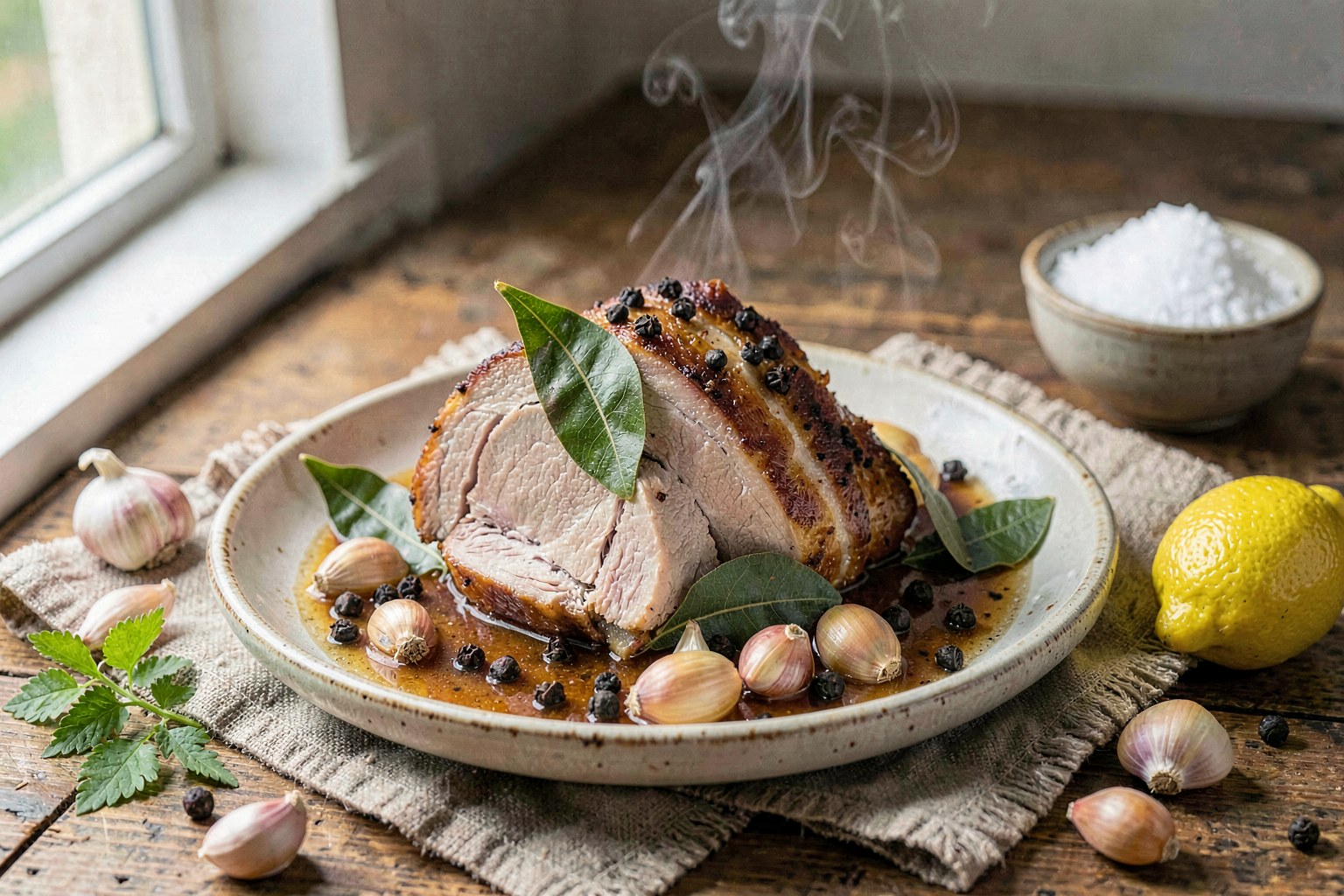
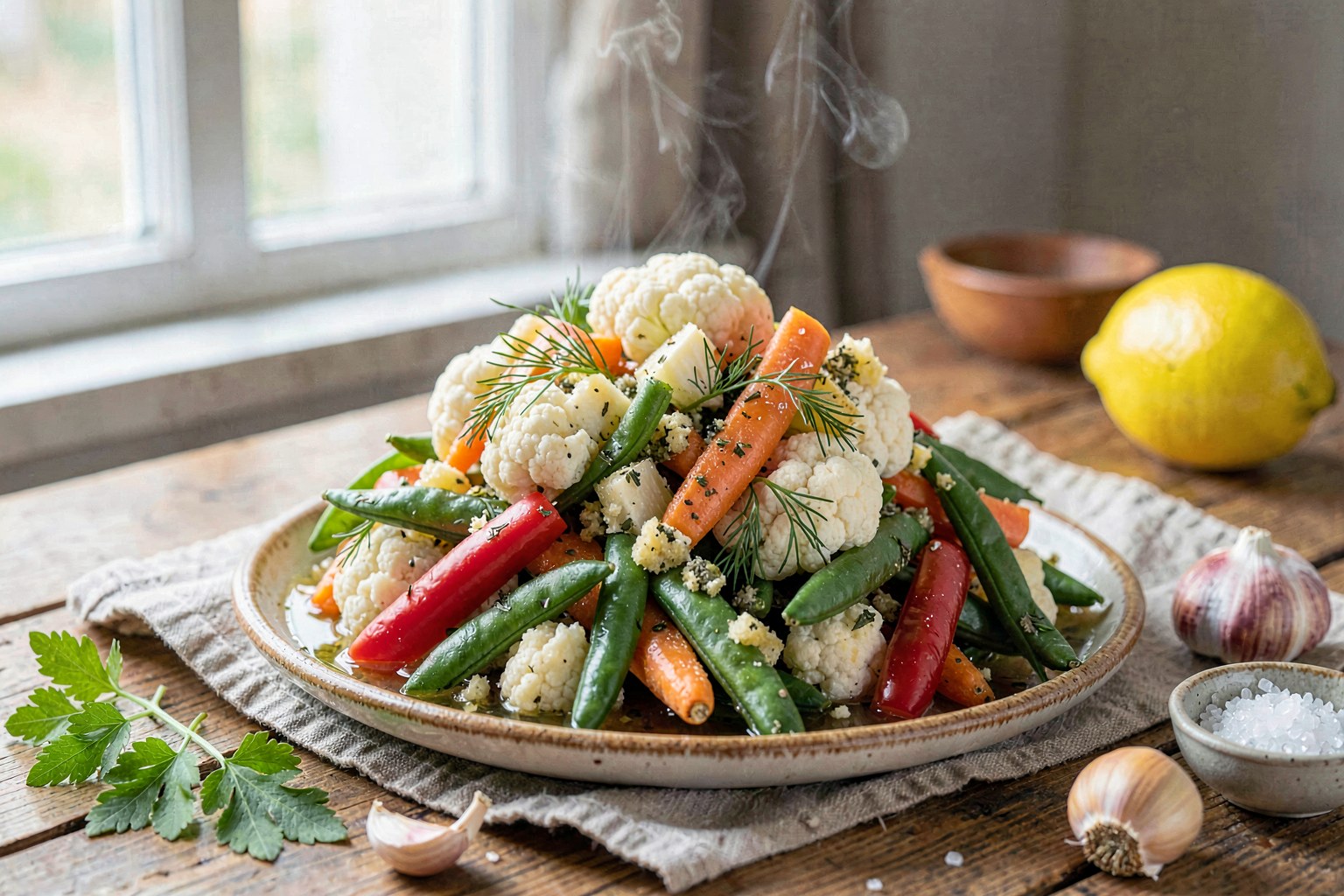
Levantine Garden Turshi: Fermented Crunch with Garlic & Dill
This traditional Levantine pickled vegetable medley delivers an intense crunch and tangy depth, fermented naturally in a brine of garlic, dill, and coriander without a drop of refined sugar or seed oil. The result is a vibrant, probiotic-rich condiment that cuts through rich meats or elevates simple grains, honoring the garden's bounty with pure, living ingredients.
A little context
Rooted in the Levantine tradition of preserving the harvest through brine rather than vinegar or sugar, this recipe strips away the modern shortcuts of industrial canning and added sweeteners. We honor the craft by using only sea salt, fresh organic produce, and extra-virgin olive oil, ensuring the fermentation process is driven by natural lacto-fermentation rather than vinegar acidity or sugar-boosted speed.
The longevity story
Turshi is a powerhouse of gut health, relying on wild fermentation to populate the gut with beneficial Lactobacillus bacteria that aid digestion and immunity. The brine is rich in polyphenols from fresh garlic and dill, which offer potent anti-inflammatory and antioxidant effects. By using high-quality extra-virgin olive oil and avoiding refined sugars, we preserve the vegetable's natural fiber and micronutrients like vitamin C and potassium, ensuring a low-glycemic, nutrient-dense addition to any meal.
Method
- 01
Prepare the brine
In a small bowl, dissolve 25 g (1.5 tbsp) of non-iodized sea salt into 500 ml (2 cups) of filtered warm water. Stir until completely dissolved, then let cool to room temperature. Do not use chlorinated tap water.
- 02
Blanch the vegetables
Bring a large pot of water to a rolling boil. Blanch the green beans for 2 minutes, then immediately remove with a slotted spoon. Briefly blanch the carrots and cauliflower for 1 minute to soften slightly but retain crunch. Shock all vegetables in an ice bath immediately to stop cooking.
- 03
Layer the jar
Pack the smashed garlic, fresh dill, coriander leaves, and crushed coriander seeds into the bottom of the clean glass jar. Layer the blanched and cooled vegetables tightly on top, leaving about 3 cm of headspace at the top. Add the red pepper strips last for visual contrast.
- 04
Submerge and seal
Pour the cooled salt brine over the vegetables until they are completely submerged. Use a fermentation weight or a small glass jar to keep vegetables under the liquid. Pour the 60 ml (1/4 cup) of extra-virgin olive oil on top to create an oxygen barrier.
- 05
Ferment
Seal the jar with an airlock or a loose lid. Place in a cool, dark spot (18-22°C / 65-72°F) for 3 to 5 days. Taste daily after day 3; the Turshi is ready when it is tangy, crunchy, and the vegetables have turned a vibrant yellow-green.
- 06
Store and serve
Once fermented to your liking, seal the jar tightly and move to the refrigerator. The Turshi will keep for up to 2 months. Serve chilled as a side dish with grilled meats, fish, or as a condiment for grain bowls.
Nutrition facts
Per serving · 1 of 4- — Saturated
- 3 g
- — Polyunsaturated
- 4 g
- Carbohydrates
- 36 g
- — Fiber
- 15 g
- — Sugars
- 10 g
- Cholesterol
- 0 mg
- Sodium
- 134 mg
- Potassium
- 1472 mg
Estimated from USDA FoodData Central for matched ingredients (92% ingredient coverage). Values vary with brand, preparation, and exact measurements.
Pro tips
- ✦Select organic, in-season vegetables to ensure the highest polyphenol content and best texture for fermentation.
- ✦Always use non-iodized sea salt; iodine can inhibit the growth of beneficial lactobacillus bacteria.
- ✦Ensure vegetables are completely submerged under the brine to prevent mold growth; the olive oil layer helps seal them.
- ✦Taste the Turshi daily after day 3; fermentation speed depends on room temperature, so it can be ready in 3 days or take 5.
- ✦Source extra-virgin olive oil with high polyphenol count (look for harvest dates within the last 12 months) for maximum health benefits.
Shop this recipe
As an Amazon Associate we earn from qualifying purchases.
Substitutions
- green beans → fresh asparagus spears (blanch for 1.5 minutes; adds a distinct earthy flavor)
- coriander leaves → fresh parsley (adds a milder, grassy note if coriander is too strong)
- red bell pepper → radishes sliced thin (adds a peppery crunch and maintains the low-sugar profile)
Storage
Keep refrigerated in a sealed glass jar for up to 2 months. The flavor deepens over time. Do not freeze as it will destroy the probiotic cultures and soften the texture.
What to serve with it
- Grilled wild-caught salmon or pasture-raised lamb chops
- Warm whole-grain flatbread made with sprouted spelt flour
- Sparkling water with a squeeze of fresh lemon
- Green tea or hibiscus tea (unsweetened)
FAQ
Can I use apple cider vinegar instead of salt brine?+
You can, but traditional Turshi relies on lacto-fermentation (salt brine) to create probiotics. Vinegar pickling kills bacteria and offers no gut health benefits.
Why is there a white film on top?+
This is likely kahm yeast, which is harmless. Simply skim it off. If the smell is foul or there is fuzzy colored mold, discard the batch.
Can I add sugar to speed up fermentation?+
No. We rely on the natural sugars in the vegetables. Adding refined sugar violates the Blueprint principles; the fermentation will proceed correctly with just salt and vegetables.
Share this recipe
Notes from the community
Sign in to leave a note.
No notes yet — be the first.
You might also like