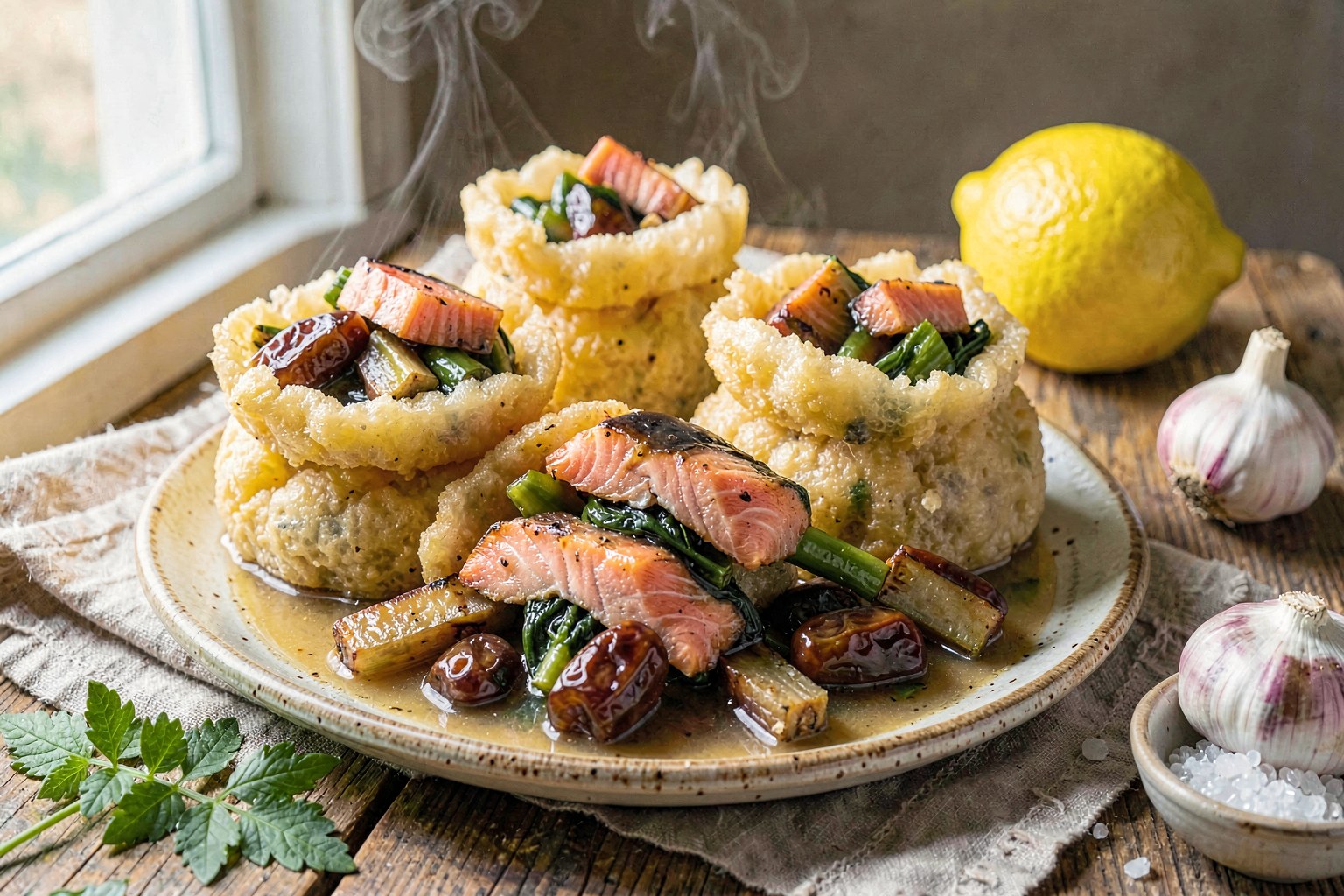
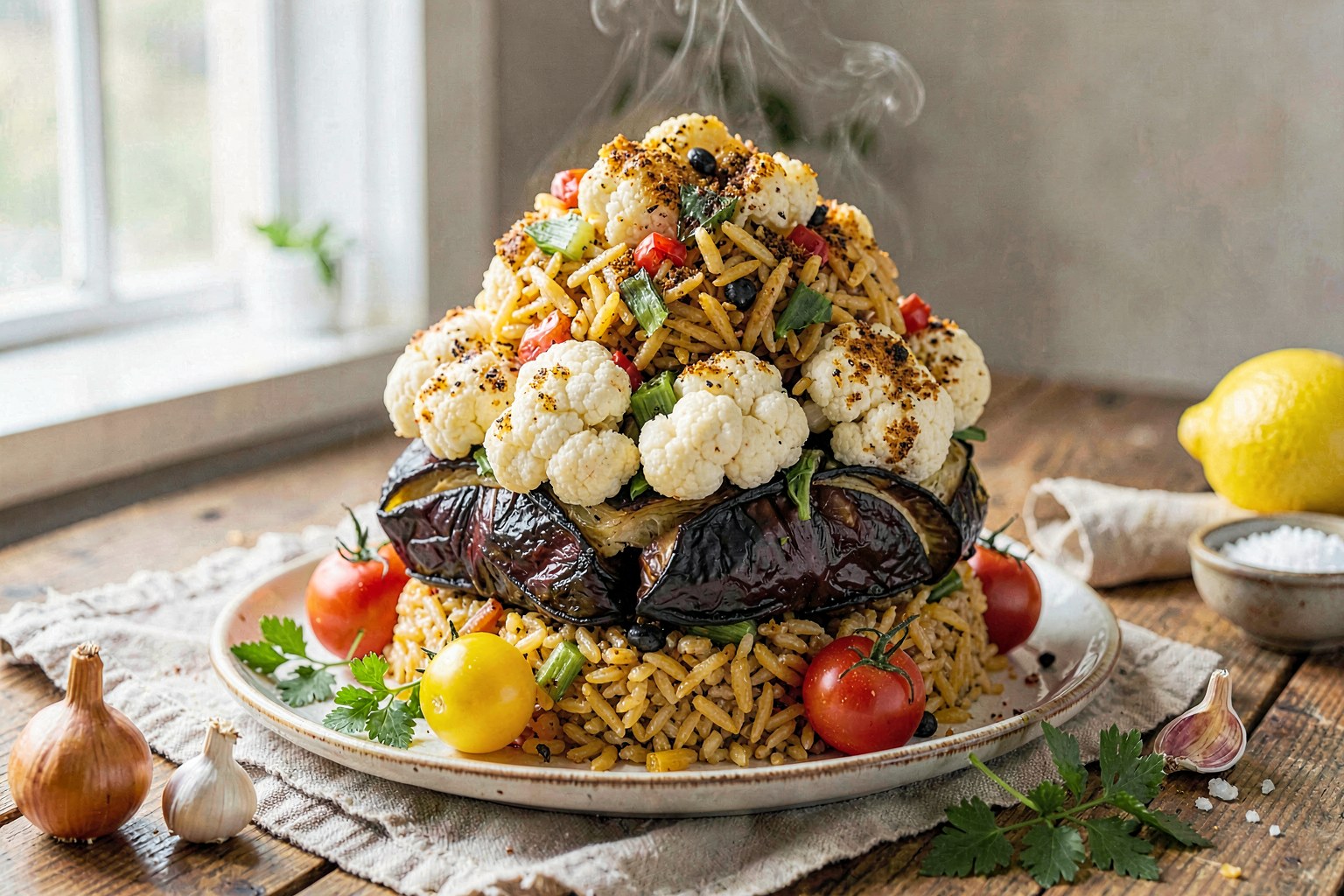
Levantine Garden Vegetable Maqluba with Roasted Eggplant and Spiced Rice
A stunning upside-down casserole where layers of roasted eggplant, cauliflower, and spiced basmati rice are inverted to reveal a golden, vegetable-rich crown. This farm-fresh version swaps traditional seed oils for antioxidant-rich extra-virgin olive oil and omits refined sugar, relying on the natural sweetness of caramelized onions and ripe tomatoes for depth.
A little context
Maqluba, meaning 'upside down,' is a cherished Levantine tradition celebrating the abundance of the harvest. We honor this heritage by strictly using organic, in-season vegetables and high-quality fats, replacing the refined sugar often added to the tomato base with the natural sweetness of Medjool dates, and ensuring no industrial seed oils are used for frying, adhering to a whole-food, longevity-focused philosophy.
The longevity story
This dish is a polyphenol powerhouse, leveraging the nitrates in eggplant and the sulforaphane precursors in cauliflower to support cellular health. The generous use of extra-virgin olive oil provides oleocanthal, a potent anti-inflammatory compound that mimics ibuprofen's effects without the side effects. By utilizing whole basmati rice and avoiding ultra-processed bouillon, we maintain a lower glycemic load while maximizing fiber intake from the diverse vegetable stack, supporting a healthy gut microbiome.
Method
- 01
Prepare the Eggplant
Salt the eggplant slices generously and let them rest on a wire rack for 20 minutes to draw out moisture and bitterness. Pat them completely dry with clean kitchen towels.
- 02
Roast the Vegetables
Heat 40 ml of extra-virgin olive oil in a large skillet over medium-high heat. Sear the eggplant slices in batches until deeply golden brown on both sides (about 4 minutes per side). Remove and set aside. In the same pan, toss the cauliflower florets with the remaining oil and roast until tender-crisp and browned. Set aside.
- 03
Build the Flavor Base
In the same pot you will cook the rice, sauté the sliced onions in a splash of oil over medium heat until soft and translucent (about 8 minutes). Add the diced tomatoes, chopped Medjool dates, allspice, cinnamon, black pepper, and 1 tsp of sea salt. Cook for 5 minutes until the mixture thickens into a fragrant paste.
- 04
Layer the Casserole
Arrange the seared eggplant slices in a tight, single layer at the bottom of the pot. Top evenly with the roasted cauliflower. Pour the spiced tomato-onion mixture over the vegetables, spreading it gently to cover.
- 05
Add the Rice
Spread the soaked and drained basmati rice evenly over the vegetable layer. Do not pack it down; keep it loose so the steam can circulate. Pour the homemade vegetable broth over the rice until the liquid is just 1 cm above the rice level.
- 06
Simmer
Bring the pot to a boil, then immediately reduce the heat to the lowest setting. Cover tightly with the lid and simmer undisturbed for 25-30 minutes, or until the rice is tender and the liquid is fully absorbed.
- 07
Rest and Invert
Remove the pot from heat and let it rest, covered, for 10 minutes. Place the large serving platter upside down over the pot. Wearing oven mitts, firmly hold the lid and platter together and quickly flip the pot over. Let it sit for 2 minutes before lifting the pot to reveal the layered vegetables.
- 08
Garnish and Serve
If any rice sticks, gently push it back into place. Garnish generously with fresh parsley and toasted pine nuts. Serve immediately while warm.
Nutrition facts
Per serving · 1 of 4- — Saturated
- 5 g
- — Polyunsaturated
- 13 g
- Carbohydrates
- 33 g
- — Fiber
- 4 g
- — Sugars
- 14 g
- Cholesterol
- 40 mg
- Sodium
- 917 mg
- Potassium
- 574 mg
Estimated from USDA FoodData Central for matched ingredients (54% ingredient coverage). Values vary with brand, preparation, and exact measurements.
Pro tips
- ✦Sourcing tip: Look for eggplants that feel heavy for their size with smooth, shiny skin; dull skin or soft spots indicate age and bitterness.
- ✦Do not skip the salting step for the eggplant; it ensures the flesh stays firm and doesn't absorb excessive oil during searing.
- ✦Ensure your broth is homemade or certified low-sodium; commercial broths often contain hidden seed oils or MSG.
- ✦The 'resting' phase after cooking is critical; it allows the rice grains to firm up so the Maqluba holds its shape when inverted.
- ✦Use a high-quality, cold-pressed extra-virgin olive oil for the searing to maximize polyphenol intake, but keep the heat moderate to prevent burning.
Shop this recipe
As an Amazon Associate we earn from qualifying purchases.
Substitutions
- basmati rice → farro or spelt berries (increase liquid by 100 ml and cooking time by 10 minutes; adds a nuttier texture.)
- Medjool dates → pure maple syrup (1 tbsp) or monk fruit syrup (add during the tomato cooking step; reduces fiber content slightly but maintains low glycemic impact.)
- cauliflower → broccoli or zucchini rounds (zucchini should be salted and drained like eggplant to prevent sogginess.)
Storage
Store leftovers in a glass container in the refrigerator for up to 3 days. Reheat gently in a covered skillet with a splash of water or broth. Freezing is not recommended as the eggplant texture may become mushy upon thawing.
What to serve with it
- Warm green tea with mint
- Sparkling water with fresh lemon and a pinch of sea salt
- A glass of dry red wine (Cabernet Sauvignon or Syrah) for polyphenol synergy
- Simple arugula salad with lemon juice and EVOO
FAQ
Can I use canned tomatoes instead of fresh?+
You can, but ensure they are organic and packed in water with no added sugar or citric acid. Fresh vine-ripened tomatoes offer superior flavor and lower sodium.
Why did my rice stick to the bottom?+
This usually happens if the heat was too high during the simmer or the pot wasn't heavy-bottomed. Use the lowest heat setting and a heavy Dutch oven.
Is this recipe suitable for a strict low-carb diet?+
Basmati rice adds carbohydrates. For a strict low-carb approach, substitute the rice with riced cauliflower, though the texture and cooking time will change significantly.
Share this recipe
Notes from the community
Sign in to leave a note.
No notes yet — be the first.
You might also like