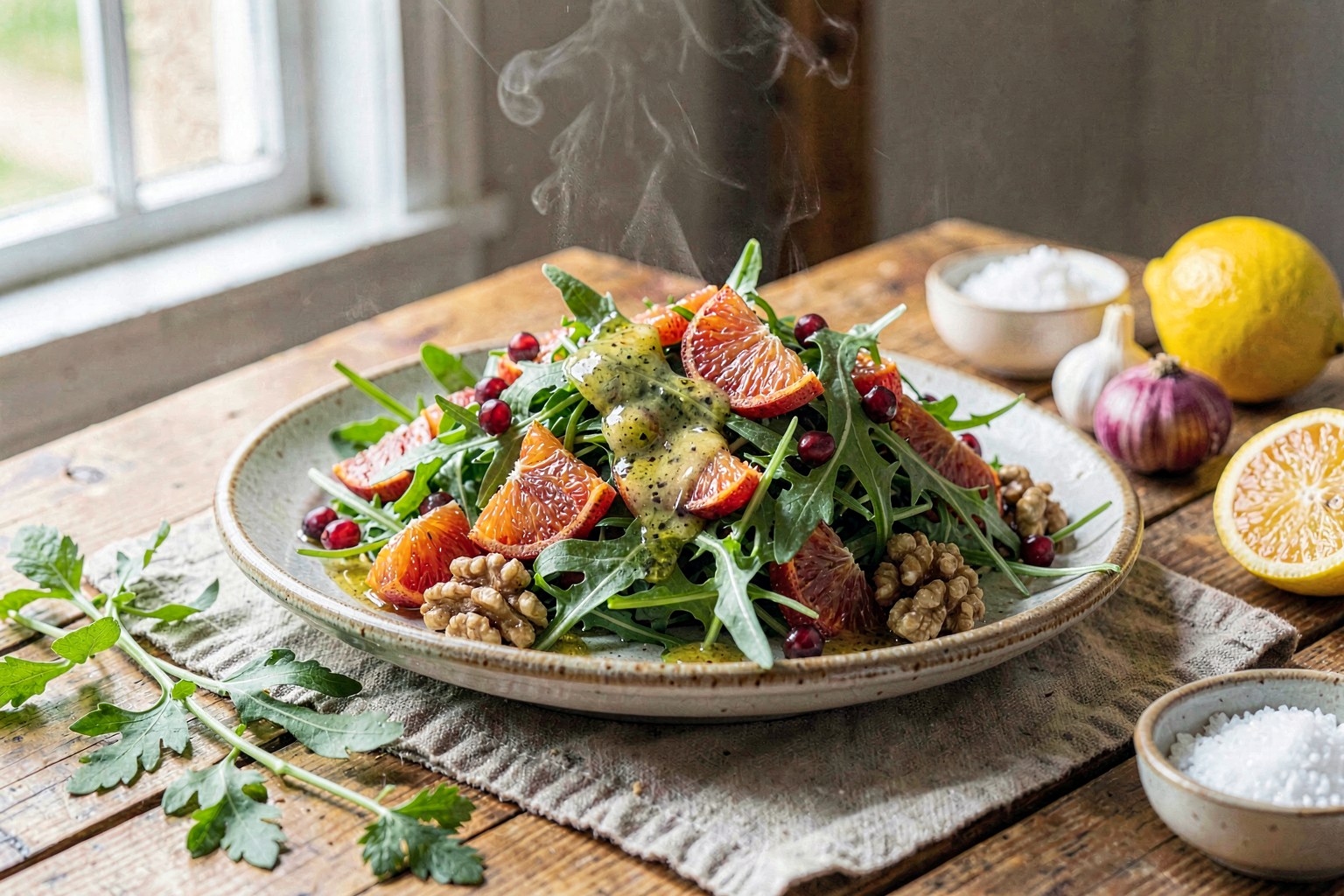
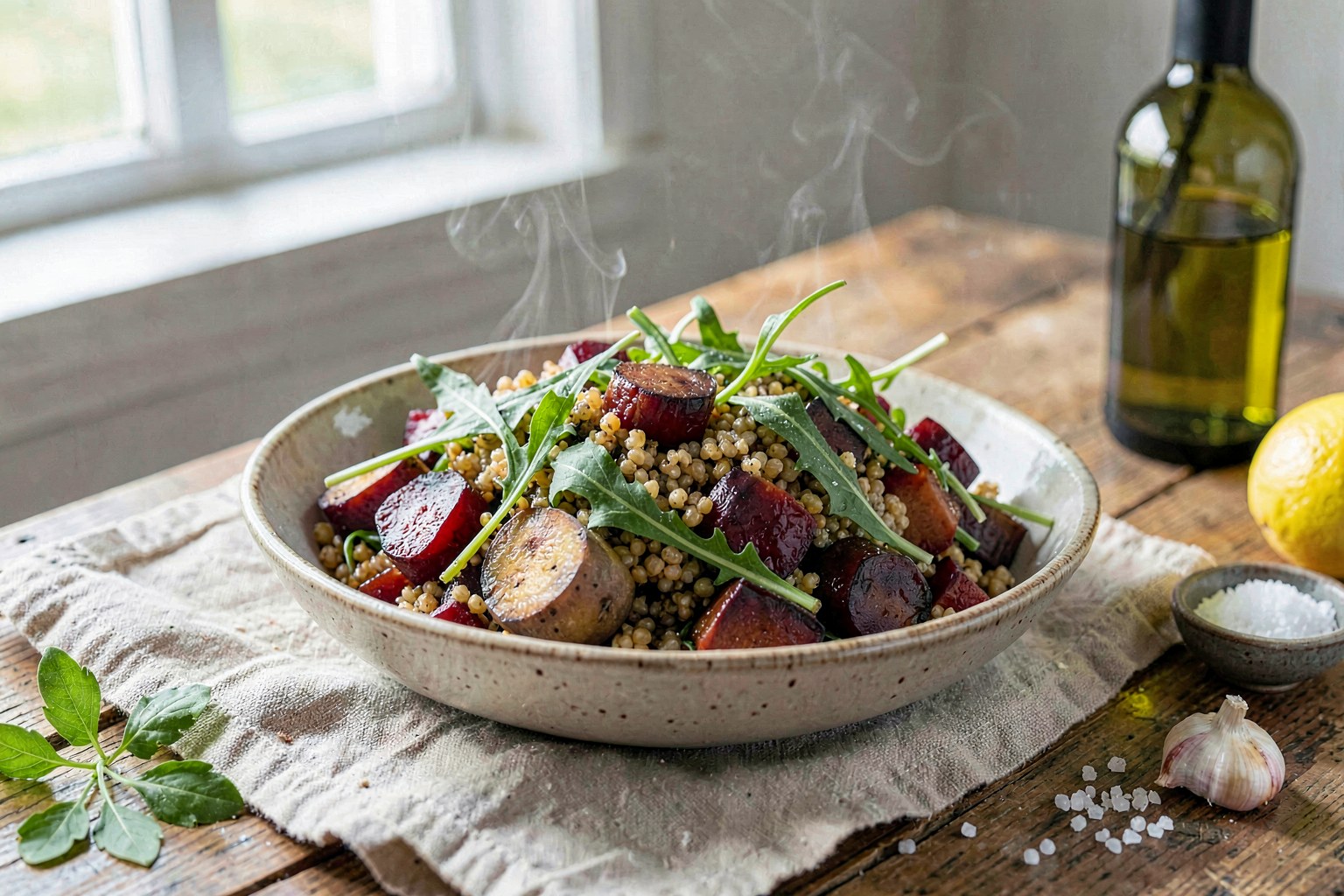
Warm Farro & Roasted Beet Salad Bowl
This dish features nutty, sprouted farro tossed with earthy, caramelized roasted beets and peppery arugula, all bound by a polyphenol-rich extra-virgin olive oil and balsamic reduction. It captures the essence of California's Central Valley harvest, offering a warm, satisfying dinner that balances complex carbohydrates with vibrant micronutrients without a single drop of refined sugar or seed oil.
A little context
Rooted in the California farm-to-table tradition of celebrating seasonal root vegetables and ancient grains, this recipe honors the agricultural heritage of the region. We have honored the traditional earthy sweetness of roasted beets by using the vegetable's natural sugars through slow roasting rather than adding refined sugar or honey glazes. Additionally, we replaced the seed oils often found in commercial vinaigrettes with cold-pressed extra-virgin olive oil, ensuring the dish remains free of inflammatory fats while preserving the authentic, rustic flavor profile.
The longevity story
The beets provide dietary nitrates that support nitric oxide production for vascular health and blood flow, while the sprouted farro offers a lower glycemic index and higher bioavailability of minerals like magnesium and zinc compared to standard grains. The extra-virgin olive oil contributes high levels of oleocanthal and hydroxytyrosol, potent polyphenols with proven anti-inflammatory properties that protect cellular integrity. Arugula adds glucosinolates and vitamin K, and the optional addition of fermented pickled onions introduces probiotics to support the gut microbiome, a core tenet of longevity nutrition.
Method
- 01
Roast the beets
Preheat oven to 200°C (400°F). Place whole beets on a large sheet of heavy-duty aluminum foil. Drizzle with 15 ml (1 tbsp) of the extra-virgin olive oil and season with half the sea salt. Wrap tightly to seal in steam. Roast for 45–55 minutes, or until a paring knife slides easily into the center. Let cool completely, then peel off skins (they should slip off easily) and cut into 2 cm (3/4-inch) wedges.
- 02
Cook the farro
While beets roast, rinse the farro under cold water. In a large pot, combine farro, filtered water, and remaining sea salt. Bring to a boil, then reduce heat to low, cover, and simmer for 25–30 minutes until tender but still chewy (al dente). Drain any excess water and spread the farro on a baking sheet to cool slightly, preventing it from steaming into a mush.
- 03
Make the dressing
In a small bowl, whisk together the aged balsamic vinegar, remaining 45 ml (3 tbsp) extra-virgin olive oil, fresh lemon juice, Dijon mustard, and thyme. Taste and adjust acidity if needed. The dressing should be bright and emulsified.
- 04
Toast the walnuts
Place raw walnuts in a dry skillet over medium-low heat. Toast for 3–4 minutes, shaking the pan frequently, until fragrant and lightly golden. Immediately transfer to a plate to stop the cooking process and prevent burning.
- 05
Warm the beets
In a large skillet over medium heat, add the roasted beet wedges and a splash of the dressing. Toss gently for 2–3 minutes just to warm them through and coat them in the vinaigrette. Remove from heat.
- 06
Assemble the bowl
In a large serving bowl, combine the warm farro, warm beets, and fresh arugula. Pour the remaining dressing over the mixture and toss gently to combine without bruising the arugula.
- 07
Plate and finish
Divide the salad among four bowls. Top each with crumbled pasture-raised goat cheese and the toasted walnuts. Serve immediately while the farro and beets are still warm.
Nutrition facts
Per serving · 1 of 4- — Saturated
- 6 g
- — Polyunsaturated
- 9 g
- Carbohydrates
- 35 g
- — Fiber
- 8 g
- — Sugars
- 13 g
- Cholesterol
- 9 mg
- Sodium
- 586 mg
- Potassium
- 830 mg
Estimated from USDA FoodData Central for matched ingredients (93% ingredient coverage). Values vary with brand, preparation, and exact measurements.
Pro tips
- ✦When selecting beets, look for firm, smooth skin with vibrant green tops attached if possible; the greens are a sign of freshness and can be sautéed as a side dish.
- ✦Do not skip the cooling step for the roasted beets; peeling them while hot makes a mess, and they hold their shape better when slightly cool.
- ✦For maximum polyphenol retention, buy your extra-virgin olive oil in dark glass bottles and check for a harvest date within the last 12 months.
- ✦If you prefer a vegan version, swap the goat cheese for a sprinkle of nutritional yeast or a dollop of cashew cream.
- ✦Toast your walnuts in a dry pan, not in oil, to preserve their delicate omega-3 fatty acids which can degrade under high heat.
Shop this recipe
As an Amazon Associate we earn from qualifying purchases.
Substitutions
- farro → spelt berries or brown rice (spelt has a similar nutty profile; brown rice takes longer to cook (50 mins) but is gluten-free)
- goat cheese → grilled halloumi or vegan feta (halloumi adds a salty, chewy texture; vegan feta should be coconut-oil based, not seed-oil based)
- arugula → watercress or baby spinach (watercress offers a similar peppery kick; spinach is milder and wilts faster)
Storage
Store cooled components separately in glass containers in the refrigerator for up to 4 days. The dressing keeps for 5 days. Reheat the farro and beets gently in a skillet with a splash of water; do not microwave to preserve texture.
What to serve with it
- A glass of dry Pinot Noir or a sparkling water with fresh lemon and rosemary sprig
- A side of warm sourdough bread brushed with garlic-infused EVOO
- Green tea with a slice of ginger to aid digestion
FAQ
Can I use canned beets to save time?+
You can, but roasted beets have a deeper, concentrated sweetness and better texture. If using canned, choose brands packed in water without added sugar or seed oils, and rinse thoroughly.
Is farro gluten-free?+
No, traditional farro is a type of wheat and contains gluten. For a gluten-free version, substitute with spelt-free certified quinoa, buckwheat groats, or brown rice.
How do I know if my balsamic vinegar is pure?+
Read the label: it should list only 'grape must' and 'wine vinegar'. Avoid any ingredients like 'caramel color', 'sugar', or 'corn syrup'.
Share this recipe
Notes from the community
Sign in to leave a note.
No notes yet — be the first.
You might also like