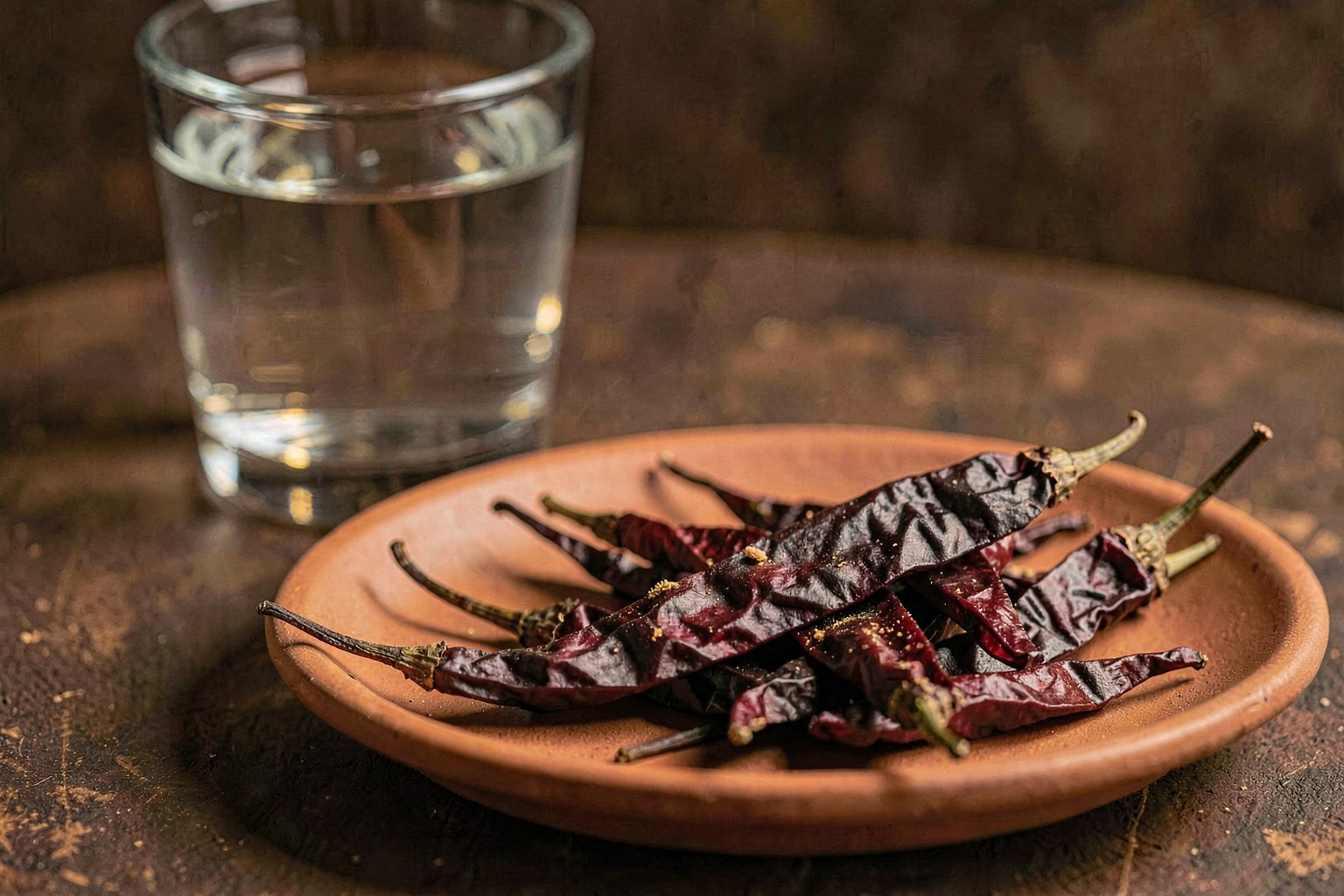
Ancho
Ancho is the dried form of the poblano pepper, offering a sweet, raisin-like flavor with mild heat and a complex, fruity depth.
What it is
The ancho pepper is simply a ripe poblano pepper that has been sun-dried until leathery. While fresh poblanos are dark green and mild, the drying process concentrates their sugars, transforming the flavor profile into something reminiscent of dried fruit, tobacco, and licorice. Botanically, it belongs to the Capsicum annuum species. In its whole dried form, it appears dark brown, almost black, with a wrinkled, broad, heart-like shape. It is rarely used fresh; instead, it is a cornerstone of Mexican mole sauces, adobos, and rubs, providing a foundational sweetness and body rather than sharp heat.
How to buy
Seek out whole dried chiles that are pliable but not brittle; they should bend slightly without snapping, indicating they haven't over-dried or lost their essential oils. The color should be a deep, uniform mahogany or dark brown. Avoid packages with significant dust, holes, or white mold spots, which signal age or poor storage. The scent should be sweet and smoky, not musty or sour. While mainstream supermarkets often stock them in the spice aisle, quality varies significantly. For the best flavor, visit a dedicated Latin American grocer or order from specialty spice merchants who rotate stock frequently, as dried chiles lose potency after a year.
Storage
Store whole dried anchos in an airtight container in a cool, dark pantry for up to one year, though they are best used within six months for peak flavor. Once ground into powder, they lose potency rapidly; keep ancho powder in a sealed jar away from light and heat, using it within three to four months. Signs of spoilage include a complete lack of aroma, a musty smell, or visible mold. If the chiles become brittle and crumble at the slightest touch, they are past their prime and will yield a dusty, flavorless paste.
How to use
The standard technique involves toasting the dried chiles lightly on a comal or skillet for 30 seconds per side until fragrant, then soaking them in hot water for 20 minutes to rehydrate before blending into pastes or sauces. Never skip the rehydration step if using them whole, as they will not blend smoothly. When substituting for fresh poblano in a recipe calling for roasting, remember that ancho provides intense dried-fruit sweetness and no fresh crunch; adjust sugar content in the dish accordingly. A common mistake is under-toasting, which leaves the flavor raw and grassy, or over-toasting, which introduces a bitter, burnt taste.
Where it comes from
Originating in the central highlands of Mexico, the ancho is indispensable to the cuisine of Puebla and Oaxaca, where it forms the base of the famous 'Three Chiles' mole (alongside mulato and pasilla). It represents the Mexican culinary philosophy of 'recado,' where dried chiles are the primary vehicle for complex flavor building, distinct from the fresh salsa culture of the north. Its presence in a kitchen signals a commitment to traditional, slow-cooked sauces that rely on the deep, layered sweetness of the dried fruit rather than immediate heat.
Substitutions
- Mulato pepper — The closest match; slightly darker, more bitter, and less sweet, but works identically in moles.
- Guajillo pepper — Use a 1:1 ratio if you need to substitute; it offers more tang and less sweetness, resulting in a sharper, less fruity sauce.