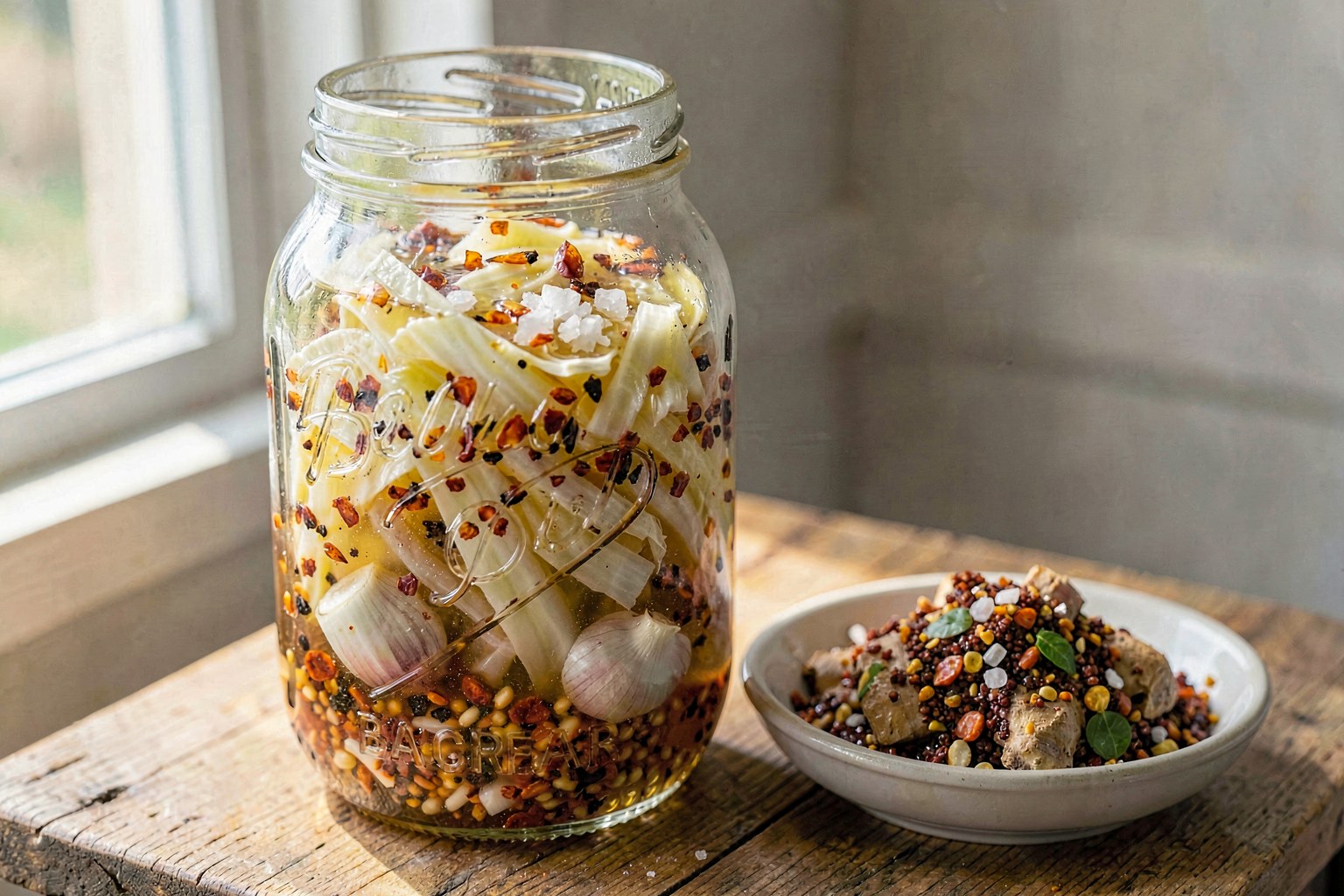
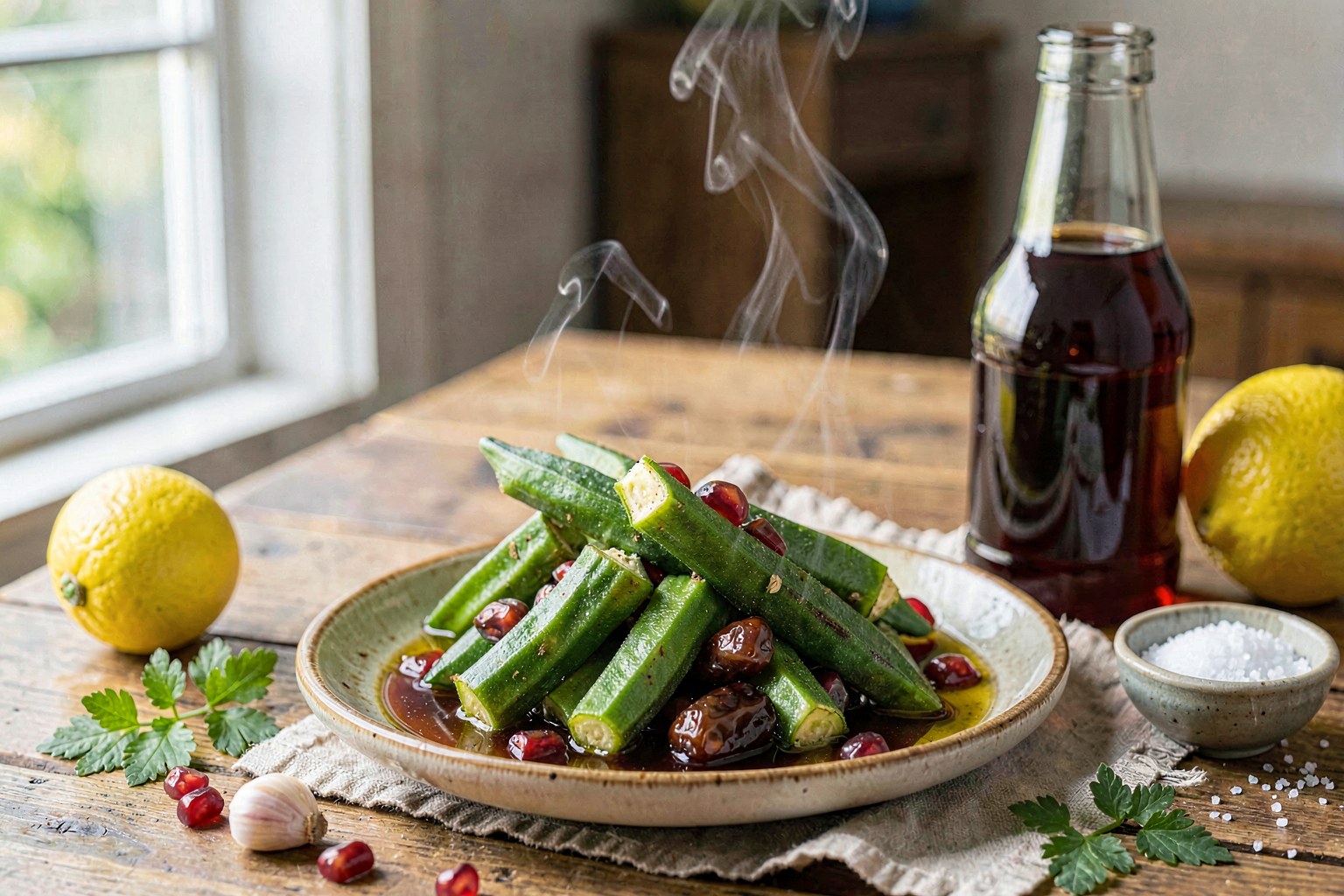
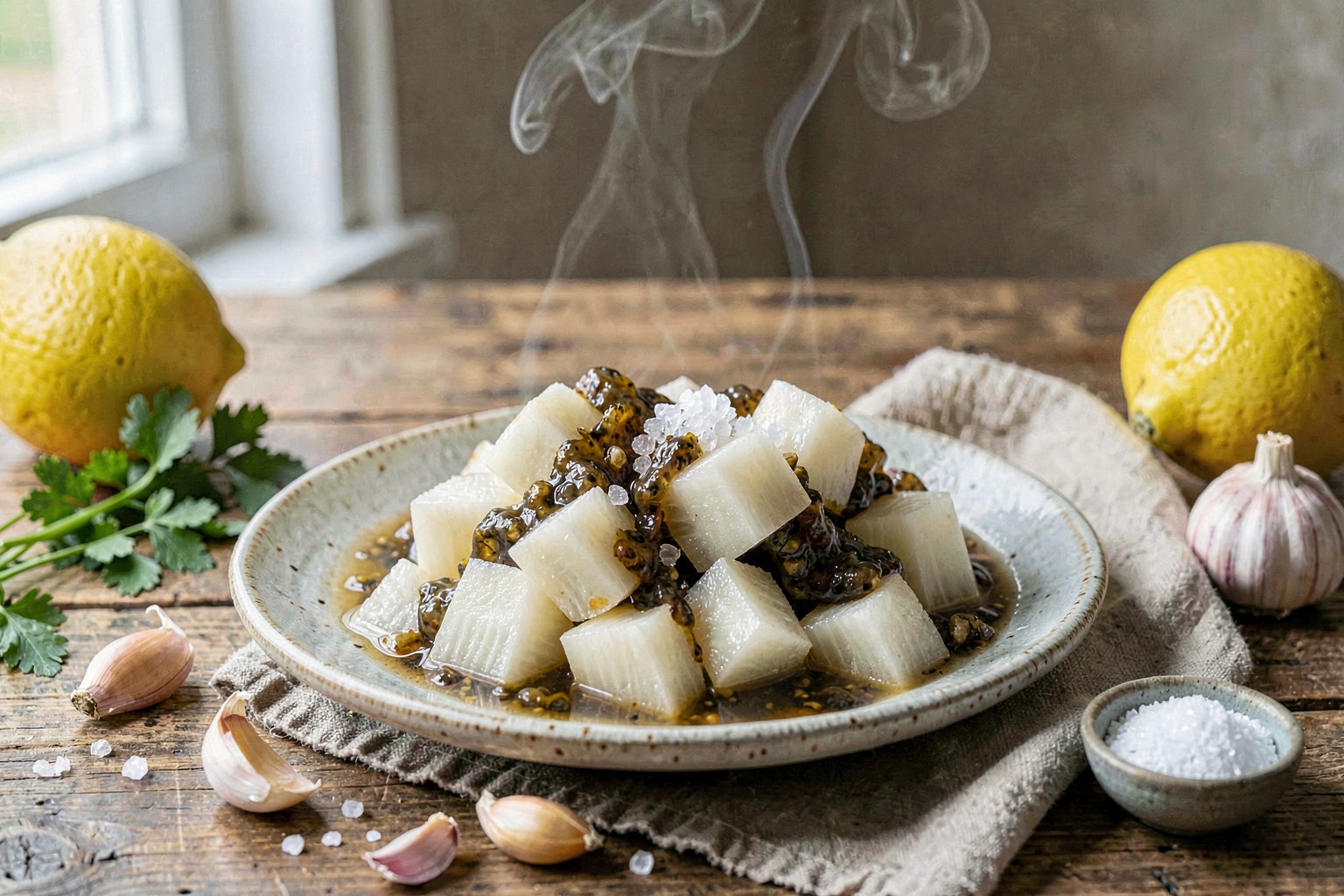
Jjok-gi (Traditional Salted Radish Ferment)
Crisp daikon radish cubes cured in a brine of wild-caught anchovy extract and sea salt. This probiotic-rich banchan delivers deep umami without refined sugar or seed oils, perfect as a longevity-focused side for dinner.
A little context
Rooted in the Korean tradition of kimjang (winter fermentation), this version honors the ancestral method of salting vegetables for preservation. We have stripped out the refined sugar and wheat pastes often found in modern recipes to lower the glycemic load while preserving the microbial benefits essential for gut health.
The longevity story
Radishes are rich in nitrates which support healthy blood flow and mitochondrial function, while the fermentation process cultivates lactobacillus for gut lining integrity. Wild-caught anchovies provide marine omega-3s to counter inflammatory omega-6s, and garlic and ginger supply allicin and gingerol for systemic inflammation control. The absence of refined sugar ensures this ferment does not spike blood glucose, keeping insulin levels stable.
Method
- 01
Salt the radish
Place cubed radish in a large bowl. Sprinkle 40 g of sea salt over the radish and toss thoroughly. Let sit at room temperature for 45 minutes to draw out moisture and soften slightly.
- 02
Rinse and drain
Rinse the radish cubes under cold filtered water to remove excess salt. Drain well in a colander for 15 minutes. Do not squeeze dry; you want them moist but not waterlogged.
- 03
Prepare the ferment paste
In a small bowl, mix the minced garlic, grated ginger, gochugaru, remaining 20 g sea salt, and anchovy fish sauce until it forms a thick, fragrant paste.
- 04
Combine ingredients
Add the drained radish cubes and scallions to the ferment paste. Massage by hand (wear gloves if sensitive to chili) for 2 minutes until every piece is evenly coated.
- 05
Pack the jar
Pack the mixture tightly into the glass fermentation jar, pressing down to release trapped air bubbles. Ensure the vegetables are submerged under their own liquid.
- 06
Ferment
Seal the jar. Leave at room temperature (20°C / 68°F) for 24 to 48 hours to begin fermentation. Check daily for bubbles. Once bubbly, move to the refrigerator to slow the process.
- 07
Serve
Taste after 2 days. If the flavor is tangy and crisp, it is ready. Store in the fridge for up to 3 weeks. Serve chilled as a banchan side.
Nutrition facts
Per serving · 1 of 4- — Saturated
- 0 g
- — Polyunsaturated
- 1 g
- Carbohydrates
- 11 g
- — Fiber
- 4 g
- — Sugars
- 5 g
- Cholesterol
- 13 mg
- Sodium
- 6469 mg
- Potassium
- 695 mg
Estimated from USDA FoodData Central for matched ingredients (57% ingredient coverage). Values vary with brand, preparation, and exact measurements.
Pro tips
- ✦Select daikon radishes that are heavy for their size; light weight indicates pithiness inside.
- ✦Ensure your fish sauce is labeled 'sugar-free' as many commercial brands add corn syrup or molasses.
- ✦Wear nitrile gloves when handling gochugaru to prevent chili burn on your skin.
- ✦If the liquid does not cover the radishes after packing, add a small amount of filtered water mixed with extra salt.
Shop this recipe
As an Amazon Associate we earn from qualifying purchases.
Substitutions
- wild-caught anchovy fish sauce → organic soy-free mushroom soy sauce or coconut aminos (makes the dish vegan while maintaining umami depth)
- daikon radish → Korean white radish (mu) (slightly sweeter and denser, ideal for traditional texture)
Storage
fridge 3 weeks in a glass container; keep submerged in brine to prevent oxidation
What to serve with it
- steamed brown rice or cauliflower rice
- grilled wild-caught salmon
- unsweetened green tea
- bone broth
FAQ
Is this safe to ferment without a starter?+
Yes, wild lactobacillus lives on the vegetable skins. The salt concentration inhibits harmful bacteria while allowing beneficial microbes to thrive.
Can I eat this immediately?+
You can, but it won't have the probiotic benefits or tangy depth. Fermentation takes at least 24 hours to activate the lactic acid bacteria.
Share this recipe
Notes from the community
Sign in to leave a note.
No notes yet — be the first.
You might also like