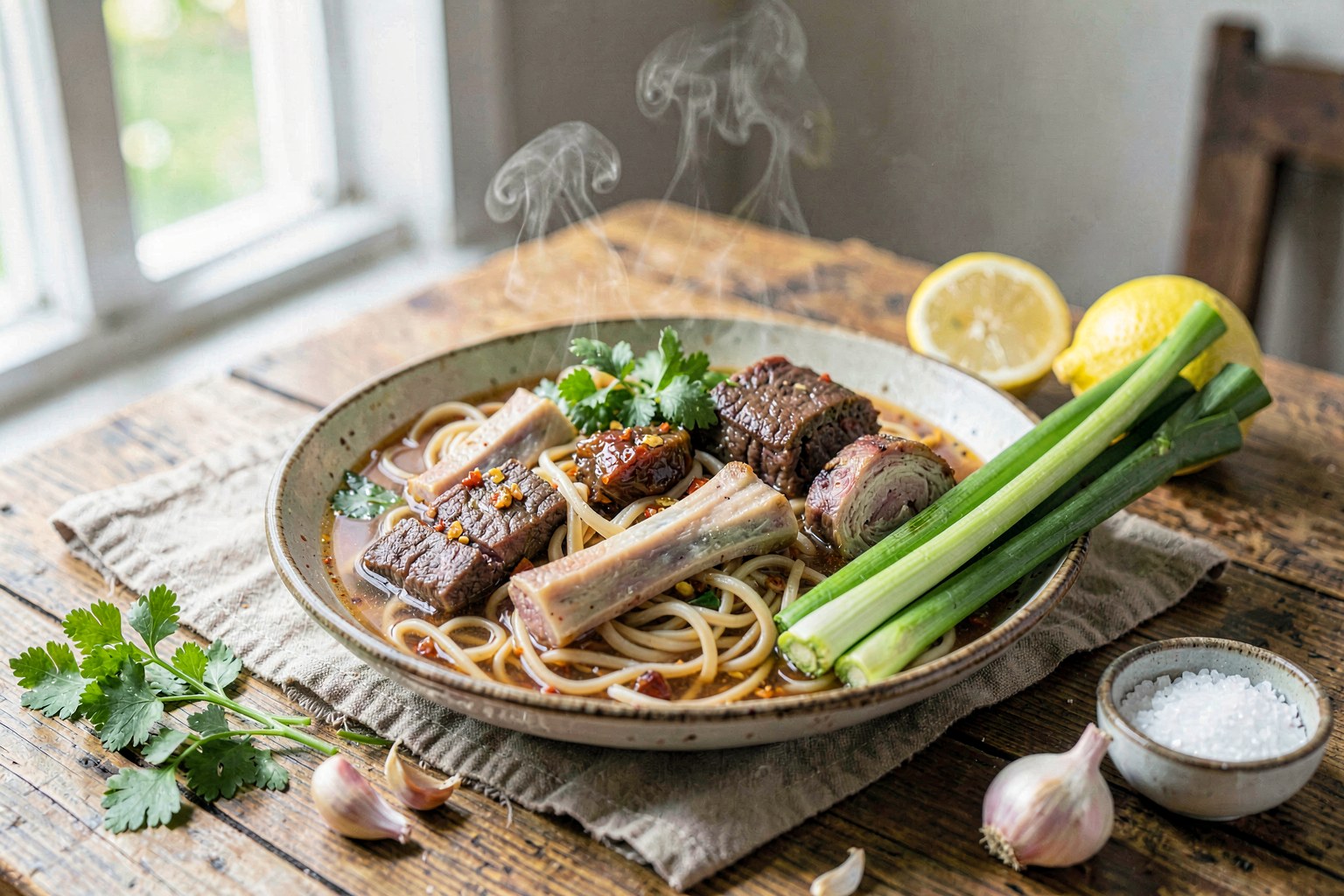
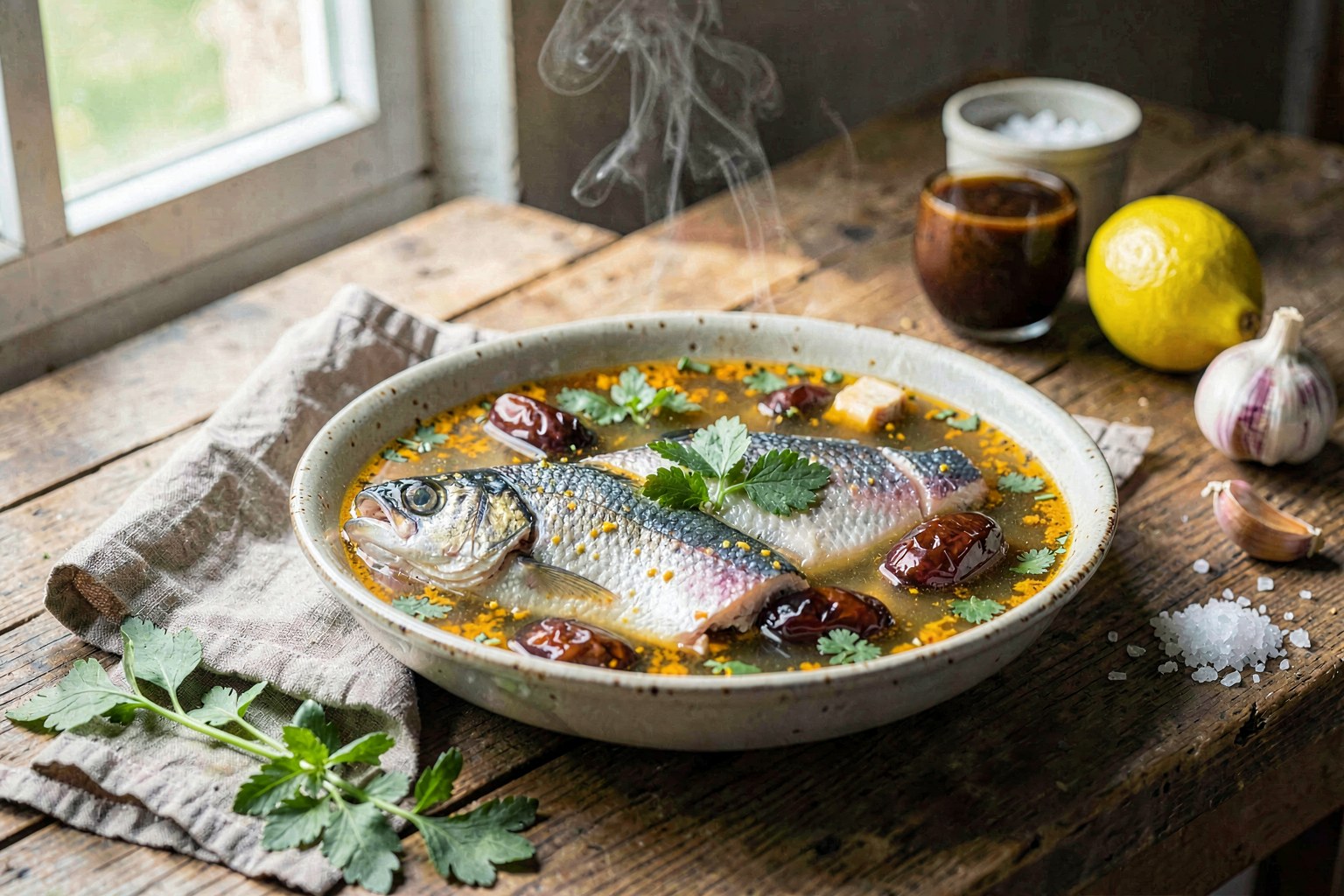
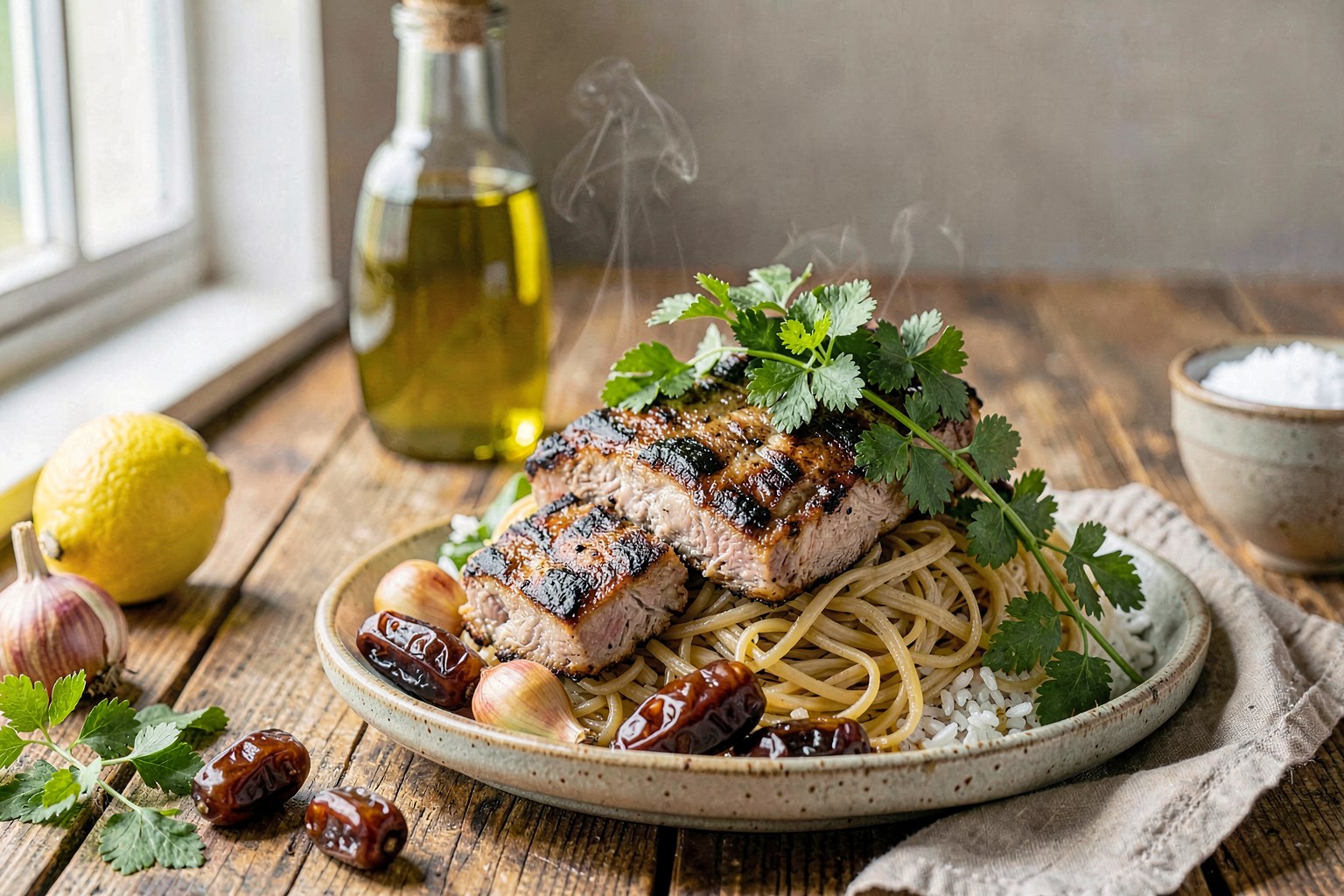
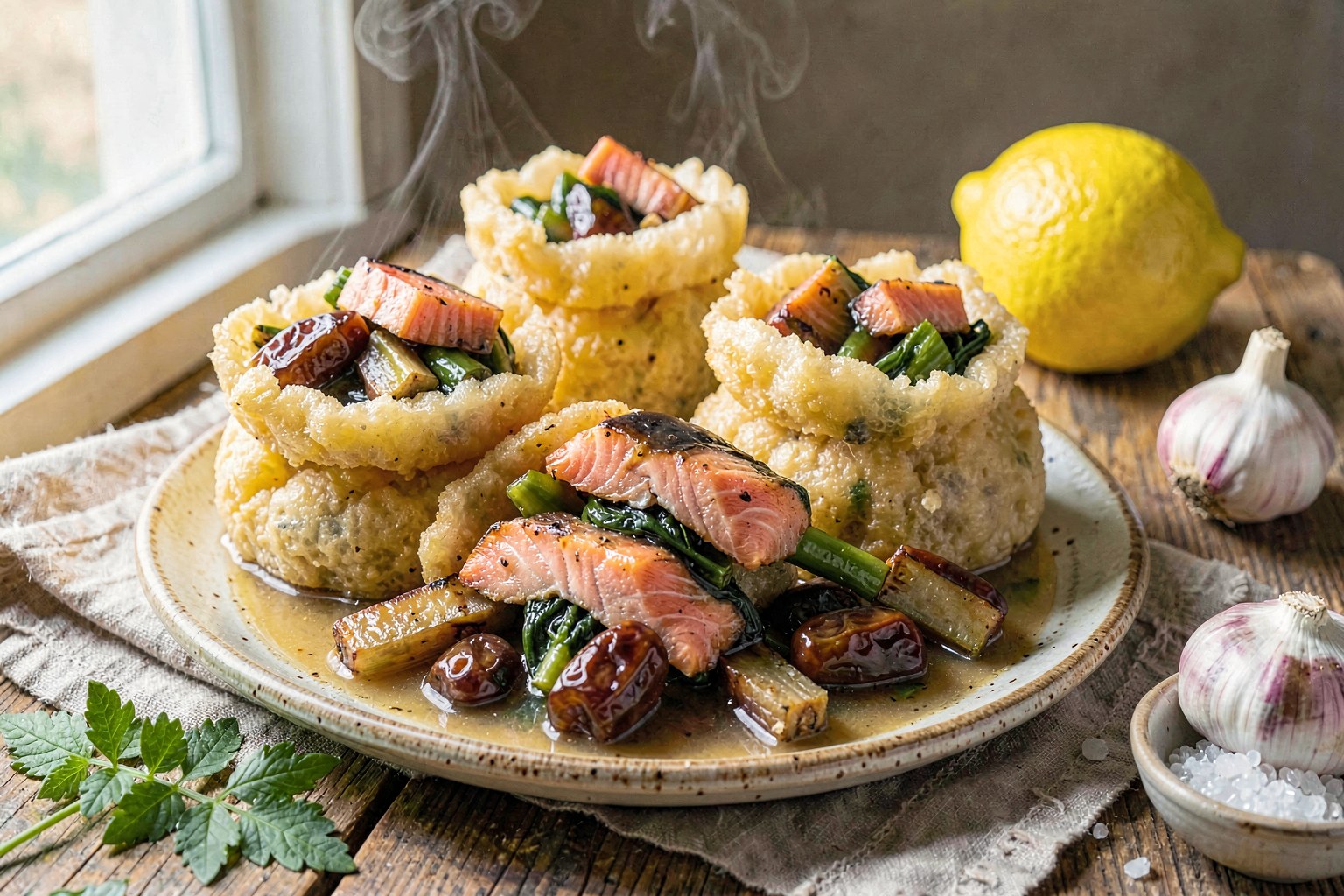
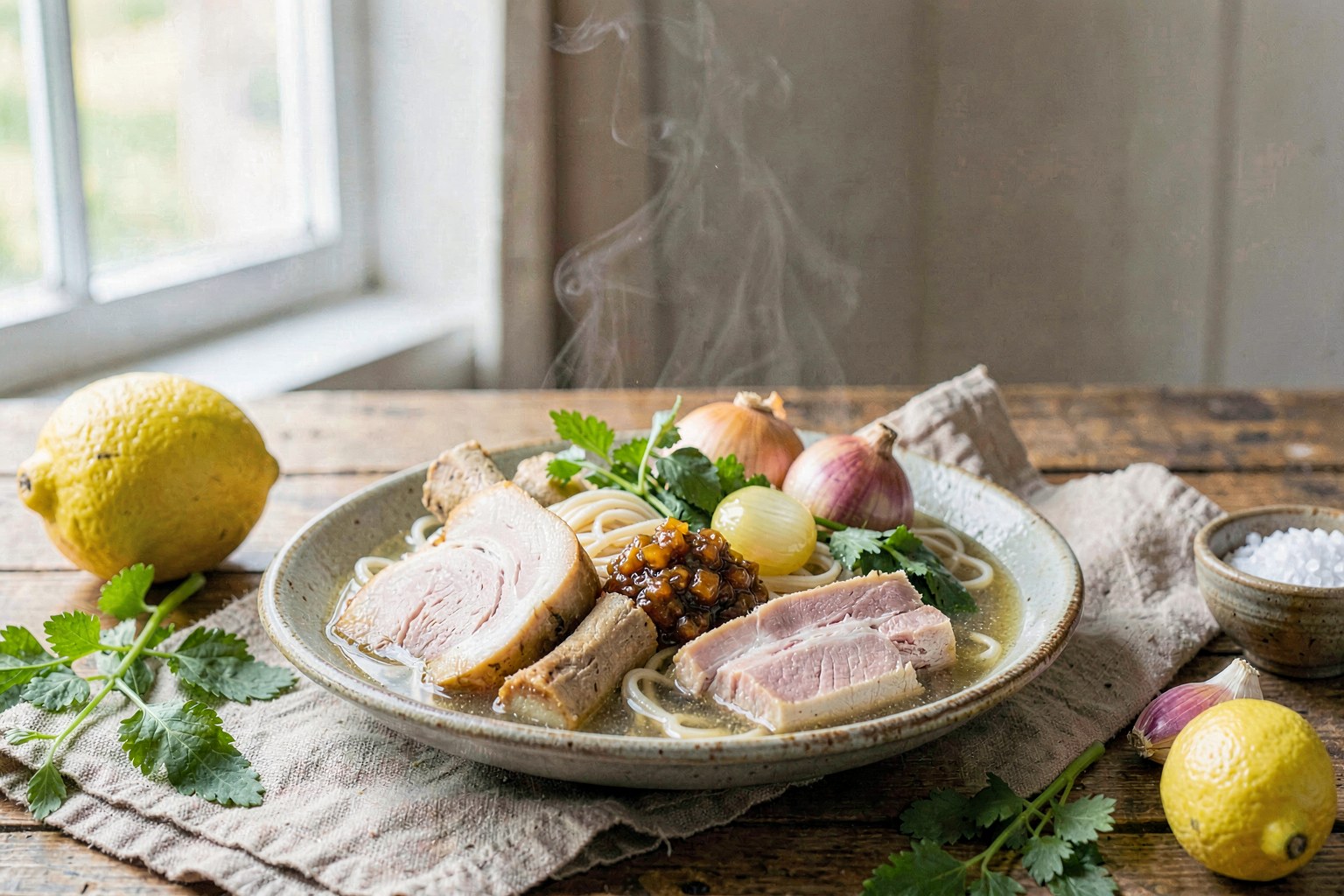
Canh Bún Đậu: Vietnamese Herb-Broth with Grass-Fed Pork & Aged Tofu
A revitalizing twist on the classic Vietnamese rice noodle and fried tofu bowl, transformed into a nutrient-dense, polyphenol-rich broth. This dish features slow-simmered bone broth, crispy grass-fed pork, and fermented tofu, all swimming in a sea of fresh herbs and served with sprouted buckwheat noodles for a gut-friendly twist.
A little context
Traditionally, Canh Bún Đậu is a street-food staple featuring deep-fried tofu and pork in a light broth, often accompanied by a sweet, salty fish sauce dip loaded with sugar and MSG. We honor the soul of the dish by keeping the core components—rice noodles, tofu, pork, and an explosion of herbs—but elevating the cooking method to a farm-to-table standard. We replace seed-oil frying with air-frying or olive-oil searing, swap refined sugar for date syrup, and ensure all animal proteins are pasture-raised to align with longevity principles.
The longevity story
This recipe leverages the anti-inflammatory power of grass-fed pork and wild-caught shrimp (or mushrooms) to provide high-quality protein and omega-3s without the inflammatory seed oils typically used for frying. The broth is rich in collagen and glycosaminoglycans from the bones, supporting gut lining integrity, while the generous heap of fresh herbs (mint, perilla, basil) delivers volatile oils and antioxidants that combat oxidative stress. Fermented shrimp paste and tofu introduce natural probiotics and bioavailable minerals, replacing the refined sugar often found in traditional dipping sauces with the natural sweetness of ripe date syrup and the umami depth of aged ingredients.
Method
- 01
Build the Collagen Broth
In the heavy stockpot, combine the roasted marrow bones, charred onions, ginger, and 4 liters (16 cups) of filtered water. Bring to a boil, then immediately reduce to a bare simmer. Skim off any scum that rises for the first 10 minutes. Add the wrapped roasted shrimp paste. Simmer uncovered for 3 to 4 hours to extract maximum collagen and flavor. Strain through a fine-mesh sieve, discarding solids, and reserve the clear, golden broth.
- 02
Prepare the Protein
Season the pork shoulder cubes with a pinch of sea salt. In a cast-iron skillet or air fryer, toss the pork with 1 tablespoon of extra-virgin olive oil. Sear over medium-high heat until browned and cooked through (about 10-12 minutes). Set aside. In the same pan, add a splash more oil and sear the tofu cubes until golden and crispy on all sides. Drain on a paper towel.
- 03
Make the No-Sugar Dipping Sauce
In a small bowl, whisk together the fish sauce, date syrup (or maple syrup), the roasted shrimp paste (unwrapped and crumbled), 2 tablespoons of the hot broth, and the sliced chilies. Taste and adjust; it should be a balance of salty, umami, and a hint of natural sweetness without cloying sugar. Set aside.
- 04
Prep the Noodles and Herbs
Soak the sprouted buckwheat vermicelli in hot water according to package instructions (usually 5-7 minutes) until tender but still slightly chewy. Drain and rinse with cold water to stop cooking. Roughly chop the cucumber and pick all leaves from the mint, basil, and perilla bunches. Arrange the herbs in a vibrant pile on a serving platter.
- 05
Assemble the Bowls
Divide the drained noodles among 4 large bowls. Top each with a generous portion of the seared pork, crispy tofu, and a sprinkle of the grass-fed pork floss. Ladle the hot, steaming bone broth over the noodles and meat until the bowl is full. The heat will gently wilt the herbs if placed in the broth, but for maximum polyphenol retention, place the fresh herb pile on top of the broth or on the side.
- 06
Serve and Enjoy
Serve immediately with the dipping sauce on the side. Instruct diners to dip the tofu and pork into the sauce before eating, or to drizzle a little sauce into the broth. Garnish with a final drizzle of extra-virgin olive oil for healthy fats. Enjoy the complex layers of texture and the clean, herbaceous finish.
Nutrition facts
Per serving · 1 of 4- — Saturated
- 8 g
- — Polyunsaturated
- 6 g
- Carbohydrates
- 85 g
- — Fiber
- 12 g
- — Sugars
- 10 g
- Cholesterol
- 97 mg
- Sodium
- 1911 mg
- Potassium
- 1069 mg
Estimated from USDA FoodData Central for matched ingredients (65% ingredient coverage). Values vary with brand, preparation, and exact measurements.
Pro tips
- ✦Sourcing is key: Look for 'pasture-raised' pork with a pinkish hue and firm fat; avoid pale, soft meat which indicates factory farming.
- ✦For the best broth, roast the bones and onions until they are deeply browned, almost black on the edges, to develop a rich, non-sweet caramelized flavor base.
- ✦Freshness matters: Buy your herbs (mint, perilla, basil) the same day you cook. They should be crisp and vibrant, not wilted, to ensure maximum volatile oil content.
- ✦If you cannot find sprouted buckwheat noodles, high-quality brown rice vermicelli is an acceptable substitute, though buckwheat offers a lower glycemic index.
- ✦Do not overcook the tofu; sear it quickly to get a crust, then remove it from the heat to keep the interior creamy.
Shop this recipe
As an Amazon Associate we earn from qualifying purchases.
Substitutions
- pasture-raised pork shoulder → wild-caught salmon fillets or grass-fed beef brisket (salmon adds more omega-3s; brisket requires longer simmering in the broth.)
- fermented shrimp paste (mắm tôm) → high-quality miso paste (red or white) (miso provides similar umami depth and probiotics if the shrimp paste is unavailable or for a pescatarian option.)
- date syrup → monk fruit sweetener or stevia drops (use sparingly to mimic sweetness without the glycemic load of fruit sugar.)
Storage
Store broth, meat, and tofu separately in airtight glass containers in the refrigerator for up to 3 days. Fresh herbs and noodles are best prepared fresh. Broth freezes exceptionally well for up to 3 months.
What to serve with it
- Hot green tea (Sencha or Matcha) to complement the herbal notes
- Sparkling water with a wedge of lime and fresh mint
- A glass of dry, low-sulfite red wine (e.g., Pinot Noir) if alcohol is consumed
- Kombucha (unsweetened or lightly sweetened with fruit) for extra probiotics
FAQ
Why use sprouted buckwheat instead of traditional rice noodles?+
Traditional white rice noodles have a high glycemic index and offer little nutritional value. Sprouted buckwheat is lower in carbs, higher in fiber and protein, and contains rutin, a potent antioxidant that supports vascular health.
Can I make this vegan?+
Yes. Replace the pork and shrimp paste with mushrooms (shiitake for umami) and use a high-quality fermented soybean paste instead of shrimp paste. Use vegetable broth instead of bone broth.
Is the shrimp paste safe for those with shellfish allergies?+
No. Shrimp paste is made from fermented shrimp and is not safe for those with shellfish allergies. Use miso or a mushroom-based umami paste as a substitute.
Share this recipe
Notes from the community
Sign in to leave a note.
No notes yet — be the first.
You might also like