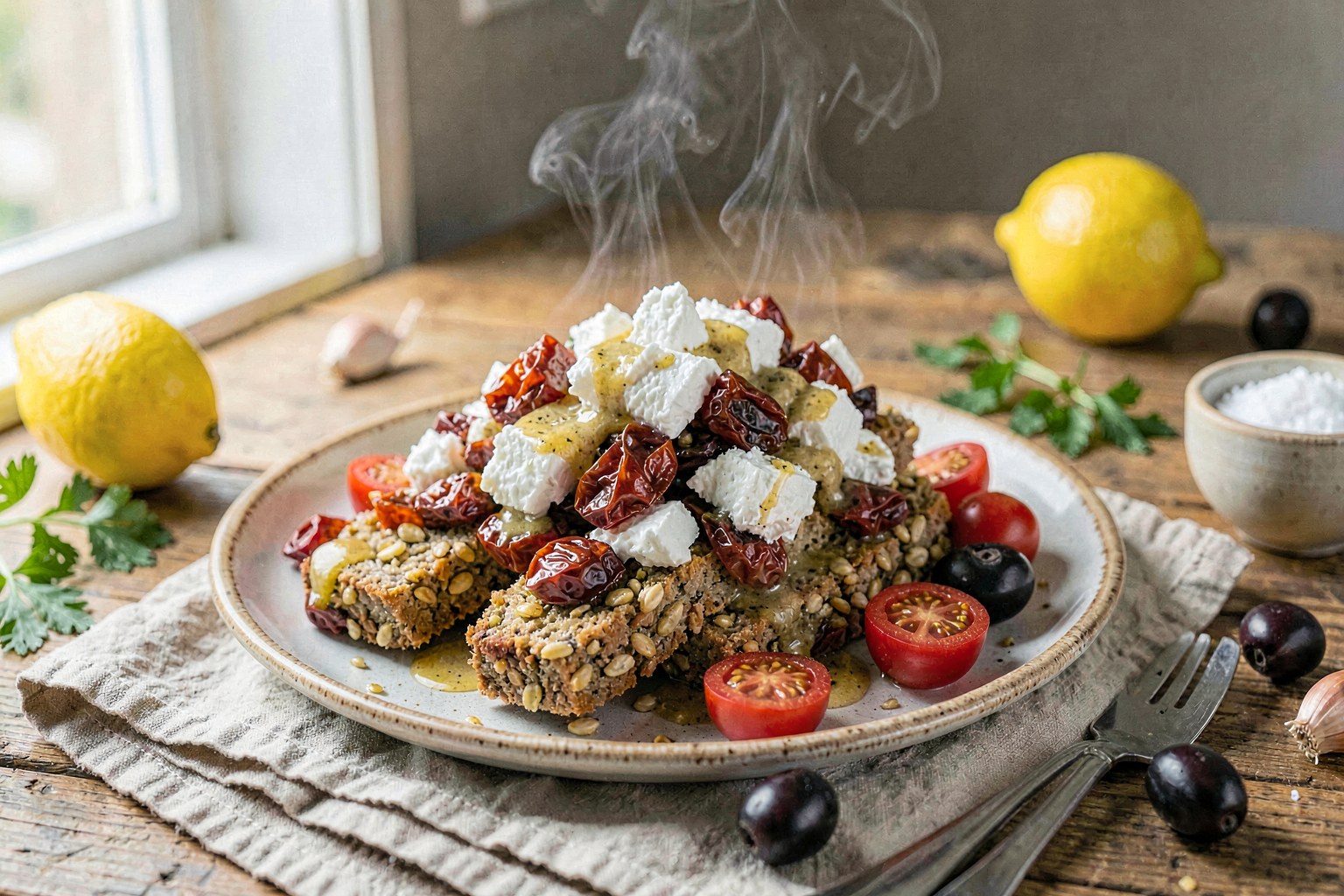
Kritiki Dakos: Sun-Dried Tomato & Barley Rye Salad
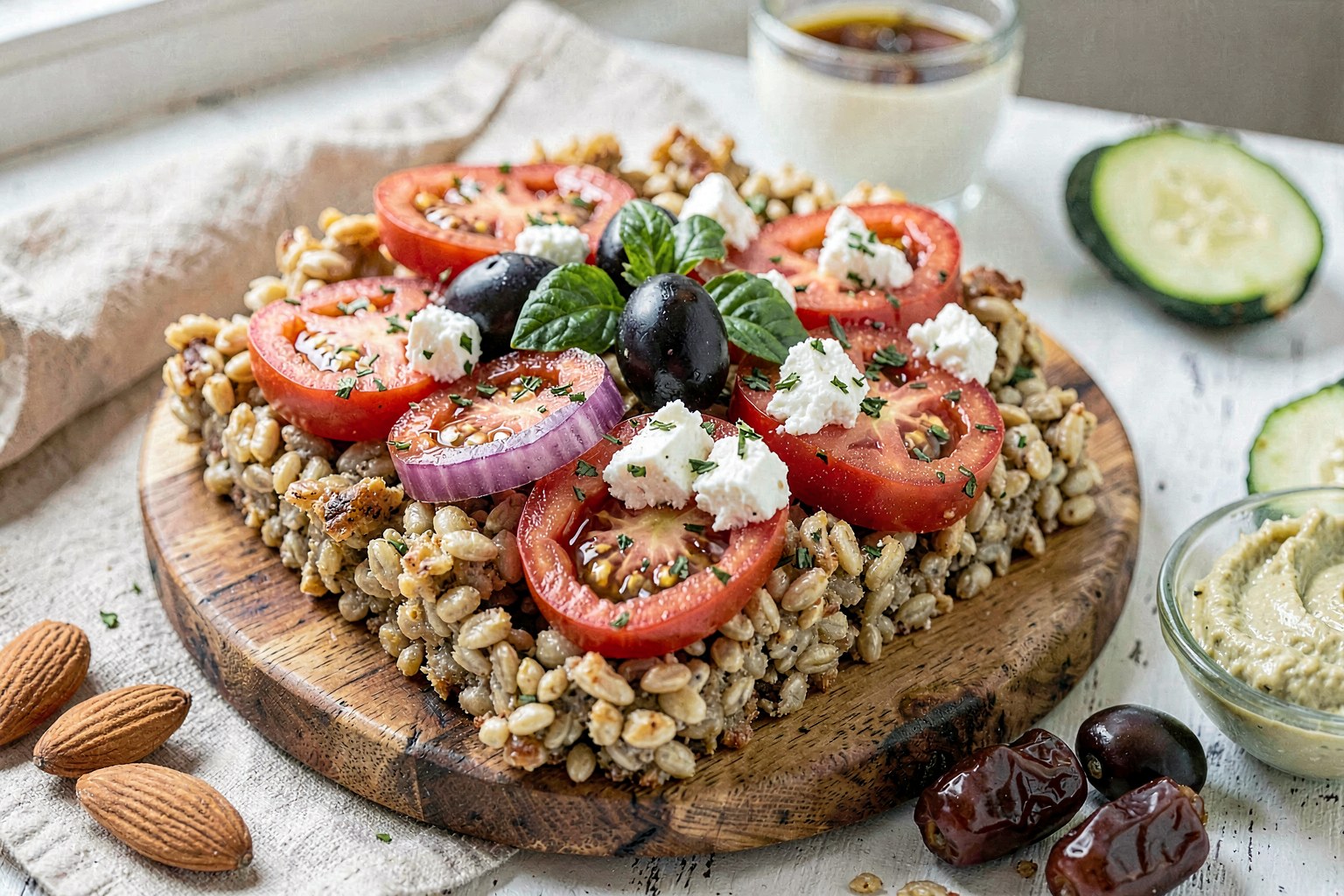
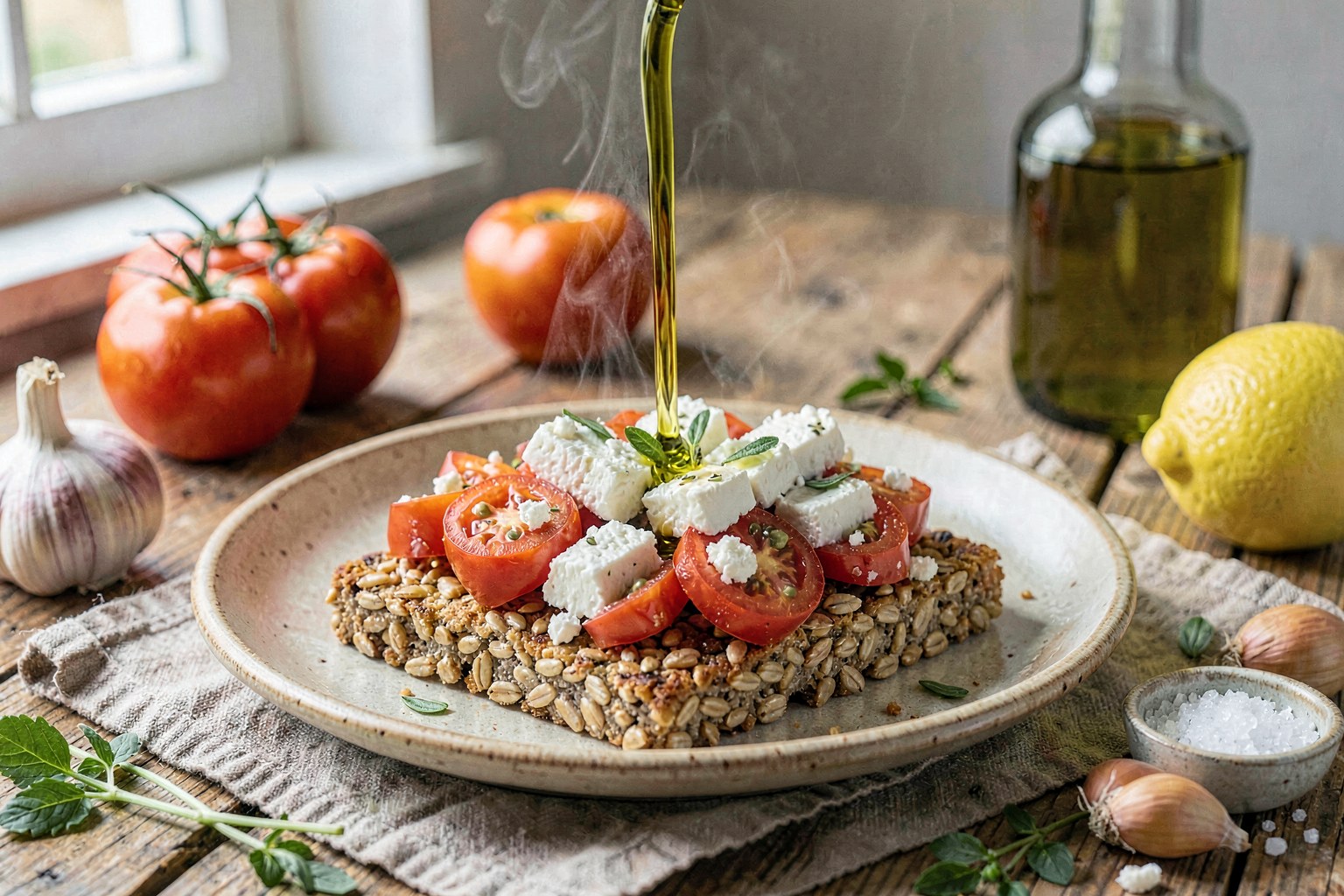
This authentic Cretan salad features crunchy, sprouted barley rye rusks soaked in brine, topped with creamy, pasture-raised feta, sun-dried tomatoes, and a generous dressing of polyphenol-rich extra-virgin olive oil. It is a textural masterpiece of savory umami and bright acidity, designed to satisfy as a hearty, nutrient-dense dinner without refined grains or seed oils.
A little context
Originating from the Greek island of Crete, Dakos is a staple of the Blue Zone diet where longevity is the norm. We honor this tradition by using authentic, sprouted barley rusks instead of refined white bread and ensuring our feta is made from sheep or goat milk without additives. We strictly omit the commercial sun-dried tomatoes often packed in seed oils, opting for sun-dried in olive oil or rehydrated fresh tomatoes, and we replace any traditional sugar glazes with the natural sweetness of ripe fruit or dates if needed.
The longevity story
The star of this dish is the extra-virgin olive oil, which delivers oleocanthal and oleuropein, potent anti-inflammatory compounds that mimic ibuprofen's effects on pain pathways. The barley rye rusks provide soluble fiber for gut microbiome diversity, while the sun-dried tomatoes concentrate lycopene, an antioxidant that becomes more bioavailable when paired with dietary fats. The pasture-raised feta offers probiotics from traditional fermentation and a complete protein profile, supporting muscle maintenance and satiety.
Method
- 01
Prepare the Rusks
Place the barley rye rusks on a clean wooden board. Lightly sprinkle each rusk with a few drops of water or dip the very top surface quickly in a shallow bowl of water. The goal is to soften the surface slightly so it can absorb the dressing without turning into mush. Let them sit for 2-3 minutes.
- 02
Release the Aromatics
In a small mortar, combine the coarse sea salt and fresh oregano leaves. Gently crush them together until the oregano is bruised and fragrant. This step unlocks the polyphenols and flavor compounds that would otherwise remain trapped in the leaves.
- 03
Dress the Base
Immediately drizzle 15 ml (1 tbsp) of the high-quality extra-virgin olive oil and a squeeze of fresh lemon juice over the dampened rusks. Rub the oil and lemon gently into the surface of the bread with your fingers or a spoon. This acts as a barrier and flavor carrier.
- 04
Layer the Vegetables
Distribute the diced fresh heirloom tomatoes and the sun-dried tomato strips evenly over the four rusks. The fresh tomatoes provide moisture, while the sun-dried ones offer concentrated umami.
- 05
Add the Olives and Feta
Scatter the halved Kalamata olives over the tomatoes. Top generously with the crumbled pasture-raised feta cheese. The fat in the feta is essential for absorbing the fat-soluble vitamins from the tomatoes and olives.
- 06
Finish and Serve
Sprinkle the oregano-salt mixture over the entire dish. Drizzle the remaining 45 ml (3 tbsp) of extra-virgin olive oil generously over the top, ensuring every bite gets a coating. Serve immediately while the rusk is still crisp on the outside but soft on the inside.
Nutrition facts
Per serving · 1 of 4- — Saturated
- 11 g
- — Polyunsaturated
- 3 g
- Carbohydrates
- 38 g
- — Fiber
- 10 g
- — Sugars
- 20 g
- Cholesterol
- 56 mg
- Sodium
- 1074 mg
- Potassium
- 1921 mg
Estimated from USDA FoodData Central for matched ingredients (89% ingredient coverage). Values vary with brand, preparation, and exact measurements.
Pro tips
- ✦Sourcing the Rusks: If you cannot find authentic Cretan barley rusks, look for 'sprouted' grain breads. Avoid standard white rusks which are often made with refined flour and preservatives.
- ✦The Water Dip: Do not soak the rusks. A quick dip or a few drops of water is enough. If they get too wet, they dissolve into a paste; if too dry, they break your teeth.
- ✦Oil Quality: This dish is 50% olive oil by volume. Do not skimp on quality; a bitter, peppery finish in the oil indicates high polyphenol content, which is the health goal here.
- ✦Cheese Selection: Authentic Greek feta is protected by PDO (Protected Designation of Origin) laws and must be at least 70% sheep's milk. Check the label to ensure no cow's milk or vegetable rennet is used.
Shop this recipe
As an Amazon Associate we earn from qualifying purchases.
Substitutions
- pasture-raised feta → high-quality goat cheese or sheep's milk ricotta (For a softer texture, use fresh ricotta, though it lacks the tangy fermentation profile of feta.)
- sun-dried tomatoes → roasted fresh red peppers (Roast red peppers until charred, peel, and slice. This reduces the sodium load while maintaining the sweet, smoky flavor.)
Storage
Best eaten immediately as the rusks lose crunch quickly. If storing, keep the dressing, tomatoes, and cheese separate from the rusks. Stored in an airtight glass container in the fridge, the toppings last 3 days; re-crisp rusks in a 180°C/350°F oven for 5 minutes before serving.
What to serve with it
- A glass of dry Assyrtiko white wine or a small pour of organic red wine (e.g., Agiorgitiko).
- Unsweetened green tea or a glass of sparkling water with a slice of lemon and fresh mint.
- A side of steamed green beans with lemon and olive oil.
FAQ
Can I make this vegan?+
Yes, simply omit the feta or substitute with a high-quality cashew-based cheese that is fermented and free of seed oils. The dish remains high in polyphenols and healthy fats from the olives and olive oil.
Is the sodium too high?+
Feta and olives are naturally salty, but this is real food salt, not refined table salt with anti-caking agents. If you are strictly sodium-restricted, rinse the olives and use less feta, though the fermentation benefits will be slightly reduced.
Share this recipe
Notes from the community
Sign in to leave a note.
No notes yet — be the first.
You might also like