Färskt Bröd med Nykål (Nordic Clean Tradition)
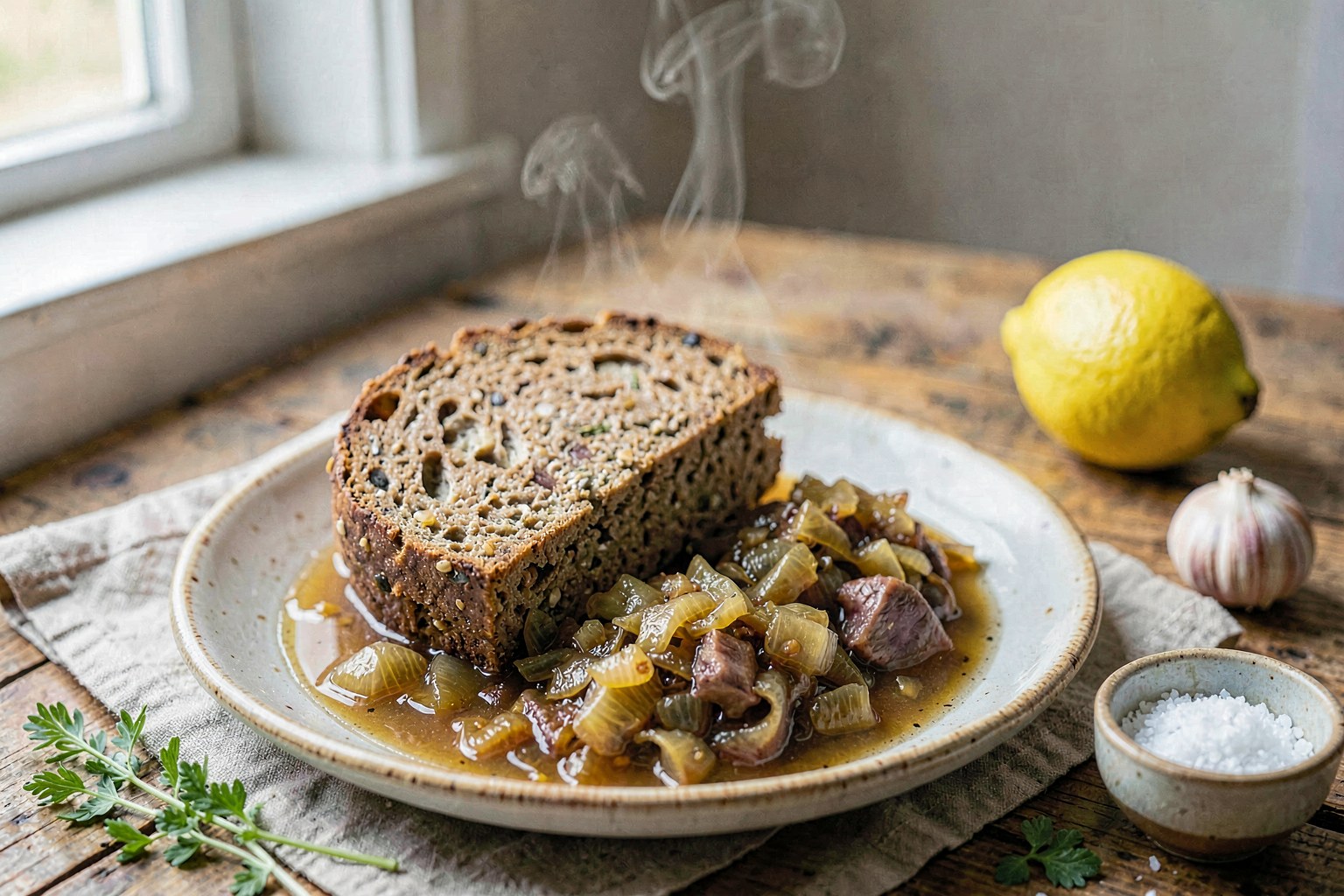
A humble Nordic dinner featuring dense, sprouted rye sourdough served alongside warm sauerkraut simmered in rich grass-fed bone broth. The dish balances fermented probiotics with collagen-rich stock and clean fats for sustained energy. Simple, warming, and deeply nourishing without refined sugars or industrial oils.
A little context
Rooted in Scandinavian preservation traditions where cabbage and dark bread were staples for winter survival, this version honors the simplicity of the original while removing sugar often added to commercial sauerkraut. We replace seed oils with pastured butter and ghee, and ensure the beef is grass-fed to align with modern longevity standards. The bread is baked as a sourdough to reduce phytates, making the minerals more bioavailable.
The longevity story
This meal leverages collagen from grass-fed bone broth to support gut lining and joint health, while the fermented sauerkraut provides live cultures (if added late) or prebiotic fiber for digestion. The sprouted rye bread offers a lower glycemic impact than white flour, paired with polyphenol-rich caraway and EVOO for anti-inflammatory benefits. Grass-fed beef contributes high-quality protein and conjugated linoleic acid (CLA), avoiding the inflammatory omega-6 profile of grain-fed livestock.
Method
- 01
Prepare the Bread
Mix the sprouted rye flour, warm water, and active sourdough starter (if using) or commercial yeast. Add sea salt. Knead until sticky but cohesive. Let rise in a warm spot for 4 hours or overnight in the fridge for better flavor development.
- 02
Bake the Loaf
Shape the dough into a round or oval loaf. Score the top. Bake at 220°C (425°F) for 45 minutes until deep brown and hollow sounding when tapped. Let cool completely before slicing.
- 03
Sear the Beef
Pat the beef cubes dry. Season generously with salt. Heat a cast-iron skillet over medium-high heat with a splash of ghee. Sear beef in batches until deeply browned on all sides. Remove and set aside.
- 04
Build the Broth Base
In the same skillet, add 10 g (1 tbsp) more ghee. Sauté the crushed caraway seeds for 30 seconds until fragrant. Deglaze with a splash of the bone broth, scraping up the browned bits (fond).
- 05
Simmer the Stew
Transfer the seared beef to a Dutch oven. Add the remaining bone broth and the fond mixture. Bring to a boil, then reduce to a low simmer. Cover and cook for 30 minutes until beef is tender.
- 06
Add the Kraut
Stir in the rinsed sauerkraut. Simmer uncovered for another 10-15 minutes. Do not boil vigorously to preserve texture and nutrients.
- 07
Finish and Serve
Turn off the heat. Drizzle generously with extra-virgin olive oil. Taste for salt. Serve hot with thick slices of the warm rye bread on the side.
Nutrition facts
Per serving · 1 of 4- — Saturated
- 16 g
- — Polyunsaturated
- 4 g
- Carbohydrates
- 91 g
- — Fiber
- 33 g
- — Sugars
- 5 g
- Cholesterol
- 161 mg
- Sodium
- 2432 mg
- Potassium
- 1569 mg
Estimated from USDA FoodData Central for matched ingredients (78% ingredient coverage). Values vary with brand, preparation, and exact measurements.
Pro tips
- ✦Sourcing: Look for sauerkraut in the refrigerated section of health food stores; shelf-stable versions are often pasteurized and lack probiotics.
- ✦Texture: Rye dough is stickier than wheat; wet your hands rather than adding more flour to handle it.
- ✦Sourcing: Ensure the beef bone broth label explicitly states 'grass-fed' and contains no sugar or yeast extract.
- ✦Flavor: Toasting the caraway seeds before crushing releases more essential oils.
Shop this recipe
As an Amazon Associate we earn from qualifying purchases.
Substitutions
- grass-fed beef chuck → wild-caught salmon or Arctic char (add fish in the last 10 minutes to avoid overcooking)
- sprouted rye flour → spelt or buckwheat flour (adjust water slightly as absorption varies)
Storage
Refrigerate in a glass container for up to 4 days. The bread keeps best wrapped in linen. Freeze stew portions for up to 3 months; bread can be frozen sliced.
What to serve with it
- Hot green tea or dandelion root tea
- Dry red wine (Pinot Noir)
- Sparkling water with lemon and fresh rosemary
FAQ
Can I use store-bought bread?+
You can, but ensure it is 100% sprouted grain with no added sugar or seed oils. Many commercial 'rye' breads are mostly wheat with coloring.
Does boiling sauerkraut kill the probiotics?+
Yes, high heat kills live cultures. If you want probiotic benefits, stir in a small amount of raw sauerkraut just before serving after turning off the heat.
Share this recipe
Notes from the community
Sign in to leave a note.
No notes yet — be the first.
You might also like