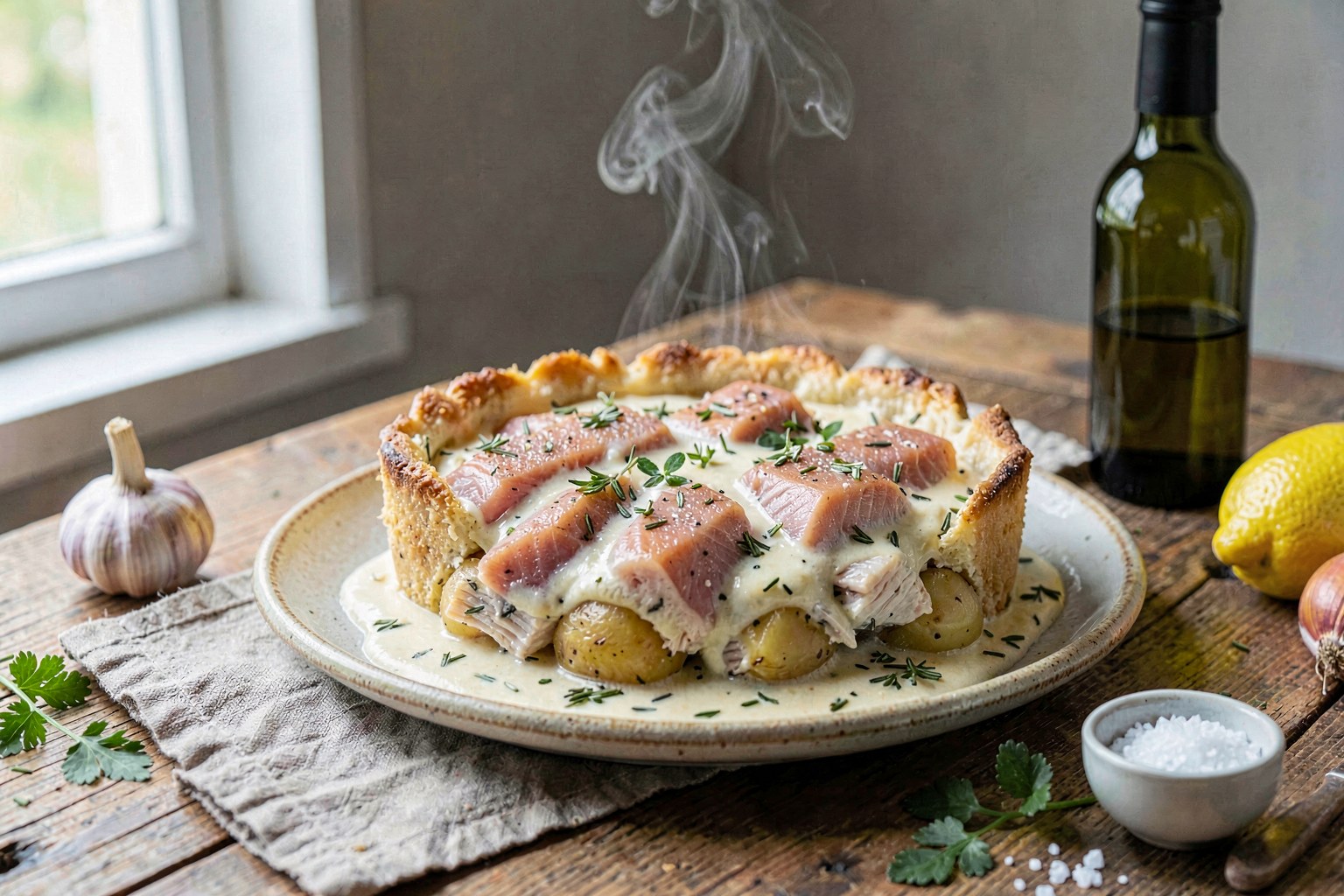
Fiskgryta: Nordic Clean Fish Pie
This is a rustic Nordic fish pie where tender wild-caught white fish and waxy potatoes bake in a rich, creamy sauce made from grass-fed butter and fresh herbs. Topped with a crisp, polyphenol-dense breadcrumb crust, it delivers the comforting texture of a traditional casserole without the seed oils or refined sugars that typically plague modern adaptations.
A little context
Rooted in the Scandinavian tradition of simple, hearty coastal cooking, this recipe honors the 'fiskgryta' spirit by keeping the ingredients whole and unprocessed. We have stripped away the historical reliance on refined white flour thickeners and seed-oil-heavy sauces, replacing them with nutrient-dense fats and sprouted grain breadcrumbs to align with longevity goals while preserving the dish's soul.
The longevity story
The dish leverages the high omega-3 content of wild-caught cod or halibut to support cellular membrane fluidity and reduce systemic inflammation. The sauce relies on grass-fed ghee and extra-virgin olive oil, providing butyrate and polyphenols that protect the gut lining and lower oxidative stress. Fresh dill and parsley add significant amounts of apigenin and vitamin K2, while the waxy potatoes offer resistant starch when cooled slightly, acting as a prebiotic for a healthy microbiome.
Method
- 01
Preheat and Prep
Preheat your oven to 200°C (400°F). Line a large baking sheet with parchment paper if you plan to toast the breadcrumbs separately, or have your baking dish ready.
- 02
Build the Aromatic Base
In a medium saucepan over medium-low heat, melt 30g (2 tbsp) of the grass-fed butter. Add the diced onion and a pinch of salt. Sauté gently for 8-10 minutes until translucent and sweet, avoiding any browning. Stir in the minced garlic and crushed dill stems, cooking for another minute until fragrant.
- 03
Create the Sauce
Pour in the coconut milk (or cream) and the remaining 30g (2 tbsp) of melted butter. Add the sea salt and black pepper. Whisk gently to combine and bring to a very gentle simmer. Do not boil vigorously, as this can break the emulsion. Remove from heat and stir in half of the chopped parsley.
- 04
Layer the Pie
In your baking dish, arrange half of the sliced potatoes in an even layer. Season lightly with salt and pepper. Pour half of the creamy sauce over the potatoes, ensuring they are well-coated. Arrange the fish chunks evenly over the potatoes. Top with the remaining potatoes, then pour the rest of the sauce over everything. The liquid should just cover the ingredients; if it looks dry, add a splash of vegetable broth or water.
- 05
Prepare the Crust
In a small bowl, mix the sprouted breadcrumbs (or almond flour) with the cold, cubed butter. Use your fingertips to rub the butter into the crumbs until the mixture resembles coarse sand. Stir in the remaining chopped parsley and a pinch of lemon zest for brightness.
- 06
Bake
Sprinkle the breadcrumb mixture evenly over the top of the casserole. Place the dish in the center of the oven and bake for 35-40 minutes. The dish is done when the potatoes are tender when pierced with a fork, the fish flakes easily, and the topping is golden brown and crisp.
- 07
Rest and Serve
Remove from the oven and let the pie rest for 10 minutes before serving. This allows the sauce to thicken slightly and the fish to reabsorb some juices. Garnish with fresh dill fronds and a final crack of black pepper.
Nutrition facts
Per serving · 1 of 4- — Saturated
- 14 g
- — Polyunsaturated
- 1 g
- Carbohydrates
- 35 g
- — Fiber
- 2 g
- — Sugars
- 25 g
- Cholesterol
- 48 mg
- Sodium
- 671 mg
- Potassium
- 150 mg
Estimated from USDA FoodData Central for matched ingredients (77% ingredient coverage). Values vary with brand, preparation, and exact measurements.
Pro tips
- ✦Sourcing is key: Look for wild-caught cod from the North Atlantic or Pacific, or Alaskan halibut. Avoid farmed cod which often has a higher pollutant load and inferior texture.
- ✦Uniformity matters: Slice your potatoes to exactly the same thickness (3mm) so they cook at the same rate as the fish; uneven slices lead to mushy bottoms or raw centers.
- ✦Don't overcook the garlic: Sauté it gently with the onions; burnt garlic turns bitter and destroys the delicate allicin compounds we want for health.
- ✦Test the crust: If the breadcrumbs brown too quickly but the sauce isn't bubbling, cover the dish loosely with foil for the last 10 minutes of baking.
- ✦Freshness check: Your herbs should smell vibrant and earthy, not musty. If the dill looks wilted, it won't provide the necessary polyphenol punch.
Shop this recipe
As an Amazon Associate we earn from qualifying purchases.
Substitutions
- wild-caught cod → wild-caught Arctic char or rainbow trout (These fish have slightly higher fat content, making them even more forgiving in the oven.)
- sprouted whole-grain breadcrumbs → finely ground almond flour or crushed walnuts (Creates a gluten-free, lower-carb crust that is rich in healthy fats.)
- grass-fed butter → ghee or avocado oil (Ghee is lactose-free; avocado oil has a higher smoke point if you prefer to sauté the onions at higher heat.)
Storage
Store leftovers in an airtight glass container in the refrigerator for up to 3 days. The flavors improve as the fish absorbs the sauce. Reheat gently in the oven at 160°C (325°F) to prevent the fish from drying out. Can be frozen portioned for up to 2 months; thaw overnight in the fridge before reheating.
What to serve with it
- A glass of cold-brew green tea or matcha to complement the antioxidants
- Sparkling water with a wedge of lemon and a sprig of fresh dill
- A crisp, dry white wine from a low-intervention producer (e.g., unoaked Chardonnay or Albariño)
- A side of massaged kale salad with extra-virgin olive oil and lemon juice
FAQ
Can I use farmed salmon instead of white fish?+
Yes, but the texture will be richer and the cooking time may need to be reduced by 5-10 minutes to prevent overcooking. Ensure it is organic or responsibly farmed to minimize exposure to contaminants.
Why do we rest the dish before serving?+
Resting allows the starches in the potatoes and the proteins in the fish to settle, preventing the sauce from running when you cut into it. It also ensures even heat distribution.
Is this recipe dairy-free?+
The base recipe uses grass-fed butter, so it contains dairy. To make it dairy-free, substitute the butter with ghee (if lactose intolerant) or high-quality coconut oil/avocado oil, and use full-fat coconut milk.
Share this recipe
Notes from the community
Sign in to leave a note.
No notes yet — be the first.
You might also like