Gangwon Geumsaeng Kimchi (Ginger Radish Kimchi)
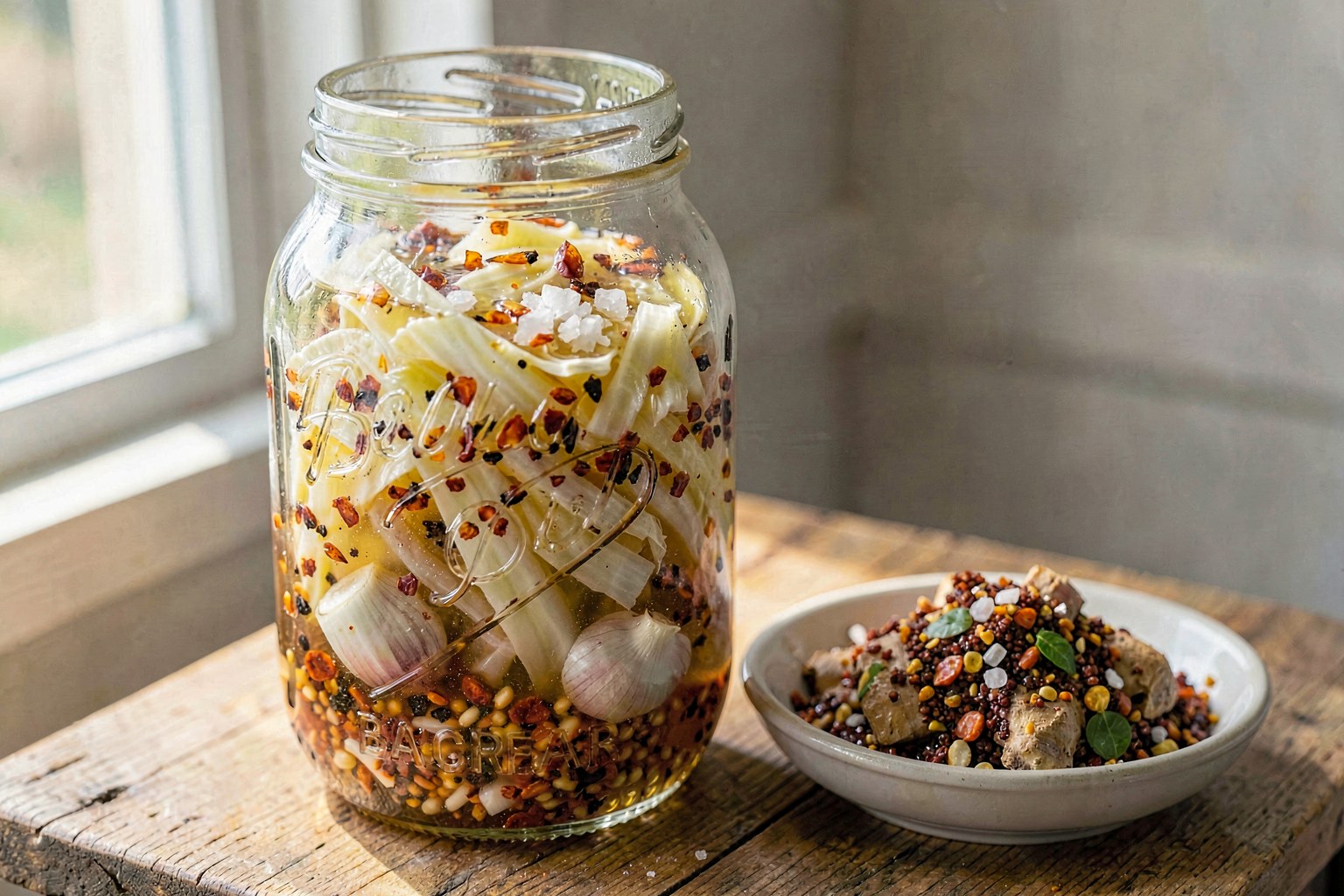
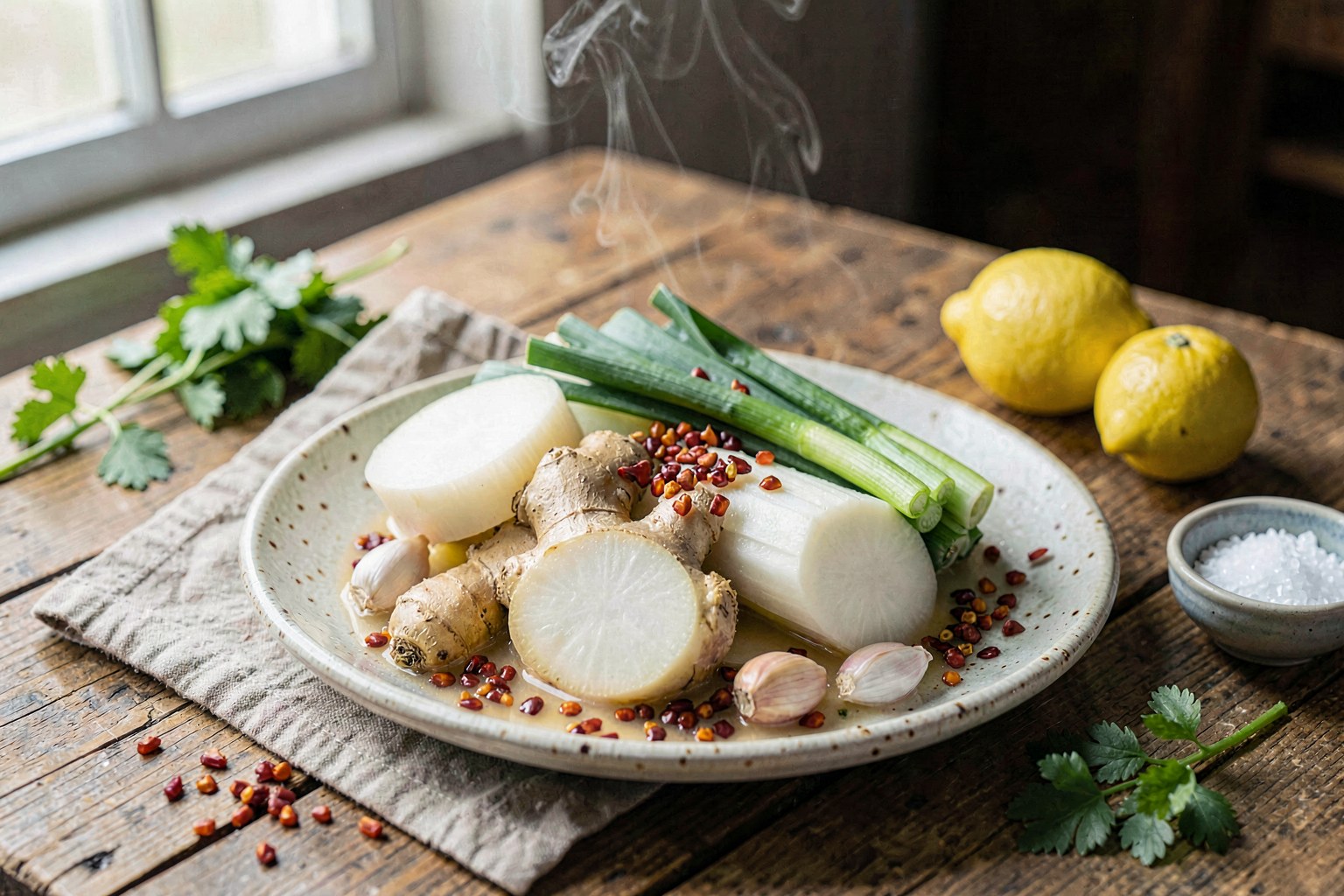
A crisp, refreshing regional kimchi from Korea's Gangwon province, featuring sweet Daikon radish and aromatic fresh ginger. Unlike the fiery red versions, this pale, naturally sweet ferment relies on the earthy depth of radish and the zesty bite of ginger, making it a gentle, polyphenol-rich addition to any dinner table.
A little context
Originating from the cold, mountainous Gangwon region, Geumsaeng Kimchi traditionally uses local radishes and a light brine to create a sweet, mild side dish often served with rice or meat. We honor this tradition by strictly omitting the refined sugar often added in modern commercial versions, replacing it with the natural sweetness of ripe Asian pears and dates. We also ensure all brine components are free from ultra-processed additives, preserving the authentic, clean fermentation profile.
The longevity story
This dish is a powerhouse of gut health, leveraging wild radish and fresh ginger to deliver high levels of fiber and the anti-inflammatory compound gingerol. The fermentation process cultivates natural probiotics (Lactobacillus) that support a diverse microbiome, while the radish provides essential vitamin C and sulfur compounds for detoxification. By avoiding refined sugars and using only whole fruit for minimal sweetness, we prevent blood sugar spikes, keeping the focus on the bioactive compounds that drive longevity.
Method
- 01
Brine the Radish
In a large stainless steel bowl, combine the julienned radish with the dissolved sea salt water. Submerge the radish completely (use a small plate as a weight if needed). Let sit at room temperature for 30 minutes. This draws out excess moisture and begins the pickling process without making the radish mushy.
- 02
Prepare the Paste
While the radish brines, blend the dates, Asian pear puree, minced garlic, ginger, and red pepper flakes (if using) in a small blender or mortar and pestle until a smooth, cohesive paste forms. The pear enzymes help break down the radish fibers slightly, ensuring a tender crunch.
- 03
Rinse and Drain
Drain the radish brine through a colander. Rinse the radish briefly under cold filtered water to remove excess surface salt, then let it drain thoroughly for 10 minutes. Shake the colander to remove as much water as possible; the drier the radish, the better the paste will adhere.
- 04
Massage the Kimchi
Transfer the drained radish to a clean, dry bowl. Add the date-pear paste and the sliced green onions. Using clean hands (wearing food-safe gloves if preferred), massage the mixture vigorously for 3-5 minutes until the vegetables are evenly coated and the radish feels slightly limp but still crisp. This mechanical action helps distribute the probiotics and flavors.
- 05
Pack the Jar
Tightly pack the kimchi into the sterilized glass jar, pressing down firmly with a wooden spoon or your fist to eliminate air pockets. The liquid from the radish and pear should rise to cover the vegetables. If the mixture is too dry, add a splash of extra filtered water.
- 06
Ferment
Seal the jar with the airlock lid. Leave at room temperature (18-22°C / 65-72°F) for 24 to 48 hours. Check daily; once you see small bubbles forming and the taste is tangy but still sweet, move it to the refrigerator. The cold slows fermentation, preserving the crunch.
- 07
Serve and Store
This kimchi is best eaten within 2 weeks for maximum crispness. Serve as a banchan (side dish) alongside grilled wild-caught fish, steamed brown rice, or as a palate cleanser between courses. Always use a clean utensil to serve to prevent contamination.
Nutrition facts
Per serving · 1 of 4- — Saturated
- 0 g
- — Polyunsaturated
- 1 g
- Carbohydrates
- 30 g
- — Fiber
- 8 g
- — Sugars
- 18 g
- Cholesterol
- 0 mg
- Sodium
- 2576 mg
- Potassium
- 872 mg
Estimated from USDA FoodData Central for matched ingredients (89% ingredient coverage). Values vary with brand, preparation, and exact measurements.
Pro tips
- ✦Sourcing matters: Choose organic Daikon radishes to avoid pesticide residue, as the skin is not peeled before salting in some traditional methods, but here we peel to ensure a clean, crisp texture.
- ✦Temperature control: If your kitchen is very warm (above 24°C/75°F), check the jar after 12 hours to prevent over-fermentation; move to the fridge sooner.
- ✦The 'Squeeze Test': The radish is ready to be packed when it bends without snapping but still offers resistance. If it feels rubbery, it over-salted; if it's tough, it needs more time in the brine.
- ✦Date selection: Use Medjool dates that are soft and sticky; if they are hard, soak them in warm water for 15 minutes before blending to ensure a smooth paste.
Shop this recipe
As an Amazon Associate we earn from qualifying purchases.
Substitutions
- Asian pear → organic Fuji apple or ripe honeycrisp apple (Apples work well but may be slightly sweeter; reduce date quantity by half if using very sweet apples.)
- gochugaru (red pepper flakes) → smoked paprika (for color only) or omit entirely (For a truly 'white' kimchi, omit the pepper and rely on the ginger and radish for flavor complexity.)
- sauerkraut juice starter → extra filtered water (Fermentation will still occur naturally but may take 1-2 days longer to develop tang.)
Storage
Refrigerate in the sealed jar for up to 3 weeks. The flavor will deepen and become more sour over time. Freezing is not recommended as it will destroy the probiotic cultures and soften the texture significantly.
What to serve with it
- Grilled wild-caught mackerel or sardines
- Steamed short-grain brown rice or black rice
- Hot cup of roasted barley tea (boricha) or green tea
- Sparkling water with a slice of fresh lemon
FAQ
Why does my kimchi smell sour?+
A sour smell is normal for fermented foods, indicating lactic acid bacteria are working. If it smells like rot, mold, or rotten eggs, discard it. A sharp, vinegary aroma is a sign of success.
Can I make this without dates?+
Yes, you can rely solely on the natural sugars of the Asian pear and radish, though the fermentation may take slightly longer to kickstart as the dates provide an immediate food source for the bacteria.
Share this recipe
Notes from the community
Sign in to leave a note.
No notes yet — be the first.
You might also like