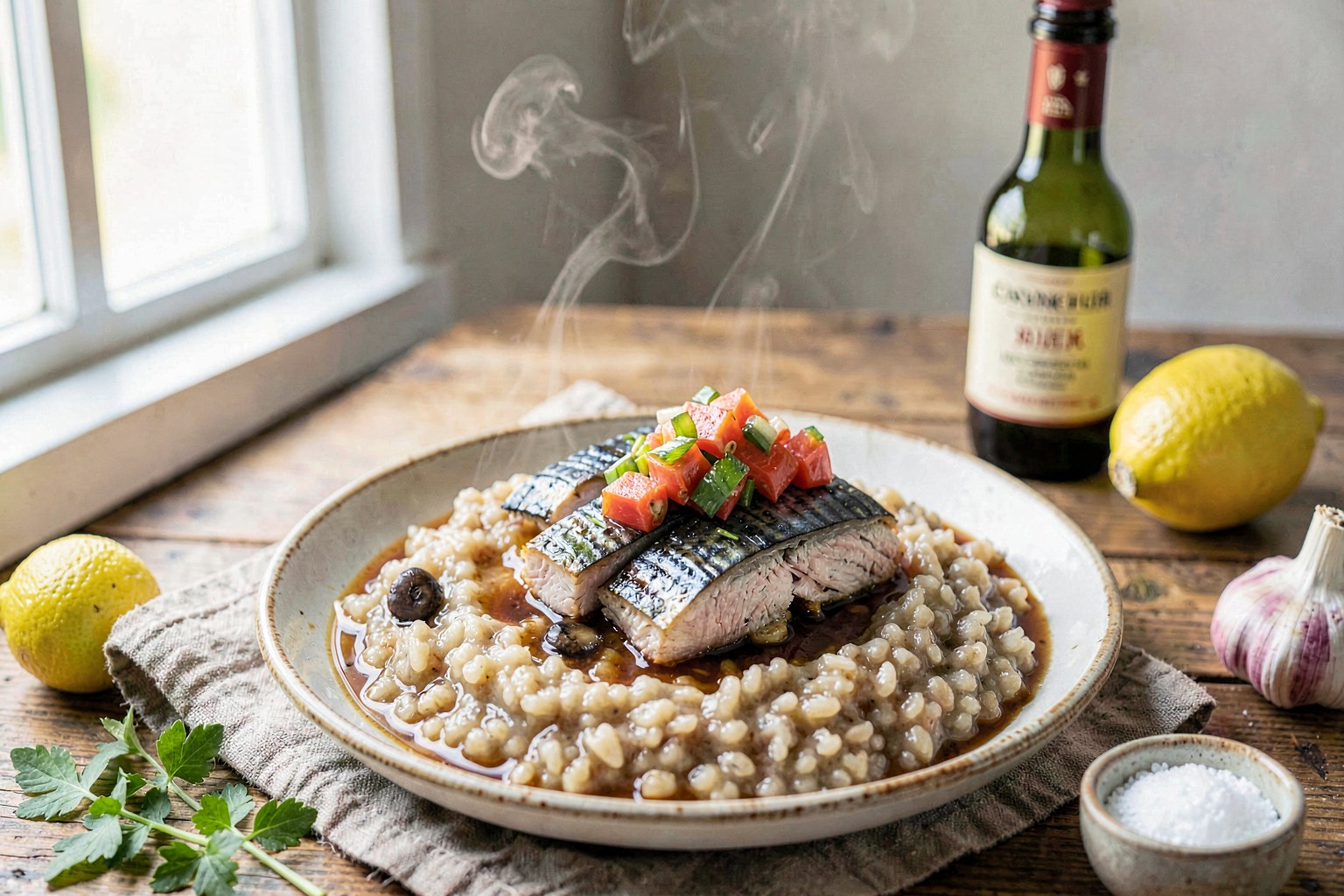
Savory Fermented Millet Porridge with Mackerel (Ganjang-Mugi)
A warming, savory millet porridge slow-cooked in traditionally fermented soy sauce broth, topped with wild-caught mackerel and fresh kimchi. Rich in umami and fiber, this dish serves as a nutrient-dense winter staple that supports gut health without spiking blood sugar.
A little context
Rooted in the Korean tradition of *juk* (porridge), historically eaten for recovery and nourishment during cold months. We honor this by using traditionally fermented, sugar-free soy sauce instead of commercial versions laden with corn syrup, and swapping seed oils for extra-virgin olive oil to preserve polyphenol content.
The longevity story
Millet provides resistant starch and magnesium, supporting metabolic health and gut microbiome diversity. The fermented soy sauce and kimchi introduce beneficial lactobacilli and polyphenols that aid digestion and reduce systemic inflammation. Wild-caught mackerel delivers high concentrations of EPA and DHA omega-3 fatty acids, crucial for brain longevity and cellular membrane integrity.
Method
- 01
Toast the Millet
Heat the Dutch oven over medium heat. Add the rinsed millet and dry toast for 3-4 minutes until it smells nutty. Stir constantly to prevent burning.
- 02
Build the Broth
Pour in the warm broth and soy sauce. Bring to a boil, then reduce heat to low. Cover and simmer for 25 minutes, stirring occasionally to prevent sticking.
- 03
Prepare the Mackerel
While porridge cooks, pat the mackerel dry and season lightly with sea salt. Heat the cast-iron skillet over medium-high heat. Add a drizzle of olive oil.
- 04
Sear the Fish
Place mackerel skin-side down. Press gently with a spatula for 10 seconds to crisp the skin. Cook for 3-4 minutes per side until opaque and flaky. Set aside.
- 05
Sauté Aromatics
In the same skillet, add the sliced shiitake mushrooms and white parts of the scallions. Sauté with a splash of broth until tender, about 5 minutes. Stir in the grated ginger.
- 06
Finish the Porridge
Check the millet texture; it should be creamy but not mushy. Stir in the mushroom mixture and half of the green scallions. Remove from heat.
- 07
Rest and Serve
Let the porridge rest for 5 minutes to thicken slightly. Divide into bowls. Top with seared mackerel, fresh kimchi, torn nori, and remaining green scallions.
Nutrition facts
Per serving · 1 of 4- — Saturated
- 9 g
- — Polyunsaturated
- 7 g
- Carbohydrates
- 42 g
- — Fiber
- 6 g
- — Sugars
- 1 g
- Cholesterol
- 95 mg
- Sodium
- 5495 mg
- Potassium
- 1244 mg
Estimated from USDA FoodData Central for matched ingredients (80% ingredient coverage). Values vary with brand, preparation, and exact measurements.
Pro tips
- ✦Source mackerel with bright, non-cloudy eyes and firm flesh that springs back when touched.
- ✦Toast the millet until it smells like popcorn to deepen the nutty flavor profile.
- ✦If using home-fermented kimchi, ensure it is not pasteurized to retain live probiotics.
- ✦Rinse millet thoroughly to remove any residual dust or saponins that cause bitterness.
- ✦Do not skip the resting step; it allows the grains to fully absorb the broth.
Shop this recipe
As an Amazon Associate we earn from qualifying purchases.
Substitutions
- wild-caught mackerel → wild-caught salmon or Arctic char (similar omega-3 profile, adjust sear time by 1 minute)
- millet → brown rice or barley (increase cooking time by 15 minutes for brown rice)
- sugar-free soy sauce → coconut aminos (slightly sweeter, reduce added salt if using)
Storage
Refrigerate in a glass container for up to 3 days; porridge thickens in the fridge, so add a splash of broth when reheating. Freezes well for up to 2 months, though texture may soften slightly.
What to serve with it
- Hot green tea (sencha or matcha) to enhance polyphenol absorption
- Small side of fermented vegetables (cabbage or radish)
- Sparkling water with a wedge of lemon or yuzu
FAQ
Can I use regular soy sauce?+
No. Most commercial soy sauces contain added corn syrup or sugar. You must use traditionally fermented, sugar-free soy sauce or tamari to meet Blueprint standards.
Is millet safe for gluten sensitivity?+
Yes, millet is naturally gluten-free, but ensure your soy sauce is certified gluten-free (tamari) to avoid cross-contamination.
Can I make this vegan?+
Yes, omit the mackerel and use a kombu (seaweed) broth instead of bone broth. Add extra mushrooms for umami.
Share this recipe
Notes from the community
Sign in to leave a note.
No notes yet — be the first.
You might also like