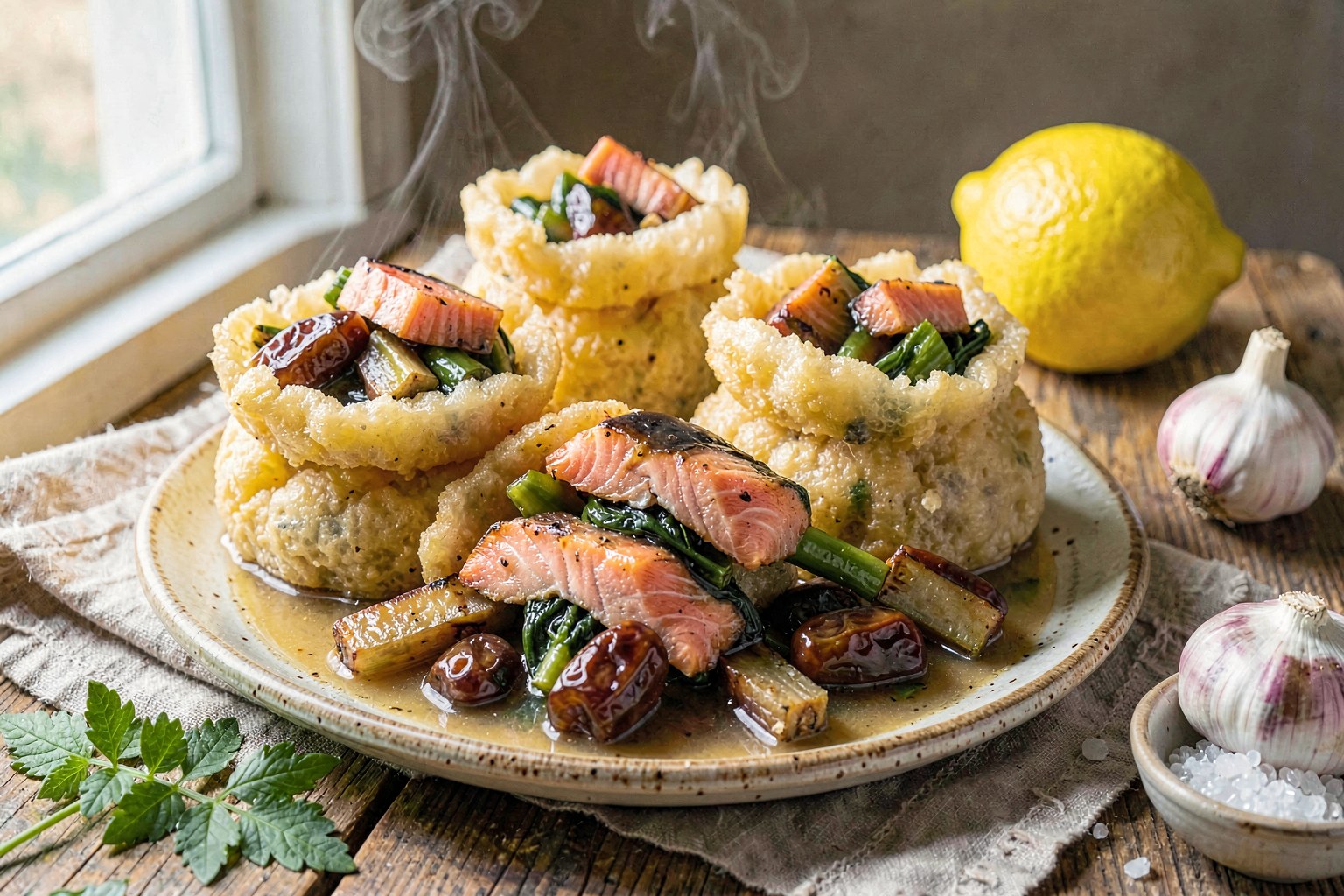
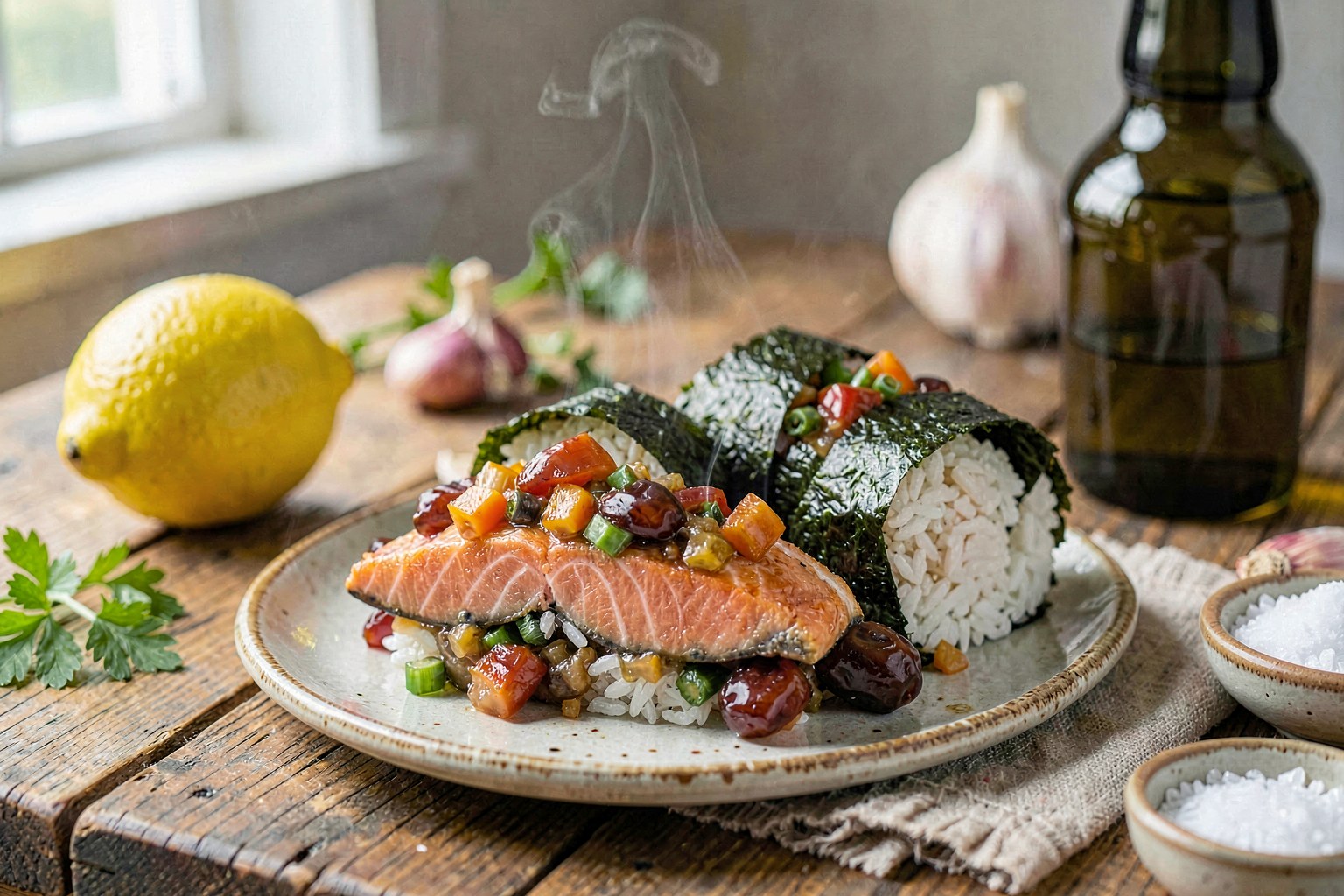
Seaweed-Wrapped Salmon & Kimchi Gimbap with Fermented Rice
This portable Korean rice roll swaps traditional refined sugar and sesame oil for nutrient-dense wild salmon, fermented kimchi, and extra-virgin olive oil. The result is a vibrant, savory-sweet roll bursting with omega-3s, probiotics, and polyphenols, designed to fuel longevity without spiking blood sugar.
A little context
Rooted in the Korean tradition of gimbap as a wholesome, portable meal, this version honors the balance of rice, protein, and vegetables while strictly adhering to modern longevity standards. We have eliminated the refined sugar and soybean oil typically found in rice seasoning and filling sauces, replacing them with the natural sweetness of whole dates and the anti-inflammatory properties of extra-virgin olive oil. This approach respects the spirit of the dish—fresh, balanced, and nourishing—while removing the inflammatory triggers common in modernized versions.
The longevity story
The core of this dish relies on wild-caught salmon for a superior omega-3 fatty acid profile (EPA/DHA) that supports brain health and reduces systemic inflammation. The inclusion of homemade or high-quality kimchi provides active lactobacilli cultures essential for gut barrier integrity and immune function. Sesame seeds and spinach deliver calcium, iron, and lignans, while the use of EVOO instead of seed oils ensures a stable, high-polyphenol fat source that protects the cellular membrane.
Method
- 01
Prepare the Rice
Rinse the rice thoroughly under cold water until the water runs clear to remove excess starch. Combine rice and water in a heavy saucepan, bring to a boil, then immediately reduce to the lowest heat, cover, and simmer for 40-45 minutes (or per package instructions for sprouted rice). Turn off heat and let it steam, covered, for 10 minutes.
- 02
Season the Rice
While rice cooks, blend the pitted dates with 1 tablespoon of water until a smooth paste forms. Once rice is cooked, transfer it to a large wooden or glass bowl. Drizzle with the 15ml of extra-virgin olive oil, sea salt, and the date paste. Gently fold with a rice paddle or spatula to coat evenly without mashing the grains. Let cool to room temperature.
- 03
Sear the Salmon
Pat the wild salmon strips dry and season lightly with sea salt. Heat a small skillet over medium heat with a drizzle of extra-virgin olive oil. Sear the salmon for 2-3 minutes per side until just cooked through but still tender. Remove from heat and let cool completely.
- 04
Prep the Vegetables
Blanch the spinach in boiling water for 30 seconds, rinse in ice water, squeeze out all excess moisture, and chop. Julienne the carrots and sauté briefly in a teaspoon of EVOO until tender-crisp. Salt the cucumber strips, let sit for 10 minutes, then squeeze dry. Chop the kimchi into small, bite-sized pieces.
- 05
Assemble the Rolls
Place a sheet of nori on the bamboo mat, shiny side down. Wet your hands to prevent sticking and spread a thin, even layer of seasoned rice over the nori, leaving a 2cm border at the top. Arrange a line of salmon, spinach, carrots, cucumber, and kimchi horizontally across the center of the rice.
- 06
Roll and Seal
Lift the edge of the mat closest to you, folding it over the filling to encase it tightly. Apply gentle, firm pressure with your fingers to shape the roll into a cylinder. Roll forward until the empty nori border meets the roll, sealing it with a dab of water. Repeat with remaining ingredients.
- 07
Slice and Serve
Using a sharp knife dipped in water, slice each roll into 6-8 even pieces. Sprinkle with toasted sesame seeds. Serve immediately with a side of green tea or sparkling water with lemon.
Nutrition facts
Per serving · 1 of 4- — Saturated
- 2 g
- — Polyunsaturated
- 3 g
- Carbohydrates
- 60 g
- — Fiber
- 12 g
- — Sugars
- 19 g
- Cholesterol
- 45 mg
- Sodium
- 1834 mg
- Potassium
- 1701 mg
Estimated from USDA FoodData Central for matched ingredients (86% ingredient coverage). Values vary with brand, preparation, and exact measurements.
Pro tips
- ✦Source your kimchi specifically from the refrigerated section of a health food store or make your own; check labels to ensure no sugar or seed oils were added during fermentation.
- ✦When selecting nori, look for 'toasted' or 'roasted' on the package for better flavor, but ensure it is unsalted to control sodium intake.
- ✦The key to tight rolls is moisture control: squeeze every vegetable (especially spinach and cucumber) until dry, and keep your hands slightly damp when handling rice.
- ✦For the best omega-3 profile, verify your salmon is wild-caught (look for 'Sockeye' or 'Pink' from Alaska or Canada) rather than farmed Atlantic salmon.
- ✦If the nori feels too brittle to roll, briefly toast the sheet over an open flame for 2 seconds to re-crisp it before assembling.
Shop this recipe
As an Amazon Associate we earn from qualifying purchases.
Substitutions
- wild-caught sockeye salmon → wild-caught Arctic char or rainbow trout (Both offer excellent omega-3 profiles and firm texture suitable for rolling.)
- spinach → blanched kale or Swiss chard (Provides similar mineral density; ensure stems are removed and leaves are dried thoroughly.)
- white rice or sprouted rice → short-grain brown rice (Increases fiber content but requires longer cooking time and more water.)
Storage
Store rolls in an airtight glass container in the refrigerator for up to 2 days. Note: Nori will soften over time; for best texture, wrap individual rolls in plastic wrap and consume within 24 hours. Do not freeze assembled rolls as the texture of the nori and rice will degrade significantly.
What to serve with it
- Hot green tea (sencha or matcha) to enhance polyphenol absorption
- Unsweetened kombucha with ginger or lemon for additional probiotics
- Sparkling water with a wedge of fresh yuzu or lemon
- A small side of fresh miso soup made with dashi and tofu
FAQ
Can I use store-bought sesame oil instead of olive oil?+
Traditional gimbap uses sesame oil, but many commercial brands are diluted with seed oils. If you find a 100% pure, cold-pressed sesame oil, you can use it, but extra-virgin olive oil is preferred here for its higher polyphenol content and stability.
Why did my nori get soggy?+
This usually happens if the vegetables were not squeezed dry enough or if the rice was still warm when the roll was assembled. Ensure all fillings are room temperature and moisture-free before rolling.
Is this recipe low-carb?+
Gimbap is rice-based, so it is not strictly low-carb. However, by using sprouted brown rice and avoiding added sugars, the glycemic load is significantly lower than traditional versions. For a lower-carb option, you can substitute half the rice with riced cauliflower.
Share this recipe
Notes from the community
Sign in to leave a note.
No notes yet — be the first.
You might also like