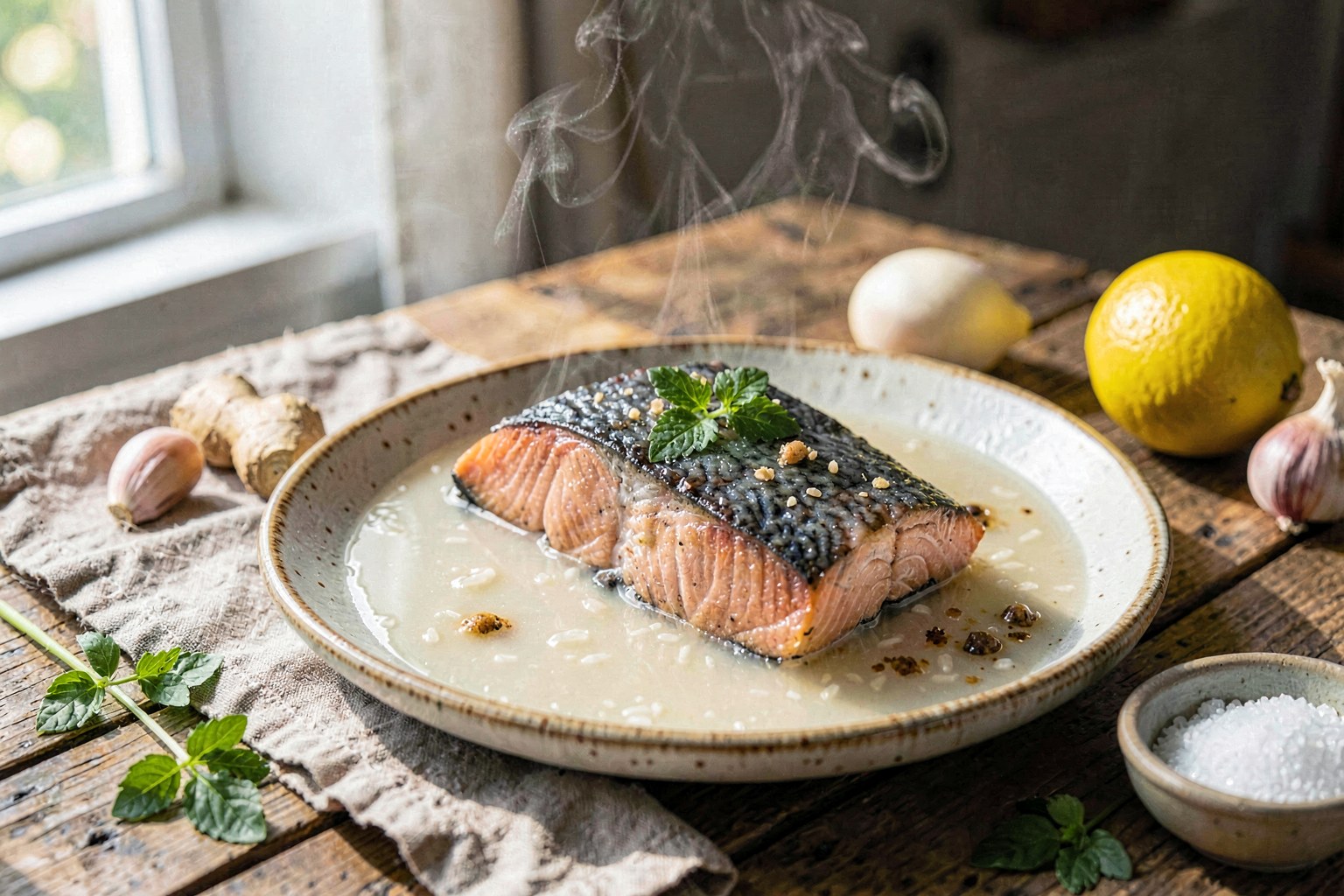
Gogi-jeom (Fermented Rice Water Glazed Wild Salmon)
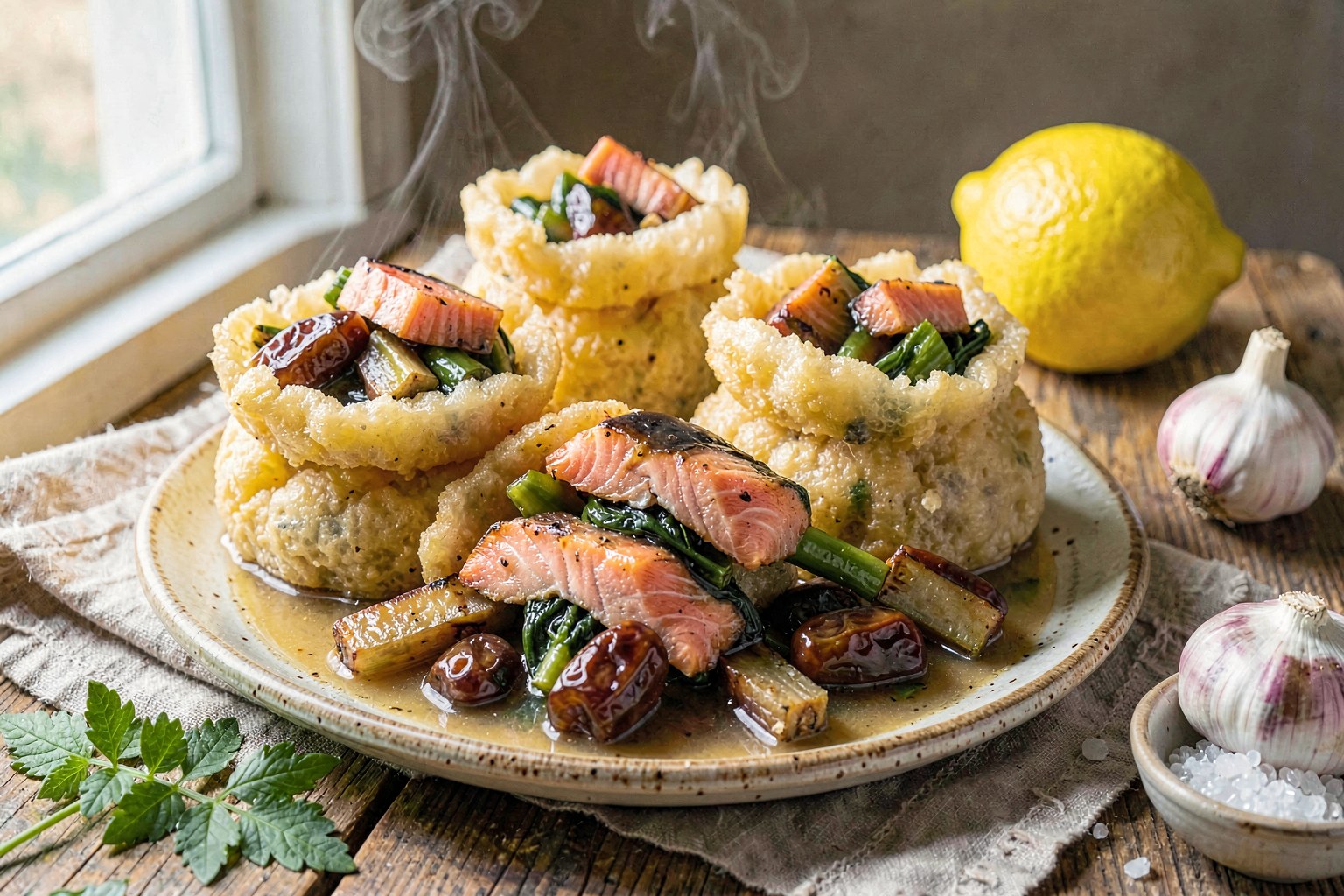
A modern interpretation of Korean banchan featuring wild-caught salmon poached in activated cloudy rice water. The dish offers a subtle tang from fermentation and rich umami without refined sugar or seed oils. This gut-supportive preparation honors the tradition of using rice water as a nourishing cooking medium.
A little context
This recipe draws from the Korean tradition of using rice water (often used for skincare or in makgeolli) and fermentation techniques central to banchan culture. We honor the source by using organic brown rice and traditional aromatics like ginger and scallion. To align with health goals, we have replaced refined sugar with date syrup and eliminated seed oils in favor of extra-virgin olive oil.
The longevity story
Wild-caught sockeye salmon provides high levels of EPA and DHA omega-3 fatty acids to reduce systemic inflammation. The cloudy rice water is rich in inositol and B vitamins, which support skin barrier function and energy metabolism. Fermentation introduces beneficial microbes and enzymes that aid digestion, while garlic and ginger contribute allicin and gingerol for immune support. Using extra-virgin olive oil adds polyphenols that protect the fish fats from oxidation during cooking.
Method
- 01
Prepare the rice water
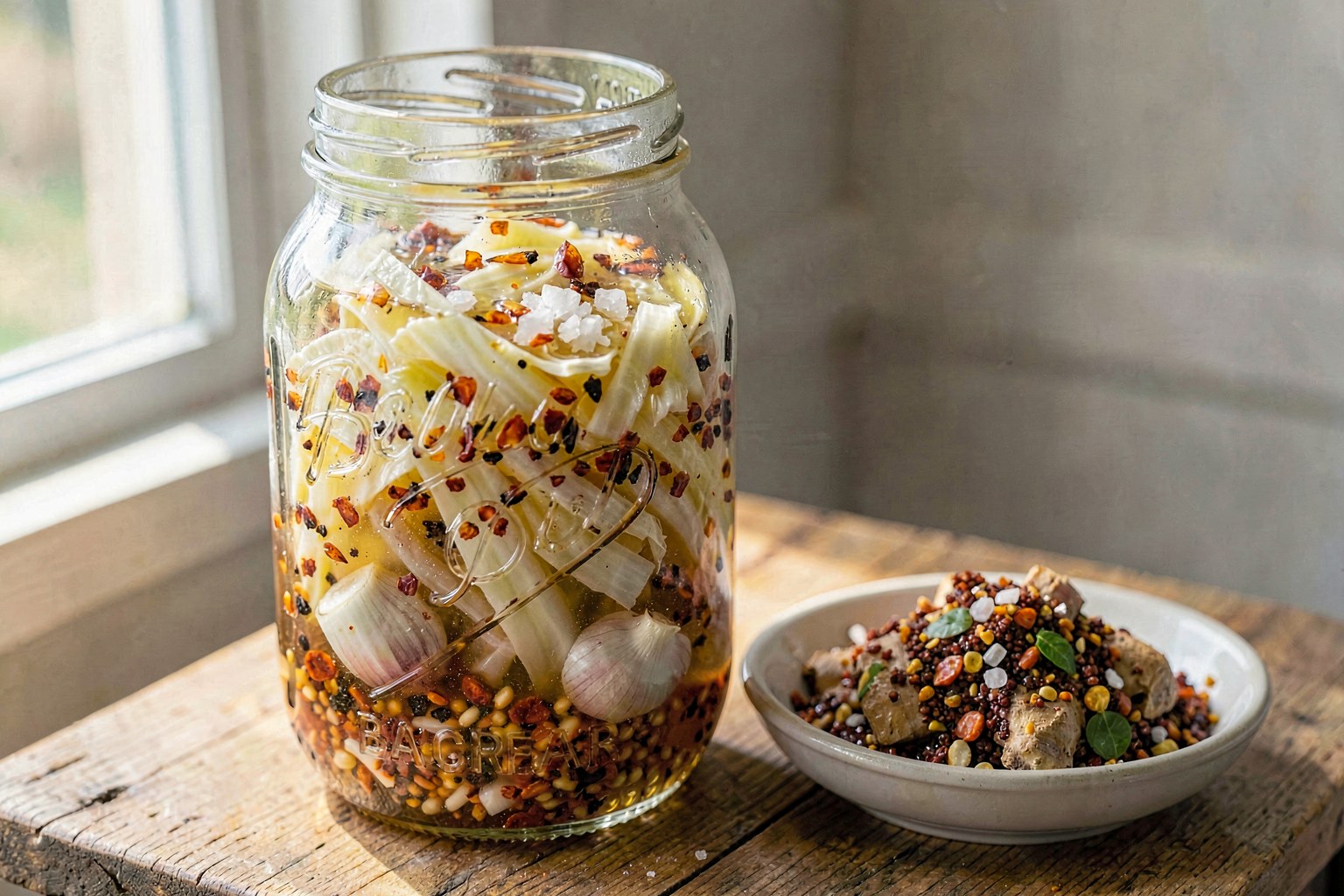
Rinse the organic brown rice until water runs clear. Place rice in a glass jar with 500 ml warm filtered water. Stir vigorously to create a cloudy suspension.
- 02
Activate the ferment
Stir in the active dry yeast. Cover the jar loosely and let sit at room temperature for 20 minutes until slightly bubbly, indicating activation.
- 03
Prep the salmon
Pat the wild-caught salmon fillet dry with paper towels. Rub both sides lightly with half of the sea salt. Let rest at room temperature for 10 minutes.
- 04
Strain and heat base
Strain the rice water through a fine mesh strainer into the Dutch oven, discarding the grains. Add the remaining sea salt, ginger, garlic, and white parts of the scallions.
- 05
Poach the fish
Bring the liquid to a simmer over medium heat. Reduce to low. Gently lay the salmon skin-side down in the liquid. Cover and poach for 12-15 minutes until just cooked through.
- 06
Make the glaze
Remove salmon to a serving plate. Increase heat to medium. Add date syrup and extra-virgin olive oil to the rice water liquid. Simmer for 5 minutes until slightly thickened.
- 07
Finish and serve
Pour the warm glaze over the salmon. Top with green scallion parts. Serve immediately with steamed brown rice or quinoa.
Nutrition facts
Per serving · 1 of 4- — Saturated
- 2 g
- — Polyunsaturated
- 2 g
- Carbohydrates
- 23 g
- — Fiber
- 2 g
- — Sugars
- 3 g
- Cholesterol
- 64 mg
- Sodium
- 586 mg
- Potassium
- 573 mg
Estimated from USDA FoodData Central for matched ingredients (70% ingredient coverage). Values vary with brand, preparation, and exact measurements.
Pro tips
- ✦Source wild-caught salmon over farmed to avoid PCBs and ensure higher omega-3 content.
- ✦Do not overcook the salmon; it continues to cook in the hot liquid after removal.
- ✦If you have time, ferment the rice water for 24 hours in the fridge for a deeper tang before using.
- ✦Wash the brown rice thoroughly to remove excess starch that can make the water too thick.
- ✦Choose a high-quality date syrup without added preservatives or sulfur dioxide.
Shop this recipe
As an Amazon Associate we earn from qualifying purchases.
Substitutions
- wild-caught sockeye salmon → wild Arctic char or rainbow trout (similar fat profile and delicate texture)
- date syrup → pure maple syrup or monk fruit syrup (adjust to taste for sweetness level)
- extra-virgin olive oil → avocado oil (higher smoke point but lower polyphenol count)
Storage
Store in a glass container with rice water glaze for up to 3 days in the fridge. Do not freeze as texture of poached fish may degrade.
What to serve with it
- Green tea or roasted barley tea (boricha)
- Steamed organic brown rice
- Kimchi (sugar-free version)
- Sparkling water with lemon and ginger
FAQ
Is the yeast safe to eat?+
Yes, the yeast is deactivated during the poaching process, leaving behind the flavor and enzymatic benefits without active fermentation in the stomach.
Can I make this without the ferment step?+
Yes, you can use plain cloudy rice water, but you will miss the probiotic and flavor depth of the yeast activation.
Is this gluten-free?+
Yes, as long as you ensure the date syrup and yeast are certified gluten-free, and you avoid soy sauce.
Share this recipe
Notes from the community
Sign in to leave a note.
No notes yet — be the first.
You might also like