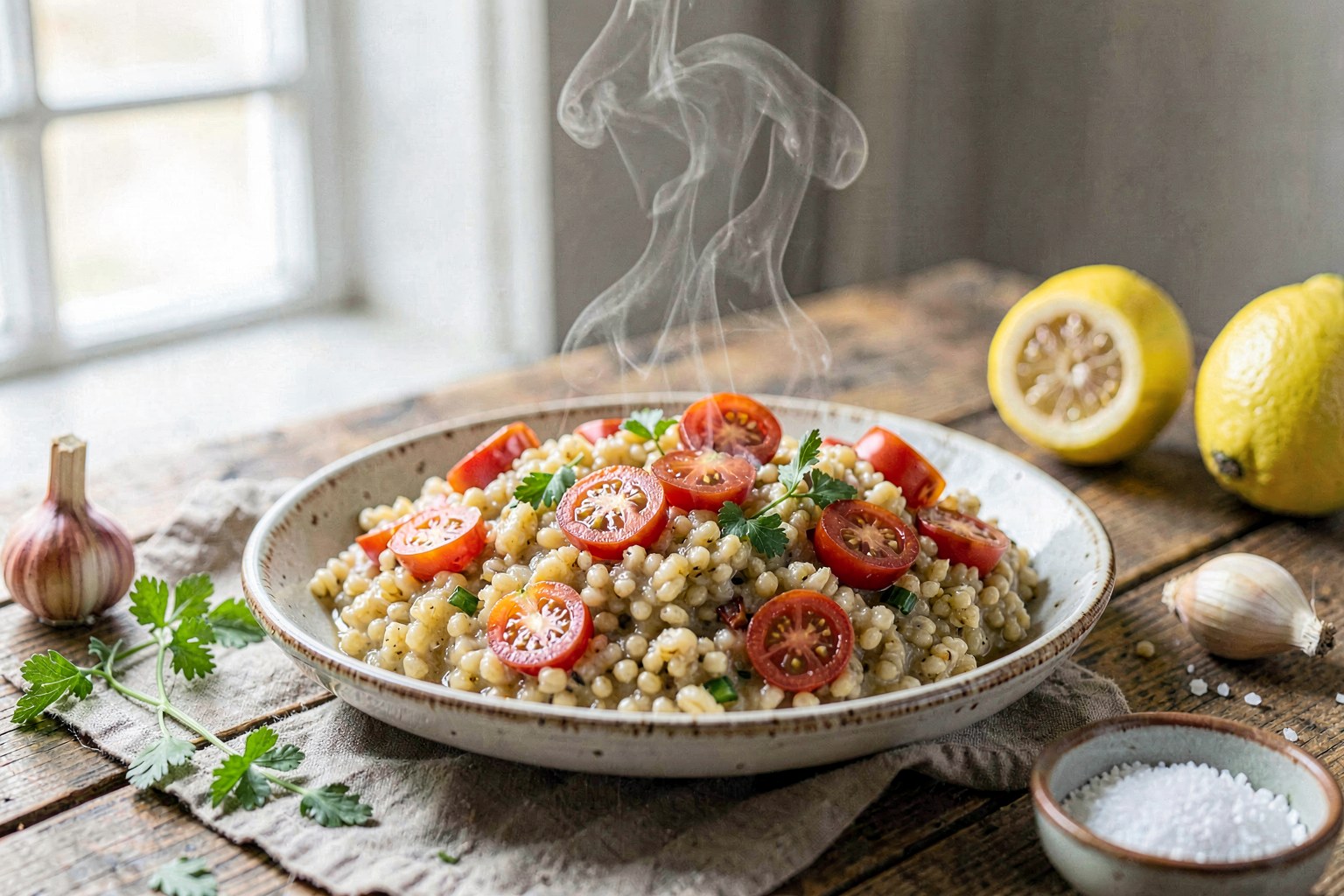
Golden State Heirloom Tomato and Farro Risotto
This creamy, nutrient-dense dinner swaps traditional Arborio rice for nutty, fiber-rich farro, creating a satisfying texture that mimics classic risotto. Bursting with the natural sweetness of sun-ripened California heirloom tomatoes and finished with a generous emulsion of extra-virgin olive oil, this dish delivers deep umami without refined sugars or seed oils. It is a celebration of seasonal abundance, designed to support longevity and stable blood sugar.
A little context
Rooted in the Italian-American tradition of California's Central Valley, this recipe honors the 'risotto' technique of slow, patient cooking but adapts it for the modern longevity kitchen. We have stripped away the heavy butter and Parmesan rind (often treated with preservatives) and replaced them with grass-fed ghee and high-quality salt, ensuring the fat profile supports heart health. Traditional recipes sometimes add a pinch of sugar to balance tomato acidity; here, we rely solely on the natural glucose of ripe heirloom varieties and a splash of high-quality white wine.
The longevity story
This dish leverages the polyphenol density of extra-virgin olive oil (oleocanthal) and lycopene from cooked heirloom tomatoes, which becomes more bioavailable with heat. Farro provides a low-glycemic source of complex carbohydrates and fiber, promoting gut microbiome diversity and satiety. The inclusion of nutritional yeast and fresh basil adds B-vitamins and antioxidants, while the absence of seed oils prevents the introduction of pro-inflammatory omega-6 fatty acids often found in traditional risottos.
Method
- 01
Prepare the Broth
In a separate saucepan, bring the organic vegetable or bone broth to a gentle simmer. Keep it warm over low heat throughout the cooking process; adding cold broth will shock the grains and stop the gelatinization process.
- 02
Sauté Aromatics
Heat 30 ml (2 tbsp) of the extra-virgin olive oil and the grass-fed ghee in the Dutch oven over medium heat. Add the finely diced onion and a pinch of sea salt. Sauté for 5-7 minutes until translucent and soft, but not browned. Add the minced garlic and cook for another minute until fragrant.
- 03
Toast the Farro
Add the rinsed farro to the pot. Stir constantly for 2-3 minutes to toast the grains, coating them in the fat. This step develops a nutty flavor and helps the grains hold their shape. If using wine, deglaze the pan now, scraping up any browned bits, and let it evaporate almost completely.
- 04
Gradual Simmering
Add a ladleful (about 120 ml) of the warm broth to the farro. Stir frequently until the liquid is mostly absorbed. Continue adding broth one ladle at a time, stirring often, allowing the grains to release their starch. This process takes about 25-30 minutes. The farro should be tender but still have a slight bite (al dente).
- 05
Incorporate Tomatoes
About 10 minutes before the farro is done, stir in the diced heirloom tomatoes (reserving a few for garnish). The tomatoes will break down, creating a natural, vibrant red sauce that coats the grains. Continue adding broth and stirring until the farro is cooked and the mixture is creamy.
- 06
Rest and Emulsify
Remove the pot from the heat. Stir in the remaining 30 ml (2 tbsp) of cold extra-virgin olive oil and the nutritional yeast. This 'mantecatura' step creates a glossy, creamy texture without heavy cream or seed oils. Let it rest for 2 minutes.
- 07
Season and Serve
Taste and adjust with sea salt and freshly cracked black pepper. The dish should be fluid, not stiff. Serve immediately in warm bowls, topped with the reserved fresh heirloom tomato dice, torn fresh basil, and an extra drizzle of high-quality olive oil.
Nutrition facts
Per serving · 1 of 4- — Saturated
- 7 g
- — Polyunsaturated
- 2 g
- Carbohydrates
- 69 g
- — Fiber
- 5 g
- — Sugars
- 8 g
- Cholesterol
- 23 mg
- Sodium
- 500 mg
- Potassium
- 502 mg
Estimated from USDA FoodData Central for matched ingredients (75% ingredient coverage). Values vary with brand, preparation, and exact measurements.
Pro tips
- ✦Sourcing Tip: Look for 'heirloom' tomatoes that feel heavy for their size and have a strong, earthy aroma at the stem; if they smell like nothing, they were picked too early and lack polyphenols.
- ✦Texture Control: If the farro absorbs liquid too quickly, add warm broth in smaller increments. If it's too soupy, cook for 2 more minutes without liquid to thicken.
- ✦Fat Quality: Do not skimp on the final drizzle of olive oil; the cold oil added at the end preserves the delicate polyphenols that heat can degrade.
- ✦Grain Choice: If you have celiac sensitivity, ensure your farro is certified gluten-free, as it is naturally gluten-free but often processed in facilities with wheat.
Shop this recipe
As an Amazon Associate we earn from qualifying purchases.
Substitutions
- pearl farro → spelt berries or barley (spelt offers a similar nutty profile; barley is softer and requires slightly longer cooking time.)
- grass-fed ghee → coconut oil or avocado oil (coconut oil adds a subtle sweetness; avocado oil is neutral and high-stability.)
- nutritional yeast → grated Parmigiano-Reggiano (pasture-raised) (ensure the cheese is made with animal rennet and no anti-caking agents for a non-vegan option.)
Storage
Store in an airtight glass container in the refrigerator for up to 3 days. The farro will absorb liquid as it cools; reheat gently with a splash of broth or water to restore creaminess. Not recommended for freezing as the texture of the tomatoes may become mushy upon thawing.
What to serve with it
- A glass of dry Pinot Noir or a light Sangiovese (low sugar, high polyphenols)
- Sparkling water with a wedge of lemon and a sprig of rosemary
- Green tea with a slice of ginger
- Simple mixed green salad with arugula and a lemon-olive oil vinaigrette
FAQ
Can I make this gluten-free?+
Yes, farro is a wheat relative and contains gluten. Substitute with certified gluten-free grains like quinoa, buckwheat groats, or brown rice, adjusting the cooking time and liquid ratio accordingly.
Why is my risotto not creamy?+
Creaminess comes from the starch released by the grains during constant stirring. Ensure you are stirring frequently and adding warm broth gradually. The final emulsion of cold olive oil is also crucial.
Can I use canned tomatoes?+
Fresh heirloom tomatoes are preferred for their superior flavor and lower sodium content. If using canned, choose organic, low-sodium varieties with no added sugar or citric acid, and drain well.
Share this recipe
Notes from the community
Sign in to leave a note.
No notes yet — be the first.
You might also like