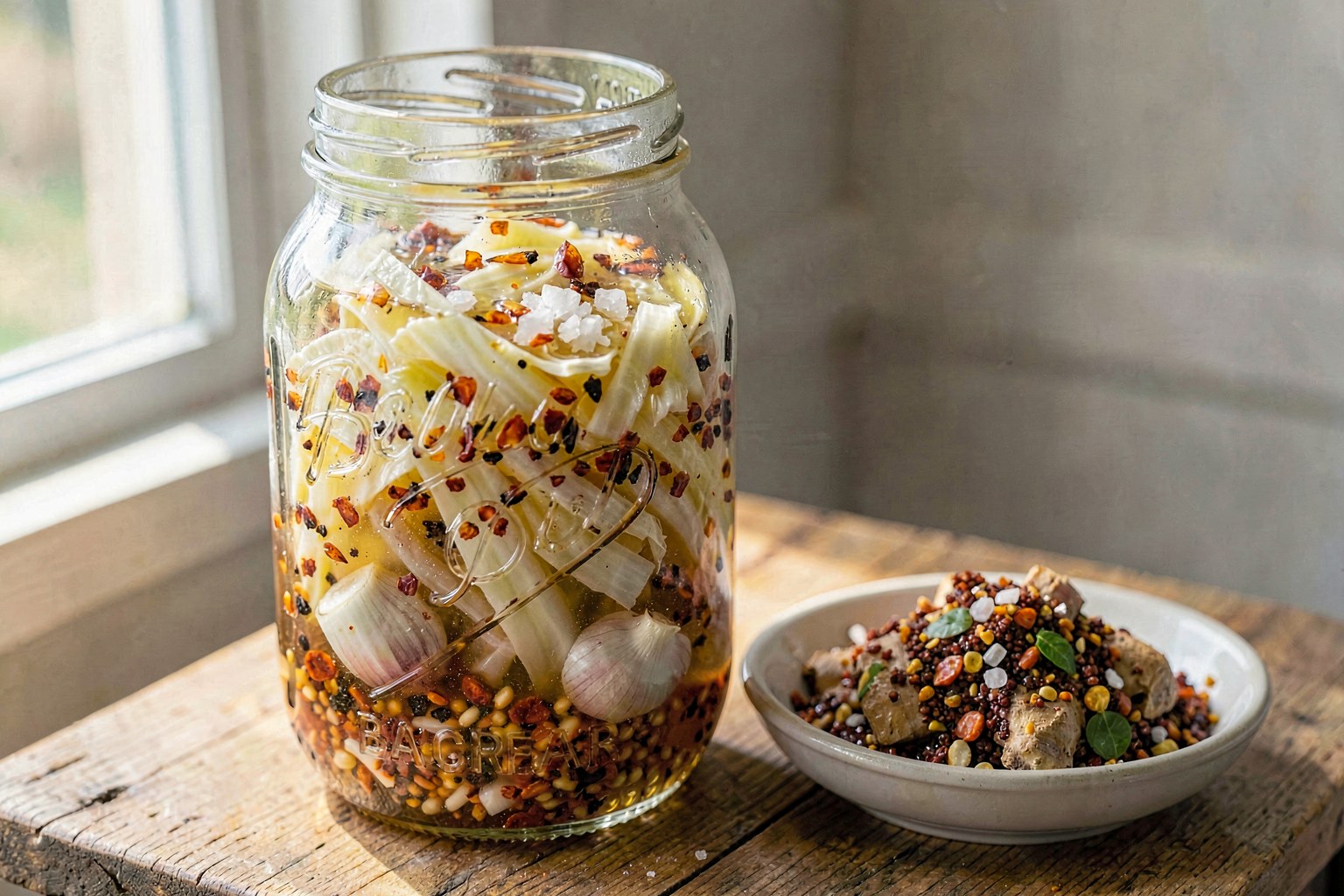
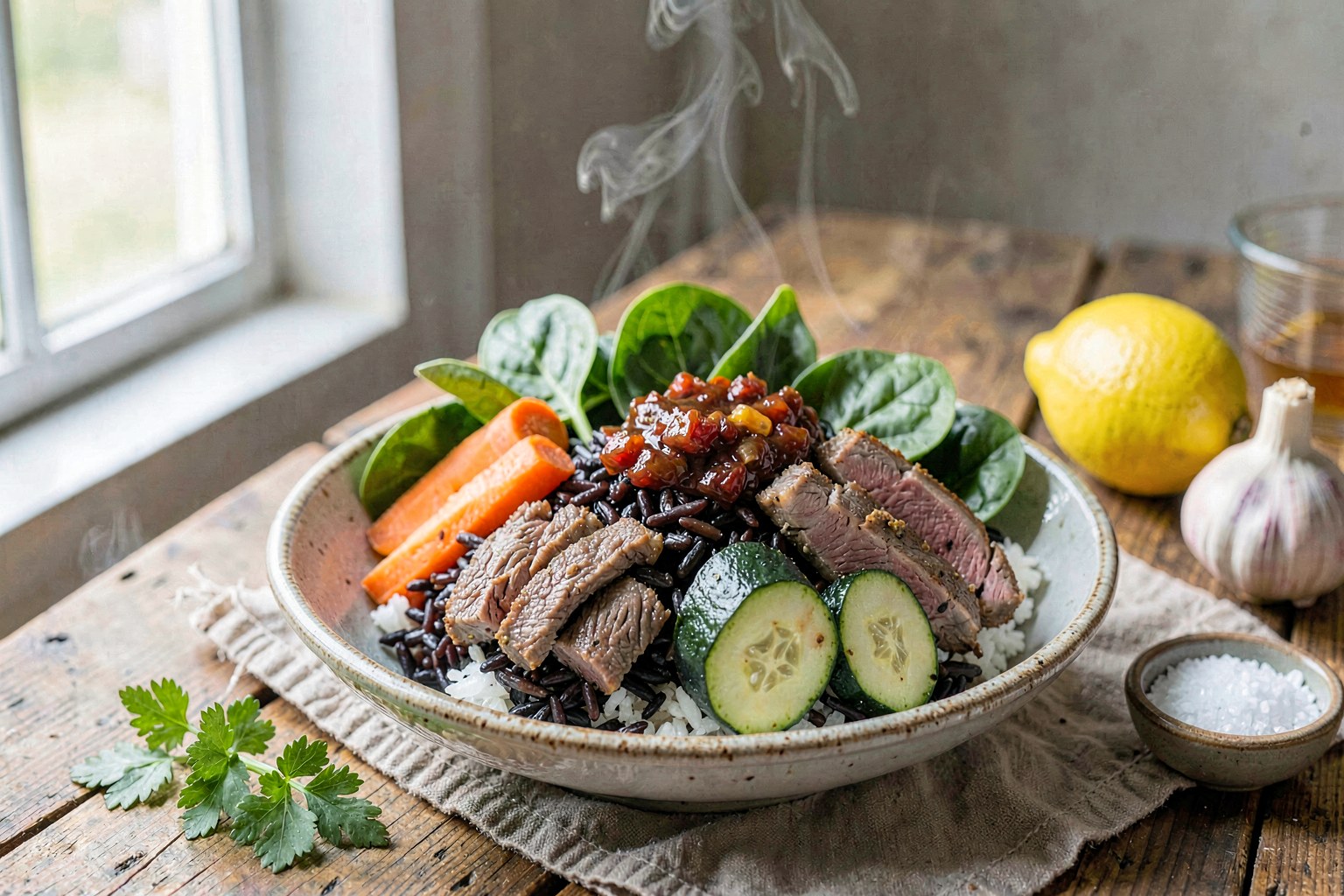
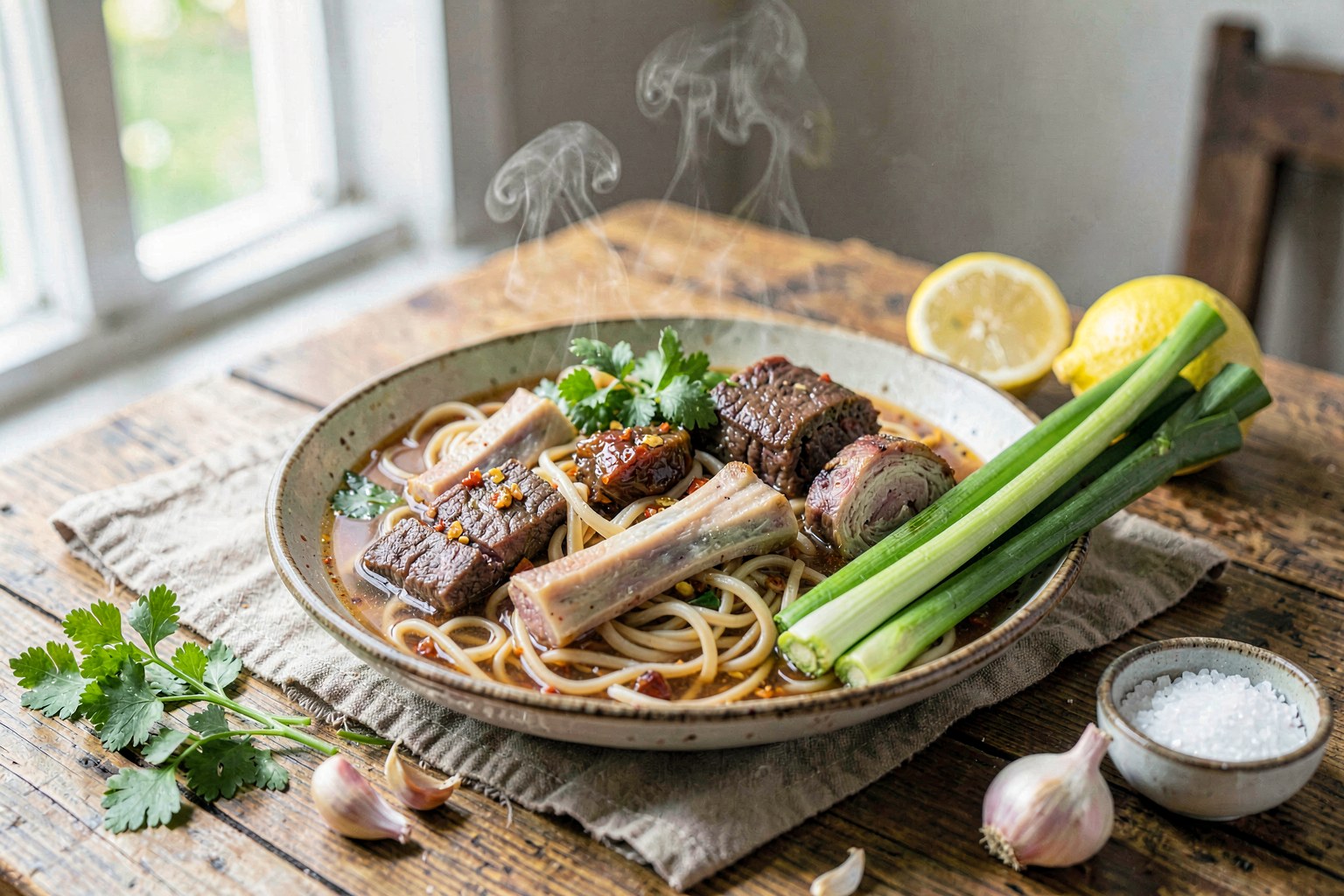
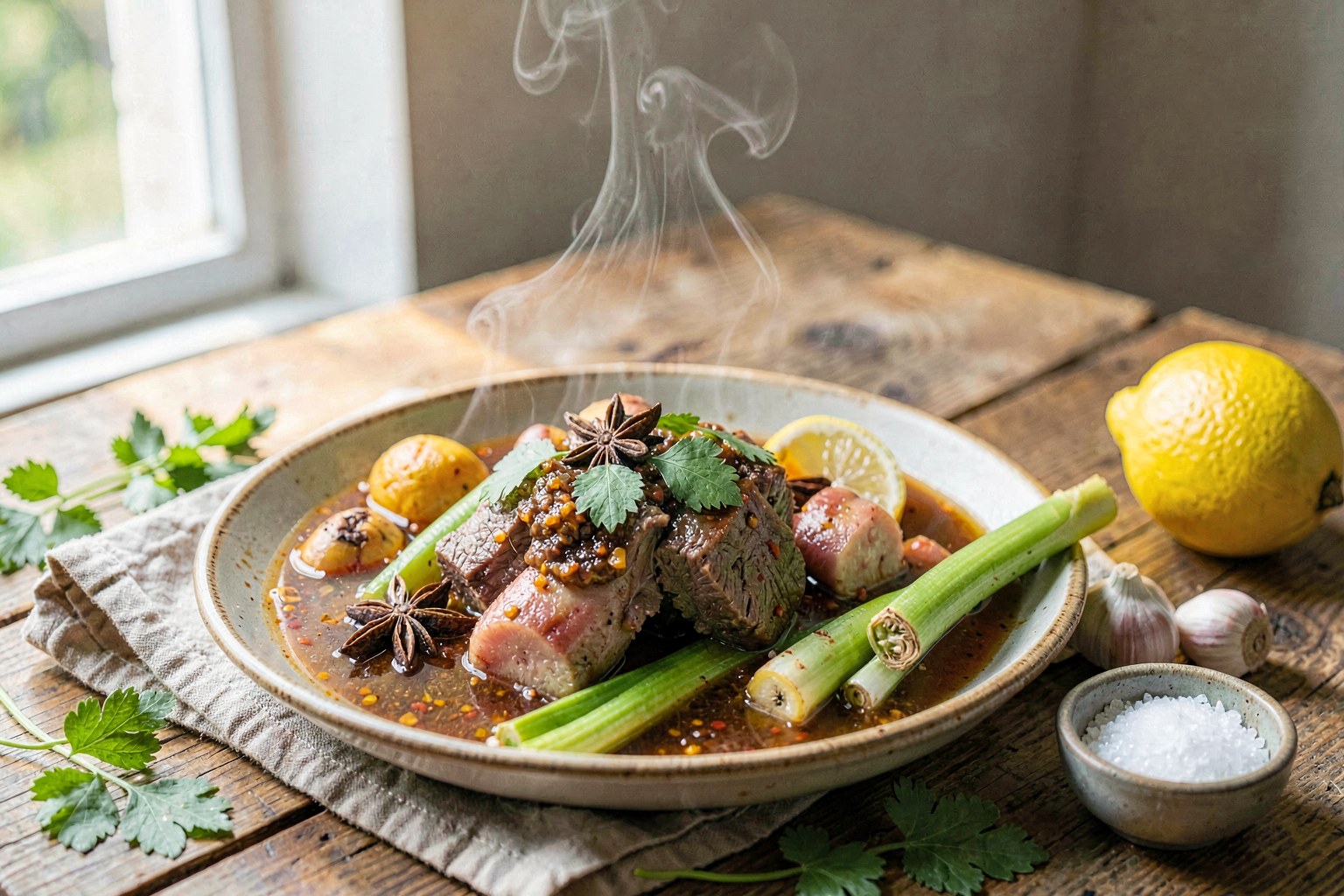
Farm-Fresh Kimchi-Bap with Pasture-Raised Egg
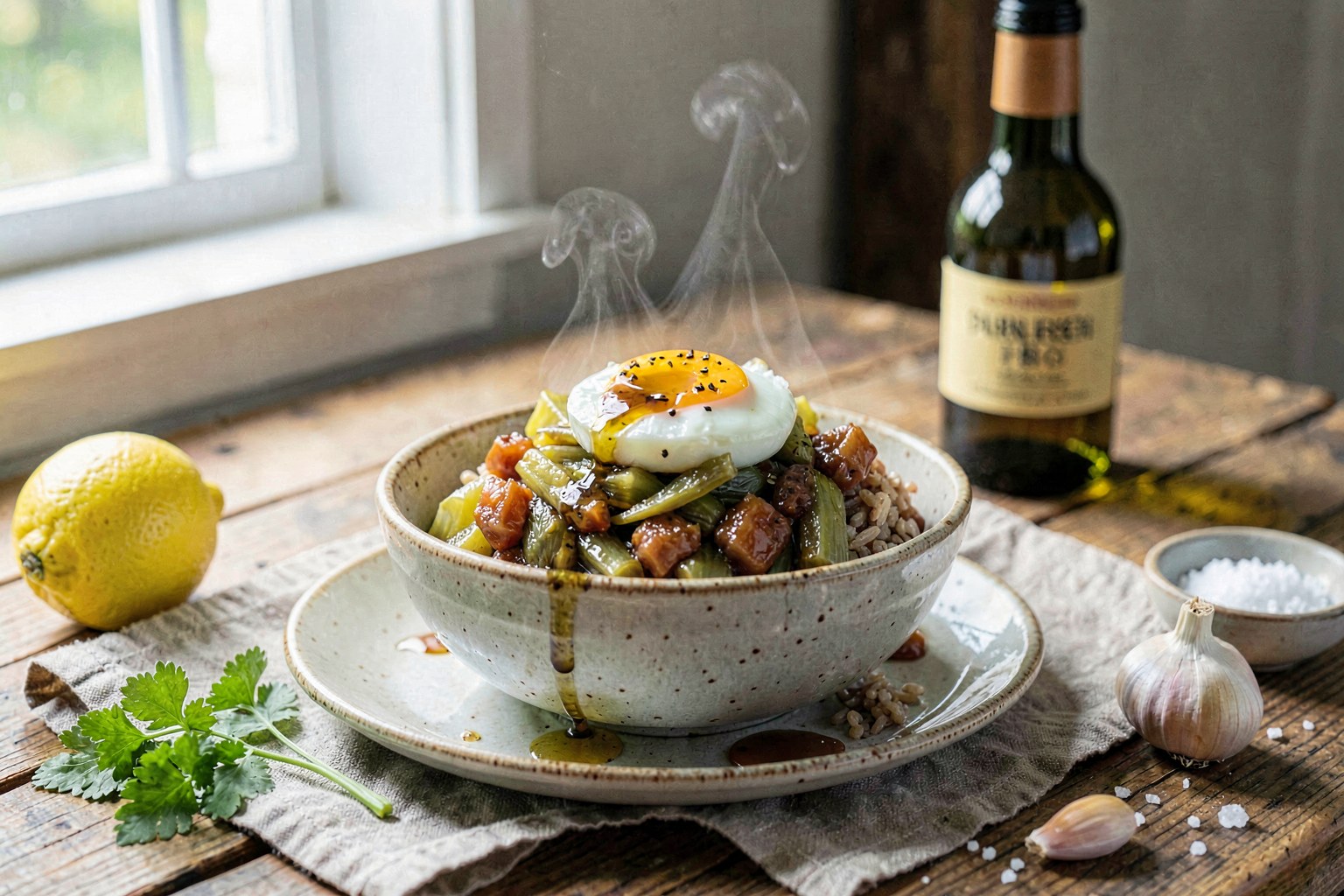
A nourishing rice bowl featuring fermented napa cabbage kimchi, seasoned with extra-virgin olive oil and date syrup, topped with a jammy pasture-raised egg. This dish balances probiotic-rich ferments with clean fats and fiber-rich grains for a gut-friendly, longevity-focused meal. It captures the spirit of Korean banchan without the refined sugars or industrial seed oils found in many modern adaptations.
A little context
Kimchi-bap is a humble staple in Korean households, traditionally made with leftover rice and kimchi juice. We honor this tradition by sourcing organic, sugar-free kimchi and swapping the typical sesame oil (often refined) for cold-pressed extra-virgin olive oil to reduce oxidative stress. Any natural sweetness needed to balance the fermentation acidity comes from whole-date syrup rather than refined white sugar, respecting the dish's roots while optimizing for modern longevity standards.
The longevity story
This bowl leverages the power of fermentation through kimchi, which delivers live probiotics and bioavailable B vitamins essential for metabolic health. The pasture-raised egg provides choline for brain function and lutein for eye health, while the extra-virgin olive oil contributes oleocanthal, a potent anti-inflammatory polyphenol. Brown rice adds resistant starch to support gut microbiome diversity, and sesame seeds offer additional lignans and calcium. Together, these ingredients create a synergistic effect that supports digestion, reduces systemic inflammation, and stabilizes blood sugar.
Method
- 01
Rinse and Soak the Rice
Rinse the organic short-grain brown rice under cold water until the water runs clear to remove excess starch. Soak in fresh water for 30 minutes to soften the grains, which reduces cooking time and improves digestibility.
- 02
Cook the Rice
Drain the rice and transfer to your heavy pot. Add 240 ml (1 cup) of fresh filtered water per 200 g (1 cup) of rice. Bring to a boil, then reduce heat to low, cover, and simmer for 40 minutes. Remove from heat and let steam, covered, for 10 minutes.
- 03
Season the Rice
Fluff the cooked rice gently with a paddle. Drizzle with the extra-virgin olive oil, date syrup, and sea salt. Fold gently to coat every grain without mashing the texture. This creates a protective layer of healthy fats.
- 04
Prepare the Eggs
Place pasture-raised eggs in a saucepan and cover with cold water. Bring to a boil, then cover and remove from heat. Let sit for 6 to 7 minutes for jammy yolks. Transfer to an ice bath to stop cooking, then peel carefully.
- 05
Toast the Sesame Seeds
In a dry skillet over medium heat, toast the black sesame seeds for 2 to 3 minutes until fragrant and they begin to pop. Do not burn them, as this creates bitterness. Set aside.
- 06
Assemble the Bowls
Divide the seasoned rice among four warm bowls. Top each with a generous portion of chopped kimchi and a peeled egg. Scatter the scallions over the top and finish with the toasted sesame seeds. Serve immediately.
Nutrition facts
Per serving · 1 of 4- — Saturated
- 1 g
- — Polyunsaturated
- 2 g
- Carbohydrates
- 16 g
- — Fiber
- 1 g
- — Sugars
- 1 g
- Cholesterol
- 0 mg
- Sodium
- 204 mg
- Potassium
- 44 mg
Estimated from USDA FoodData Central for matched ingredients (62% ingredient coverage). Values vary with brand, preparation, and exact measurements.
Pro tips
- ✦Source your kimchi from a local fermenter or read labels carefully; avoid brands with corn syrup or high fructose corn syrup.
- ✦For the best rice texture, let it steam off the heat for 10 minutes before opening the lid to redistribute moisture.
- ✦If the kimchi is too sour for your palate, add a tiny drop more date syrup to the rice seasoning to balance the pH.
- ✦Store-bought kimchi can be pasteurized, which kills the probiotics; look for 'refrigerated' and 'live cultures' on the label for gut benefits.
- ✦Use a sharp knife to slice the scallions on a sharp bias for a better presentation and texture contrast.
Shop this recipe
As an Amazon Associate we earn from qualifying purchases.
Substitutions
- short-grain brown rice → quinoa or millet (for a lower-carb or gluten-free alternative if avoiding grains entirely)
- pasture-raised eggs → sliced avocado (for a vegan version, though you will lose the choline benefit)
- date syrup → pure maple syrup (use sparingly as maple has a stronger flavor profile)
Storage
Store rice and kimchi separately in airtight glass containers in the refrigerator for up to 4 days. Cooked eggs are best eaten fresh but can be stored peeled in water for 2 days. Reheat rice gently with a splash of water.
What to serve with it
- hot green tea (sencha or matcha) for additional catechins
- plain kombucha for extra fermentation support
- sparkling water with fresh lemon wedge
- light herbal tea like dandelion root for digestion
FAQ
Can I use white rice instead of brown?+
Yes, white rice is traditional, but brown rice offers more fiber and a lower glycemic index, which aligns better with longevity goals. If you use white rice, reduce the water slightly and cooking time to 15 minutes.
Is sesame oil allowed?+
No, we use extra-virgin olive oil to avoid the high Omega-6 content and oxidative stress associated with refined seed oils. The sesame seeds provide the flavor without the processing.
How do I know if the kimchi has enough sugar?+
Read the nutrition label; total sugars should come from the vegetables themselves. If added sugar is listed, the kimchi is not compliant. Taste it; it should be tangy and spicy, not cloyingly sweet.
Share this recipe
Notes from the community
Sign in to leave a note.
No notes yet — be the first.
You might also like