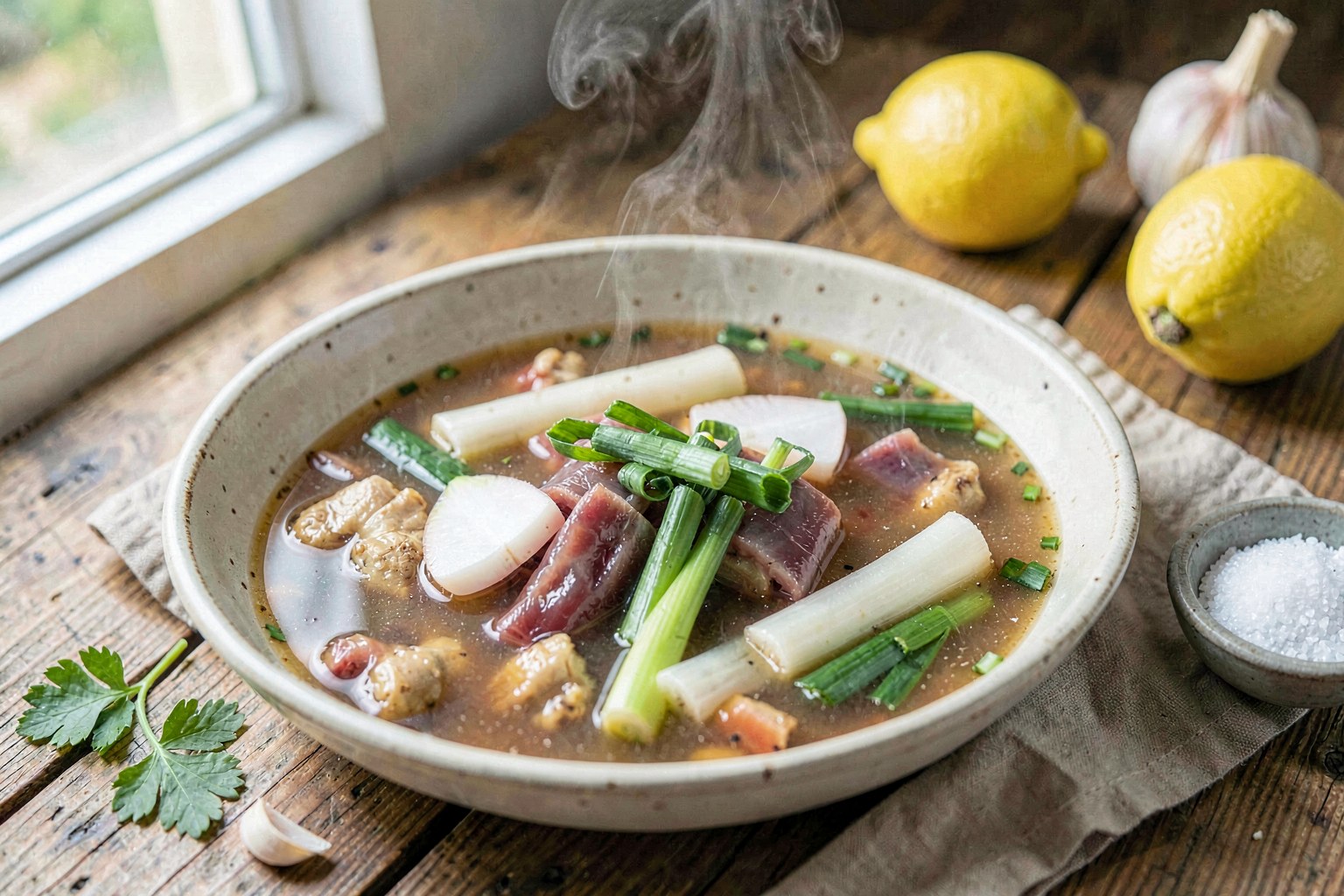
Aged Kimchi Stem Broth with Wild-Caught Pollack
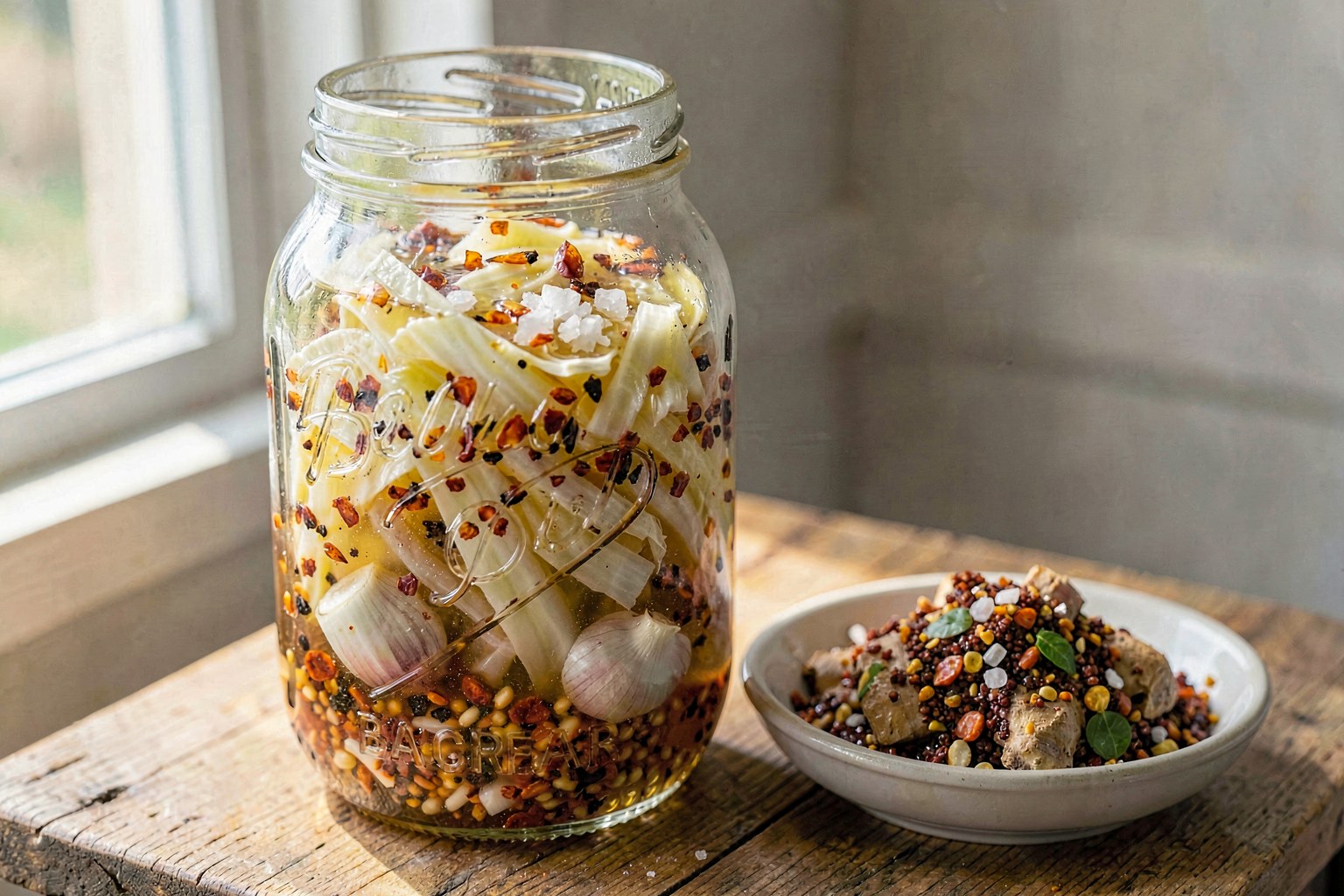
This light, probiotic-rich broth transforms the often-discarded stems and leaves of aged kimchi into a deeply savory, umami-packed dinner. The soup balances the sharp, fermented tang of the cabbage with the delicate sweetness of wild pollack and the earthy warmth of fresh ginger, creating a gut-healing bowl that feels restorative rather than heavy.
A little context
Rooted in the Korean tradition of 'jeong-guk' (using leftovers) and the banchan philosophy of zero waste, this recipe honors the practice of fermenting cabbage for winter sustenance. Traditional recipes often call for a splash of sugar or corn syrup to balance the saltiness of the brine; we have omitted all refined sugars, relying instead on the natural sweetness of mature radish and a touch of organic date syrup only if absolutely necessary. We also replace the ubiquitous sesame oil finish with a high-quality, cold-pressed extra-virgin olive oil or avocado oil to avoid oxidized seed oils, preserving the integrity of the fats.
The longevity story
The core of this dish's longevity benefits lies in the fermentation process: aged kimchi provides live Lactobacillus cultures and increased bioavailability of B vitamins, while the polyphenols from the napa cabbage and radish act as potent antioxidants. We utilize the fibrous stems, which are often discarded, to extract additional prebiotic fiber that feeds the gut microbiome. The wild-caught pollack contributes high-quality, lean protein and omega-3 fatty acids (EPA/DHA) without the inflammatory load of farmed fish, and the fresh ginger adds gingerol for systemic inflammation reduction.
Method
- 01
Prep the Kimchi Base
Separate the aged kimchi into two piles: the softer leaves and the tougher stems. Roughly chop the stems into 1 cm pieces to increase surface area for flavor extraction. Set the leaves aside for the last 5 minutes of cooking.
- 02
Sauté Aromatics
Heat 1 tbsp of extra-virgin olive oil in the Dutch oven over medium heat. Add the sliced white parts of the green onions, ginger, and garlic. Sauté for 2-3 minutes until fragrant but not browned, releasing the volatile oils.
- 03
Build the Broth
Add the chopped kimchi stems and daikon radish cubes to the pot. Stir for 2 minutes to coat in the oil and aromatics. Pour in the reserved kimchi brine and the 1.5 L of water (or bone broth). Bring to a boil, then immediately reduce to a low simmer.
- 04
Simmer for Depth
Cover the pot and simmer gently for 30 minutes. This allows the tough kimchi stems to soften and release their probiotic-rich juices and the radish to become tender. Do not boil vigorously, as this can destroy the delicate enzymes in the kimchi.
- 05
Season and Add Protein
Stir in the gluten-free tamari. Gently add the wild-caught pollack chunks. If the fish is thick, you may add the reserved kimchi leaves now so they wilt but retain texture. Cover and simmer for another 8-10 minutes until the fish is opaque and flakes easily.
- 06
Finish and Serve
Remove from heat. Taste the broth; usually, the aged kimchi provides enough salt, but adjust with a pinch of sea salt if needed. Drizzle the remaining 1 tsp of EVOO over the top for healthy fats and polyphenols. Garnish with the reserved green onion tops and serve immediately.
Nutrition facts
Per serving · 1 of 4- — Saturated
- 4 g
- — Polyunsaturated
- 10 g
- Carbohydrates
- 18 g
- — Fiber
- 9 g
- — Sugars
- 4 g
- Cholesterol
- 0 mg
- Sodium
- 1166 mg
- Potassium
- 927 mg
Estimated from USDA FoodData Central for matched ingredients (60% ingredient coverage). Values vary with brand, preparation, and exact measurements.
Pro tips
- ✦Sourcing is key: Look for kimchi that lists only cabbage, radish, chili, garlic, ginger, and salt. Avoid any brand with 'sugar', 'corn syrup', or 'vegetable oil' in the ingredients.
- ✦The 'aged' factor: For a truly gut-healing broth, use kimchi that has been fermenting in the fridge for at least 3-4 weeks. The lactic acid content is higher, and the flavor is deeper.
- ✦Don't overcook the fish: Pollack is lean and cooks quickly. If you simmer it for more than 10 minutes, it will become dry and stringy.
- ✦Texture control: If you prefer a smoother soup, you can blend half the cooked radish and kimchi stems before adding the fish, creating a creamy texture without dairy or seed oils.
Shop this recipe
As an Amazon Associate we earn from qualifying purchases.
Substitutions
- wild-caught pollack → wild-caught cod or halibut (Both are lean, white-fleshed fish with similar cooking times and mild flavors.)
- gluten-free tamari → coconut aminos (Slightly sweeter and lower sodium, but fully compliant with the no-refined-sugar rule.)
- daikon radish → turnip or kohlrabi (These root vegetables offer a similar texture and mild sweetness when simmered.)
Storage
Store in a glass container in the refrigerator for up to 3 days. The flavor often improves on day 2 as the fermentation continues. Freeze in portioned containers for up to 2 months; note that the texture of the fish may soften slightly upon reheating.
What to serve with it
- Warm brown rice or short-grain organic rice
- Hot green tea (sencha or bancha)
- A side of fresh cucumber salad with sesame seeds (toasted)
- Sparkling water with a wedge of lemon
FAQ
Can I make this without fish?+
Yes, this is naturally vegan if you use water instead of broth. The kimchi stems and radish provide enough umami depth that the fish is optional, not essential.
Why not use sesame oil?+
Traditional Korean cooking uses toasted sesame oil, but it is often refined and can be high in omega-6s if not cold-pressed. We use EVOO or avocado oil to prioritize a better omega-3 to omega-6 ratio and higher heat stability for the sauté step.
Is the kimchi spiciness adjustable?+
The heat comes from the gochugaru (chili flakes) in the kimchi. You cannot remove the spice once it's in, but you can dilute it by adding more water or radish, or by serving with a side of plain rice.
Share this recipe
Notes from the community
Sign in to leave a note.
No notes yet — be the first.
You might also like