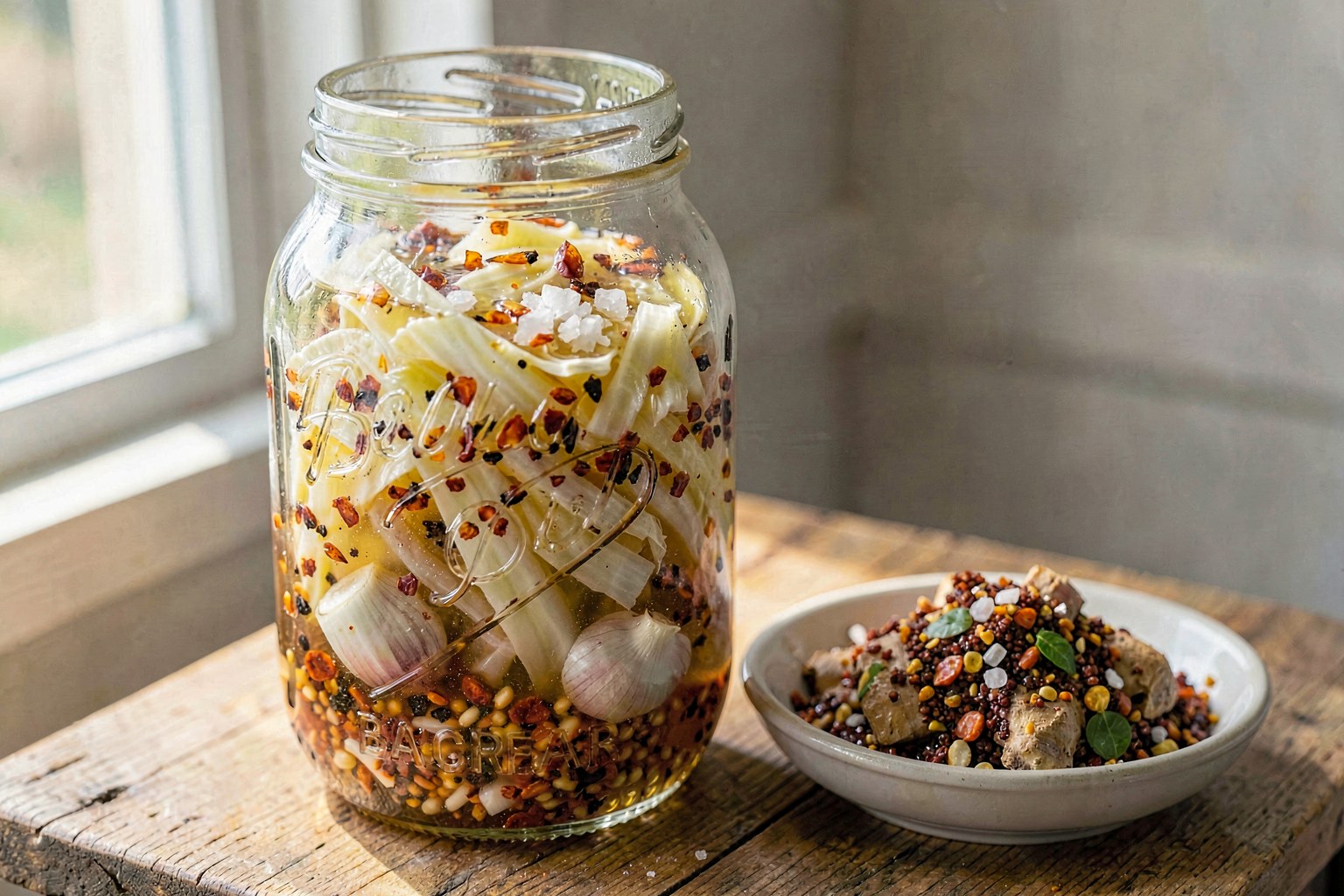
Kkae-ri (Fermented White Radish Banchan)
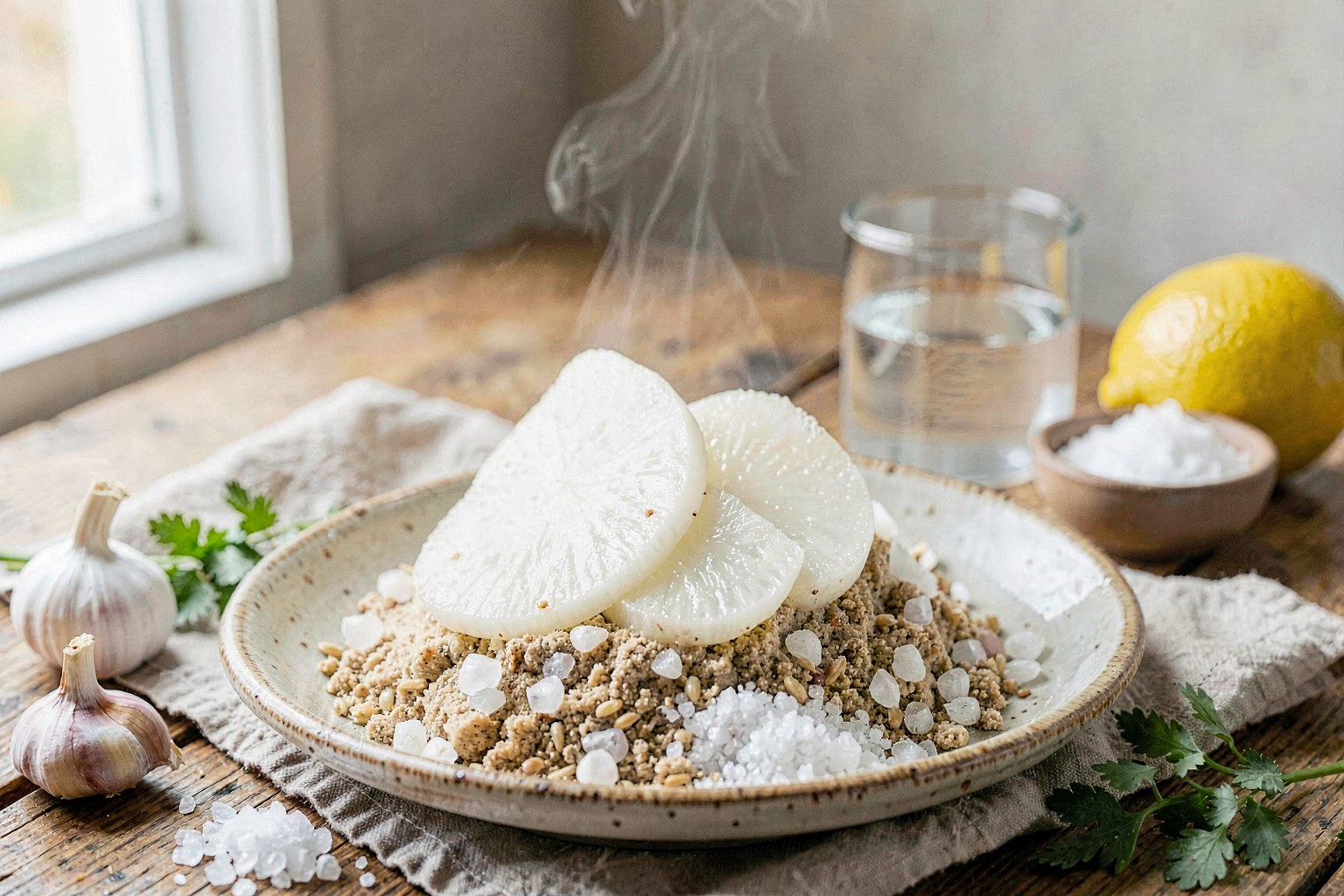
Crisp, tangy white radish slices fermented with a traditional rice flour slurry for a sour crunch that balances spicy meals. This version eliminates refined sugar and seed oils, relying on the natural sweetness of fruit and the probiotic power of fermentation for a nutrient-dense side dish.
A little context
This dish honors the Korean banchan tradition of preserving vegetables to accompany rice meals, specifically the use of a rice flour 'gut' to thicken the brine. We have stripped out the refined sugar often added to speed fermentation, replacing it with whole fruit sweetness, and ensured all fats are cold-pressed or omitted to respect the seed oil restriction.
The longevity story
The lactobacillus produced during fermentation supports gut diversity and immune function, while white radishes provide fiber and digestive enzymes like diastase. Garlic and ginger contribute allicin and gingerol, potent anti-inflammatory compounds that reduce oxidative stress. The use of sprouted brown rice flour ensures a lower glycemic impact compared to white rice binders, maintaining blood sugar stability.
Method
- 01
Salt the Radish
Toss the daikon cubes with 15 g sea salt in a large bowl. Let sit for 30 minutes until the radish releases liquid and softens slightly. Rinse briefly under cold water and drain thoroughly in a colander.
- 02
Make the Rice Porridge
In a small saucepan, whisk the sprouted brown rice flour into 100 ml of cold water. Cook over medium heat, stirring constantly, until it thickens into a thin paste (about 5 minutes). Stir in remaining 50 ml water if too thick. Cool completely to room temperature.
- 03
Prepare the Brine
In a large mixing bowl, combine the cooled rice porridge, grated pear juice, minced garlic, ginger, chili flakes, and remaining sea salt. Mix well until a uniform paste forms.
- 04
Combine Ingredients
Add the drained radish cubes and green onions to the brine mixture. Using clean hands or gloves, massage the mixture into the vegetables until evenly coated.
- 05
Pack the Jar
Tightly pack the mixture into the glass jar, pressing down to remove air bubbles. Ensure the liquid covers the vegetables. Leave 2 cm of headspace at the top.
- 06
Ferment
Seal the jar loosely to allow gas escape. Store at room temperature for 24 to 48 hours, tasting daily. Once desired sourness is reached, seal tightly and refrigerate.
- 07
Finish and Serve
Before serving, drizzle with the extra-virgin olive oil to enhance polyphenol absorption and add a glossy finish. Serve chilled as a banchan side.
Nutrition facts
Per serving · 1 of 4- — Saturated
- 1 g
- — Polyunsaturated
- 1 g
- Carbohydrates
- 19 g
- — Fiber
- 6 g
- — Sugars
- 9 g
- Cholesterol
- 1 mg
- Sodium
- 3042 mg
- Potassium
- 698 mg
Estimated from USDA FoodData Central for matched ingredients (70% ingredient coverage). Values vary with brand, preparation, and exact measurements.
Pro tips
- ✦Select daikon radishes that feel heavy for their size, indicating high water content and crispness.
- ✦Use a fermentation weight or a smaller glass jar filled with water to keep the radishes submerged below the brine line to prevent mold.
- ✦The pear not only sweetens but contains natural enzymes that aid the fermentation process, reducing the need for added sugar.
- ✦Store in the back of the refrigerator where the temperature is most consistent for long-term preservation.
Shop this recipe
As an Amazon Associate we earn from qualifying purchases.
Substitutions
- sprouted brown rice flour → gluten-free oat flour (creates a slightly creamier texture but verify it is certified gluten-free)
- Asian pear → 1 whole ripe date blended with water (use sparingly to avoid excessive sweetness)
- Korean chili flakes → crushed red pepper flakes (ensure no sugar or anti-caking agents are added)
Storage
fridge 2 weeks in a sealed glass container; keeps up to 1 month if fully submerged in brine
What to serve with it
- green tea or barley tea
- grilled wild-caught salmon
- steamed brown rice or quinoa
- sparkling water with lemon
FAQ
Why did my brine turn cloudy?+
Cloudiness is normal in lacto-fermentation and indicates active bacteria. It is safe unless there is mold or a foul smell.
Can I skip the rice flour?+
You can, but the brine will be thinner. The flour acts as a binder and food source for the bacteria, speeding up the souring process.
Is this spicy?+
Adjust the chili flakes to taste. Traditional gochugaru provides a deep heat, but you can reduce the amount for a milder profile.
Share this recipe
Notes from the community
Sign in to leave a note.
No notes yet — be the first.
You might also like