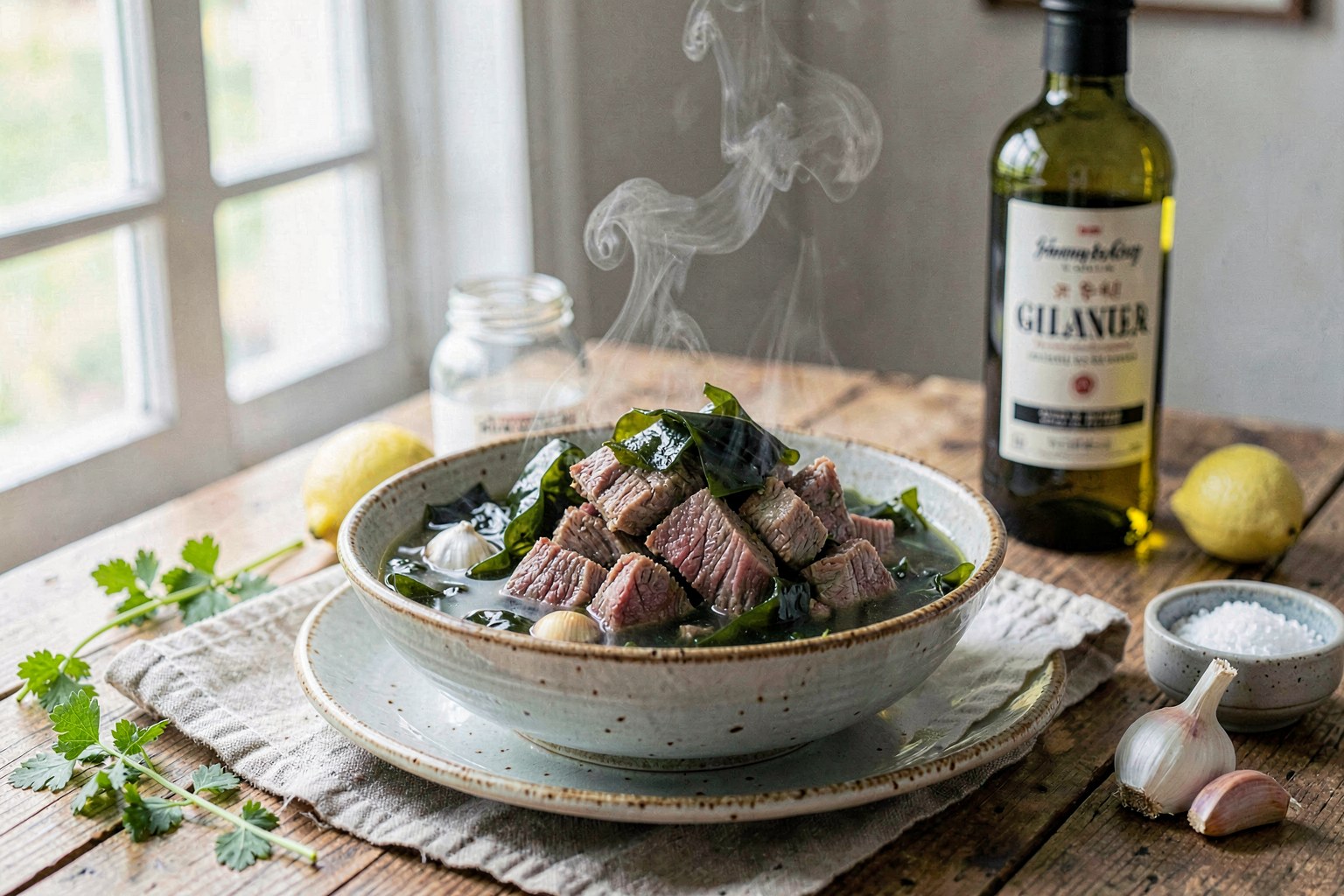
Immunity-Boosting Miyeok-guk (Seaweed Soup)
A nutrient-dense Korean seaweed soup simmered with grass-fed beef and fresh garlic, designed to replenish minerals and support immunity. This farm-fresh version honors tradition while eliminating refined sugar and industrial seed oils, relying on the natural umami of dried wakame and grass-fed collagen.
A little context
In Korea, this soup is traditionally eaten on birthdays to honor the mother who carried the child, symbolizing renewal and nourishment. We honor this ritual by using grass-fed beef for better micronutrient density and swapping refined sugar for whole dates. Traditional sesame oil is replaced with extra-virgin olive oil to align with anti-inflammatory fat profiles without losing the savory depth.
The longevity story
Dried wakame seaweed is packed with iodine for thyroid function, magnesium for stress regulation, and alginate fibers that support gut motility. The grass-fed beef provides bioavailable iron, zinc, and collagen peptides essential for connective tissue repair. Extra-virgin olive oil introduces polyphenols like oleocanthal, while garlic adds allicin for antimicrobial support.
Method
- 01
Rehydrate the seaweed
Place dried wakame in a bowl of cold water. Let soak for 20 minutes until expanded and tender. Drain well and squeeze out excess water. Roughly chop if pieces are large.
- 02
Sear the beef
Heat the extra-virgin olive oil in the Dutch oven over medium-high heat. Add the sliced grass-fed beef. Sear for 2-3 minutes until browned on both sides. Do not overcrowd; cook in batches if necessary.
- 03
Build the base
Push beef to the side. Add minced garlic to the center and sauté for 1 minute until fragrant. Stir in the chopped dates and tamari. Mix well to coat the beef and deglaze the pan slightly.
- 04
Simmer the broth
Pour in the bone broth or filtered water. Bring to a boil, then reduce heat to low. Cover and simmer for 30 minutes to allow the beef to tenderize and flavors to meld.
- 05
Add the seaweed
Stir in the drained wakame. Simmer uncovered for another 10-15 minutes. The seaweed will release minerals into the broth. Taste and adjust salt if needed (usually not required due to tamari).
- 06
Serve immediately
Ladle into bowls. Serve hot with a side of fermented kimchi and a bowl of brown rice or quinoa if desired. Garnish with fresh scallions.
Nutrition facts
Per serving · 1 of 4- — Saturated
- 7 g
- — Polyunsaturated
- 2 g
- Carbohydrates
- 20 g
- — Fiber
- 3 g
- — Sugars
- 4 g
- Cholesterol
- 118 mg
- Sodium
- 883 mg
- Potassium
- 543 mg
Estimated from USDA FoodData Central for matched ingredients (75% ingredient coverage). Values vary with brand, preparation, and exact measurements.
Pro tips
- ✦Source your wakame from a reputable supplier to ensure it is low in heavy metals; organic Japanese wakame is often safest.
- ✦Do not overcook the seaweed beyond 15 minutes or it will become slimy.
- ✦If the broth is too salty, add a splash of water or a raw egg poached in the soup to balance.
- ✦For a lighter version, swap beef for wild-caught mussels and reduce cooking time to 15 minutes.
Shop this recipe
As an Amazon Associate we earn from qualifying purchases.
Substitutions
- grass-fed beef brisket → wild-caught mussels or clams (cook for only 10 minutes total to prevent rubbery texture)
- whole dates → 1 tbsp date syrup (add at the end of cooking to preserve flavor)
- extra-virgin olive oil → avocado oil (similar neutral profile, high smoke point)
Storage
Refrigerate in glass containers for up to 4 days. The seaweed will absorb liquid; add a splash of water when reheating. Freezing is not recommended as seaweed texture degrades.
What to serve with it
- Hot green tea (sencha) to enhance polyphenol absorption
- Sparkling water with fresh lemon
- Side of brown rice or quinoa for complex carbohydrates
FAQ
Why not use sesame oil?+
Traditional recipes use sesame oil, but it is a seed oil. We use EVOO for its stable polyphenol profile and anti-inflammatory properties.
Can I make this vegan?+
Yes, substitute beef with mushrooms and use vegetable bone broth, but ensure the tamari is sugar-free.
Share this recipe
Notes from the community
Sign in to leave a note.
No notes yet — be the first.
You might also like