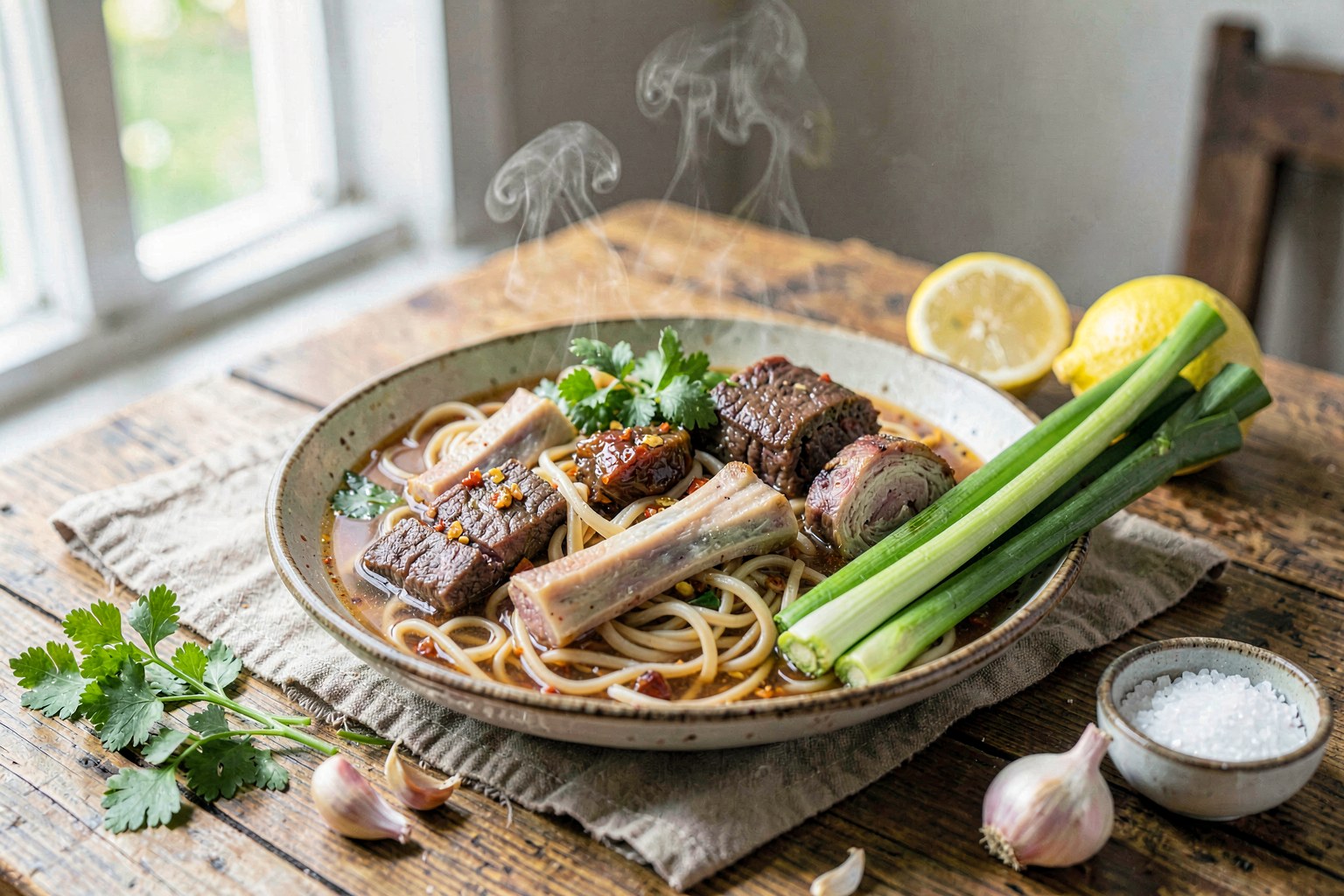
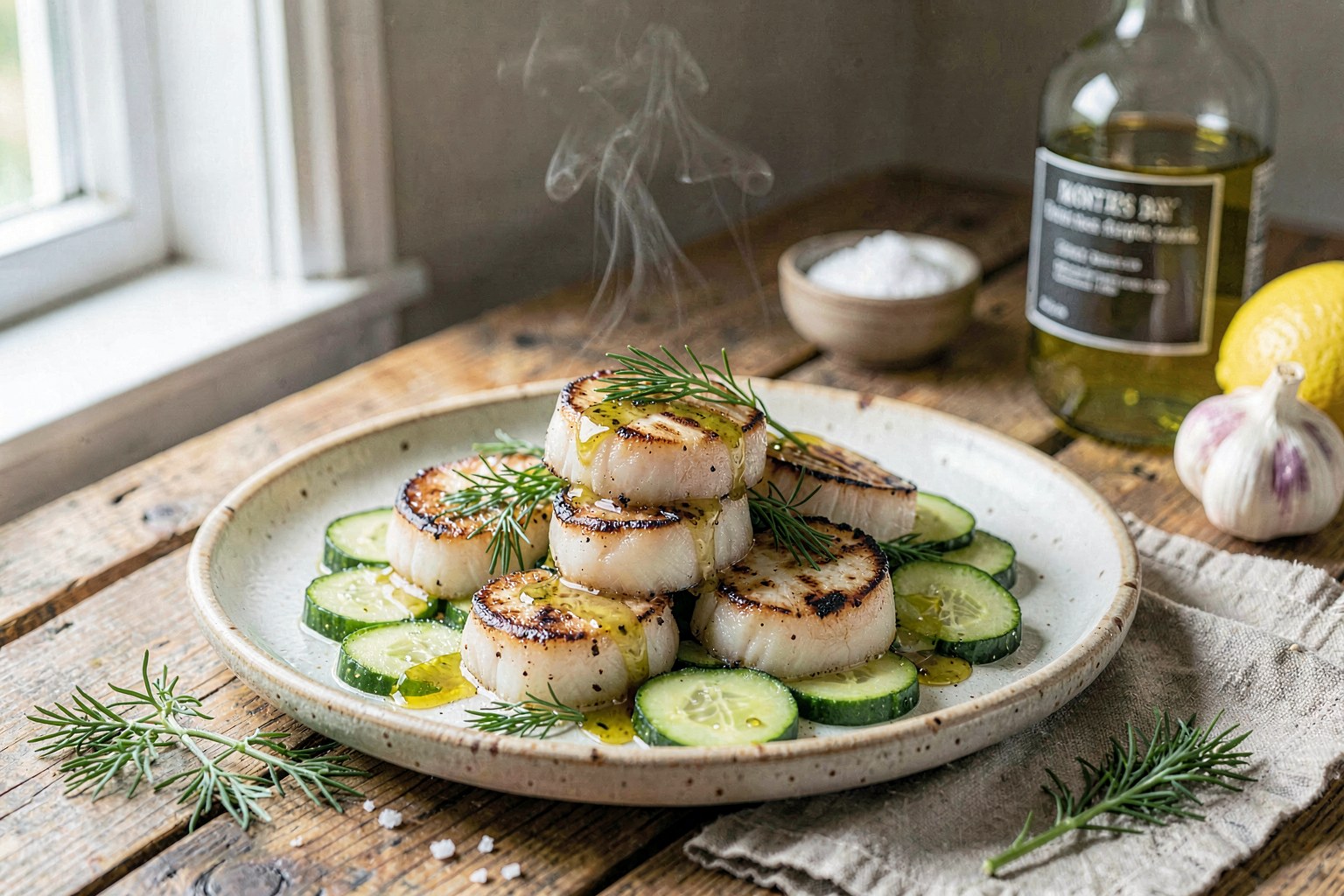
Monterey Bay Scallops with Cucumber & Dill
This dish features perfectly seared, wild-caught sea scallops resting on a bed of crisp, acid-cured cucumbers and fresh dill. The scallops are finished with a drizzle of high-polyphenol extra-virgin olive oil and a hint of lemon, delivering a clean, briny flavor profile that honors the Monterey Bay coast while adhering to strict longevity standards.
A little context
Rooted in the California farm-to-table tradition, this recipe captures the essence of coastal dining where the quality of the catch is paramount. Historically, coastal preparations might have used butter or a touch of sugar to balance acidity; here, we honor the tradition of simplicity by relying solely on the natural sweetness of the scallop and the brightness of fresh citrus, eliminating all refined sugars and seed oils to align with modern longevity protocols.
The longevity story
Wild-caught scallops provide high-quality protein and essential minerals like selenium and magnesium without the inflammatory omega-6 load of farmed fish. The extra-virgin olive oil is the primary source of oleocanthal and oleuropein, potent polyphenols that support cellular health and reduce systemic inflammation. Fresh dill and cucumber contribute hydration and antioxidants, while the absence of refined sugar and seed oils ensures a stable glycemic response and optimal nutrient absorption.
Method
- 01
Prepare the Cucumber Base
In a medium bowl, combine the sliced cucumbers, chopped dill (including stems), sea salt, black pepper, lemon juice, and half of the extra-virgin olive oil. Toss gently to coat. Let this sit at room temperature for 15-20 minutes to allow the cucumbers to soften slightly and release their juices, creating a light brine.
- 02
Dry the Scallops
Remove the side muscle from the scallops if still attached. Place the scallops on a layer of paper towels and pat them thoroughly dry on all sides. This is the single most important step for a golden crust. Let them rest on the counter for 10 minutes to come to room temperature.
- 03
Season Just Before Cooking
Immediately before cooking, season the scallops lightly with sea salt. Do not salt them too early as this can draw out moisture right before searing.
- 04
Heat the Pan
Place your heavy skillet over medium-high heat. Add the avocado oil (or ghee) and swirl to coat the bottom. Wait until the oil is shimmering and just beginning to smoke lightly. The pan must be very hot.
- 05
Sear the Scallops
Place the scallops in the pan, ensuring they are not touching each other (cook in batches if necessary). Do not move them for 2 minutes to allow a deep golden crust to form.
- 06
Flip and Finish
Flip the scallops carefully. Cook for another 90 seconds to 2 minutes on the second side, depending on size. The center should remain slightly translucent (medium-rare) or just opaque (medium), depending on preference. Remove from heat immediately.
- 07
Assemble and Serve
Divide the cucumber and dill salad among four plates, drizzling any accumulated juices from the bowl over the top. Place two seared scallops on top of each serving. Finish with a final drizzle of the remaining high-polyphenol extra-virgin olive oil and a pinch of flaky sea salt.
Nutrition facts
Per serving · 1 of 4- — Saturated
- 4 g
- — Polyunsaturated
- 7 g
- Carbohydrates
- 18 g
- — Fiber
- 1 g
- — Sugars
- 0 g
- Cholesterol
- 31 mg
- Sodium
- 1071 mg
- Potassium
- 267 mg
Estimated from USDA FoodData Central for matched ingredients (62% ingredient coverage). Values vary with brand, preparation, and exact measurements.
Pro tips
- ✦Sourcing is non-negotiable: Look for MSC-certified wild-caught scallops or those labeled 'dry-packed' to avoid chemical treatments that ruin texture.
- ✦If your scallops are wet-looking in the package, they have been soaked in a phosphate solution; return them or use them only in soups, never for searing.
- ✦Select cucumbers that feel heavy for their size with taut, dark green skin; avoid any with yellowing ends.
- ✦Do not overcrowd the pan; if scallops touch, the temperature drops and they will steam instead of sear.
- ✦For maximum polyphenol intake, choose an EVOO with a high polyphenol count (often labeled on bottles from specific harvests) and add it raw at the end, not during cooking.
Substitutions
- wild-caught sea scallops → wild-caught bay scallops or large shrimp (Bay scallops cook in half the time; shrimp should be deveined and tails removed for this presentation)
- avocado oil for searing → grass-fed ghee (Ghee adds a nutty richness but contains trace dairy; use only if dairy is tolerated)
Storage
Store leftovers in a glass airtight container in the refrigerator for up to 24 hours. Note: Reheated scallops will lose their texture and become rubbery; this dish is best enjoyed fresh. The cucumber salad can be made 4 hours ahead.
What to serve with it
- Sparkling water with a wedge of lemon and fresh mint
- Unsweetened green tea (matcha or sencha) to complement the polyphenols
- A glass of dry, mineral-forward white wine like auno-oaked Chardonnay or Albariño
FAQ
Why did my scallops stick to the pan?+
This usually means the pan wasn't hot enough or the scallops weren't dried thoroughly. Ensure the oil is shimmering and the scallops are bone-dry before they hit the pan.
Can I use regular olive oil?+
No. For the finishing drizzle, you must use high-quality extra-virgin olive oil to get the anti-inflammatory polyphenols. Regular 'pure' olive oil is often refined and lacks these benefits.
Share this recipe
Notes from the community
Sign in to leave a note.
No notes yet — be the first.
You might also like