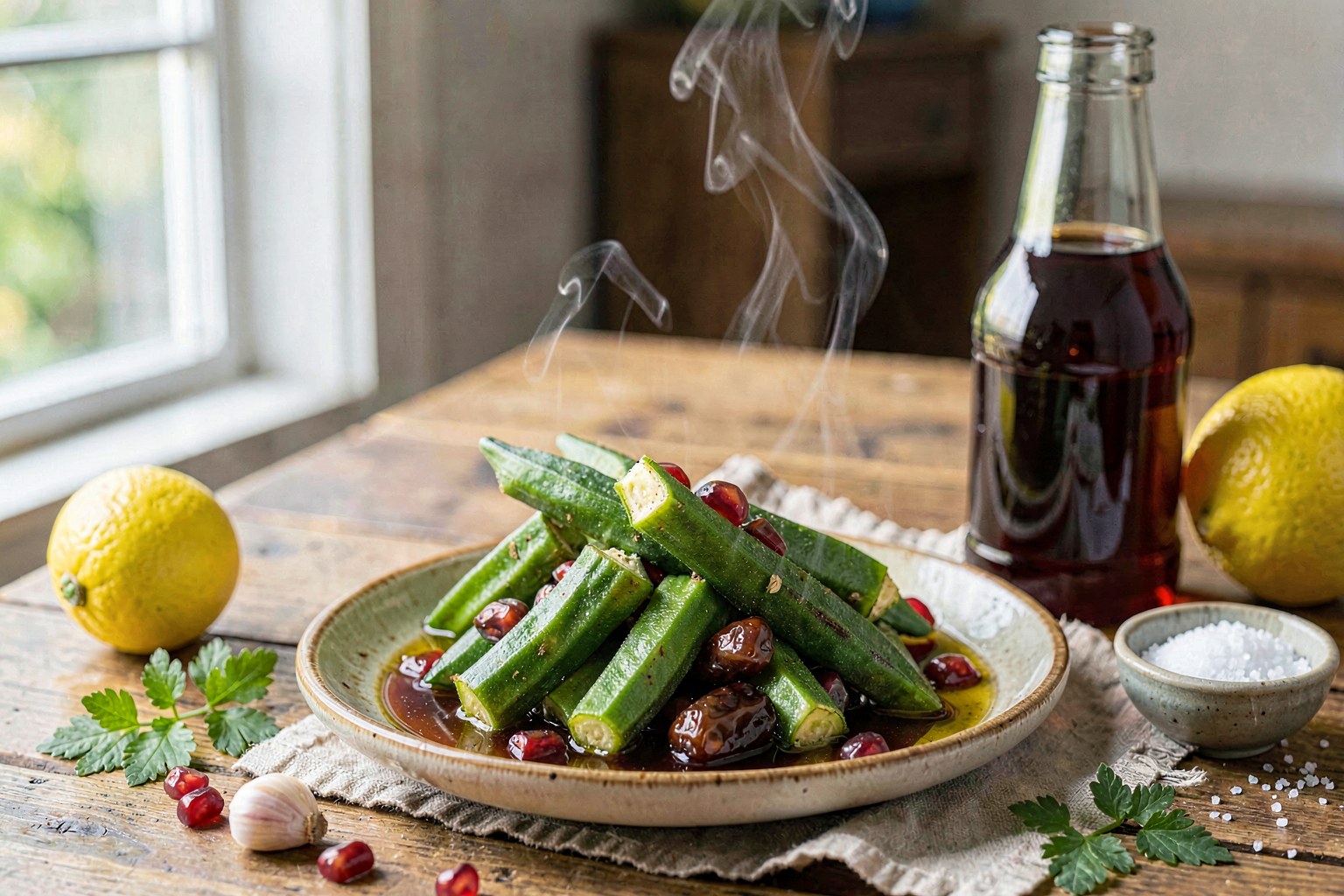
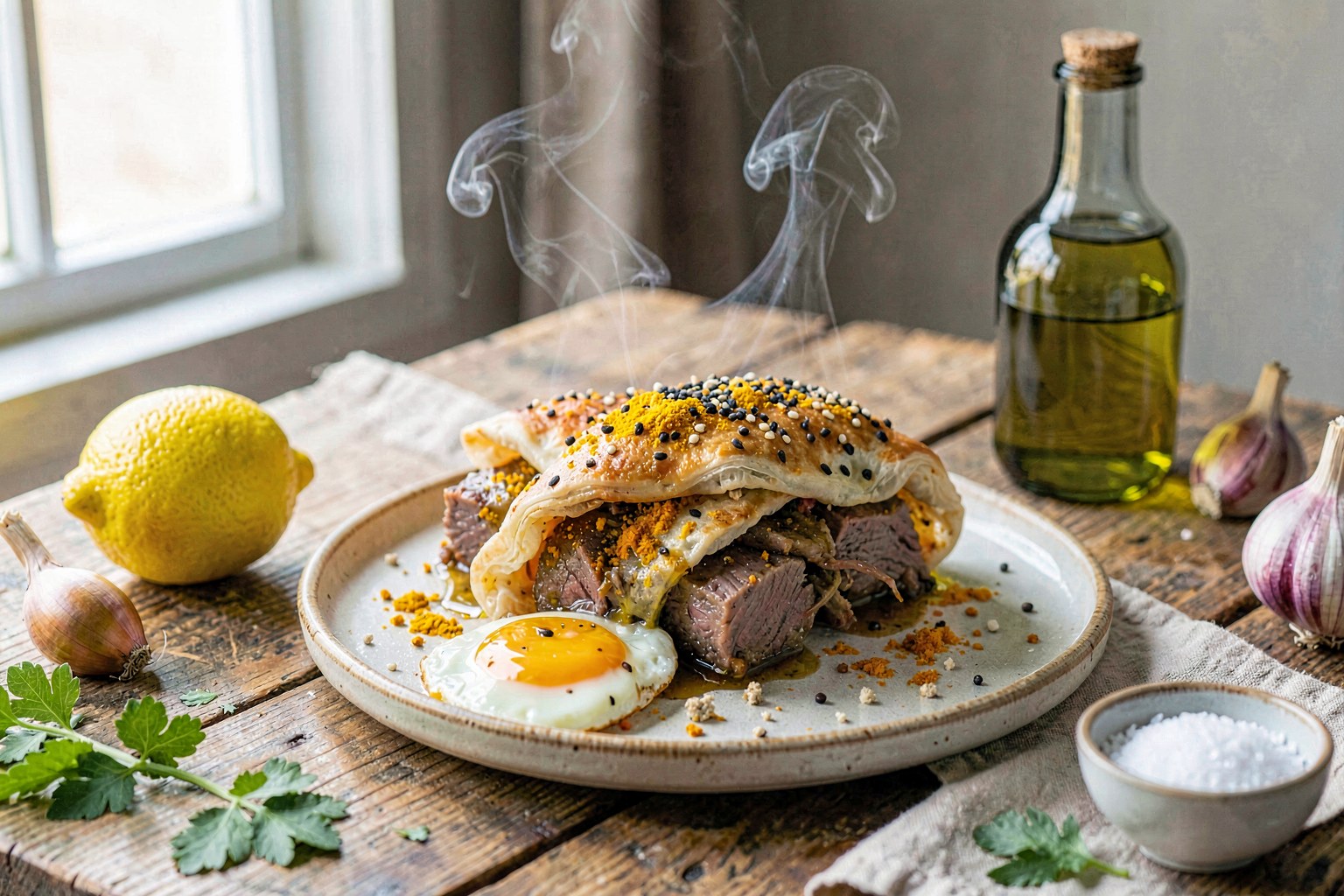
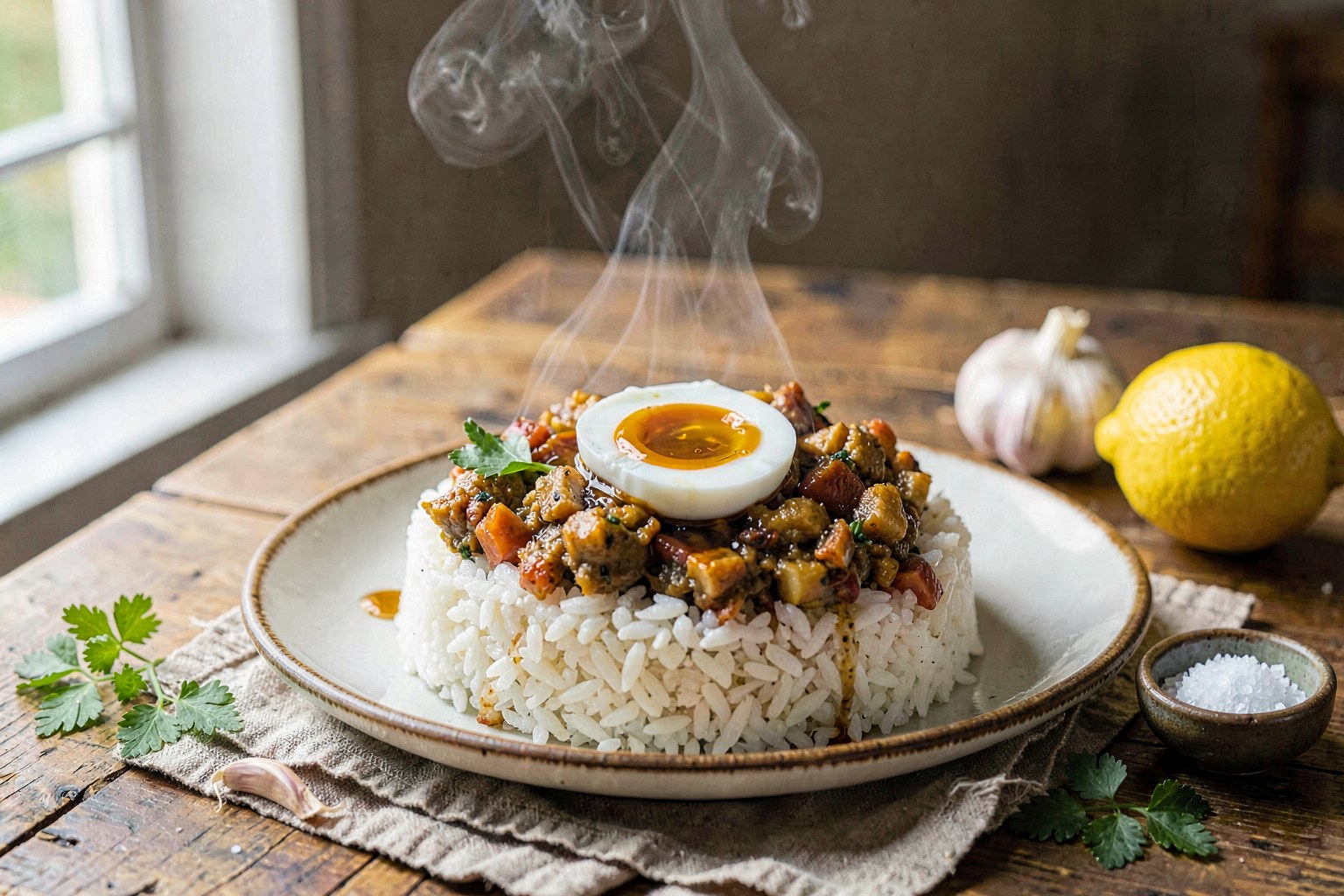
Savory Puto Buhangin with Soft-Boiled Egg and Aged Vinegar Emulsion
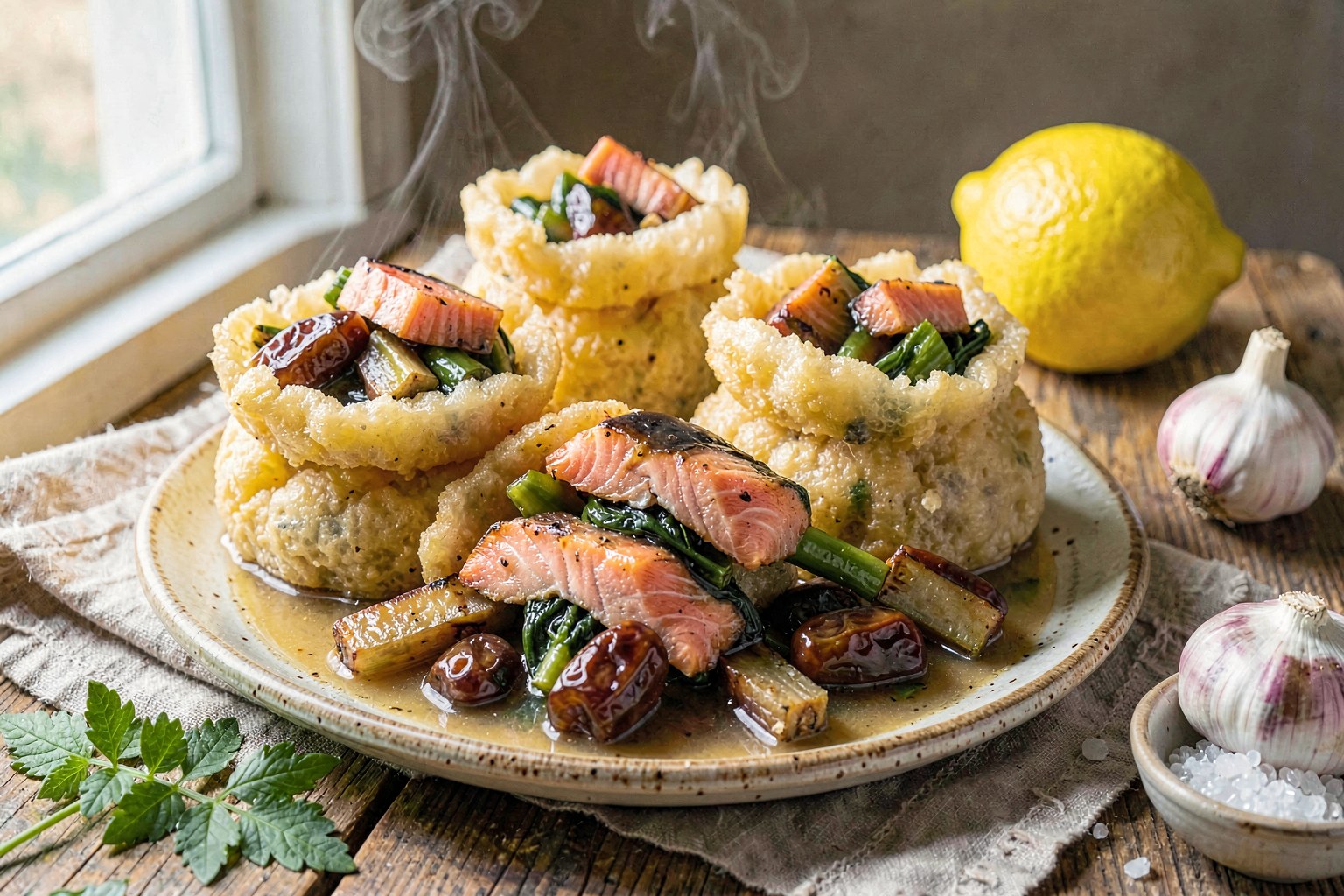
This savory reinterpretation of the classic Filipino rice cake strips away the traditional sugar and seed oils to create a nutrient-dense, polyphenol-rich dinner. The steamed rice cakes, made from pure heirloom rice flour and coconut milk, are topped with a perfectly soft-boiled pasture-raised egg and a bright, fermented soy-vinegar emulsion rich in probiotics and antioxidants.
A little context
Puto Buhangin is traditionally a sweet breakfast treat made with rice flour and sugar, often served with salted duck eggs. We honor this heritage by keeping the steamed texture and the savory-sweet balance but replacing white sugar with a touch of date syrup or monk fruit, and swapping canola oil for virgin coconut oil. The addition of a soy-vinegar emulsion mimics the tang of the traditional salted egg yolk while introducing beneficial fermentation compounds.
The longevity story
This dish leverages the polyphenol content of aged vinegar and the healthy fats of coconut milk to support gut health and stable blood sugar levels. The inclusion of pasture-raised eggs provides high-quality choline and omega-3s, while the heirloom rice flour offers a lower glycemic impact than refined white flour. By avoiding refined sugars and seed oils, we eliminate pro-inflammatory triggers, focusing instead on the natural umami of fermented soy and the fiber of whole grains.
Method
- 01
Prepare the steamer
Fill the bottom of your steamer pot with water and bring to a rolling boil. Line the bamboo steamer with banana leaves or parchment paper to prevent sticking, then lightly brush with melted virgin coconut oil.
- 02
Mix the batter
In a medium bowl, whisk together the sifted heirloom rice flour, sea salt, and maple syrup (or monk fruit). Slowly pour in the room-temperature coconut milk and melted coconut oil, whisking until the batter is smooth and free of lumps. The consistency should resemble heavy cream.
- 03
Steam the cakes
Pour the batter into the prepared liners or ramekins, filling them ¾ full. Place in the steamer basket, cover tightly, and steam over high heat for 15–18 minutes. Do not open the lid during the first 12 minutes to prevent collapse.
- 04
Check for doneness
Insert a toothpick into the center of a cake; it should come out clean. If wet batter remains, steam for another 2–3 minutes. Remove from heat and let cool slightly in the steamer for 5 minutes to set the structure.
- 05
Cook the eggs
While the cakes steam, place the pasture-raised eggs in a pot of boiling water. Lower heat to a gentle simmer and cook for exactly 6 minutes and 30 seconds for a jammy, soft-boiled yolk. Immediately transfer to an ice bath to stop cooking, then peel carefully.
- 06
Make the emulsion
In a small bowl, whisk the organic soy sauce and aged cane vinegar until combined. For a richer mouthfeel, slowly drizzle in 1 teaspoon of melted coconut oil while whisking to create a light, glossy emulsion.
- 07
Assemble the dish
Place two warm rice cakes on each plate. Slice the soft-boiled eggs in half lengthwise and arrange them on top of the cakes. Drizzle the soy-vinegar emulsion generously over the eggs and cakes.
- 08
Garnish and serve
Sprinkle with fresh sliced scallions and toasted sesame seeds. Serve immediately while the rice cakes are still warm and the egg yolk is runny.
Nutrition facts
Per serving · 1 of 4- — Saturated
- 5 g
- — Polyunsaturated
- 1 g
- Carbohydrates
- 43 g
- — Fiber
- 3 g
- — Sugars
- 4 g
- Cholesterol
- 0 mg
- Sodium
- 428 mg
- Potassium
- 212 mg
Estimated from USDA FoodData Central for matched ingredients (90% ingredient coverage). Values vary with brand, preparation, and exact measurements.
Pro tips
- ✦Sourcing the rice flour is critical: look for 'heirloom' or 'organic' labels to ensure the rice wasn't treated with synthetic fungicides.
- ✦Do not skip the ice bath for the eggs; it is the only way to get that distinct jammy yolk texture without overcooking the white.
- ✦If the batter sits too long, it may thicken; add a splash of water or coconut milk to restore the pourable consistency before steaming.
- ✦For a deeper umami punch, add a pinch of dried shiitake mushroom powder to the dry flour mix.
- ✦Ensure your steamer water is boiling vigorously before adding the basket; low heat will result in gummy, dense cakes.
Shop this recipe
As an Amazon Associate we earn from qualifying purchases.
Substitutions
- heirloom rice flour → glutinous brown rice flour (will create a chewier, slightly stickier texture but remains gluten-free)
- aged cane vinegar → unfiltered apple cider vinegar with the mother (adds different probiotic strains and a fruitier acidity)
- coconut milk → homemade oat milk (unsweetened) (will reduce saturated fat but may alter the traditional rich mouthfeel)
Storage
Store cooled rice cakes in an airtight glass container in the fridge for up to 3 days. Reheat in a steamer for 5 minutes to restore softness. Do not freeze the assembled dish with the egg, as the yolk texture will degrade; freeze the cakes alone for up to 1 month.
What to serve with it
- Hot green tea (sencha or matcha) to complement the polyphenols
- Sparkling water with a wedge of calamansi or lime
- A small side of fermented kimchi or pickled daikon radish for extra probiotics
FAQ
Can I make this vegan?+
Yes, simply omit the egg and replace it with a marinated block of firm tofu or a slice of avocado. The rice cakes themselves are naturally vegan.
Why is my rice cake tough?+
This usually happens if the batter is over-mixed or steamed too long. Ensure you stop mixing once the flour is hydrated and check for doneness a minute early.
Is the soy sauce gluten-free?+
Traditional soy sauce often contains wheat. You must use certified gluten-free tamari or coconut aminos to keep this dish gluten-free.
Share this recipe
Notes from the community
Sign in to leave a note.
No notes yet — be the first.
You might also like