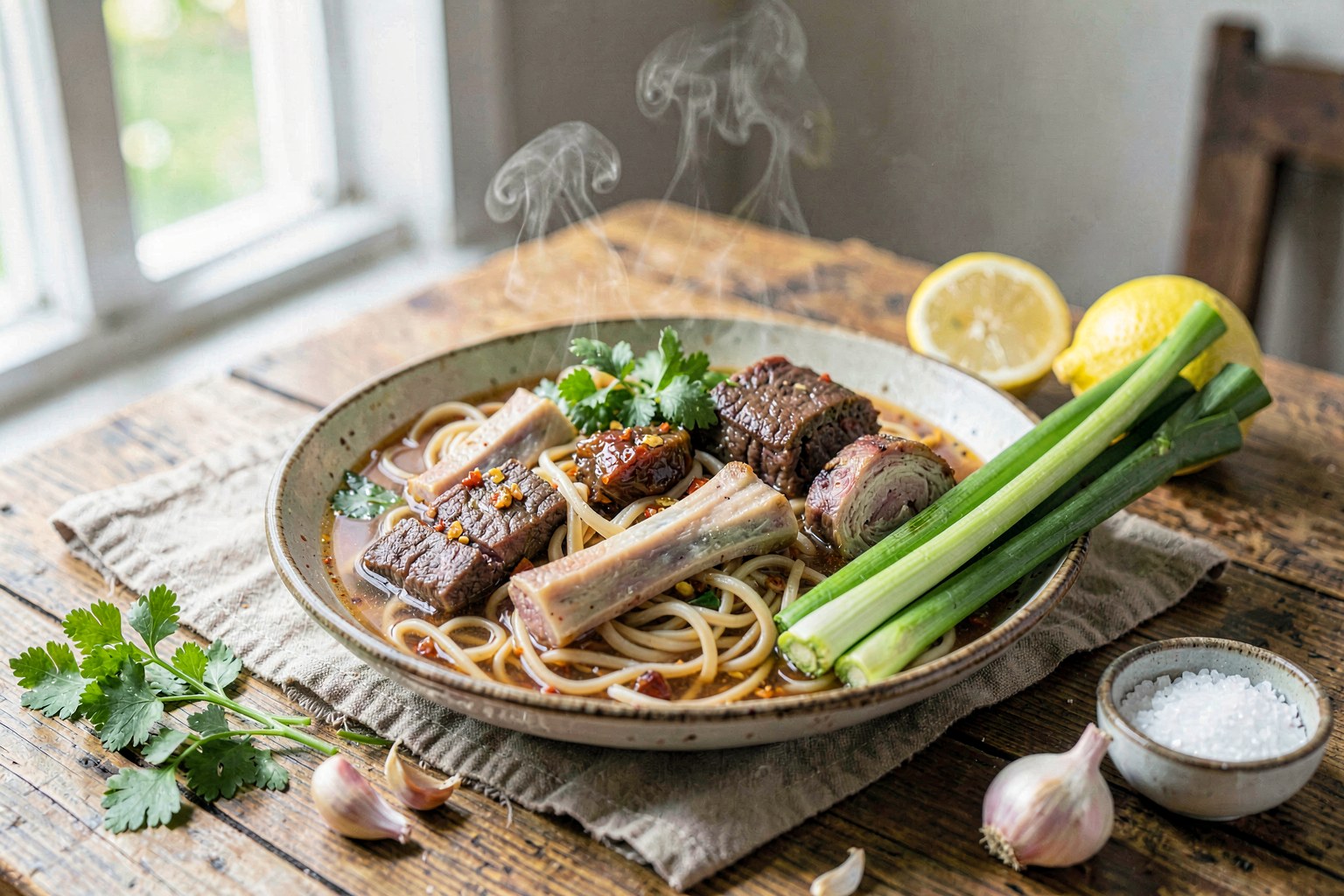
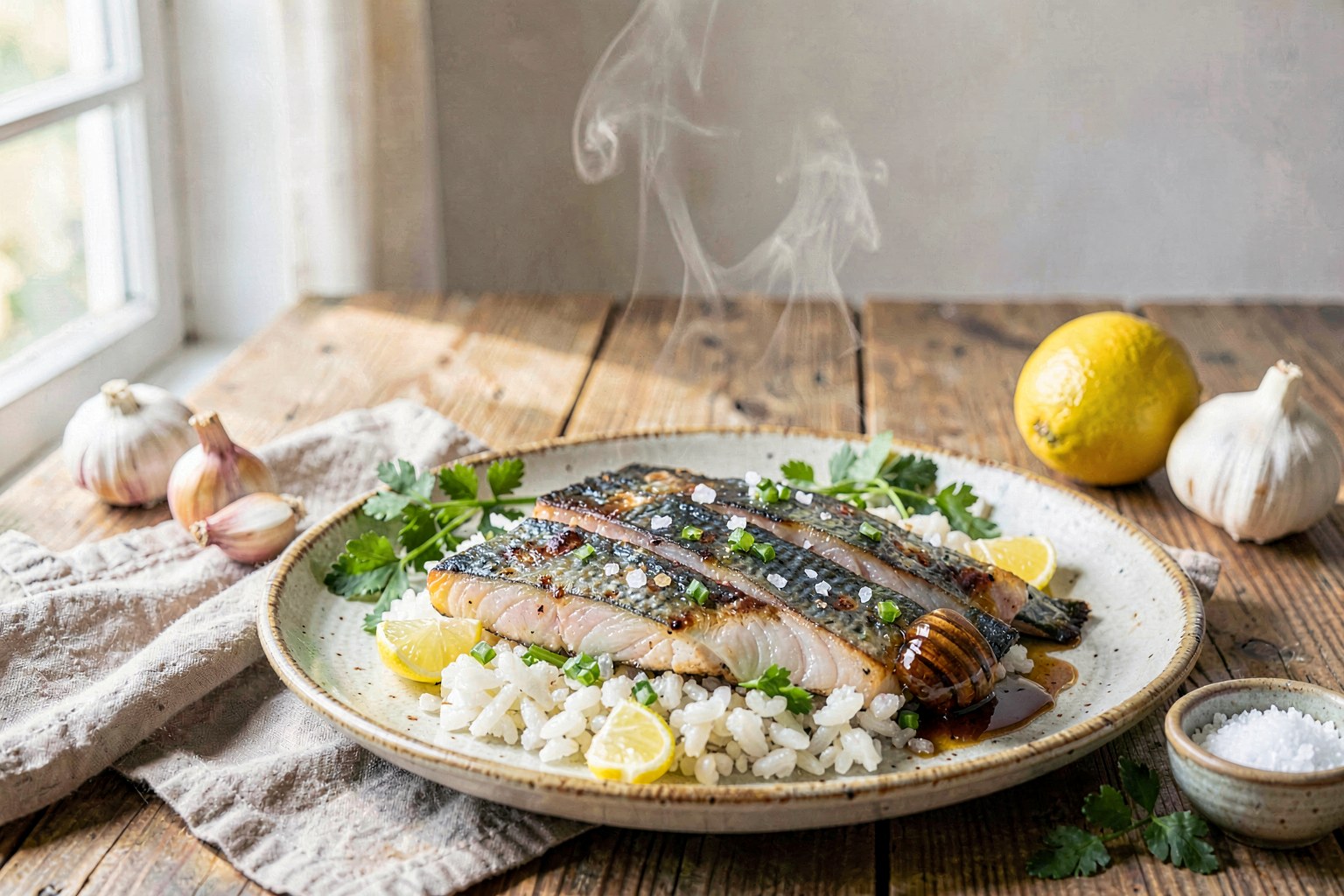
Saba Meshi: Grilled Mackerel with Daikon Ponzu
This modern take on the classic Japanese saba meshi features wild-caught mackerel, salt-cured to remove excess moisture and bitterness, then seared until the skin is crisp. Served over short-grain rice with a bright, sugar-free ponzu and a generous mound of fresh grated daikon radish, it delivers a perfect balance of umami, acidity, and clean omega-3 fats.
A little context
Rooted in the Edo period tradition of preserving fish with salt, this recipe honors the Washoku principle of balancing flavors without relying on the sugar-heavy tare sauces common in modern fusion. We have stripped out the traditional mirin and sugar glaze, replacing them with the natural sweetness of ripe dates and the acidity of fresh yuzu to maintain the flavor profile while adhering to strict anti-inflammatory and no-added-sugar guidelines.
The longevity story
Mackerel is one of the most potent sources of EPA and DHA omega-3 fatty acids, essential for reducing systemic inflammation and supporting brain longevity. The dish is fortified with polyphenols from the citrus zest in the ponzu and the catechins found in the accompanying green tea. Fresh daikon radish provides digestive enzymes (diastase) that aid protein breakdown, while the absence of refined sugars prevents blood glucose spikes, aligning with metabolic health goals.
Method
- 01
Salt-cure the mackerel
Pat the mackerel fillets completely dry with paper towels. Spread a layer of coarse sea salt on a plate, place the fish skin-side up, and cover with another layer of salt. Let rest at room temperature for 20 minutes. This draws out moisture and firming the flesh, reducing the 'fishy' taste.
- 02
Rinse and dry
Rinse the fish thoroughly under cold running water to remove all salt. Pat dry again with fresh paper towels. The skin must be bone-dry for a perfect sear. Score the skin diagonally in 3-4 places to prevent curling.
- 03
Prepare the sugar-free ponzu
In a small bowl, whisk together the soy sauce (or coconut aminos), fresh yuzu juice, warmed honey, and the blended date paste. Strain through a fine mesh sieve to remove any date pulp, ensuring a smooth, glossy sauce. Set aside.
- 04
Cook the rice
Cook the organic short-grain rice according to package instructions. Once cooked, gently fold in the mixture of rice vinegar and coconut aminos. Let it cool slightly to room temperature; do not refrigerate yet.
- 05
Sear the mackerel
Heat a cast-iron skillet over medium-high heat. Add a thin layer of avocado oil. Place the fish skin-side down. Press gently with a spatula for 10 seconds to ensure even contact. Cook undisturbed for 4-5 minutes until the skin is deep golden and crisp.
- 06
Finish the fish
Flip the fish carefully. Reduce heat to medium and cook for another 2-3 minutes until the flesh is just opaque and flakes easily. Do not overcook. Remove from heat.
- 07
Glaze and serve
Brush the cooked fish lightly with the date-ponzu glaze. Serve immediately over the seasoned rice. Top with a generous mound of grated daikon, sliced shiso, and an extra drizzle of ponzu on the side.
Nutrition facts
Per serving · 1 of 4- — Saturated
- 8 g
- — Polyunsaturated
- 4 g
- Carbohydrates
- 28 g
- — Fiber
- 1 g
- — Sugars
- 5 g
- Cholesterol
- 94 mg
- Sodium
- 3928 mg
- Potassium
- 1039 mg
Estimated from USDA FoodData Central for matched ingredients (90% ingredient coverage). Values vary with brand, preparation, and exact measurements.
Pro tips
- ✦Sourcing is critical: Look for mackerel with skin that shines like silver and eyes that are clear, not cloudy. If buying frozen, ensure it was flash-frozen at sea.
- ✦The salt-cure step is non-negotiable for texture; skipping it results in soggy skin and a stronger fish flavor.
- ✦Grate the daikon radish yourself just before serving; pre-grated daikon loses its digestive enzymes and flavor within minutes.
- ✦If you cannot find yuzu, a mix of 2 parts lemon juice to 1 part lime juice provides the necessary complex acidity.
- ✦Use a sharp knife to score the skin; a dull blade will tear the flesh.
Shop this recipe
As an Amazon Associate we earn from qualifying purchases.
Substitutions
- wild-caught Pacific mackerel → wild-caught Pacific sardines or wild Arctic char (Sardines are smaller and cook faster; char has a similar fat profile but milder flavor.)
- Medjool dates → pure monk fruit syrup or stevia extract (Use 1/2 tsp of syrup to mimic the sweetness of the dates, though you will lose the fiber content.)
- short-grain sushi rice → cauliflower rice or quinoa (Quinoa offers a complete protein profile and a nuttier texture, suitable for lower carb needs.)
Storage
Store the cooked fish and rice separately in airtight glass containers in the refrigerator for up to 3 days. The ponzu keeps for 1 week. Grated daikon must be freshly made and does not store well.
What to serve with it
- Hot sencha or hojicha green tea (rich in EGCG)
- Sparkling water with a wedge of fresh yuzu
- Dry sake (check label for no added sugar)
FAQ
Why use dates instead of sugar for the ponzu?+
Traditional Japanese tare often relies on mirin and sugar, which spike blood glucose. Dates provide a lower glycemic index sweetness along with fiber and polyphenols, keeping the flavor profile rounded without the metabolic crash.
Can I bake the fish instead of searing?+
You can bake at 200°C (400°F) for 12-15 minutes, but the skin will not become as crisp. For the best texture and to render the fats properly, searing in a hot pan is preferred.
Share this recipe
Notes from the community
Sign in to leave a note.
No notes yet — be the first.
You might also like