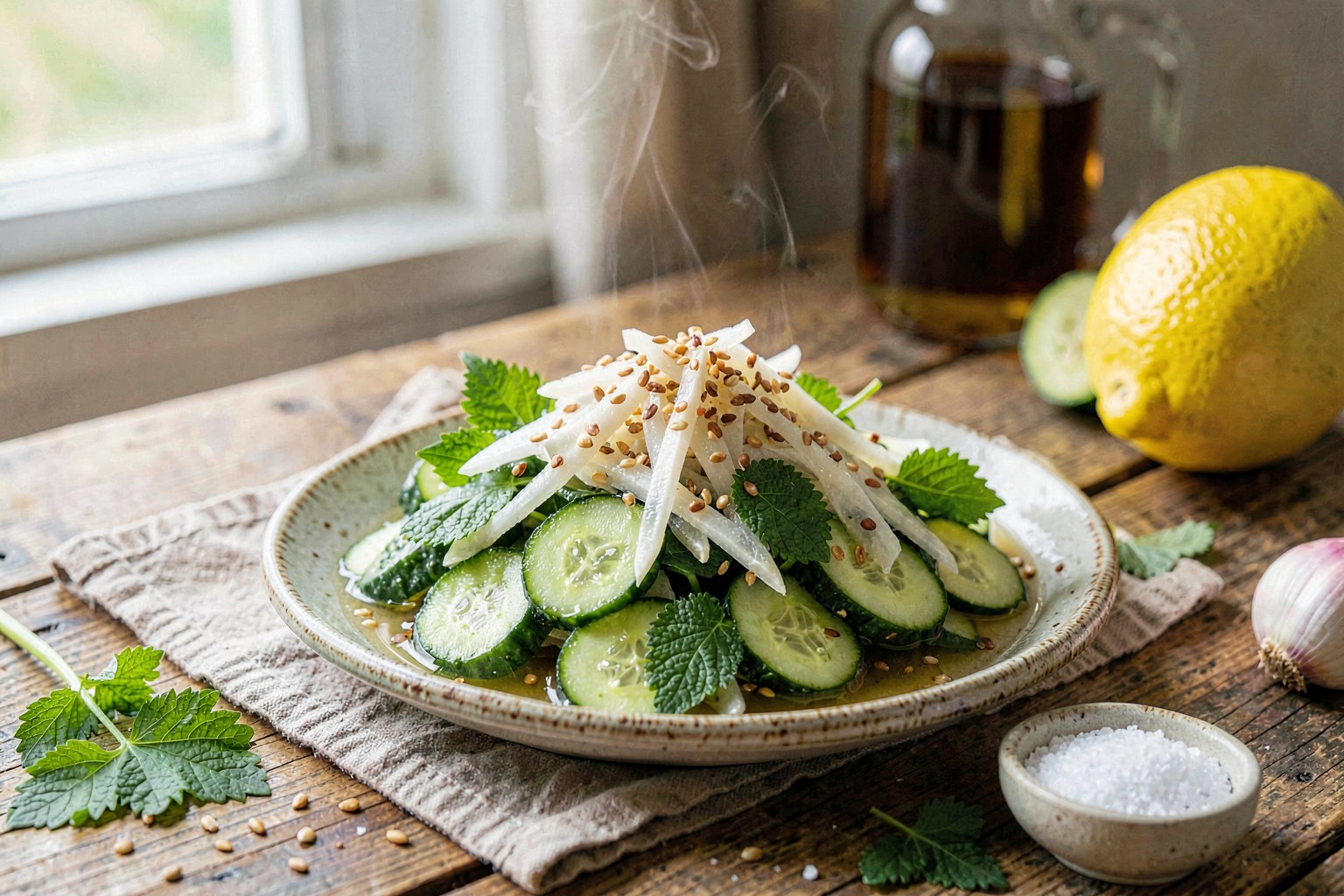
Sunomono: Vinegared Cucumber & Daikon with Toasted Sesame
A crisp, refreshing vinegared salad featuring thinly sliced organic cucumbers and grated daikon radish, dressed in a sugar-free rice vinegar brine and finished with toasted sesame seeds. This dish delivers a bright, acidic snap that cleanses the palate while providing a massive dose of hydration and polyphenols, serving as the perfect low-calorie, nutrient-dense side for a protein-rich dinner.
A little context
Sunomono is a cornerstone of Washoku, traditionally valued for balancing the richness of grilled meats or fatty fish. While classical recipes often rely on a teaspoon of refined sugar to soften the vinegar's bite, this version honors the tradition by using the natural sweetness of ripe fruit and a touch of pure maple syrup to achieve balance without the metabolic cost of white sugar. We strictly avoid the industrial seed oils often found in commercial dressings, opting instead for the clean, polyphenol-rich profile of the sesame seeds themselves.
The longevity story
This recipe leverages the high water content and potassium in cucumbers and daikon for cellular hydration and blood pressure regulation. The rice vinegar provides acetic acid, which can help modulate blood glucose responses when eaten with other foods. Toasted sesame seeds contribute essential calcium, magnesium, and sesamin, a lignan with potent antioxidant properties. By eliminating refined sugar, we preserve the natural glycemic profile of the vegetables while maximizing the intake of fiber and phytonutrients without the inflammatory spike of sucrose.
Method
- 01
Prepare the vegetables
Wash the organic cucumbers and daikon. Using a mandoline, slice the cucumbers into paper-thin rounds or matchsticks. Coarsely grate the daikon radish. Place both in a large mixing bowl.
- 02
Salt and draw out moisture
Sprinkle 3g (approx. 1/2 tsp) of the sea salt over the vegetables and toss gently. Let sit for 10 minutes. This draws out excess water via osmosis, concentrating the flavor and ensuring the salad stays crisp.
- 03
Toast the sesame seeds
While vegetables rest, heat a dry heavy skillet over medium heat. Add the sesame seeds and toast, shaking the pan constantly, for 2-3 minutes until they pop and release a nutty aroma. Immediately transfer to a plate to stop cooking. Crush them lightly with a mortar and pestle or the back of a spoon to release oils.
- 04
Squeeze the vegetables
Transfer the salted vegetables to a clean kitchen towel or cheesecloth. Gather the edges and twist firmly over the sink to squeeze out as much liquid as possible. The vegetables should feel dry to the touch. Return the squeezed vegetables to the bowl.
- 05
Make the dressing
In a small jar or bowl, whisk together the cold rice vinegar, maple syrup, remaining sea salt, and grated ginger until the salt and syrup are fully dissolved. Taste; it should be sharply acidic with a very subtle hint of sweetness.
- 06
Combine and dress
Pour the dressing over the squeezed vegetables. Add the shredded shiso leaves (if using) and half of the toasted sesame seeds. Toss gently with clean hands or tongs to ensure every slice is coated.
- 07
Rest and serve
Let the salad rest for 5-10 minutes to allow the flavors to meld and the vegetables to slightly soften then crisp up again. Garnish with the remaining sesame seeds and serve immediately as a palate-cleansing side.
Nutrition facts
Per serving · 1 of 4- — Saturated
- 1 g
- — Polyunsaturated
- 2 g
- Carbohydrates
- 64 g
- — Fiber
- 7 g
- — Sugars
- 8 g
- Cholesterol
- 0 mg
- Sodium
- 554 mg
- Potassium
- 352 mg
Estimated from USDA FoodData Central for matched ingredients (88% ingredient coverage). Values vary with brand, preparation, and exact measurements.
Pro tips
- ✦Select cucumbers that are firm, dark green, and free of soft spots; the skin should be unwaxed for maximum nutrient intake.
- ✦Do not skip the salting and squeezing step; if you don't remove the water, the dressing will dilute and the salad will become soggy within minutes.
- ✦Toast the sesame seeds yourself in a dry pan; pre-toasted seeds often have added seed oils and lose their volatile aromatic compounds.
- ✦For a 'Blueprint' style presentation, arrange the cucumber slices in an overlapping spiral on the plate before adding the dressing.
- ✦Grate the daikon fresh; pre-grated daikon loses its enzymatic activity and texture rapidly.
Shop this recipe
As an Amazon Associate we earn from qualifying purchases.
Substitutions
- maple syrup → 1 pitted Medjool date blended into the vinegar or 1 tsp monk fruit syrup (Both provide sweetness without spiking insulin; date adds fiber, monk fruit is zero-calorie.)
- shiso leaves → fresh mint leaves or thinly sliced fresh tarragon (Mint offers a similar cooling effect; tarragon provides an anise note closer to shiso.)
- cucumbers → zucchini or radish slices (Zucchini works well if salted and squeezed similarly; radishes add more spice.)
Storage
Best eaten fresh within 2 hours for maximum crunch. Can be stored in an airtight glass container in the fridge for up to 24 hours, though the texture will soften slightly.
What to serve with it
- Grilled wild-caught salmon or mackerel
- Steamed organic brown rice or quinoa
- Hot hojicha or sencha green tea
- Sparkling water with a wedge of yuzu or lemon
FAQ
Why do I need to squeeze the cucumbers?+
Cucumbers are 95% water. If you don't salt and squeeze them, that water will leach out into the bowl, diluting the vinegar dressing and making the dish watery and bland.
Can I use regular white vinegar instead of rice vinegar?+
White vinegar is much harsher and lacks the subtle, rounded acidity of rice vinegar. It will overpower the delicate flavors of the daikon and sesame. Stick to unseasoned rice vinegar.
Is this recipe truly sugar-free?+
Yes, it contains no refined sugar. The only sweetener is a small amount of pure maple syrup (or date/monk fruit), which is a whole-food sweetener used strictly to balance the acid, not to sweeten the dish like a dessert.
Share this recipe
Notes from the community
Sign in to leave a note.
No notes yet — be the first.
You might also like