Massaged Soybean Sprouts (Kongnamul Muchim) - No-Sugar, Seed-Oil Free
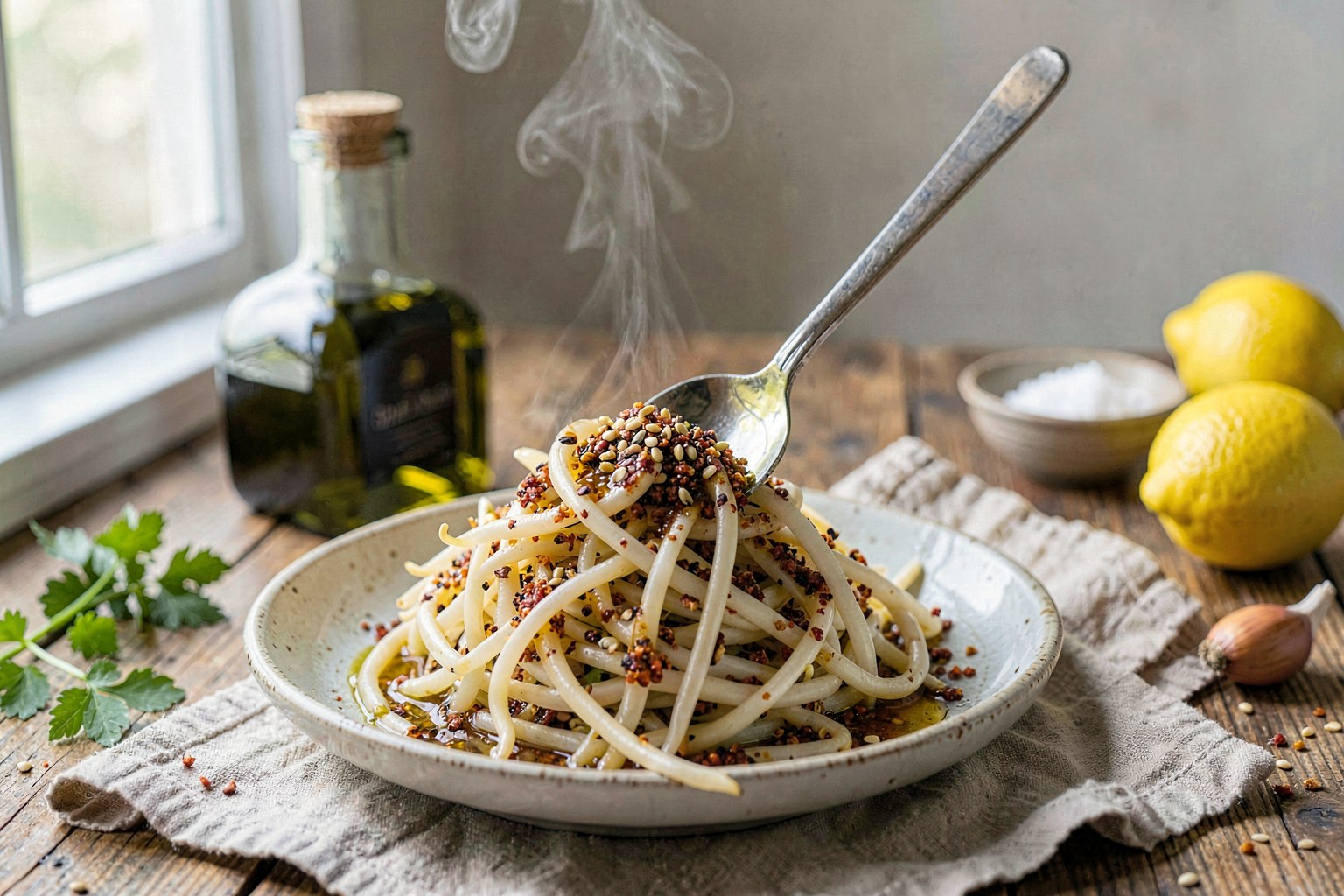
Crisp, blanched soybean sprouts are massaged with a savory, aromatic dressing of toasted sesame seeds, Gochugaru (Korean chili flakes), and high-quality extra-virgin olive oil. This cooling, protein-rich banchan offers a satisfying crunch without the refined sugar or seed oils found in restaurant versions, making it a perfect longevity-focused side for any dinner.
A little context
In Korean cuisine, Kongnamul Muchim is a staple banchan traditionally made with a touch of sugar or corn syrup to balance the chili heat. We honor this tradition by using a small amount of pure maple syrup or a ripe date paste to replicate that depth of flavor without spiking insulin, and we strictly use cold-pressed extra-virgin olive oil and pure sesame oil instead of industrial seed oils. This approach respects the balance of flavors while adhering to a whole-food, longevity-aligned framework.
The longevity story
Soybean sprouts are a powerhouse of acetylcholine, a neurotransmitter vital for cognitive function, and provide a complete plant-based protein profile. The dressing leverages the polyphenol density of extra-virgin olive oil and the capsaicin in Gochugaru to support metabolic health and reduce inflammation. By avoiding refined sugars and seed oils, we preserve the sprouts' natural fiber and B-vitamins, ensuring a low-glycemic load that stabilizes blood sugar while nourishing the gut microbiome.
Method
- 01
Prep the sprouts
Trim the root ends of the soybean sprouts if they are long or tough. Wash them thoroughly in a large bowl of cold water, swishing to remove any debris. Drain well.
- 02
Blanch quickly
Bring a large pot of water to a rolling boil. Add the sprouts and blanch for exactly 2 to 3 minutes. They should remain crisp-tender, not mushy. Do not overcook.
- 03
Ice bath shock
Immediately drain the sprouts and plunge them into the prepared ice water bath. Let them sit for 2-3 minutes until completely cool. This stops the cooking and preserves the snap.
- 04
Dry thoroughly
Drain the sprouts well. Transfer them to a clean kitchen towel or cheesecloth. Gather the edges and squeeze firmly to remove as much water as possible. Dry sprouts are the secret to a flavorful banchan; wet sprouts dilute the dressing.
- 05
Make the dressing
In a small bowl, whisk together the extra-virgin olive oil, toasted sesame oil, Gochugaru, maple syrup, sea salt, rice vinegar, minced garlic, and half of the green onions until emulsified.
- 06
Massage and toss
Place the dried sprouts in a large mixing bowl. Pour the dressing over them. Using clean hands, gently massage and toss the sprouts for 1-2 minutes to ensure every strand is coated and the flavors penetrate.
- 07
Rest and serve
Let the dish rest at room temperature for 10 minutes to allow the flavors to meld. Top with the remaining green onions and toasted sesame seeds before serving.
Nutrition facts
Per serving · 1 of 4- — Saturated
- 2 g
- — Polyunsaturated
- 5 g
- Carbohydrates
- 5 g
- — Fiber
- 1 g
- — Sugars
- 3 g
- Cholesterol
- 0 mg
- Sodium
- 496 mg
- Potassium
- 177 mg
Estimated from USDA FoodData Central for matched ingredients (80% ingredient coverage). Values vary with brand, preparation, and exact measurements.
Pro tips
- ✦Sourcing is key: Buy organic soybean sprouts to avoid pesticide residue, as sprouts are often grown in warm, moist conditions where bacteria can thrive and pesticides can be absorbed.
- ✦The 'squeeze' matters: If your sprouts are still wet after draining, the dressing will slide right off. Spend the extra minute squeezing them in a towel for maximum flavor absorption.
- ✦Toasting sesame seeds: If you can't find pre-toasted seeds, toast raw ones in a dry pan over medium heat for 2-3 minutes until they pop and smell nutty. Do not burn them.
- ✦Adjusting heat: Gochugaru varies in spiciness. Start with 1 tbsp, taste, and add more if you prefer a hotter kick.
- ✦Make it ahead: This dish actually tastes better after 30 minutes in the fridge as the garlic and chili infuse the sprouts.
Shop this recipe
As an Amazon Associate we earn from qualifying purchases.
Substitutions
- maple syrup → 1 tsp pure date paste or monk fruit sweetener (Date paste adds a deeper caramel note; monk fruit keeps it zero-calorie.)
- extra-virgin olive oil → avocado oil (Use a high-quality, cold-pressed avocado oil if you prefer a milder flavor profile, though EVOO offers superior polyphenols.)
- Gochugaru → high-quality Aleppo pepper or crushed red pepper flakes (Aleppo is milder and fruitier; crushed red pepper is hotter but lacks the specific Korean flavor profile.)
Storage
Store in an airtight glass container in the refrigerator for up to 3 days. Do not freeze, as the texture of the sprouts will become mushy upon thawing.
What to serve with it
- Serve alongside grilled wild-caught salmon or tofu, a bowl of warm brown rice or quinoa, and a glass of unsweetened green tea or kombucha.
- Pairs perfectly with other banchan like kimchi (check for seed oils) and seasoned spinach.
FAQ
Can I eat this raw?+
It is highly recommended to blanch them. Raw soybeans contain enzyme inhibitors and lectins that are difficult to digest. Blanching deactivates these compounds while keeping the sprouts crisp.
Why use olive oil instead of sesame oil for the base?+
Traditional recipes often use only sesame oil, but sesame oil is high in omega-6s. By using a base of EVOO (high in monounsaturated fats and polyphenols) and finishing with a smaller amount of sesame oil for aroma, we improve the fatty acid profile while keeping the flavor authentic.
Share this recipe
Notes from the community
Sign in to leave a note.
No notes yet — be the first.
You might also like