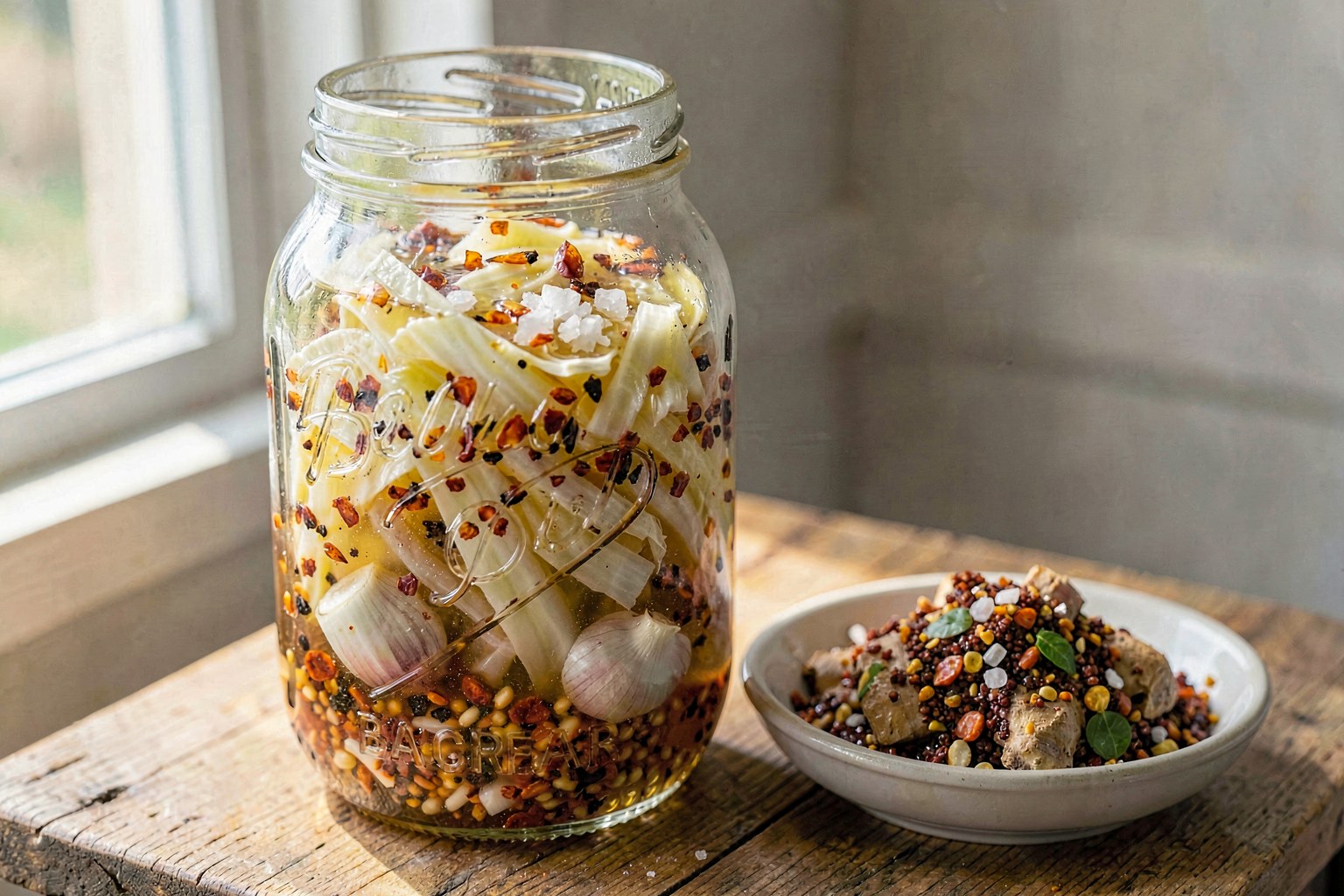
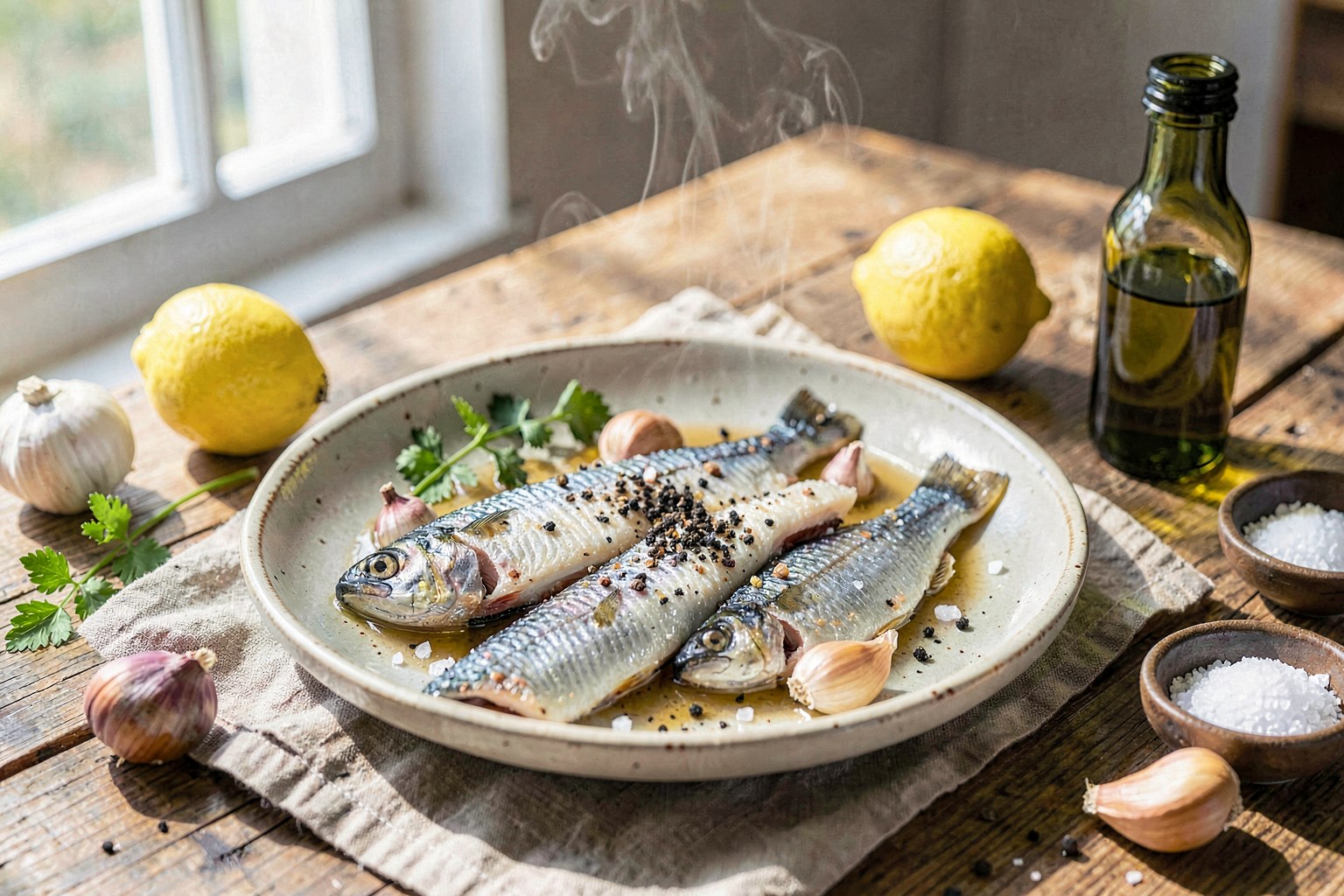
Sae-ryeo Jeotgal (Salt-Cured Wild Herring)
This dish modernizes the traditional Korean fermented herring banchan by using a controlled cold-cure method to preserve the delicate omega-3 fats while developing deep umami. Seasoned simply with fresh garlic and cracked black pepper, it delivers a savory, salty punch without the refined sugars often found in commercial versions. Served cold over warm rice or alongside blanched greens, it is a nutrient-dense centerpiece for a longevity-focused dinner.
A little context
Sae-ryeo Jeotgal is a historic Korean preservation method where herring is salted and fermented to last through winter. Traditionally, some recipes add sugar or corn syrup to balance the salt, which we have omitted entirely. We also skip the seed oils sometimes used in modern preparations, opting instead for a pure salt cure finished with cold-pressed extra-virgin olive oil to honor the integrity of the fish.
The longevity story
Wild-caught herring is a powerhouse of EPA and DHA omega-3 fatty acids, essential for reducing systemic inflammation and supporting brain health. The curing process encourages the growth of beneficial lactobacilli, supporting the gut microbiome without the histamine load of long-term fermentation. Fresh garlic provides allicin, a potent antimicrobial and anti-inflammatory compound, while black pepper enhances nutrient absorption. A finishing drizzle of extra-virgin olive oil adds polyphenols that protect the fish fats from oxidation.
Method
- 01
Prepare the fish
Rinse the herring fillets under cold water and pat completely dry with clean paper towels. Ensure no scales or bones remain. Place them skin-side down on a clean cutting board.
- 02
Apply the cure
Mix the sea salt, minced garlic, and black pepper together. Rub the mixture evenly over the flesh side of the fish. Do not rub the skin if you plan to eat it raw, but ensure the flesh is fully coated.
- 03
Cold cure
Place the fish in the glass container, cover tightly, and refrigerate. Let it cure for 24 to 48 hours. The salt will draw out moisture and firm the texture while the garlic infuses flavor.
- 04
Rinse and dry
After curing, remove the fish and rinse briefly under cold water to remove excess salt. Pat dry thoroughly. The fish should look slightly translucent and firm, not mushy.
- 05
Slice and serve
Slice the herring into bite-sized strips or bite-sized pieces. Arrange on a plate and drizzle immediately with the extra-virgin olive oil just before serving to preserve the polyphenols.
- 06
Garnish and pair
Top with torn perilla leaves or cilantro. Serve chilled as a banchan side dish alongside steamed white rice, blanched spinach, or a warm miso soup.
Nutrition facts
Per serving · 1 of 4- — Saturated
- 4 g
- — Polyunsaturated
- 12 g
- Carbohydrates
- 17 g
- — Fiber
- 9 g
- — Sugars
- 1 g
- Cholesterol
- 0 mg
- Sodium
- 623 mg
- Potassium
- 889 mg
Estimated from USDA FoodData Central for matched ingredients (83% ingredient coverage). Values vary with brand, preparation, and exact measurements.
Pro tips
- ✦Source your herring from a trusted fishmonger who knows the catch is fresh; look for bright red gills and a clean ocean smell.
- ✦Do not skip the refrigeration step; room temperature curing of fish carries a high risk of bacterial growth.
- ✦If you find the salt too intense after curing, soak the fish in cold water for 10 minutes before slicing.
- ✦Use a high-quality EVOO for the finish; cheap versions lack the polyphenols needed for the antioxidant benefit.
- ✦This keeps well in the fridge for 3 days; consume quickly for best texture and safety.
Shop this recipe
As an Amazon Associate we earn from qualifying purchases.
Substitutions
- wild-caught herring → wild-caught mackerel or sardines (similar fat profile, slightly stronger flavor; reduce cure time to 24 hours)
- perilla leaves → fresh cilantro or dill (good for herbal freshness if perilla is unavailable)
Storage
Store in a sealed glass container in the refrigerator for up to 3 days. Do not freeze after curing as the texture will degrade significantly.
What to serve with it
- Steamed short-grain white rice
- Blanched spinach with sesame oil
- Green tea or roasted barley tea
- Dry natural cider or unsweetened kombucha
FAQ
Is this safe to eat without cooking?+
Yes, provided you use sushi-grade or specifically cured fish and maintain a consistent refrigerator temperature below 4°C (40°F) during the cure.
Can I reduce the salt?+
Reducing salt compromises the cure and safety. If you are sodium-sensitive, rinse the fish thoroughly before serving or reduce the portion size.
Share this recipe
Notes from the community
Sign in to leave a note.
No notes yet — be the first.
You might also like