Creamy Turmeric Shiro Wat (Ethiopian Broad Bean Stew)
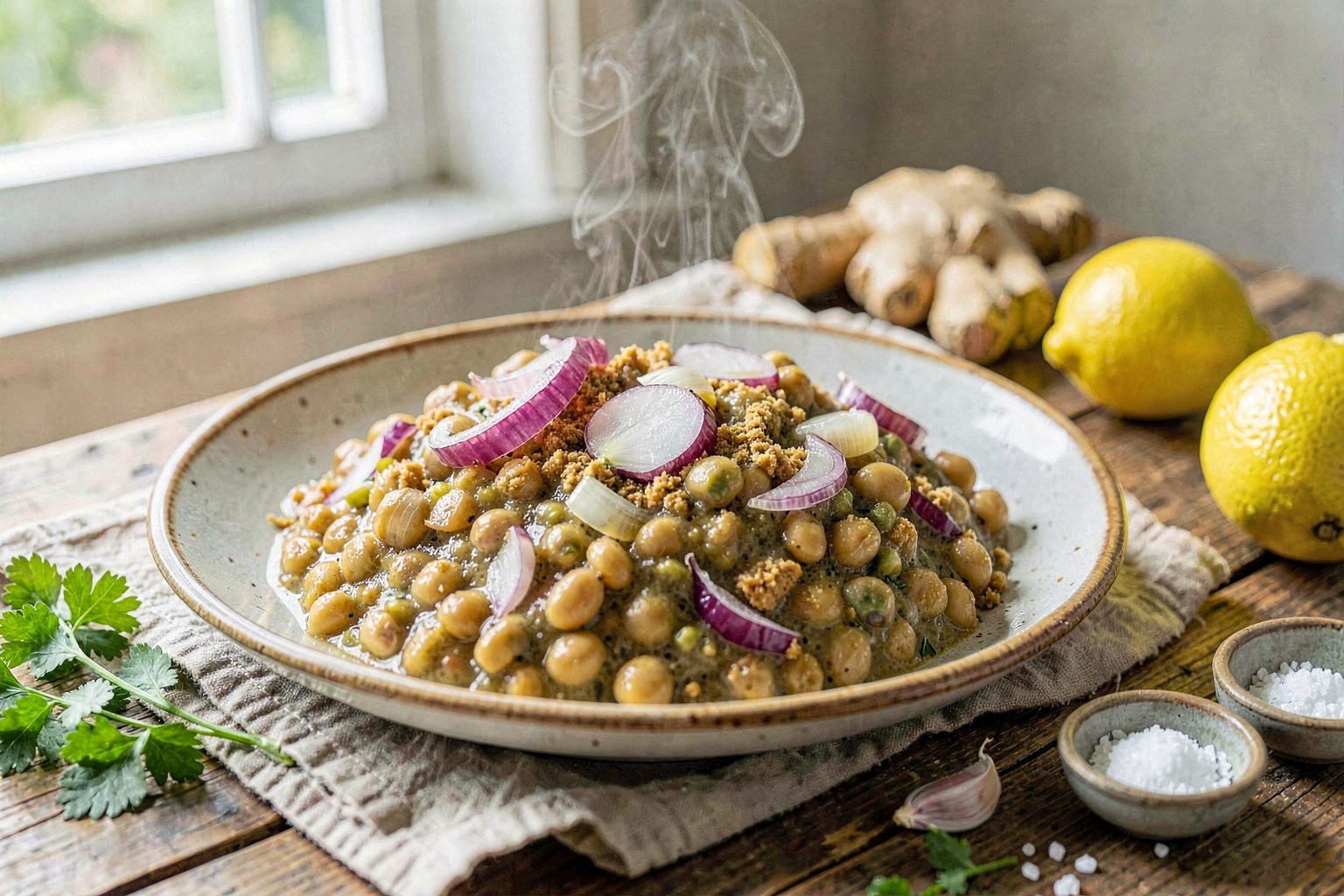
This is the quintessential Ethiopian comfort food: a velvety, golden stew made from ground broad beans or chickpeas, slowly simmered with onions, garlic, and ginger until it achieves a rich, custard-like consistency. It delivers a deep, earthy flavor profile balanced by the heat of berbere spice and the bright, bitter notes of fresh turmeric, free from any refined sugars or industrial seed oils.
A little context
Shiro Wat is a staple of Ethiopian cuisine, traditionally served on injera bread for communal dining. We honor this tradition by using authentic spice blends (berbere) and the traditional slow-simmering technique to develop depth, but we strictly exclude the refined sugar sometimes added to balance acidity and any seed oils used in commercial spice blends. Instead, we rely on the natural sweetness of caramelized onions and the richness of high-quality extra-virgin olive oil to create a luxurious texture.
The longevity story
This dish is a powerhouse of bioavailable polyphenols and fiber. The turmeric (curcumin) provides potent anti-inflammatory effects, enhanced by the black pepper and healthy fats in the oil for absorption. Broad beans and chickpeas offer a complete amino acid profile and slow-digesting carbohydrates that stabilize blood sugar, while the slow-cooked onion base creates a prebiotic foundation for gut health. The absence of seed oils ensures the omega-6 to omega-3 ratio remains favorable, reducing systemic inflammation.
Method
- 01
Sauté the aromatics
Heat the extra-virgin olive oil in the Dutch oven over medium-low heat. Add the finely diced red onions and a pinch of sea salt. Cook slowly for 20–25 minutes, stirring frequently, until the onions are deeply golden, soft, and translucent. Do not rush this step; the caramelization of the onions provides the natural sweetness usually replaced by sugar in commercial versions.
- 02
Bloom the spices
Add the grated ginger, garlic, fresh turmeric, and berbere spice blend to the softened onions. Stir constantly for 2–3 minutes until the mixture is fragrant and the oil turns a deep ruby red. This step 'blooms' the fat-soluble compounds in the spices, maximizing flavor and bioavailability.
- 03
Create the paste
Remove the pot from the heat. Add the sifted shiro powder (broad bean or chickpea flour) and stir vigorously with a wooden spoon to form a thick, uniform paste with the onion-spice mixture. Ensure no dry pockets of flour remain.
- 04
Temper the liquid
Slowly pour in the warm water or broth, about 1 cup at a time, whisking or stirring constantly to prevent lumps. The mixture will thicken rapidly as it absorbs the liquid.
- 05
Slow simmer
Return the pot to low heat. Cover and simmer gently for 25–30 minutes, stirring every 5 minutes to prevent sticking at the bottom. The stew should bubble very slowly. If it becomes too thick, add a splash more warm water. The goal is a consistency similar to a thick porridge or heavy cream.
- 06
Season and finish
Taste the stew. It should be savory, spicy, and earthy. Stir in the freshly ground black pepper and lemon juice. If the flavor feels too flat, a tiny pinch of sea salt may be added, though the broth and spices usually provide enough. Cook for 2 more minutes to meld the flavors.
- 07
Serve
Serve immediately hot. Traditionally eaten with injera, but pairs well with other gluten-free grains or simply on its own as a nutrient-dense bowl.
Nutrition facts
Per serving · 1 of 4- — Saturated
- 3 g
- — Polyunsaturated
- 2 g
- Carbohydrates
- 104 g
- — Fiber
- 50 g
- — Sugars
- 7 g
- Cholesterol
- 0 mg
- Sodium
- 22 mg
- Potassium
- 2616 mg
Estimated from USDA FoodData Central for matched ingredients (90% ingredient coverage). Values vary with brand, preparation, and exact measurements.
Pro tips
- ✦Sourcing Check: When buying berbere, read the label carefully. Many commercial brands add sugar or use seed oils as fillers. Look for a blend of pure dried chilies and spices, or make your own by toasting and grinding whole spices.
- ✦Fresh Turmeric: If you cannot find fresh turmeric root, use 2 tsp of high-quality organic turmeric powder, but the fresh root offers a brighter, less dusty flavor and higher curcumin content.
- ✦Texture Control: The stew will thicken significantly as it cools. If you prefer a soupier consistency, add extra warm water before serving. It should coat the back of a spoon but still flow.
- ✦Onion Mastery: The 20-minute onion sauté is non-negotiable. If the onions are not fully caramelized, the stew will taste raw and bitter. Patience here creates the sweetness.
Shop this recipe
As an Amazon Associate we earn from qualifying purchases.
Substitutions
- shiro powder (broad beans) → organic chickpea flour (besan) (Chickpea flour is more accessible and creates a slightly nuttier, lighter texture. Cooking time remains the same.)
- fresh turmeric root → organic turmeric powder (Use 2 teaspoons of powder. The color will be slightly less vibrant, but the health benefits remain if paired with black pepper.)
- extra-virgin olive oil → avocado oil (Avocado oil has a higher smoke point if you prefer to sauté at slightly higher heat, though EVOO is preferred for its polyphenol density.)
Storage
Store in an airtight glass container in the refrigerator for up to 4 days. The stew will thicken in the fridge; reheat gently with a splash of water or broth. Freezes well for up to 3 months; thaw overnight in the fridge.
What to serve with it
- Traditional injera (fermented teff flatbread) for gut health and fiber
- Warm green tea or hibiscus tea to aid digestion
- Simple side salad with bitter greens (arugula, dandelion) dressed with lemon and EVOO
- Sparkling water with a slice of fresh ginger
FAQ
Why does my Shiro Wat taste bitter?+
This is usually due to undercooked onions or burning the garlic/spices. Ensure the onions are fully soft and golden before adding spices, and do not let the spices burn on high heat.
Can I make this spicy?+
Yes, increase the berbere blend or add a pinch of cayenne pepper. The heat level is adjustable, but the base flavor of turmeric and fenugreek should remain dominant.
Is this gluten-free?+
Yes, provided you use pure broad bean or chickpea flour and verify your berbere blend does not contain wheat-based fillers. Serve with gluten-free injera or avoid bread entirely.
Share this recipe
Notes from the community
Sign in to leave a note.
No notes yet — be the first.
You might also like