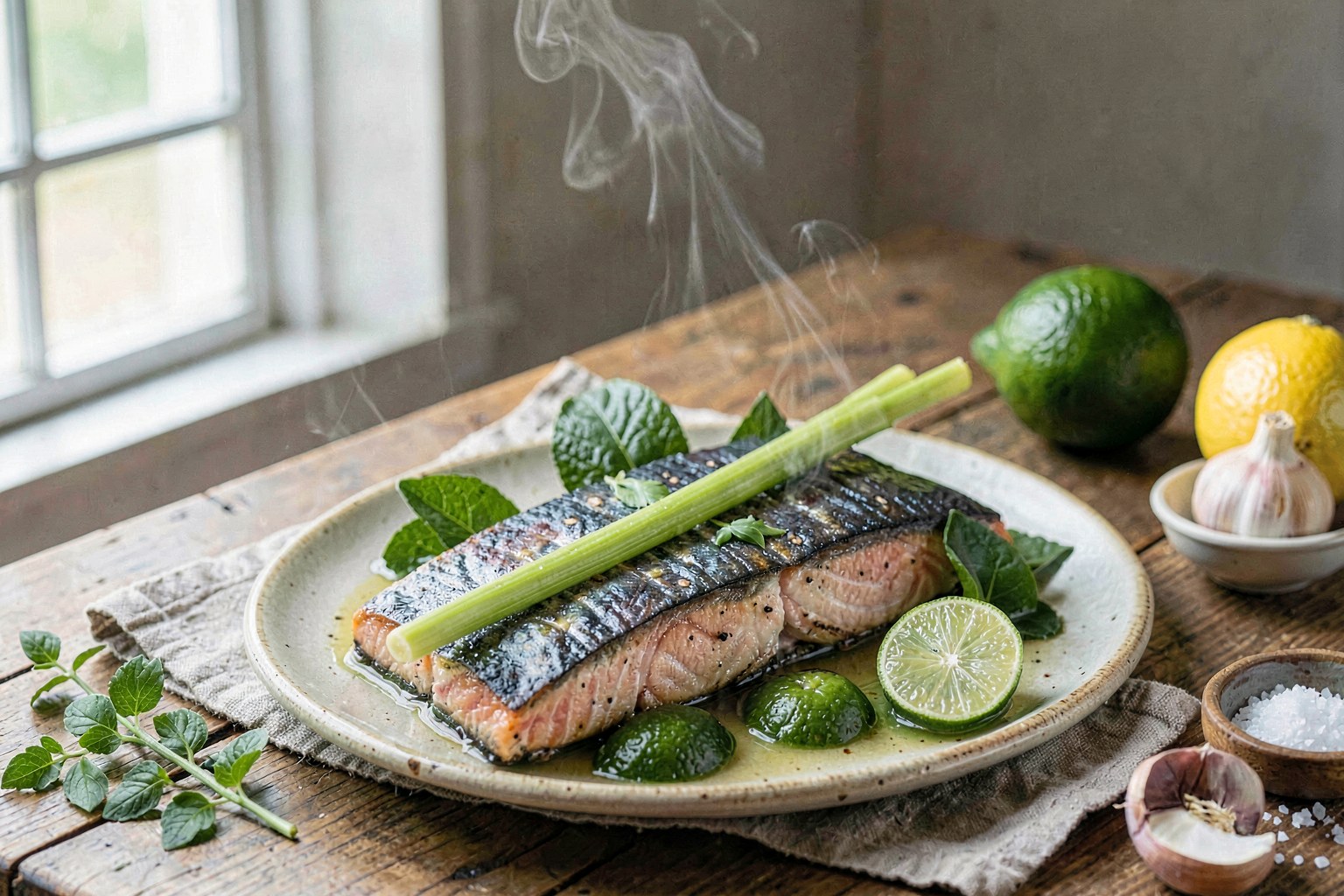
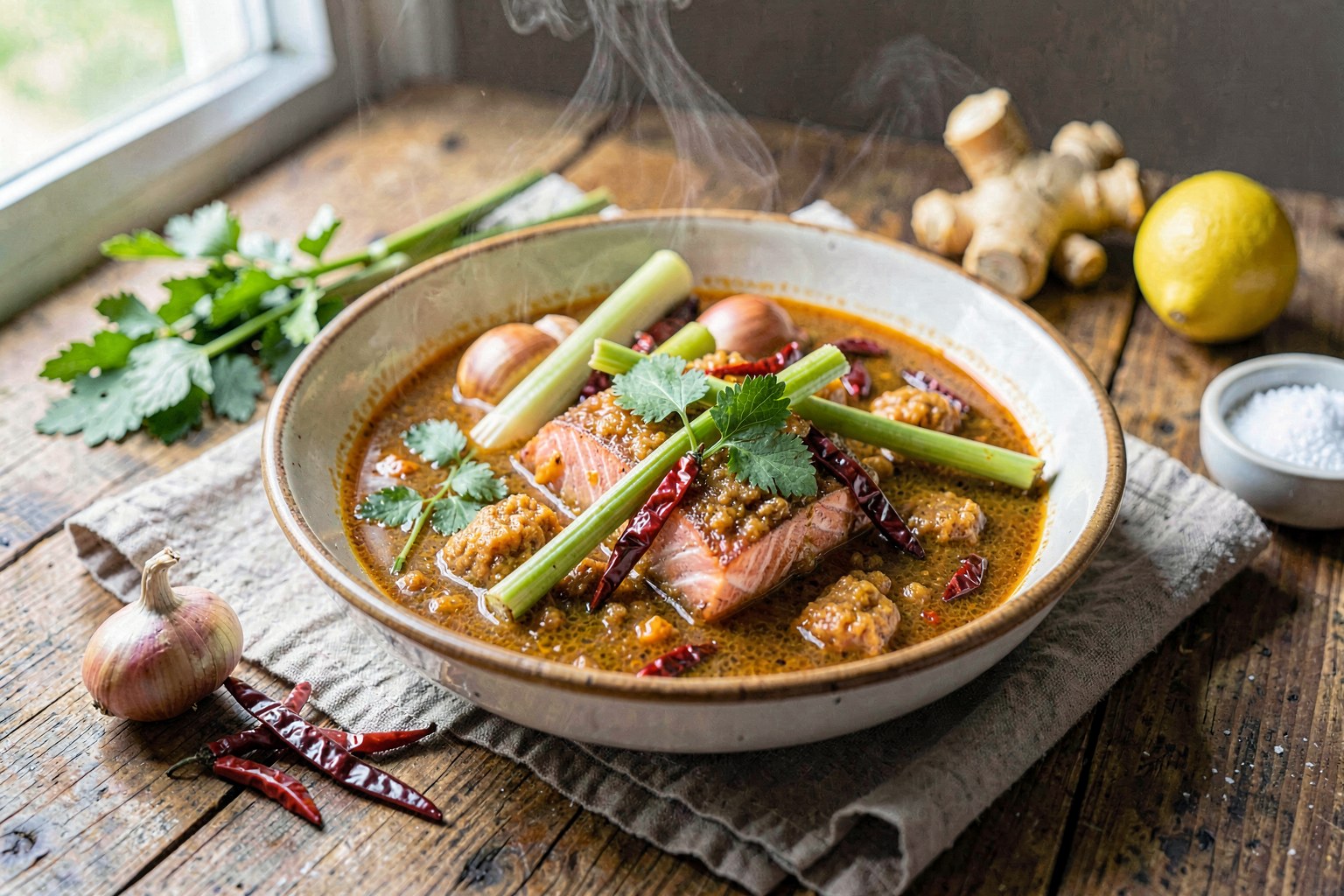
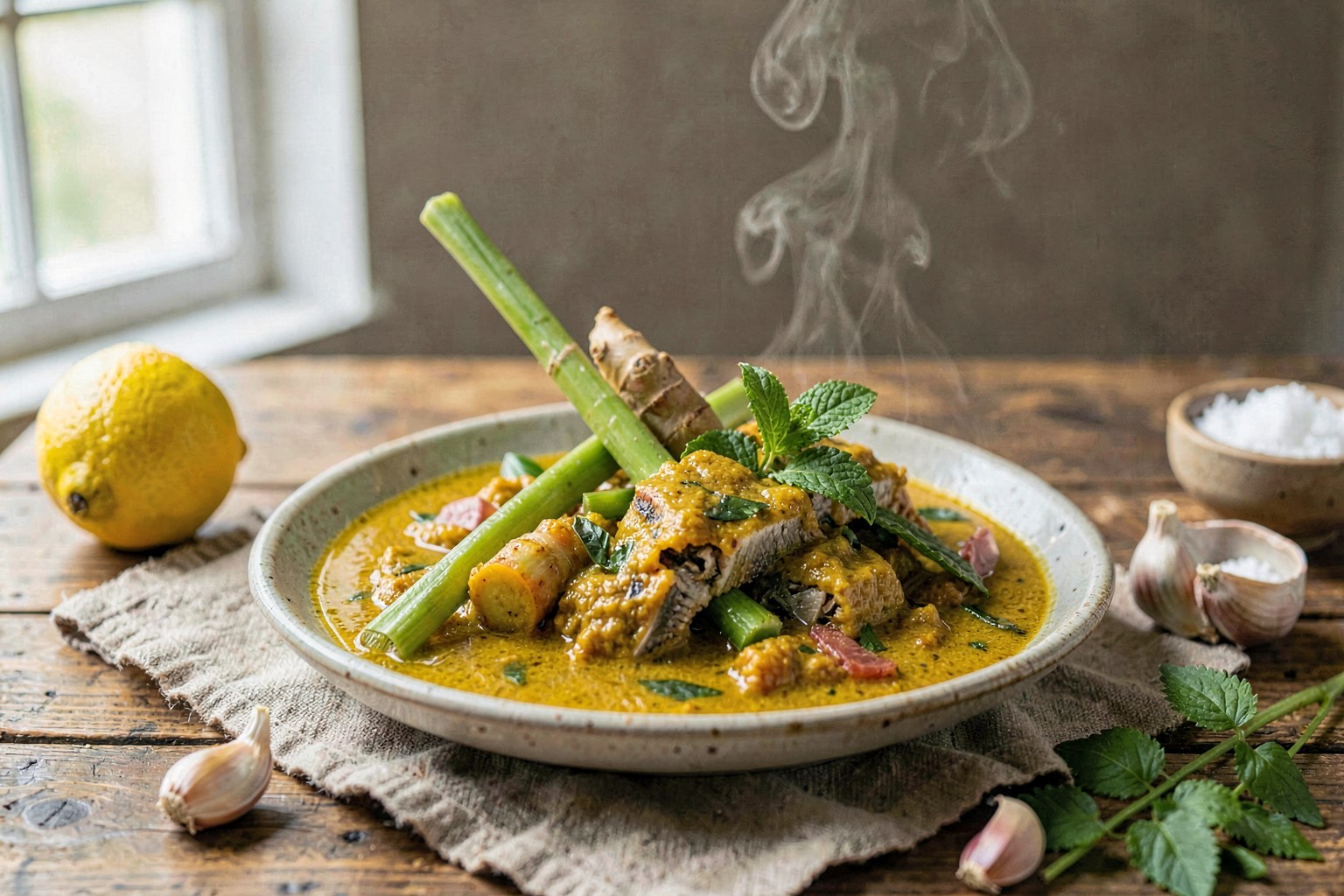
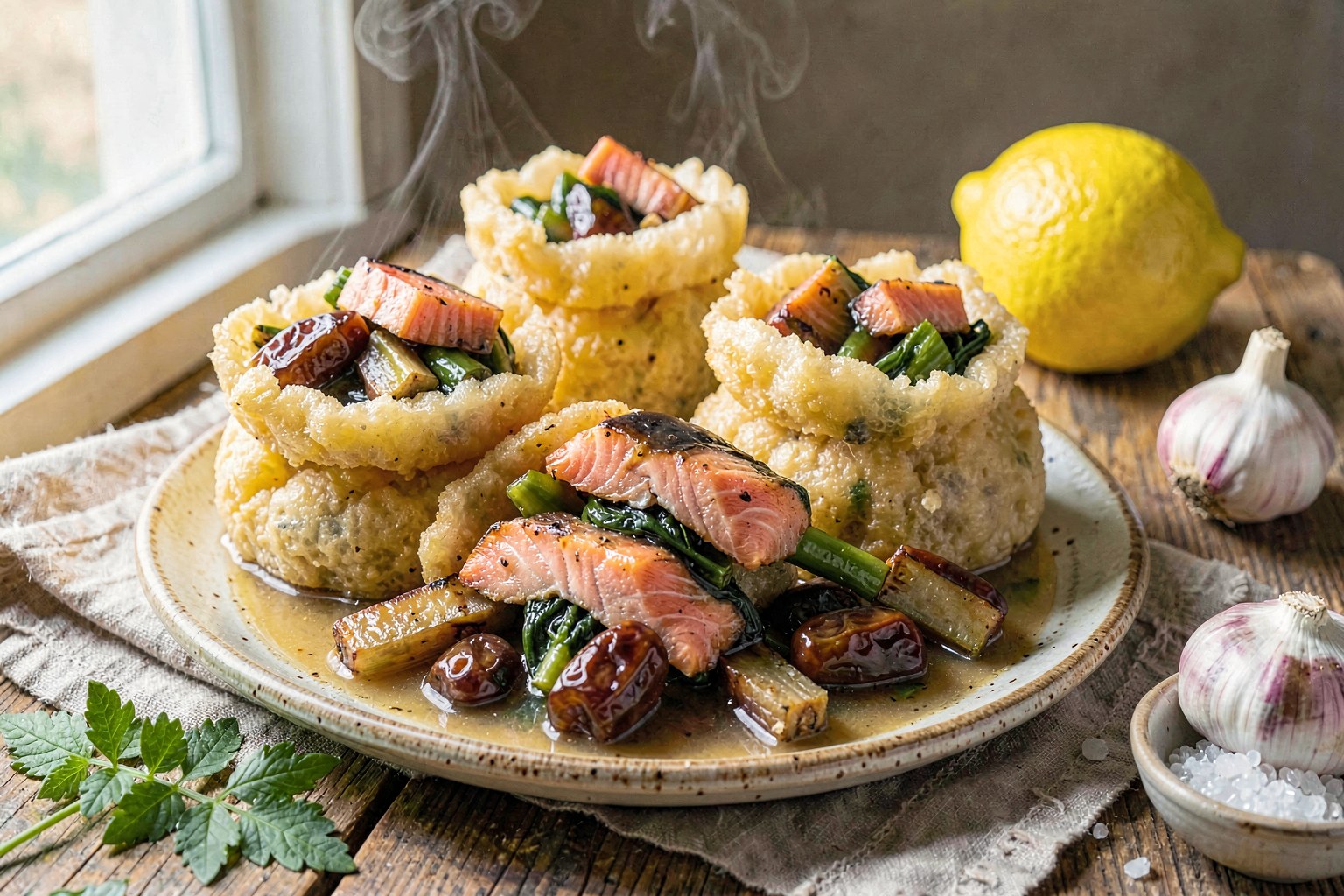
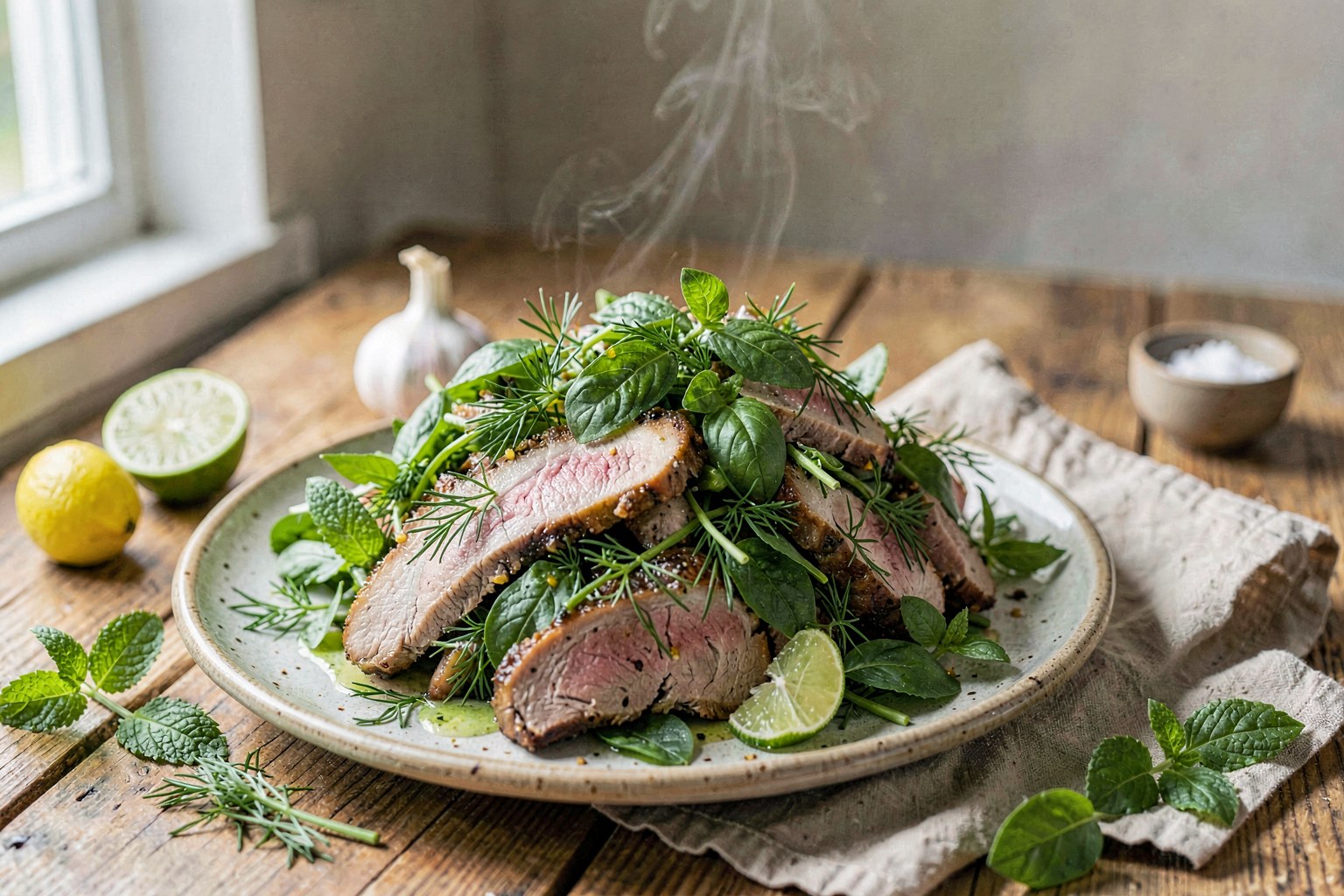
Yum Hua Malai: Dill, Lime Leaf, and Grass-Fed Pork Salad
A vibrant, textural Thai salad featuring tender slices of grass-fed pork loin tossed with an abundance of fresh dill, crisp Thai basil, and aromatic kaffir lime leaves. The dressing is a sharp, unsweetened emulsion of high-quality fish sauce and fresh lime juice, celebrating the natural savory depth of the meat without masking it with refined sugar or seed oils.
A little context
In traditional Thai cuisine, 'Yum' salads are defined by the balance of spicy, sour, salty, and sweet. The 'sweet' element is traditionally achieved with palm sugar or refined white sugar. We honor the tradition by relying on the natural sweetness of shallots and the savory umami depth of high-quality fish sauce, creating a complex flavor profile that feels authentic but adheres to a no-added-sugar framework. We also strictly avoid the seed oils sometimes used to coat the pork, opting for a gentle sear in grass-fed tallow or avocado oil to preserve the integrity of the fats.
The longevity story
This dish is a powerhouse of polyphenols and anti-inflammatory compounds. The dill and Thai basil provide significant amounts of apigenin and luteolin, flavonoids that support vascular health and reduce oxidative stress. The grass-fed pork offers a superior omega-3 to omega-6 fatty acid ratio compared to conventional pork, while the fresh lime juice provides bioavailable Vitamin C to aid iron absorption from the meat. By omitting refined sugar, we prevent the glycemic spike often associated with traditional 'Yum' dressings, keeping the meal aligned with longevity protocols.
Method
- 01
Prepare the aromatics
In a small mortar, lightly crush the bird's eye chilies and 1 clove of garlic (optional, if using) with a pinch of sea salt just until broken down. This releases the capsaicin and allicin without turning them into a paste.
- 02
Make the dressing
In a medium bowl, whisk together the fresh lime juice, fish sauce, and the melted grass-fed tallow (or avocado oil). The hot fat helps emulsify the acidic juice, creating a glossy, cohesive dressing. Taste and adjust; it should be aggressively sour and salty, as the pork and herbs will mellow it.
- 03
Sear the pork
Pat the pork medallions completely dry and season generously with sea salt. Heat your carbon steel wok or skillet over high heat. Add a small amount of avocado oil. Sear the pork for 3-4 minutes per side until a deep golden-brown crust forms and the internal temperature reaches 63°C (145°F). Do not overcook; the pork will continue to cook slightly off the heat.
- 04
Rest and slice
Transfer the pork to a cutting board and let it rest for 5 minutes. Slice the meat against the grain into thin strips. Retain any juices on the board.
- 05
Assemble the salad
In a large serving bowl, combine the sliced pork, the reserved juices, the crushed chilies, sliced shallots, and the fresh herbs (dill, Thai basil, mint, and lime leaf ribbons).
- 06
Toss and serve
Pour the dressing over the mixture. Using clean hands or tongs, gently toss everything together, ensuring the herbs are coated but not bruised. Garnish with crushed roasted peanuts if desired. Serve immediately while the pork is still warm, which wilts the herbs slightly and releases their aroma.
Nutrition facts
Per serving · 1 of 4- — Saturated
- 6 g
- — Polyunsaturated
- 2 g
- Carbohydrates
- 17 g
- — Fiber
- 4 g
- — Sugars
- 4 g
- Cholesterol
- 65 mg
- Sodium
- 1132 mg
- Potassium
- 1046 mg
Estimated from USDA FoodData Central for matched ingredients (100% ingredient coverage). Values vary with brand, preparation, and exact measurements.
Pro tips
- ✦When selecting dill, look for bunches with bright green, feathery fronds that snap crisply; avoid any with yellowing leaves or slimy stems.
- ✦To get the most flavor from kaffir lime leaves, slice them as thinly as possible; the tougher the leaf, the more essential oils are trapped in the waxy surface.
- ✦Do not wash your herbs until just before assembly to prevent wilting and bacterial growth; keep them dry until the last moment.
- ✦If your fish sauce tastes overly sharp, let the dressing sit for 10 minutes before tossing; the acid will mellow and marry with the fats.
Shop this recipe
As an Amazon Associate we earn from qualifying purchases.
Substitutions
- grass-fed pork loin → grass-fed beef tenderloin or venison (Both work well with dill and lime; adjust searing time based on thickness.)
- kaffir lime leaves → fresh lime zest + 1 tsp lemongrass (Less authentic but provides a similar citrus-herbal note if fresh leaves are unavailable.)
Storage
Store leftovers in an airtight glass container in the refrigerator for up to 2 days. The herbs will wilt and the texture of the pork will soften; best consumed fresh. Do not freeze as the texture of the fresh herbs will degrade significantly upon thawing.
What to serve with it
- Steamed jasmine rice (optional, if not strictly low-carb) or a side of cucumber slices.
- Hot green tea or a glass of sparkling water with a wedge of lime.
- A dry, crisp Pinot Noir or a light-bodied Sauvignon Blanc.
FAQ
Can I use regular pork instead of grass-fed?+
You can, but conventional pork is often fed corn and soy, resulting in a higher omega-6 content and a less favorable fat profile. Grass-fed or pasture-raised is preferred for the anti-inflammatory benefits and superior taste.
Why is there no sugar in this dressing?+
Traditional Yum dressings use palm sugar to balance the acid. In this Blueprint-aligned version, the natural sweetness of the shallots and the umami depth of the fish sauce provide enough complexity to balance the lime without spiking blood glucose.
Share this recipe
Notes from the community
Sign in to leave a note.
No notes yet — be the first.
You might also like