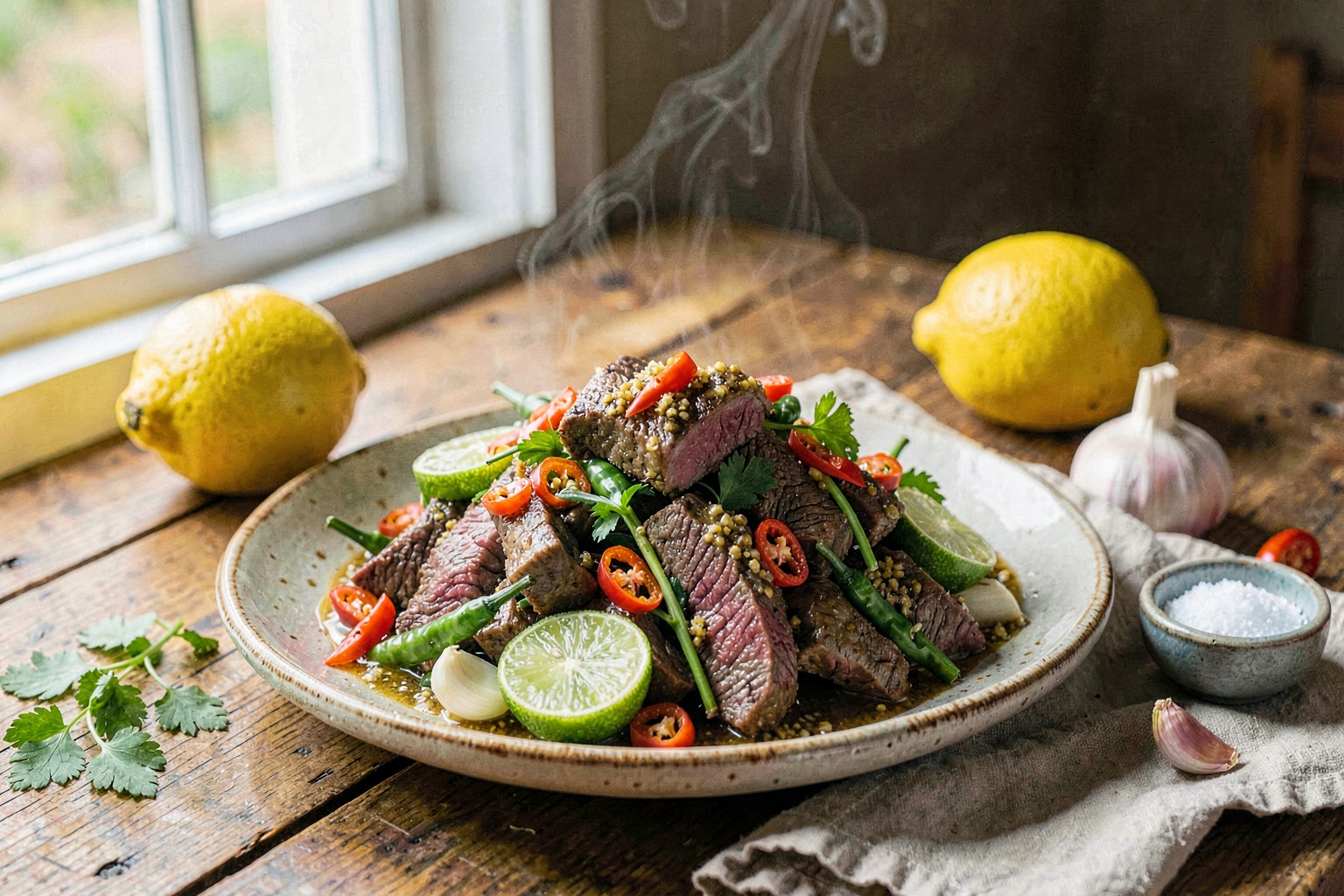
Yum Nuea Ngua: Northern Thai Herb-Forward Beef Salad
A vibrant Northern Thai salad where tender, grass-fed beef is dressed in a fiery, herbaceous emulsion of pounded coriander stems, fresh chilies, and lime. This dish swaps refined sugar for the natural sweetness of whole Medjool dates and replaces seed oils with a rich, polyphenol-dense extra-virgin olive oil finish, delivering a clean, earthy flavor profile that honors the farm-to-table ethos.
A little context
Originating from the Isaan and Northern regions of Thailand, Yum Nuea Ngua traditionally relies on the 'pounding' technique to release the essential oils of coriander roots and stems. While traditional street food versions often use palm sugar and fish sauce with added sugar, this version strictly adheres to a no-refined-sugar protocol by using whole dates for viscosity and sweetness, and ensures all fats come from whole-food sources like EVOO rather than industrial seed oils.
The longevity story
This recipe leverages the high polyphenol content of fresh coriander stems, which are rich in antioxidants that support cellular health and reduce oxidative stress. The grass-fed beef provides high-quality complete protein and a superior omega-6 to omega-3 fatty acid ratio compared to grain-fed alternatives. The dressing utilizes extra-virgin olive oil, a primary source of oleocanthal, a potent anti-inflammatory compound, while the inclusion of fresh ginger and garlic adds allicin and gingerols to support gut motility and immune function.
Method
- 01
Prepare the Date-Lime Emulsion
In a small blender, combine the soaked Medjool dates, fresh lime juice, coconut aminos (or fish sauce), and a splash of water. Blend until completely smooth and no graininess remains. Slowly drizzle in the extra-virgin olive oil while the machine runs to create a creamy, emulsified dressing. Taste and adjust acidity; it should be sharp but balanced by the date sweetness. Set aside.
- 02
Pound the Aromatics
In the mortar, combine the coriander stems, bird's eye chilies, garlic, and ginger. Using the pestle, pound firmly in a circular motion until the ingredients break down into a coarse, fragrant paste. You want the cell walls of the stems to rupture to release their oils, but not to turn them into a mush. This is the flavor foundation.
- 03
Combine the Dressing Base
Add the pounded aromatic paste into the blender with the date-lime emulsion. Pulse briefly just to combine. The texture should be rustic but pourable. If too thick, add 1 tablespoon of water. This mixture will be the 'Yum' (spicy/sour) component of the salad.
- 04
Season the Beef
Pat the grass-fed beef strips completely dry with paper towels. Season generously with sea salt and freshly ground black pepper. Let the meat rest at room temperature for 15 minutes to ensure even cooking.
- 05
Sear the Beef
Heat your cast-iron skillet over high heat until it is smoking slightly. Add a thin layer of avocado oil (high smoke point). Lay the beef strips in a single layer, ensuring they are not crowded. Sear for 1-2 minutes per side for medium-rare. Grass-fed beef cooks faster than grain-fed; do not overcook or it will become tough. Remove from heat immediately.
- 06
Rest and Slice
Transfer the seared beef to a cutting board and let it rest for 5 minutes. This allows the juices to redistribute. Slice the beef thinly against the grain to ensure maximum tenderness.
- 07
Assemble the Salad
In a large serving bowl, toss the mixed greens, soaked red onion, mint, and cilantro with about half of the prepared dressing. Arrange the sliced beef on top. Drizzle the remaining dressing over the beef and garnish with the reserved fresh coriander leaves.
- 08
Serve Immediately
Serve immediately while the beef is still warm and the herbs are crisp. This dish is best eaten fresh to preserve the volatile oils in the herbs and the texture of the greens.
Nutrition facts
Per serving · 1 of 4- — Saturated
- 10 g
- — Polyunsaturated
- 2 g
- Carbohydrates
- 24 g
- — Fiber
- 9 g
- — Sugars
- 10 g
- Cholesterol
- 103 mg
- Sodium
- 564 mg
- Potassium
- 982 mg
Estimated from USDA FoodData Central for matched ingredients (92% ingredient coverage). Values vary with brand, preparation, and exact measurements.
Pro tips
- ✦Sourcing Tip: When buying coriander, choose bunches where the stems snap crisply and the leaves are vibrant green; avoid any with yellowing edges or slimy stems, as the stems are the star of this dish.
- ✦Meat Tip: Grass-fed beef has less intramuscular fat, so it dries out quickly. Use a meat thermometer if unsure; pull it at 52°C (125°F) for medium-rare, as it will carry over to 57°C (135°F) while resting.
- ✦Texture Tip: Do not skip the soaking step for the red onions. Soaking them in ice water for 5 minutes removes the harsh sulfur compounds and leaves them sweet and crunchy.
- ✦Emulsion Tip: If the dressing separates, simply give it a vigorous whisk or a quick pulse in the blender before serving. The date paste acts as a natural emulsifier.
Shop this recipe
As an Amazon Associate we earn from qualifying purchases.
Substitutions
- grass-fed beef sirloin → wild-caught tuna steak or pastured duck breast (Tuna should be seared very briefly (rare); duck breast should be rendered slowly and sliced thin. Both pair excellently with the coriander-lime profile.)
- Medjool dates → 1 tbsp pure maple syrup or monk fruit syrup (Use sparingly. Dates provide fiber and a caramel note; syrups provide sweetness without fiber.)
- extra-virgin olive oil → avocado oil (If you prefer a more neutral flavor profile, though EVOO is preferred for its polyphenol content.)
Storage
Store the cooked beef and dressing separately in airtight glass containers in the refrigerator for up to 3 days. Do not dress the greens until ready to serve to prevent wilting. The beef can be eaten cold in a salad or reheated gently in a skillet.
What to serve with it
- Hot green tea (Sencha or Gyokuro) to complement the polyphenols
- Sparkling water with a wedge of fresh lime and a pinch of sea salt
- A dry, low-sulfite Pinot Noir or a natural wine with no added sugar
- Side of steamed organic bok choy with garlic
FAQ
Can I use dried coriander powder instead of fresh stems?+
No, the dish relies on the fresh, grassy, citrusy oils found specifically in the fresh stems. Dried powder will result in a dusty, bitter flavor profile and lacks the necessary texture.
Is this dish spicy?+
It is moderately spicy. You can control the heat by removing the seeds and membranes from the bird's eye chilies before pounding, or by using fewer chilies.
Why no fish sauce?+
Traditional fish sauce is fine if it has no added sugar. We use coconut aminos or a sugar-free fish sauce to ensure the 'no-added-sugar' rule is met, as many commercial brands add caramel color or sugar for balance.
Share this recipe
Notes from the community
Sign in to leave a note.
No notes yet — be the first.
You might also like