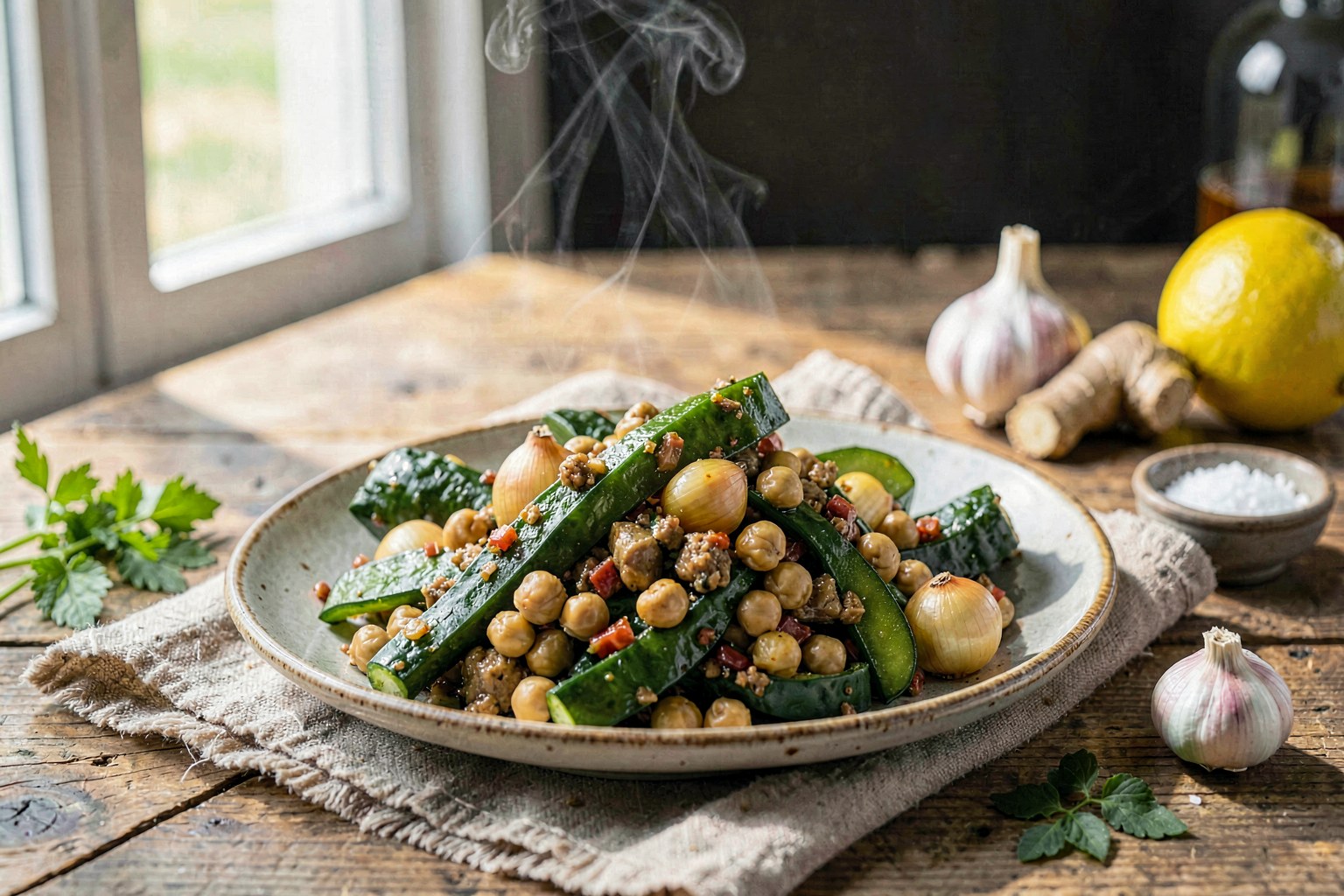
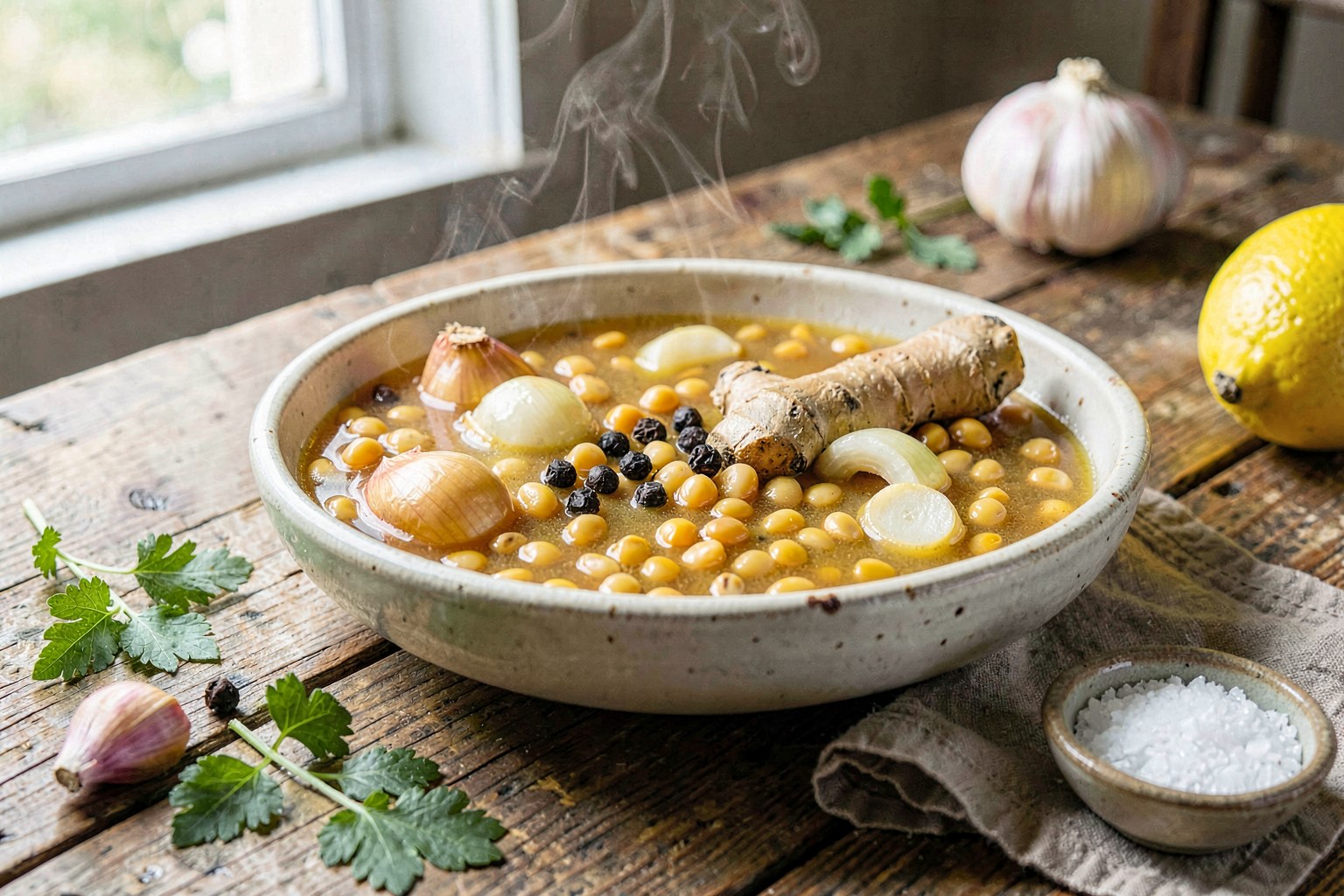
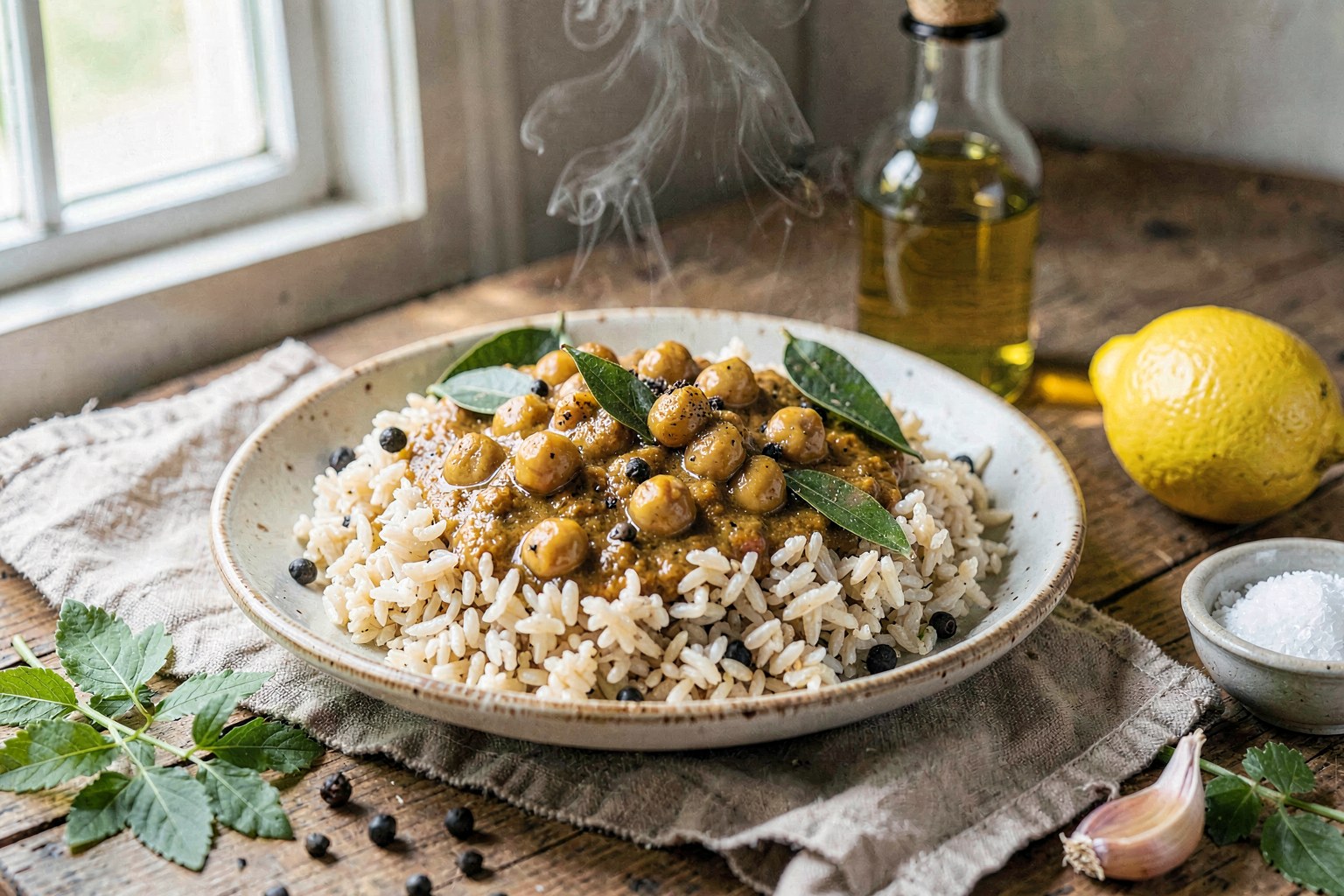
Coconut Chickpea Spice Bowl with Curry Leaves
A deeply savory, aromatic curry where tender chickpeas simmer in a rich coconut broth infused with fresh curry leaves, turmeric, and black pepper. Served over fluffy millet rice, this dish balances the earthy sweetness of the legumes with the bright, citrusy punch of tempering spices, delivering a meal that is both comforting and biochemically potent.
A little context
Rooted in the South Indian tradition of 'Kootu' and 'Sambar,' this recipe honors the ancient practice of tempering spices in ghee or oil to unlock their volatile oils. We have modernized the base by using extra-virgin olive oil or coconut oil instead of processed seed oils and eliminated the refined sugar often added to balance acidity, replacing it with the natural sweetness of ripe tomatoes and a touch of date paste if needed. The focus remains on whole, farm-fresh ingredients like organic chickpeas and fresh curry leaves, respecting the Ayurvedic principle of 'Sattvic' eating without the modern industrial shortcuts.
The longevity story
This bowl leverages the synergistic effect of curcumin from fresh turmeric and piperine from black pepper to maximize anti-inflammatory absorption. The chickpeas provide a robust source of soluble fiber for gut microbiome diversity and slow-release energy, while the coconut milk offers medium-chain triglycerides (MCTs) for efficient cellular fuel. Fresh curry leaves contribute significant polyphenols and antioxidants, and the millet base provides a low-glycemic alternative to refined grains, ensuring stable blood sugar levels post-meal.
Method
- 01
Prepare the Millet
Rinse the millet under cold water until the water runs clear. Combine with 480 ml (2 cups) of filtered water and a pinch of sea salt in a small saucepan. Bring to a boil, reduce heat to low, cover, and simmer for 15-20 minutes until tender and fluffy. Remove from heat and let sit covered.
- 02
Temper the Spices
Heat 30 ml (2 tbsp) of extra-virgin olive oil in your Dutch oven over medium heat. Add the mustard seeds; once they begin to sputter and pop (about 30 seconds), immediately add the fresh curry leaves. Stir for 10 seconds until they crisp slightly but do not burn.
- 03
Build the Aromatic Base
Add the grated turmeric, ginger, and cracked black pepper to the oil. Stir constantly for 1 minute to release the essential oils. Add the diced tomatoes and sea salt, cooking until the tomatoes break down and form a soft paste (about 5-7 minutes).
- 04
Simmer the Curry
Stir in the cooked chickpeas, coconut milk, and vegetable broth. Bring the mixture to a gentle simmer. Reduce heat to low, cover, and cook for 20 minutes to allow the flavors to meld and the chickpeas to absorb the spice profile.
- 05
Adjust Consistency and Season
If the curry is too thick, add a splash of warm water. Taste and adjust salt or add a squeeze of lime if the dish needs acidity. The texture should be creamy but not soupy. If a touch of sweetness is required to balance the tomatoes, stir in 1 tsp of date paste now, though the tomatoes usually suffice.
- 06
Serve
Ladle the warm millet into bowls and top generously with the coconut chickpea curry. Garnish with fresh cilantro and an extra drizzle of high-quality olive oil if desired. Serve immediately while hot.
Nutrition facts
Per serving · 1 of 4- — Saturated
- 6 g
- — Polyunsaturated
- 8 g
- Carbohydrates
- 57 g
- — Fiber
- 15 g
- — Sugars
- 12 g
- Cholesterol
- 0 mg
- Sodium
- 847 mg
- Potassium
- 673 mg
Estimated from USDA FoodData Central for matched ingredients (60% ingredient coverage). Values vary with brand, preparation, and exact measurements.
Pro tips
- ✦When buying curry leaves, look for bright green, unblemished leaves; if they are wilted or yellow, the aroma will be weak. Frozen curry leaves are a perfectly acceptable backup if fresh ones are unavailable.
- ✦Always add the black pepper after the turmeric has cooked briefly; the heat activates the piperine, which increases curcumin bioavailability by up to 2000%.
- ✦For a richer texture, use a wooden spoon to gently mash a few chickpeas against the side of the pot during the simmer to naturally thicken the sauce.
- ✦Source organic chickpeas to avoid pesticide residues, as legumes can be high on the 'Dirty Dozen' list depending on farming practices.
Shop this recipe
As an Amazon Associate we earn from qualifying purchases.
Substitutions
- organic millet → buckwheat groats or quinoa (both are gluten-free grains with a similar nutty profile and low glycemic impact)
- full-fat coconut milk → cashew cream (soaked cashews blended with water) (provides a creamy texture with a slightly different fat profile, still anti-inflammatory)
- fresh turmeric root → high-quality organic turmeric powder (use 1 tsp powder for every 10g fresh root; ensure it contains black pepper for absorption)
Storage
Store in an airtight glass container in the refrigerator for up to 4 days. The flavors often improve on the second day. Freeze in portioned containers for up to 3 months; thaw overnight in the fridge and reheat gently with a splash of water.
What to serve with it
- Freshly brewed green tea or matcha to complement the antioxidants
- A glass of sparkling water with a wedge of fresh lime and a pinch of sea salt
- A side of sauerkraut or kimchi to further boost the gut-health benefits
FAQ
Can I use canned chickpeas instead of dried?+
Yes, canned organic chickpeas are convenient and acceptable. Rinse them thoroughly to remove excess sodium and the canning liquid, which can sometimes impart a metallic taste. If using dried, soak them overnight for better digestion and texture.
Why is black pepper essential in this recipe?+
Turmeric contains curcumin, which has powerful anti-inflammatory properties but is poorly absorbed by the body on its own. The piperine in black pepper enhances curcumin absorption by up to 2000%, making this a non-negotiable step for the health benefits.
Share this recipe
Notes from the community
Sign in to leave a note.
No notes yet — be the first.
You might also like