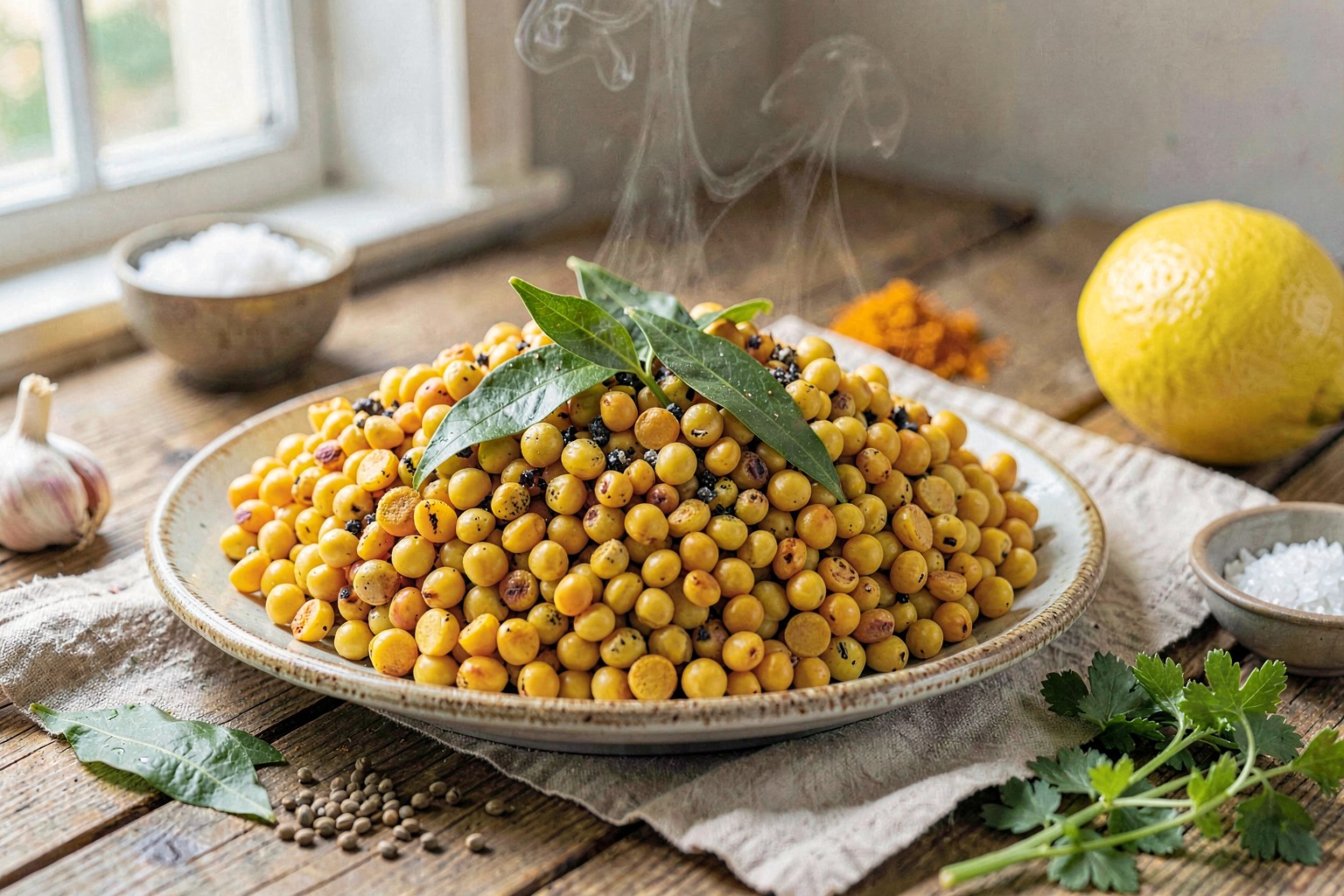
Dry Roasted Yellow Moong Dal with Mustard Oil & Curry Leaves
This is a textural masterpiece: split yellow lentils roasted until golden and crisp, then tossed in aromatic, pungent mustard oil, fresh curry leaves, and a whisper of black salt. It serves as a nutrient-dense, protein-rich side or savory snack that honors the Ayurvedic tradition of 'chana dal' but strips away the frying oil and refined sugar often found in modern iterations.
A little context
Rooted in the Indian tradition of 'tadka' (tempering), this recipe elevates the humble lentil from a soft stew ingredient to a crunchy, savory delight. Traditional street versions often deep-fry the dal in seed oils and dust them with sugary chaat masala; we honor the spirit of the dish by dry-roasting to preserve the lentil's integrity and using date powder or a hint of maple only if a subtle sweetness is desired, ensuring the flavor remains earthy and umami-focused.
The longevity story
Yellow moong dal provides a complete amino acid profile when paired with grains, offering sustained energy without the glycemic spike of refined carbs. The key polyphenol driver here is the fresh curry leaves (Murraya koenigii), which contain carbazoles shown to support metabolic health and antioxidant activity. We utilize cold-pressed mustard oil for its high erucic acid content and anti-microbial properties, while the dry-roasting method concentrates the lentil's natural fiber and B-vitamins without introducing oxidized seed oils.
Method
- 01
Rinse and Dry
Rinse the yellow moong dal under cold running water until the water runs clear. Spread the lentils in a single layer on a clean kitchen towel or baking sheet. Let them air-dry for at least 30 minutes, or pat them aggressively with paper towels. They must be bone-dry; any surface moisture will steam the lentils rather than roast them.
- 02
The Dry Roast
Place the heavy skillet over medium-low heat. Add the dried lentils. Stir constantly with a wooden spoon or spatula. This process takes 15-20 minutes. You are looking for a color change from pale yellow to a deep golden-brown and a fragrant, nutty aroma. Do not rush this step, or the lentils will remain hard or burn.
- 03
Test for Crunch
Remove a few lentils from the pan and let them cool for a minute. Taste one. It should be crunchy and snap, not chewy. If it is still soft, continue roasting for another 5 minutes, stirring frequently. Once done, immediately transfer the roasted lentils to a large bowl to stop the cooking process.
- 04
Prepare the Tempering
Wipe the skillet clean and return it to medium heat. Add the mustard oil. Heat until it just begins to smoke (a sign the oil is ready and the raw pungency is gone), then remove from heat and let it cool for 10 seconds. If you skip the smoking step, the oil will taste raw and bitter.
- 05
Sizzle the Aromatics
Turn the heat back to low. Add the cumin seeds; they should sizzle gently. After 30 seconds, add the curry leaves. They will splutter and turn dark green almost instantly. Add the asafoetida and turmeric, stirring quickly for 10 seconds to bloom the spices without burning them.
- 06
The Toss
Pour the hot oil and spice mixture over the roasted lentils in the bowl. Immediately add the black salt and fresh cilantro. Toss vigorously with tongs or two spoons until every lentil is coated in the aromatic oil. The residual heat will crisp the curry leaves further.
- 07
Cool and Serve
Spread the mixture back onto a baking sheet or plate to cool completely. As it cools, the lentils will become even crunchier. Serve immediately as a side dish or store in an airtight container for a crunchy snack.
Nutrition facts
Per serving · 1 of 4- — Saturated
- 2 g
- — Polyunsaturated
- 2 g
- Carbohydrates
- 13 g
- — Fiber
- 5 g
- — Sugars
- 1 g
- Cholesterol
- 6 mg
- Sodium
- 199 mg
- Potassium
- 272 mg
Estimated from USDA FoodData Central for matched ingredients (75% ingredient coverage). Values vary with brand, preparation, and exact measurements.
Pro tips
- ✦Sourcing is critical: Look for organic mustard oil that is 'cold-pressed' and labeled for cooking (some are for external use only).
- ✦The drying phase is non-negotiable. If you are in a humid climate, spread the rinsed lentils on a baking sheet and place them in a 200°F (95°C) oven for 10 minutes to ensure they are bone-dry before roasting.
- ✦Black salt (Kala Namak) is distinct from sea salt; it contains sulfur compounds that give the dish its signature savory depth. Do not substitute with regular sea salt.
- ✦If the curry leaves burn during the tempering, the dish will be bitter. Add them to the oil off-heat or immediately after the cumin sizzles.
Shop this recipe
As an Amazon Associate we earn from qualifying purchases.
Substitutions
- Mustard oil → Extra-virgin olive oil or avocado oil (The flavor profile will lose the pungent, nutty kick of mustard oil but remains anti-inflammatory and seed-oil free.)
- Yellow moong dal → Split red lentils (masoor dal) (Red lentils roast faster and become less crunchy; reduce roasting time by 5-7 minutes.)
- Fresh curry leaves → None recommended (Dried curry leaves lack the volatile oils and polyphenols essential to this dish. If unavailable, omit, but the flavor will be significantly different.)
Storage
Store in an airtight glass jar at room temperature for up to 5 days. The lentils will stay crunchy if kept dry. Do not refrigerate, as humidity will make them chewy.
What to serve with it
- Serve alongside a warm, steamed bowl of organic basmati rice and a side of fermented kimchi.
- Pair with a glass of unsweetened green tea or a small glass of dry red wine (Pinot Noir) to complement the earthy notes.
- Excellent as a topping for a bowl of warm vegetable dal or a fresh cucumber-yogurt raita (using full-fat coconut yogurt for dairy-free).
- Enjoy with sparkling water infused with fresh lemon and mint.
FAQ
Why do I need to smoke the mustard oil?+
Smoking the oil removes its raw, bitter pungency and activates its anti-microbial properties. It transforms the flavor from sharp to nutty and aromatic.
Can I make this in the oven instead of the stove?+
You can roast the lentils in the oven at 350°F (175°C) for 20-25 minutes, stirring every 5 minutes, but stovetop dry-roasting offers better control over the browning and texture.
Is this safe for those with sulfur sensitivities?+
The black salt and asafoetida are high in sulfur. If you have a known sensitivity, substitute with sea salt and skip the asafoetida, though the traditional flavor profile will change.
Share this recipe
Notes from the community
Sign in to leave a note.
No notes yet — be the first.
You might also like