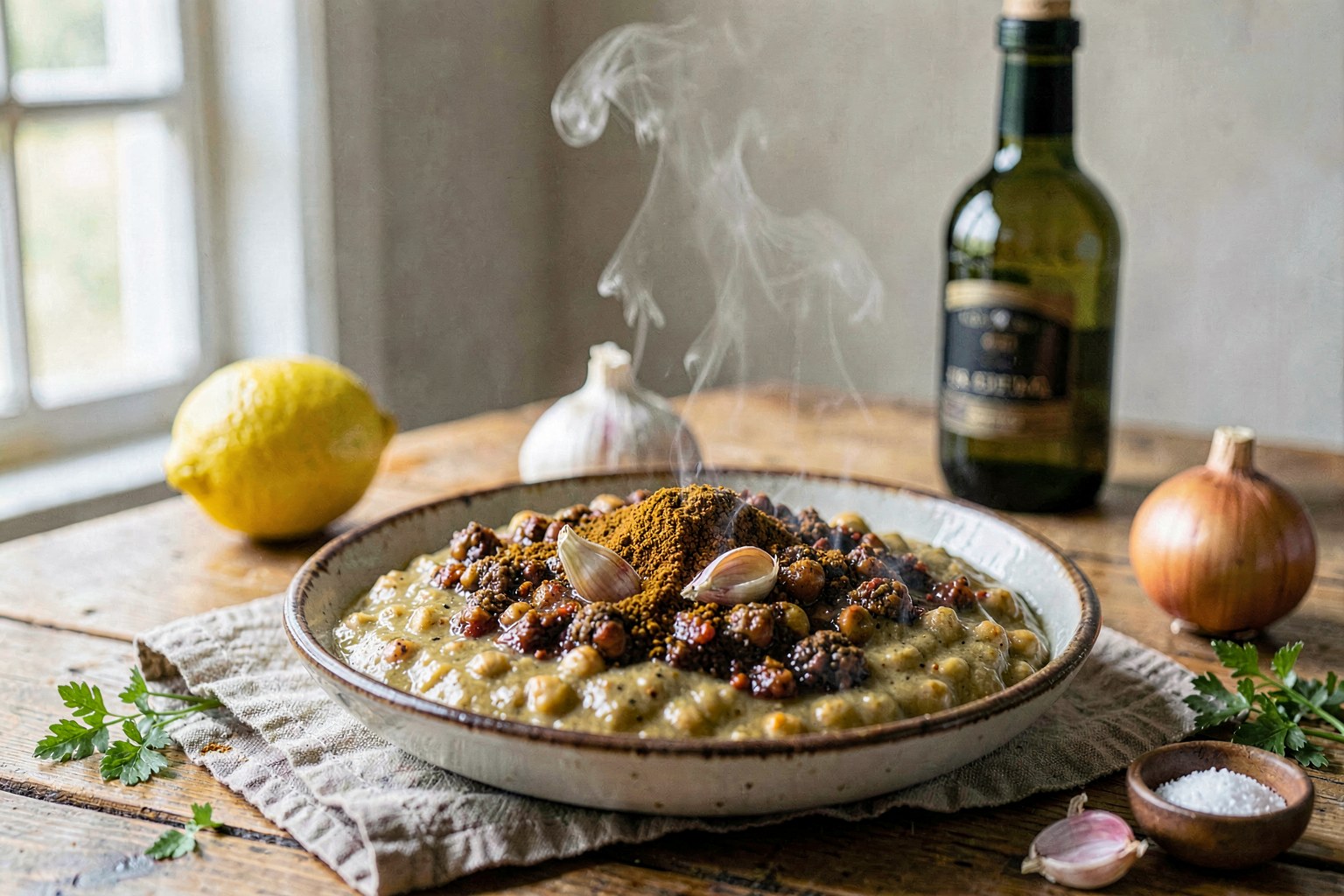
Shiro Gebeya: Creamy Berbere Chickpea Stew
This velvety Ethiopian stew transforms humble chickpea flour into a rich, protein-dense centerpiece, simmered in a deep, smoky berbere spice blend and slow-cooked with garlic and onions. The result is a comforting, umami-rich dish that honors the traditional 'wet' cooking method while strictly adhering to longevity principles by eliminating seed oils and refined sugars.
A little context
Shiro is a cornerstone of Ethiopian fasting traditions (Hawaria), historically prepared for days when meat and dairy are abstained from. We honor this legacy by using high-quality, organic chickpea flour and a house-made berbere blend free from the commercial additives and sugar often found in pre-mixed spice packets. Traditional recipes sometimes call for 'niter kibbeh' (spiced butter) or seed oils; we substitute with high-phenol extra-virgin olive oil to maintain the dish's integrity while optimizing for cardiovascular health.
The longevity story
The foundation of this dish is the bioactive synergy between chickpeas and berbere spices. Chickpeas provide resistant starch and soluble fiber that feed the gut microbiome, while the berbere blend (featuring turmeric, ginger, and fenugreek) delivers potent polyphenols like curcumin and gingerol, which actively lower systemic inflammation. By using extra-virgin olive oil as the cooking fat, we introduce oleocanthal, a natural anti-inflammatory compound that mimics ibuprofen's effects, and we avoid the pro-inflammatory omega-6 load of traditional seed oils often used in commercial preparations.
Method
- 01
Toast the spices
If your berbere blend is not pre-toasted, heat a dry skillet over medium heat. Add the 45g of berbere spice and toast for 2-3 minutes until fragrant, being careful not to burn. This unlocks the essential oils and deepens the flavor profile.
- 02
Sauté the aromatics
In your heavy Dutch oven, heat the 800g of extra-virgin olive oil over medium heat. Add the finely diced onions and a pinch of salt. Sauté slowly for 15-20 minutes until the onions are deeply golden and translucent, not browned. This slow caramelization builds the stew's natural sweetness without added sugar.
- 03
Build the flavor base
Add the minced garlic and grated ginger to the onions. Cook for another 2 minutes until fragrant. Stir in the toasted berbere spice blend, coating the onions and oil thoroughly. Cook for 1 minute to bloom the spices in the fat.
- 04
Create the roux
Reduce heat to low. Slowly sprinkle the sifted chickpea flour into the pot while stirring constantly with a wooden spoon. Continue stirring for 3-4 minutes. The mixture will look like a thick, grainy paste. This step is critical to cook out the raw flour taste and create the signature creamy texture.
- 05
Simmer the stew
Gradually add the vegetable broth, about 250ml at a time, stirring vigorously after each addition to ensure no lumps form. Once all broth is incorporated, bring to a gentle simmer. Reduce heat to low, cover partially, and cook for 25-30 minutes, stirring occasionally to prevent sticking at the bottom. The stew should thicken to a consistency similar to heavy cream or porridge.
- 06
Finish with greens
Stir in the chopped spinach or collard greens. Cook for 3-5 minutes just until wilted and bright green. This preserves the heat-sensitive vitamins and polyphenols. Season with sea salt to taste.
- 07
Rest and serve
Remove from heat and let the stew rest for 5 minutes. This allows the flavors to meld and the texture to stabilize. Serve hot, ideally with fresh injera or a side of steamed vegetables.
Nutrition facts
Per serving · 1 of 4- — Saturated
- 32 g
- — Polyunsaturated
- 21 g
- Carbohydrates
- 51 g
- — Fiber
- 11 g
- — Sugars
- 11 g
- Cholesterol
- 0 mg
- Sodium
- 1627 mg
- Potassium
- 1384 mg
Estimated from USDA FoodData Central for matched ingredients (78% ingredient coverage). Values vary with brand, preparation, and exact measurements.
Pro tips
- ✦Sourcing the berbere: Avoid commercial blends containing 'natural flavors' or sugar. Look for small-batch Ethiopian spice roasters or make your own by toasting whole seeds and grinding them fresh.
- ✦Texture control: If the stew becomes too thick, add warm water or broth, one tablespoon at a time. It should coat the back of a spoon but still flow.
- ✦Fat quality: Since we are not using seed oils, the quality of your EVOO is paramount. Taste your oil before cooking; it should have a distinct peppery kick indicating high polyphenol content.
- ✦Garlic activation: Crush or mince the garlic and let it sit for 10 minutes before adding it to the pot. This allows the enzyme alliinase to convert alliin into allicin, maximizing the antimicrobial benefits.
Shop this recipe
As an Amazon Associate we earn from qualifying purchases.
Substitutions
- chickpea flour → fava bean flour (Traditional Shiro is often made with fava beans; the flavor is earthier and slightly more bitter, but equally nutritious.)
- spinach/collards → kale or Swiss chard (Any sturdy green works; add kale earlier (10 mins) and chard later (5 mins) based on tenderness.)
Storage
Store in an airtight glass container in the refrigerator for up to 4 days. The stew will thicken significantly when cold; reheat gently with a splash of water or broth. Freezes well for up to 3 months.
What to serve with it
- Warm, homemade sourdough or injera made from teff flour
- A glass of sparkling water with a wedge of lemon and a sprig of fresh mint
- High-quality green tea (sencha or matcha) to complement the polyphenol profile
- A side of simple fermented pickled vegetables (like fermented carrots or cabbage) to enhance gut health
FAQ
Why is the stew so oily?+
In traditional Shiro, oil often floats to the top, which is a sign of proper emulsification and flavor richness. However, we use high-quality EVOO, so this fat is beneficial. If you prefer less oil, you can reduce the initial amount by 25%, but the texture may be slightly less velvety.
Can I make this gluten-free?+
Yes, chickpea flour and berbere spices are naturally gluten-free. Just ensure your broth and any side dishes (like injera) are certified gluten-free if you have celiac disease, as some commercial injera uses wheat flour.
Share this recipe
Notes from the community
Sign in to leave a note.
No notes yet — be the first.
You might also like